Using a ‘hybrid’ approach that combines AI and classical computing
“Quantum computing matters when it is applied to solving real-world problems”
Provided by Quandela
Can photonic quantum computers be practically useful in real-world research settings? A domestic research institute and a French company will jointly verify this in the context of new drug development.
French photonic quantum computing company Quandela and the Korea Research Institute of Bioscience and Biotechnology (KRIBB) announced on the 7th that they will pursue joint research on biotechnology and new drug development using photonic quantum computing.
Quandela develops quantum processing units (QPUs) and quantum computer systems and software that use photons, the particles of light.
The two institutions signed a memorandum of understanding (MOU) on 8 September. Under this agreement, Quandela will provide its photonic quantum computing technology, while KRIBB will contribute its capabilities in bio research.
The joint research will begin with KRIBB researchers reproducing initial research results obtained on the Quandela platform. The scope of application will then be expanded to new drug development, cell therapy design, and the identification of genetic targets.
● AI narrows candidates, quantum computers find the optimal combinationThe joint research will apply a hybrid computing approach that uses artificial intelligence (AI), conventional classical computing, and photonic quantum computing together.
The roles are also divided. AI will analyze massive volumes of bio data and progressively narrow down the pool of candidates for review. Classical computing will handle data processing and simulations, while the photonic quantum processor will be used for optimization calculations that must simultaneously consider multiple options and conditions.
The two institutions plan to use this method first in the process of selecting promising candidates and determining their priority.
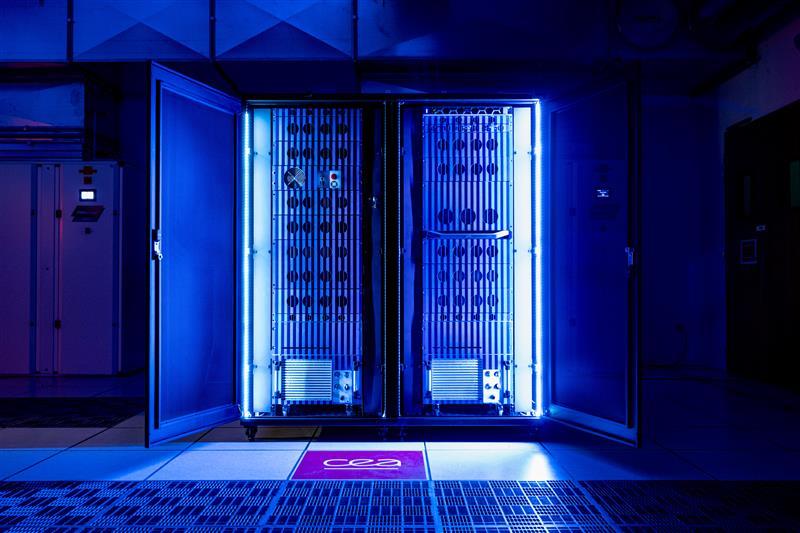
Quandela has experience operating photonic quantum computers connected to existing computing facilities. At the French Very Large Computing Center (TGCC), it operates the photonic quantum computer “Lucy” in conjunction with the supercomputer “Joliot-Curie.”
● Expanding beyond new drug development to cell therapies and genetic targetsAlongside the joint research, the two institutions will also train convergent research talent capable of understanding advanced biotechnology, AI, and quantum computing together. They plan to expand exchanges among researchers through joint education programs, hackathons, seminars, workshops, and technology exchange programs.
KRIBB President Kwon Seok-Yoon said, “By combining KRIBB’s expertise in the field of biotechnology with Quandela’s photonic quantum computing technology, the aim is to provide tools that enable researchers to understand complex biological systems more effectively.”
Kwon added, “The goal is to accelerate the process through which research results obtained via computing lead to actual experimental validation.”
Kim You-Seok, CEO of Quandela Korea, said, “Quantum computing has significance when it is used to solve problems in real research environments,” adding, “Together with the Korea Research Institute of Bioscience and Biotechnology, we will advance a hybrid research approach that combines AI, classical computing, and photonic quantum computing, and create practical and reproducible use cases in biotechnology and new drug development.”
ⓒ dongA.com. All rights reserved. Reproduction, redistribution, or use for AI training prohibited.
Popular News