From left: Professor Eun-Yeol Lee of Kyung Hee University, Professor Je-Young Park of Sogang University, Kyung Hee University graduate student Rizki Utami, Sogang University graduate student Jiheon Kim, and Kyung Hee University graduate student Tisa Rani Saha. Provided by Kyung Hee University
Kyung Hee University and Sogang University have jointly developed an eco-friendly elastomer that enhances strength and thermal stability compared with conventional polyurethane by using lignin, a wood component, together with bioplastics. The research addresses the limitations of existing approaches that relied on a single eco-friendly raw material by adopting a method that utilizes two feedstocks together.
The joint research team led by Professor Eun-Yeol Lee of the Department of Chemical Engineering at Kyung Hee University and Professor Je-Young Park of the Department of Chemical and Biomolecular Engineering at Sogang University announced on the 6th that it has developed a bio-based polyurethane elastomer by simultaneously incorporating lignin polyol and polyhydroxybutyrate (PHB) diol into polyurethane. The research findings were published in the October issue of the International Journal of Biological Macromolecules.
Polyurethane rubber is an elastic material used in tires, automotive components, and smart devices. However, conventional polyurethane primarily uses petroleum-based raw materials, which has continuously raised environmental concerns. To replace these materials, research has been conducted using lignin or bioplastics, but when only a single feedstock is used, it has been difficult to secure both strength and flexibility at the same time.
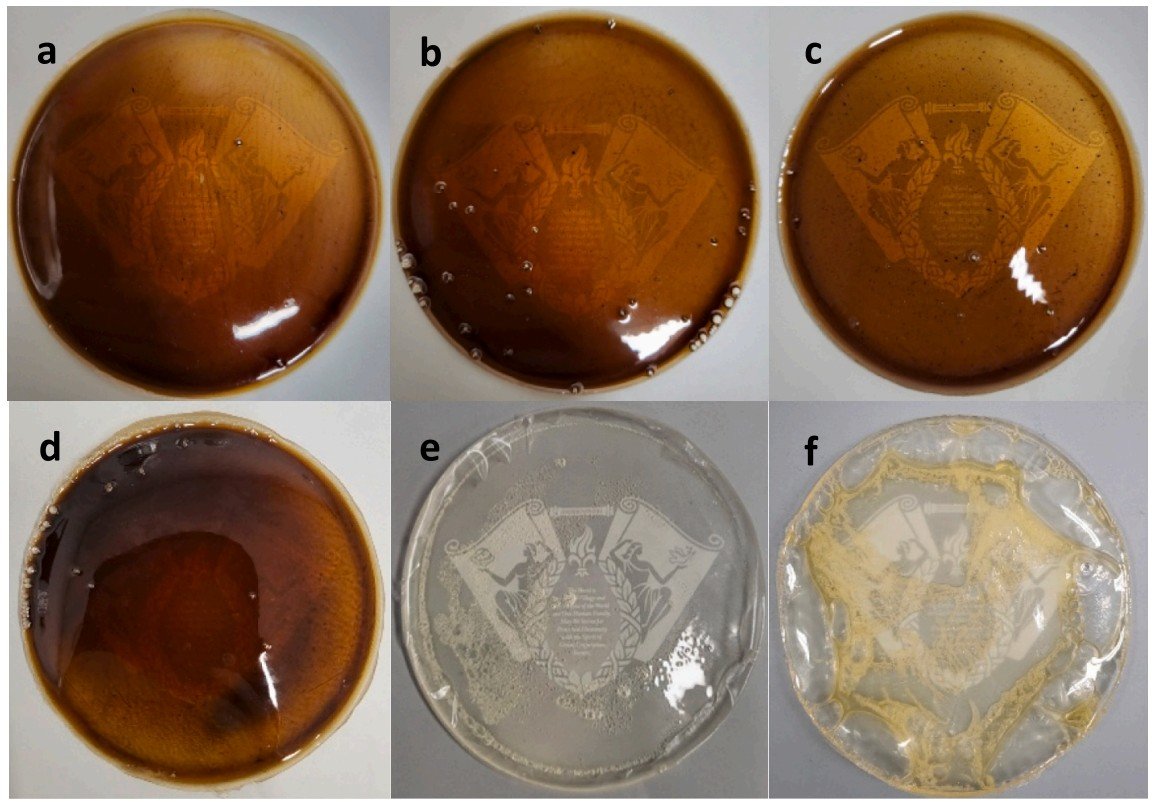
The joint research team applied a “dual feedstock” approach that uses lignin and PHB, an eco-friendly plastic component, together as raw materials for polyurethane. Lignin, with its rigid structure containing multiple functional groups, was designed to enhance the material’s strength and thermal stability, while PHB, with its polymer chain structure, contributes to elasticity and the formation of a uniform internal structure. A key feature is that both raw materials are chemically bonded into the polyurethane network.
Polyurethane film manufactured using lignin derived from wood and PHB derived from microorganisms. The appearance differs depending on the combination and mixing ratio of raw materials. Provided by Kyung Hee University
The elastomer developed by the research team demonstrated mechanical strength about four times higher than that of conventional pure polyurethane and could stretch to approximately 2.8 times its original length. Its thermal stability also exceeded that of existing polyurethane.
The research team explained that the study is significant in that it presents a method to simultaneously secure strength, flexibility, and thermal stability by incorporating different bio-based raw materials together into a single polyurethane network.
The team stated, “This achievement resolves the longstanding dilemma between robustness and flexibility, which was difficult to overcome using a single eco-friendly raw material, through the chemical bonding of two feedstocks,” adding, “It is expected to serve as an eco-friendly alternative material in various industrial fields that require high-performance rubber materials, such as automotive components and medical equipment.”
The research was conducted with support from the Ministry of Science and ICT’s ‘C1 Gas Refinery Value-Up Project.’
ⓒ dongA.com. All rights reserved. Reproduction, redistribution, or use for AI training prohibited.
Popular News