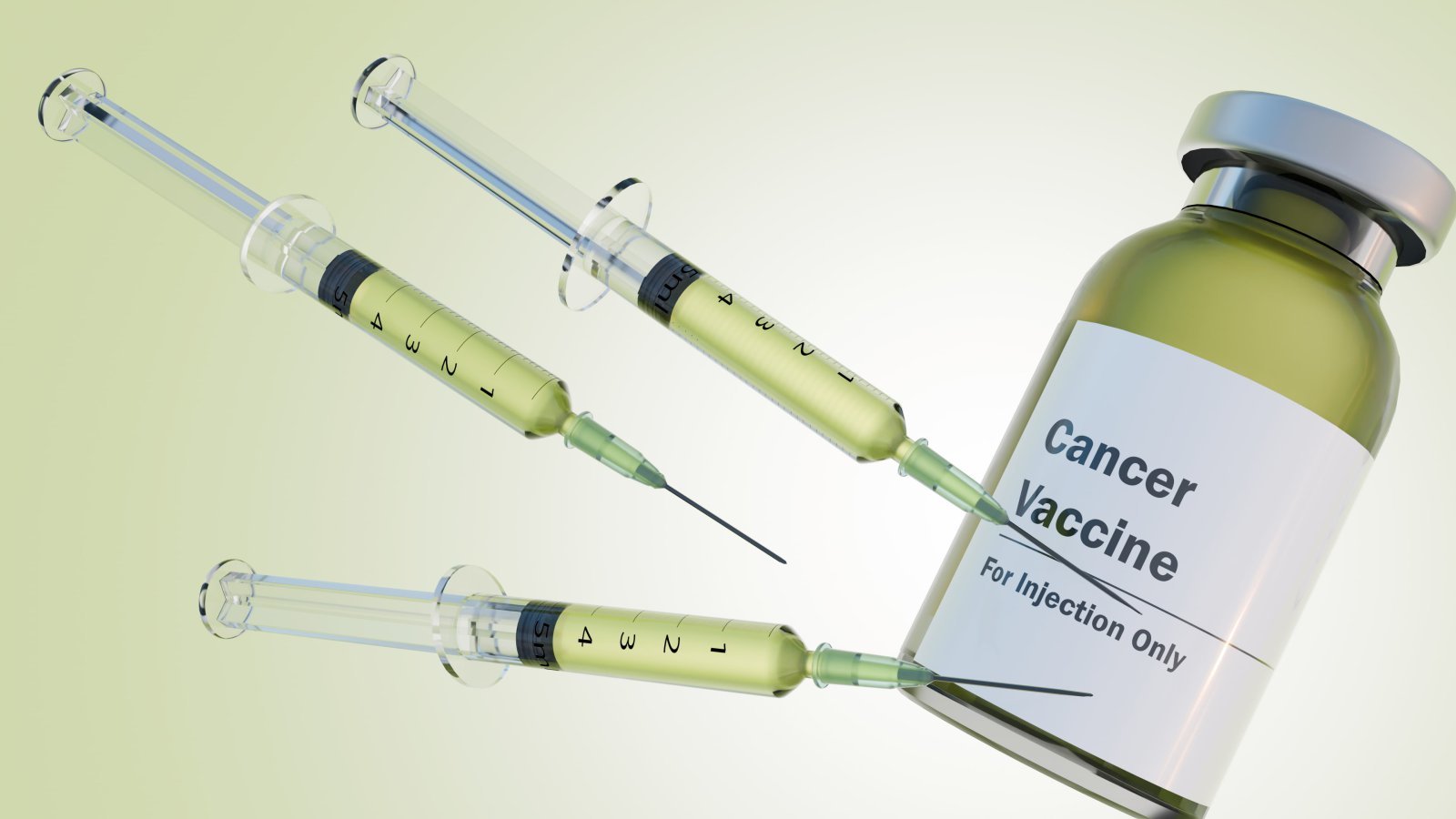
Cancer vaccine image. As the patient-specific mRNA cancer vaccine jointly developed by Moderna and Merck has produced positive results in a Phase 3 clinical trial for high-risk melanoma patients, interest in the development of personalized cancer vaccines is increasing. Getty Images Bank
The patient-specific mRNA cancer vaccine jointly developed by Moderna and Merck has produced positive results in a Phase 3 clinical trial targeting high-risk melanoma patients, boosting interest in the development of personalized cancer vaccines. In Korea, technology that designs vaccines by using artificial intelligence (AI) to identify neoantigens of cancer cells that differ for each patient is progressing through the preclinical stage and preparing to enter human clinical trials.
According to SCL Science on the 20th, its subsidiary Neogenlogic is developing a personalized cancer vaccine using the AI-based cancer vaccine design platform “DeepNeo.” The company has currently secured preclinical animal test data and is targeting 2027 for its Investigational New Drug (IND) application.
A personalized cancer vaccine is a treatment that identifies “neoantigens” that are absent in normal cells but appear only in cancer cells in a patient’s tumor and induces the immune system to attack them. Because the genetic mutations of tumors differ from patient to patient, the neoantigens to be targeted also vary.
Moderna and Merck’s “Intismeran Autogene (V940·mRNA-4157),” which is under development, is also designed to target up to 34 neoantigens expressed in each individual patient’s tumor. The two companies announced on the 19th that, in a Phase 3 clinical trial of more than 1,100 high-risk patients who had undergone melanoma removal surgery, they achieved the primary endpoint of suppressing cancer recurrence and metastasis compared with Keytruda monotherapy.
Following this news, Moderna’s share price closed at USD 174.38 on the New York Stock Exchange on the 19th (local time), up 176.97% from the previous trading day. In the Korean stock market as well, biotech stocks related to personalized cancer vaccines and neoantigens showed strong performance.
● AI identifies neoantigens for each patientDeepNeo, developed by Neogenlogic, is an AI platform that analyzes cancer patient data to identify neoantigens likely to elicit an immune response. It was co-developed with the research team of Professor Choi Jung Kyoon of the Department of Bio and Brain Engineering at KAIST.
According to the company, unlike existing neoantigen prediction technologies that mainly focus on T-cell immune responses, DeepNeo analyzes not only T-cell reactions but also B-cell reactivity. The related research results were published in the international journal “Science Advances.”
In addition to DeepNeo, Neogenlogic also owns a single-cell big data analysis platform called “DeepDependency.” With regard to technology for predicting B-cell reactivity, the company has secured patents in Korea, Japan, and China, and is proceeding with patent applications in the United States and Europe.
However, identifying the targets of a cancer vaccine using AI and actually producing a pharmaceutical product to be administered to patients are separate processes. This is also the next stage Neogenlogic must clear before its planned IND submission in 2027.
● Preclinical data secured… next hurdle is the actual drug manufacturing processIn additional comments to the press, Neogenlogic stated, “We have already secured preclinical animal test data,” and added, “For the IND application, the most critical step is to collaborate with a contract development and manufacturing organization (CDMO) capable of stably producing neoantigens selected through our AI platform.”
Personalized cancer vaccines differ from the conventional approach of finalizing a single candidate and mass-producing the same drug. Once a patient’s tumor is analyzed and the AI selects the neoantigens to be targeted, a vaccine tailored to that patient must be manufactured based on those targets.
In this process, it is necessary to verify not only how effectively the AI identifies neoantigens, but also whether the manufactured pharmaceutical product can consistently meet standards for identity, quality, purity, and content. This is the Chemistry, Manufacturing and Controls (CMC) verification step in drug development.
To this end, Neogenlogic plans to conduct CMC verification in collaboration with a CDMO capable of manufacturing pharmaceuticals using the neoantigens selected by AI. After completing the required procedures, the company’s current goal is to submit an IND in 2027. IND approval is required to begin human clinical trials.
An SCL Science official said, “Based on AI technology that integrates analysis of T cells and B cells, we are moving forward with an IND application in 2027,” and added, “We plan to announce a detailed development schedule in September.”
ⓒ dongA.com. All rights reserved. Reproduction, redistribution, or use for AI training prohibited.
Popular News