Anthropic, the most highly valued AI company, in talks with Samsung on adopting cutting-edge process technology
Reviewing use of 2-nanometer process and packaging facilities
Big Tech firms like Google racing into the AI chip market… A positive signal for Samsung’s foundry business
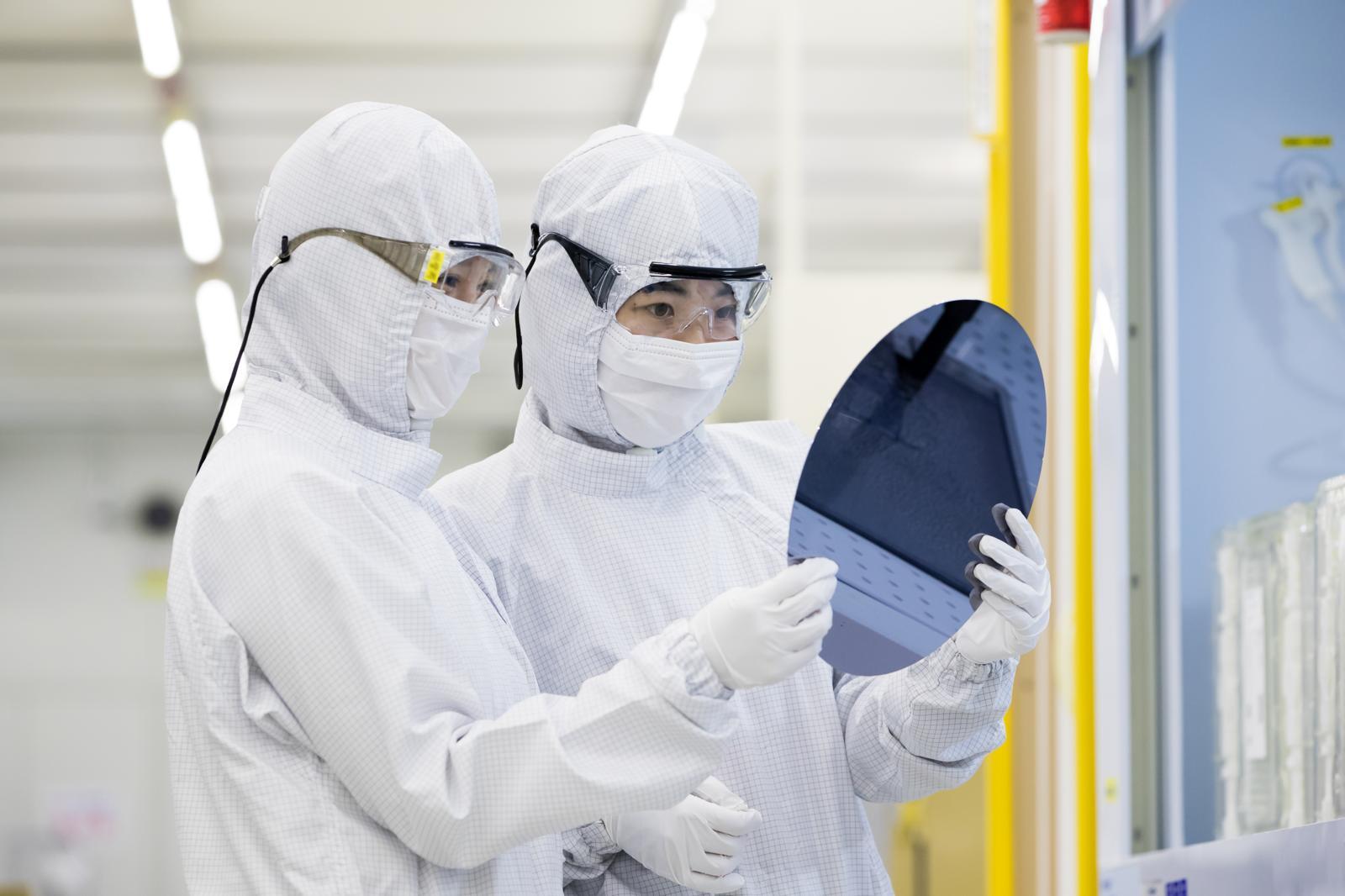
Engineers inspect wafers at Samsung Electronics’ semiconductor plant in Hwaseong, Gyeonggi Province. Provided by Samsung Electronics
The developer of the artificial intelligence (AI) model “Claude,” Anthropic, has reportedly selected Samsung Electronics as its foundry (semiconductor contract manufacturing) partner and is in talks to introduce cutting-edge process technologies.
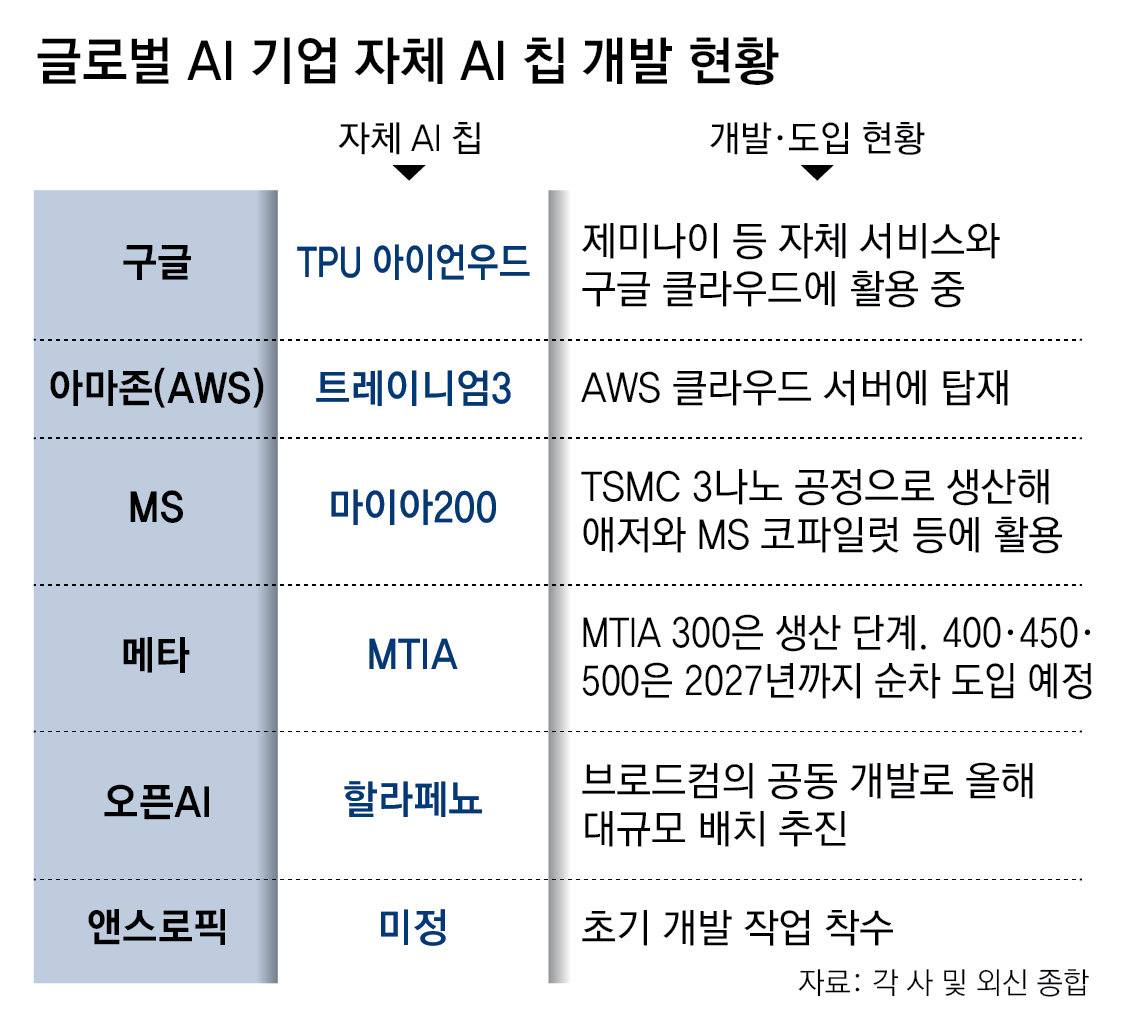
Following OpenAI, Anthropic is also moving into in-house chip development, extending the competition in customized AI chips, previously led by hyperscalers such as Google, Amazon, and Microsoft, to AI model companies. Anthropic’s corporate value is estimated at USD 965 billion (about KRW 1,478 trillion), making it the world’s most highly valued AI company, ahead of OpenAI.
With US big tech firms intensifying their in-house AI chip race, analysts say the outlook for Samsung Electronics’ foundry business has brightened.
● Anthropic in talks with Samsung on AI chip production
According to US IT-specialist outlet The Information on 2 July (local time), Anthropic has launched early-stage work to develop its own AI chips. Samsung Electronics is reportedly in discussions as a potential partner to handle contract manufacturing.
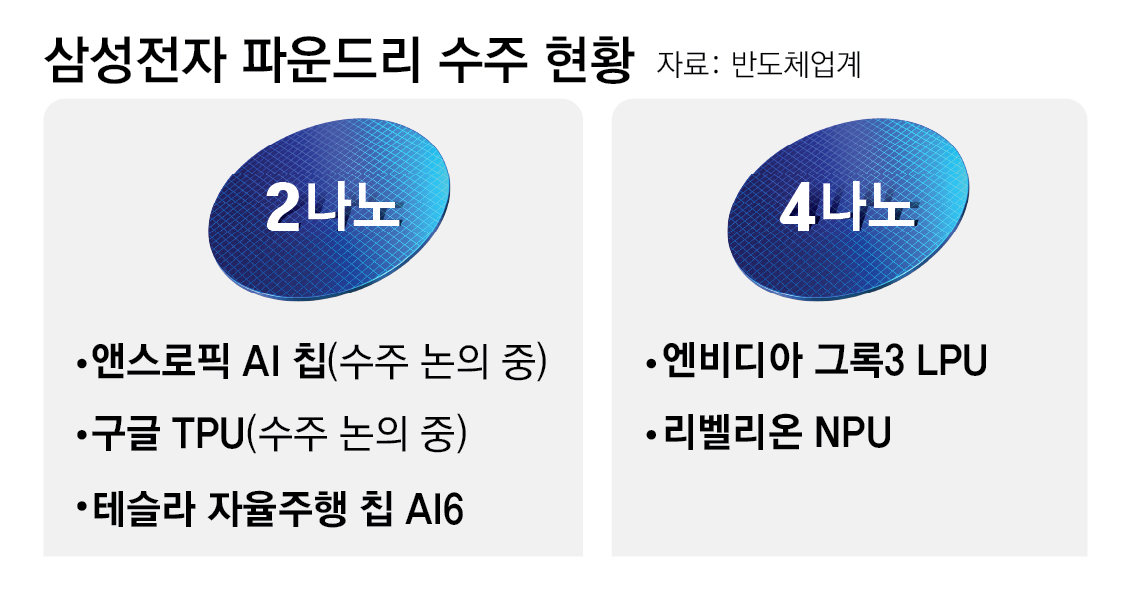
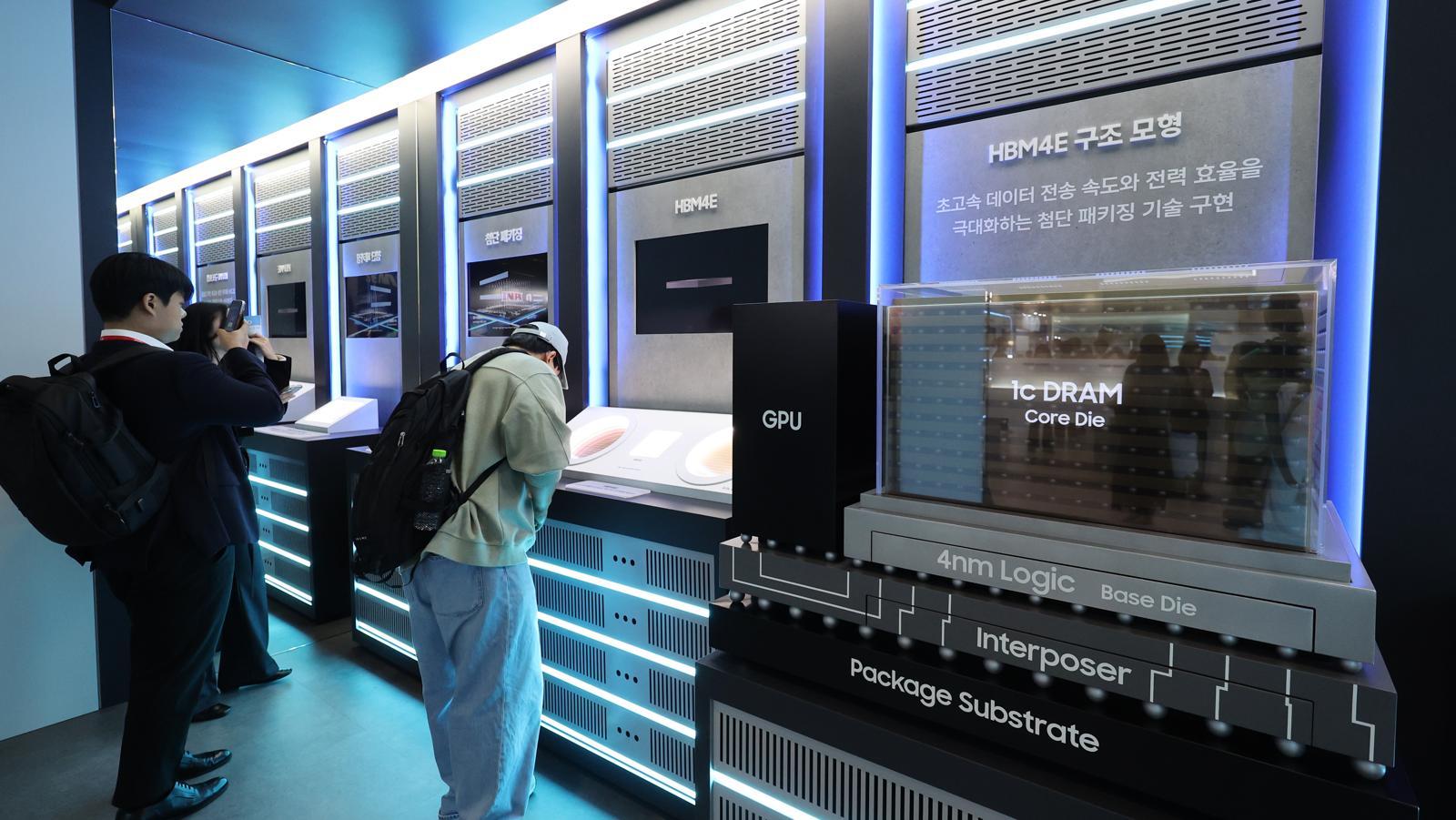
Anthropic is reviewing ways to utilize Samsung Electronics’ 2-nanometer (nm; 1 nm is one-billionth of a meter) foundry process and advanced packaging facilities. The 2 nm process is one of the most advanced in the industry, designed to increase processor density and improve power efficiency. Advanced packaging technology can mitigate bottlenecks by placing the main processor closer to memory chips, thereby boosting data transfer speeds.
In the USD 65 billion (about KRW 100 trillion) funding round it conducted in May this year, Anthropic announced that the three major memory manufacturers, including Samsung Electronics, participated as “strategic infrastructure partners.” It added at the time that “these companies’ technologies play a key role in supplying memory, storage, and logic chips worldwide.”
Given that Anthropic explicitly mentioned “logic chips” (non-memory semiconductors) then, many in the industry anticipated that Samsung Electronics stood a strong chance of winning Anthropic’s AI chip orders. Among Samsung Electronics, SK Hynix, and Micron, Samsung is effectively the only company that not only manufactures memory but also operates a large-scale foundry business capable of producing advanced AI chips on a contract basis. However, Anthropic is said to still be in talks with multiple chip design firms, and detailed design as well as testing and manufacturing stages have yet to begin.
Anthropic maintains that developing its own AI chips will not replace its existing partnerships. A company representative said, “AWS’s Trainium, Google’s Tensor Processing Unit (TPU), and Nvidia’s Graphics Processing Unit (GPU) will continue to play a central role in the company’s computing strategy.”.
● AI companies move to reduce dependence on Nvidia
The decision by Anthropic to pursue in-house AI chips is seen as an effort to move away from data center operations centered on Nvidia GPUs, thereby reducing development costs and improving efficiency.
Google is the frontrunner. Since introducing its AI-specific application-specific integrated circuit (ASIC), the Tensor Processing Unit, into its data centers in 2015, Google has commercialized up to the seventh generation of the product. By building a proprietary ecosystem that integrates everything from chips to servers, networks, AI models, and cloud services, Google aims to lower its reliance on Nvidia GPUs and enhance cost and power efficiency.
AWS has also developed its own Trainium chips for AI model training and Inferentia chips for inference, which it offers to cloud customers. OpenAI, an AI model company, unveiled its first inference chip, “Jalapeño,” last month through a collaboration with Broadcom.
In this context, if Samsung Electronics finalizes a contract with Anthropic, Samsung Foundry will add another major client to its portfolio, following Tesla, Nvidia, and Apple. For Samsung Electronics’ foundry division, which is striving to narrow the gap with Taiwan’s TSMC, the world’s largest foundry, this could become a critical turning point.
Industry analysts also attribute the growing number of contract negotiations with big tech firms to the substantial improvement in yields (the proportion of non-defective products) from Samsung’s advanced processes, an area where the company had previously struggled. In the 2 nm process segment, currently the fiercest battleground in the foundry market, Samsung’s yields are reported to have surpassed 60%. In semiconductors, yields above 60% are generally considered to support profitability. In fact, Samsung last year secured a KRW 22.8 trillion contract from Tesla to produce the next-generation autonomous-driving AI chip, AI6, and is expanding cooperation with global big tech firms such as Nvidia and Google.
In a recent report analyzing the global foundry market for the first quarter of this year (January–March), market research firm Counterpoint Research stated, “As AI-related demand expands, major customers (fabless companies) are moving to diversify their suppliers,” adding, “This trend could provide new growth opportunities for both Samsung Electronics and Intel Foundry.”
ⓒ dongA.com. All rights reserved. Reproduction, redistribution, or use for AI training prohibited.
Popular News