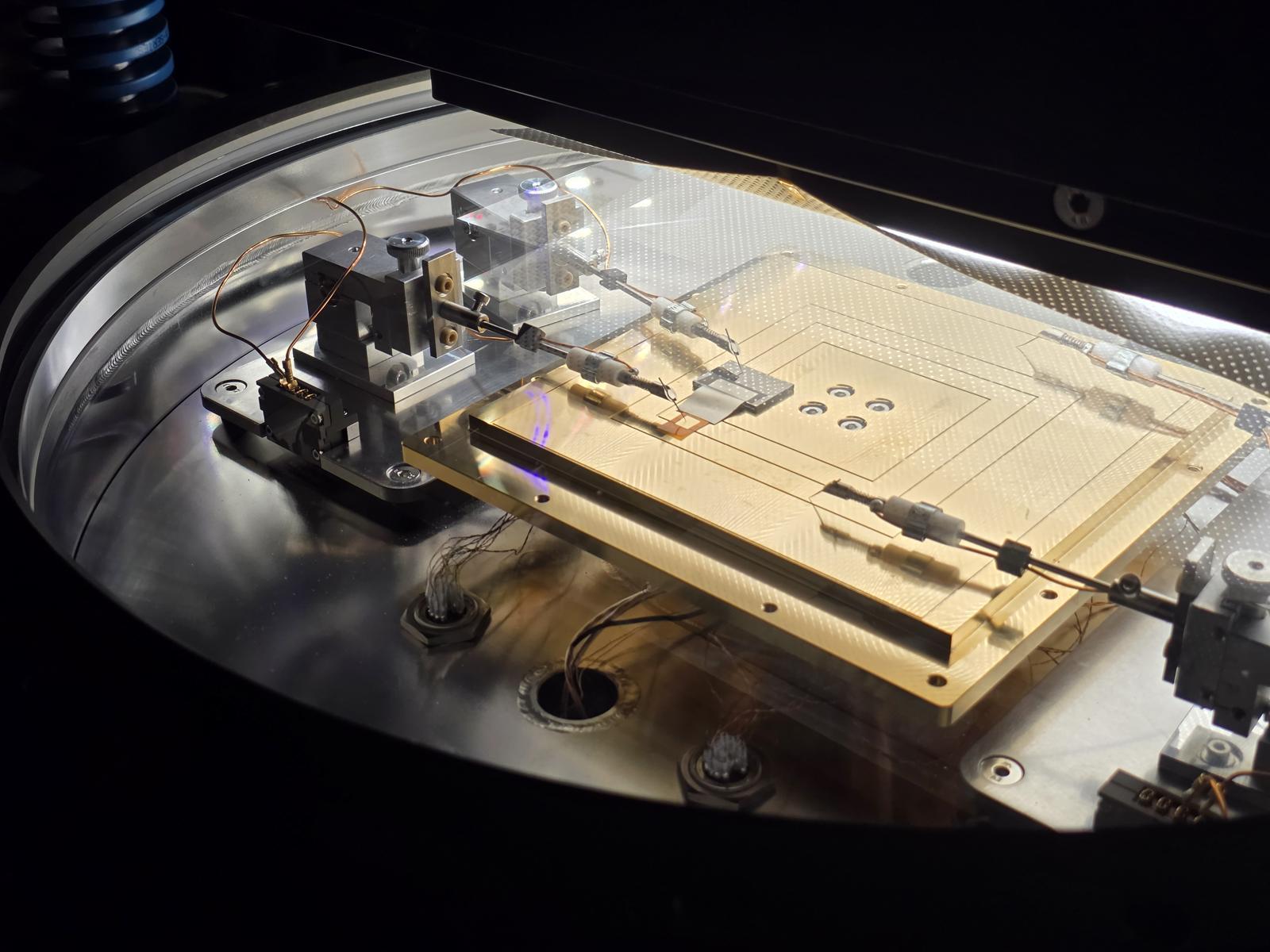
Photo courtesy of Flexell Space
As the new space industry continues to grow, including satellites, space stations, space-based data centers, and space solar power generation, the importance of technologies that can reliably supply power in space environments is increasing. However, conventional space solar cells have long been criticized for limiting the expansion of large-scale space infrastructure due to high manufacturing costs and constrained productivity. Gallium arsenide-based products lack economic viability, while silicon-based products require improvement in terms of weight and long-term reliability. Consequently, the development of next-generation space solar cell technologies that secure price competitiveness, light weight, and high durability at the same time is emerging as a key task for the industry.
Against this backdrop, domestic space solar cell specialist Flexell Space has been selected as the lead institution for a new project under the Korea Institute of Energy Technology Evaluation and Planning’s (KETEP) Energy Technology Development Program, titled “Development and verification of low-cost, high-efficiency tandem modules for space applications.” This large-scale national R&D project involves a total budget of KRW 107 billion and aims over the next three years to develop space tandem solar cell modules that are low-cost, high-efficiency, and highly reliable, and to verify their operability in actual space environments. The project will be pursued in the form of a consortium led by Flexell Space, with participation from the Korea Institute of Energy Research (KIER), the Korea Electronics Technology Institute (KETI), Gyeongsang National University, and other industry-academia-research institutions.
Flexell Space has been supplementing the weaknesses of existing products through tandem solar cell technology that combines CIGS (copper, indium, gallium, selenium) and perovskite. Through this project, the company will conduct the design of high-efficiency tandem cells and modules optimized for space environments and develop modules for application to low Earth orbit satellites. In particular, it plans to carry out step-by-step verification of reliability under harsh space conditions such as radiation, vacuum, and extreme temperatures, as well as optimization of manufacturing processes and economic feasibility assessments.
This project is significant in that a private space company is taking the lead in a national R&D initiative where energy and space technologies converge. Flexell Space plans to expand its technological scope beyond cells to modules, arrays, and customized power systems for clients, thereby establishing a commercialization base for the domestic space solar cell industry. The company is currently engaged in technological collaboration with domestic and overseas satellite manufacturers and firms related to space stations and space data centers, and it intends to secure competitiveness in the global space power market through on-orbit demonstration and advancement of mass-production technologies.
Industry insiders assess that “while the project is undoubtedly a highly challenging task with a very high level of technical difficulty, if successful, it will serve as a definitive card for securing a leading position in the global next-generation space power market, along with generating a substantial effect in substituting imports.”
Flexell Space CEO An Tae-hoon stated, “The selection of this project is meaningful in that the company’s accumulated space tandem solar cell technology is now linked to the nation’s long-term space and energy strategy,” adding, “Space solar cells must combine not only power generation efficiency but also reliability and economic feasibility under extreme environments.” He continued, “Through this research, we will accelerate the localization of space tandem modules and grow into a core power technology company whose solutions are applied to future space infrastructure, including satellites, space stations, space data centers, and lunar and deep space exploration.”
ⓒ dongA.com. All rights reserved. Reproduction, redistribution, or use for AI training prohibited.
Popular News