POSCO International completes acquisition of Indonesian palm company
Samsung C&T generates profit from overseas solar development
Hyundai Corporation moves into manufacturing
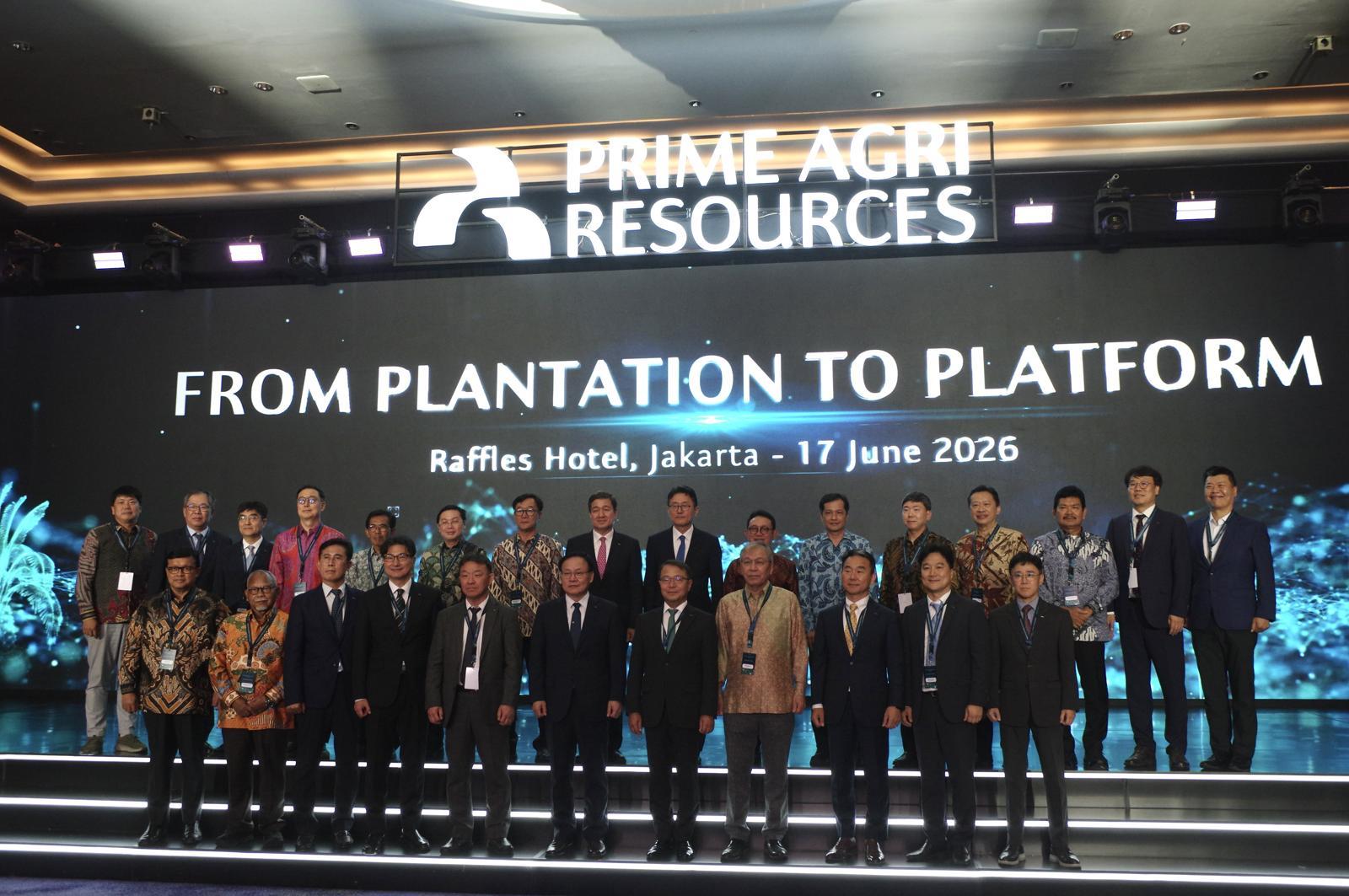
The CI proclamation ceremony of PT.PAR, a subsidiary of POSCO International, is held in Jakarta, Indonesia. From the eighth on the left: Lee Kye-in, President and CEO of POSCO International; Yoon Soon-gu, Ambassador of the Republic of Korea to Indonesia; and Eddy Martono, Chairman of the Palm Oil Association. Provided by POSCO International
POSCO International held a corporate image (CI) proclamation ceremony on the 17th (local time) at the Raffles Hotel Jakarta for its local palm (oil palm) business unit, PT.PAR, in Indonesia. This was the final piece in the acquisition of local palm plantation ‘Sampurna Agro’, which has been taken over in stages since last year through a total investment of KRW 1.3 trillion. With this, POSCO International has completed an integrated palm business “portfolio” in Indonesia, encompassing palm plantations and seed business in the Sumatra and Kalimantan regions, palm plantation operations in the Papua region, and palm oil refining through a joint venture with GS Caltex.
In this way, POSCO International and other general trading companies have recently been moving away from a business structure centered on trading (intermediary trade) and expanding their scope into direct production, manufacturing, and energy businesses. This is because new businesses deliver higher profit margins than trading, where margins are around 1%, and also allow stable business operations even amid global supply chain crises such as a war between the United States and Iran.
For example, palm oil targeted by POSCO International is not only used as edible oil but also as an industrial material serving as a raw material for biodiesel, cosmetics, and detergents. In fact, of the company’s total operating profit of KRW 1.165 trillion last year, the palm business alone generated KRW 101 billion in operating profit, accounting for about 8.7%, underscoring its high profitability. The company stated, “With the completion of vertical integration of the local business, we expect this year’s operating profit to grow to more than double last year’s level.”
The trading division of Samsung C&T is also generating significant profit from solar power development projects in major overseas countries such as the United States and Australia. Profit from this business increased from USD 21 million (about KRW 31.96 billion) in 2021 to USD 79 million (about KRW 120.23 billion) last year, and is expected to rise further to USD 85 million (about KRW 129.37 billion) this year.
Hyundai Corporation has entered the manufacturing sector. In July last year, it acquired ‘Sigma’, an automotive interior parts manufacturer that supplies various interior components, including ambient lights (interior decorative lighting), to global automakers, including Hyundai Motor Group. As the company also holds patented technologies related to robotic hands, there are projections that Hyundai Corporation could expand its reach into robotics in the future.
LX International is also expanding its resource development business, as seen in its acquisition of the AKP nickel mine in Indonesia in January 2024. Of the company’s total operating profit of KRW 292.2 billion last year, KRW 61.8 billion, or 21%, came from the resource development business. An LX International official said, “We plan to continue pursuing the acquisition of promising mineral assets going forward.”
ⓒ dongA.com. All rights reserved. Reproduction, redistribution, or use for AI training prohibited.
Popular News