Expectations for semiconductor earnings outweighed concerns over a U.S. benchmark interest rate hike, pushing the KOSPI above 9,000 for the first time in history. Samsung Electronics, the leading semiconductor blue chip, entered the global top 10 by market capitalization.
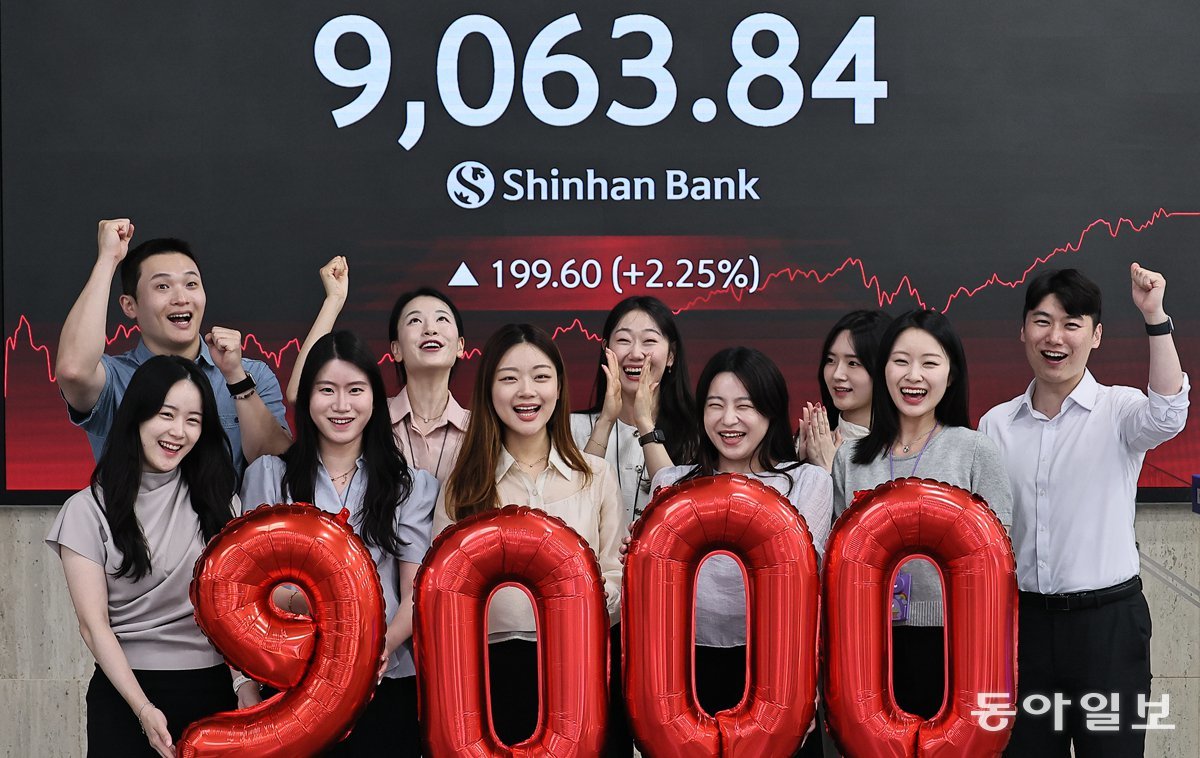
On the 18th, the KOSPI closed at 9,063.84, up 2.25% from the previous trading day. During the session it surged to as high as 9,106.07, setting new records for both the intraday high and the closing high. While retail investors and institutions recorded net sales of KRW 420 billion and KRW 770 billion, respectively, foreigners posted net purchases of KRW 1.28 trillion, driving the index higher.
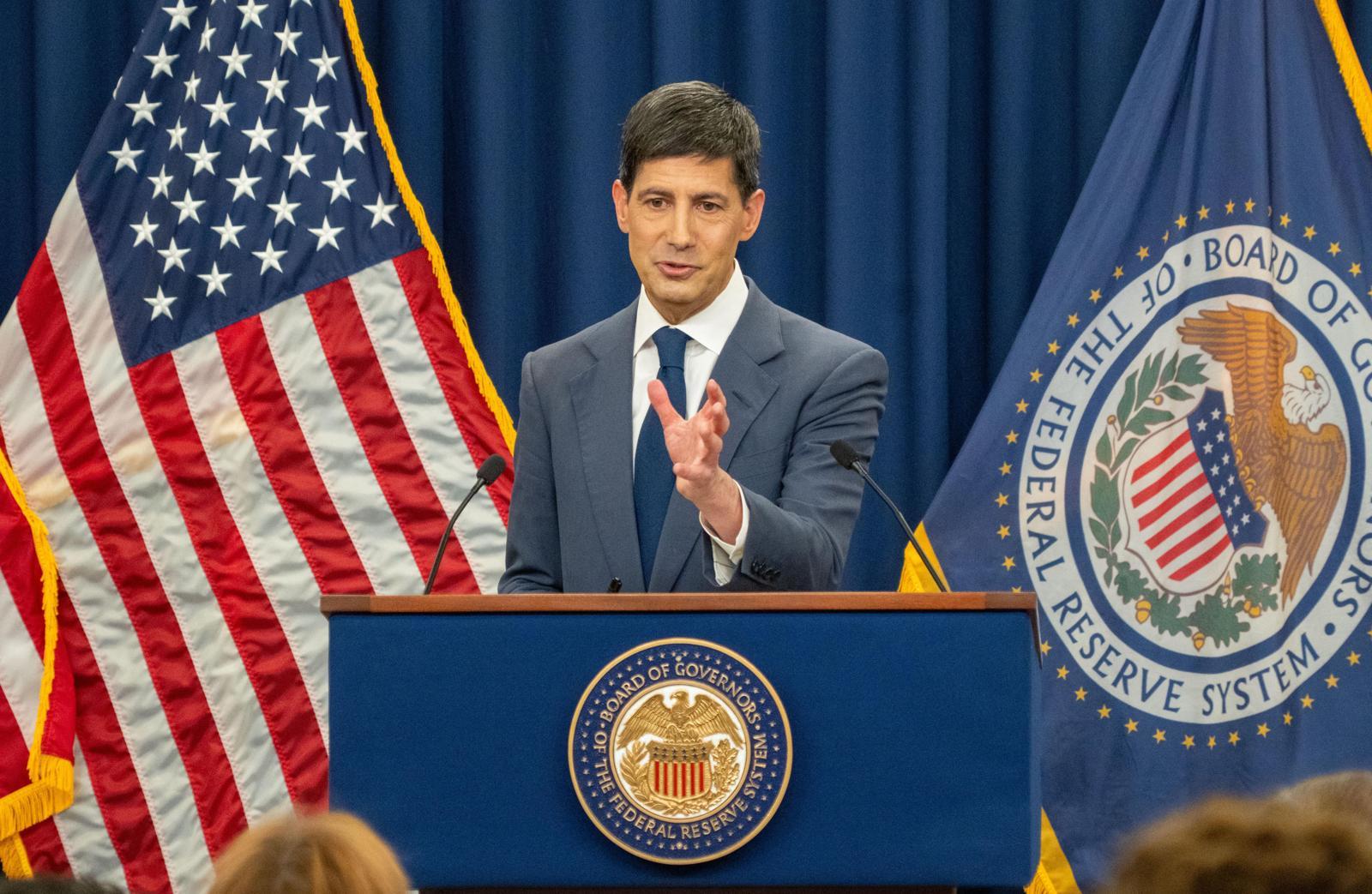
Until the domestic market opened, concerns over rate hikes dominated sentiment. On the 17th (local time), the U.S. Federal Reserve (Fed) held a Federal Open Market Committee (FOMC) meeting and kept the federal funds rate unchanged at 3.50–3.75% per annum, but signaled the possibility of a rate increase within the year. Kevin Warsh, the new Fed Chair (photo), said at his first post‑meeting press conference, “Inflation has remained well above the Fed’s long‑run target of 2% for more than five years,” adding, “This Committee will unfailingly achieve price stability.” The Fed also removed language referring to possible monetary easing from the statement it had released after the April FOMC. The median year‑end policy rate projection in the “dot plot,” which indicates the Fed’s future rate path, rose to 3.8%, up 0.4 percentage points from March’s 3.4%.
After the release of the Fed’s hawkish statement favoring monetary tightening, all three major U.S. stock indices in New York declined. The dollar index, which measures the value of the U.S. dollar against major currencies such as the yen and euro, also climbed above 100 for the first time in seven trading days since the 8th, reflecting a “strong dollar.” As the Fed hinted at a rate hike within the year, expectations strengthened that the Bank of Korea would also raise its benchmark rate by 0.25 percentage points in July.
Despite the strengthening global rate‑hike trend following recent benchmark rate increases by the European Central Bank (ECB) and the Bank of Japan (BOJ), the KOSPI did not contract and instead advanced. Investor sentiment toward semiconductor stocks improved on news that SK hynix had supplied samples of its high bandwidth memory (HBM) “HBM4E” to customers and that Apple CEO Tim Cook had voiced concerns over memory supply shortages. Samsung Electronics (+4.62%) and SK hynix (+6.51%) both posted strong gains, lifting the index. Samsung Electronics’ market capitalization (including preferred shares) rose to KRW 2,302 trillion. Samsung Electronics overtook Meta and Tesla to rank 10th in the world by market capitalization. Lee Kyung‑min, a researcher at Daishin Securities, explained, “Although the Fed’s hawkish stance has strengthened, it did not differ significantly from what the market had anticipated, so the impact on the market was limited.”
Expectations for ‘Samseon‑nix’ semiconductor earnings outweigh fears of U.S. rate hikes
KOSPI tops 9,000 for the first time ever
Memory shortages drive price uptrend
Reflecting expectations for long‑term supply contracts
On the 18th, an electronic display at Shinhan Bank’s headquarters in Jung‑gu, Seoul, shows the KOSPI topping 9,000 for the first time in history. It came 16 trading days after the index surpassed 8,000 on the 26th of last month. Photo by Yang Hoe‑seong yohan@donga.com
The reason the KOSPI surpassed 9,000 just 16 trading days after breaching 8,000 on the 26th of last month, despite fears of U.S. benchmark rate hikes, appears to be strong expectations for semiconductor earnings. When interest rates rise, stock investment sentiment tends to weaken, so rates are often seen in the market as a form of “gravity” acting on asset prices. The sharp fall in share prices of the leading U.S. big tech names known as the “Magnificent 7 (M7)” after the Fed hinted at rate hikes is attributed to this.
However, the impact on memory companies whose earnings outlook is rising more steeply has been limited. Although New York stocks fell on the 17th (local time), Micron gained 2.2%, while on the 18th the KOSPI saw Samsung Electronics and SK hynix, and Japan’s market‑cap leader Kioxia (+0.94%), all advance together. The combined market capitalization of the memory “Big 3” — Samsung Electronics, SK hynix, and Micron — came close to USD 4 trillion.
Nvidia’s issuance of corporate bonds and capital increases by Google and Meta, as they ramp up competition in AI data center investment, have also stimulated AI‑related investment sentiment. Apple’s indication that it will raise product prices likewise implies a price uptrend stemming from memory supply shortages.
Expectations are growing that long‑term supply agreements (LTAs) will alleviate the structural weakness of the memory industry, which has swung between large surpluses and deficits. Kang Yun‑hyung, a researcher at Hana Securities, said, “In Micron’s earnings announcement scheduled for the 25th (local time), attention should be paid to long‑term supply contracts,” explaining, “If a structure involving long‑term contracts, fixed volumes, and partially fixed pricing emerges, the memory semiconductor industry could undergo structural changes toward greater stability.”
These expectations have driven gains not only in Samsung Electronics and SK hynix, but also across the AI value chain, including SK Square (+6.52%) and Samsung Electro‑Mechanics (+8.27%). However, the concentration of market capitalization in large-cap semiconductor stocks on the Korean stock market has deepened further. As of the close on the 18th, Samsung Electronics (including preferred shares) and SK hynix together accounted for 56.9% of the KOSPI’s total market capitalization. Moreover, despite the KOSPI rising 2.25%, the number of advancing stocks was limited to 112, while 791 stocks declined — more than seven times as many. The KOSDAQ closed down 3.01% at 1,000.93, widening the gap with the KOSPI even further.
ⓒ dongA.com. All rights reserved. Reproduction, redistribution, or use for AI training prohibited.
Popular News