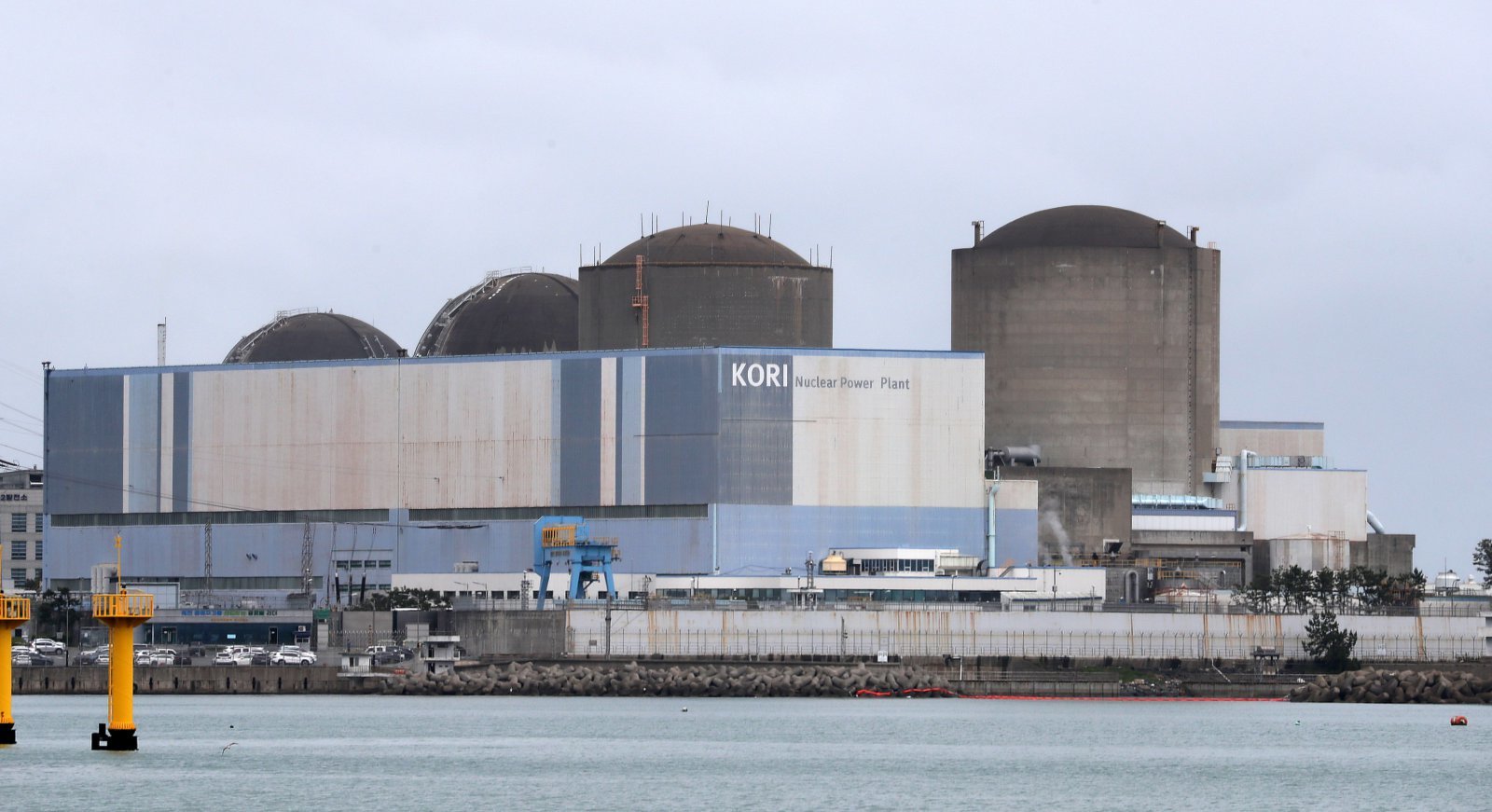
Korea Hydro & Nuclear Power’s Kori Units 1, 2, 3 and 4. 2024.5.7 News1
As candidate sites have been selected for two new large nuclear power plants and a small modular reactor (SMR), expectations are rising that a foundation has been laid to respond to growing electricity demand from artificial intelligence (AI) data centers and other sources. While construction of new nuclear power plants is gaining momentum, expansion of the transmission network is lagging behind, fueling concerns that even if power is generated at plants, it may not be possible to transmit it to semiconductor factories and other users in the future.
The plan for new nuclear power plant construction was put up for review after the launch of the Lee Jae-myung administration. The necessity of building two large nuclear plants and one SMR, which had been reflected in the 11th Basic Plan for Long-term Electricity Supply and Demand, was re-examined, but in January this year the government decided to proceed with the existing plan based on a public opinion survey and electricity demand forecasts. The decision was based on the view that it is necessary to secure stable power plants at a time when electricity consumption is rapidly increasing due to the expansion of AI data centers and semiconductor factories.
North Gyeongsang Province’s Yeongdeok, selected as a candidate site for large nuclear plants, is an area where nuclear construction was once halted. The areas around Seok-ri, Nomul-ri and Maejeong-ri in Yeongdeok-eup and Gyeongjeong-ri in Chuksan-myeon were designated in 2012 as the planned site for the Cheonji Nuclear Power Plant, but the project was suspended in 2017 under the nuclear phase-out policy. With the latest decision, nuclear plant construction will resume in the same area after 14 years.
The two large nuclear units to be built in Yeongdeok will each be constructed as Korean-type APR1400 reactors with an installed capacity of 1.4 GW. Their combined installed capacity of 2.8 GW is at a similar level to the electricity demand of Samsung Electronics’ Pyeongtaek campus. The government aims to complete the Busan Gijang SMR in 2035 and the two large Yeongdeok nuclear units in 2037 and 2038, respectively. For economic reasons, nuclear plants are usually built in pairs.
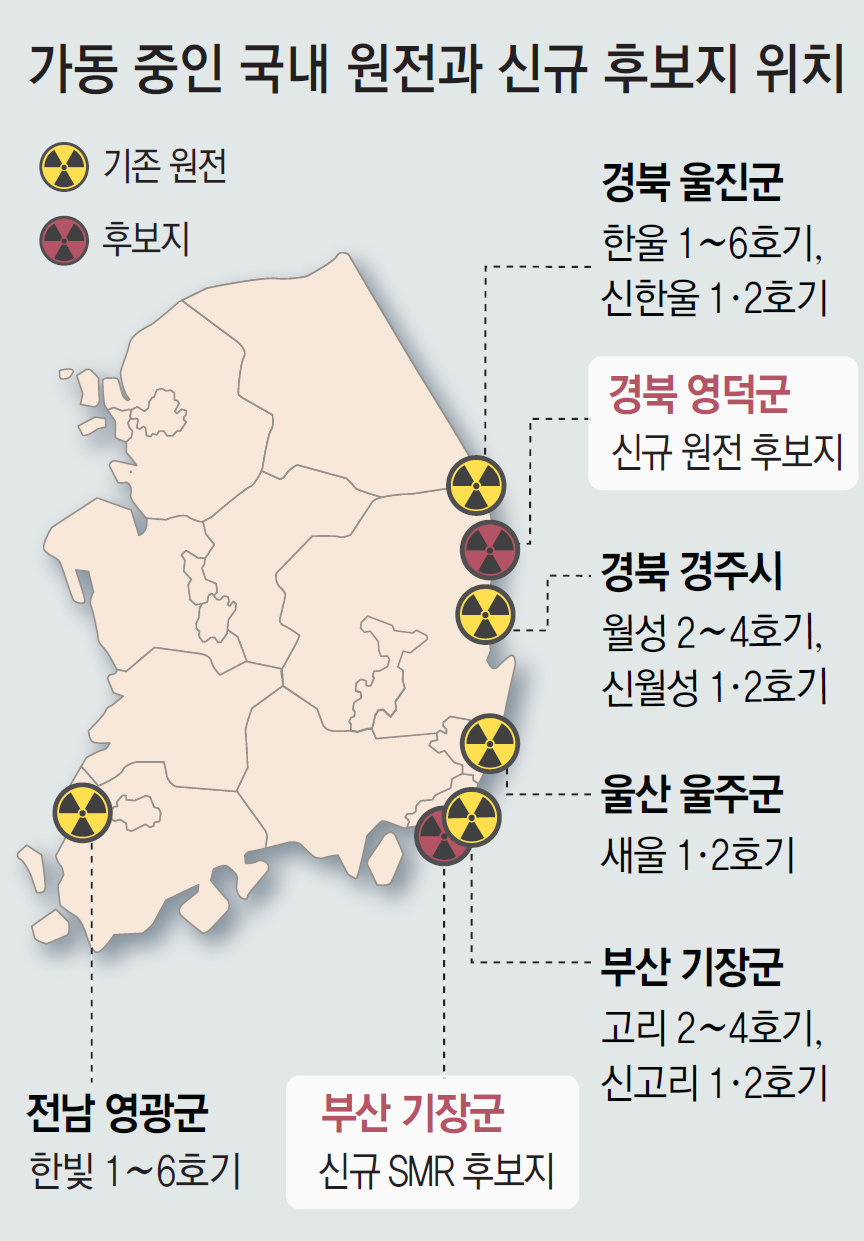
Although new nuclear candidate sites have been selected for the first time in 24 years, there are still many hurdles to clear before actual groundbreaking. Geological, seismic and marine environment surveys, environmental impact assessments, and radiological environmental impact assessments must be carried out to obtain construction approval from the Nuclear Safety and Security Commission. Designation of the planned area for the power source development project and approval of the implementation plan are also required.
To prevent delays, the government has this time introduced a public bid method in which local governments apply directly after securing residents’ consent. This allows the resident outreach process, which typically took two to three years after site confirmation, to be significantly shortened at the bidding stage. The government intends to process permitting and licensing procedures as swiftly as possible to keep pace with rising electricity demand in the AI era.
The problem is that expansion of the transmission network to deliver electricity from nuclear plants to demand centers remains slow. Even if nuclear plants are completed on schedule, if transmission lines are not prepared in time, it will be difficult to send sufficient power from the plants to the Seoul metropolitan area and industrial complexes. Critics warn that if the gap in construction speed between power plants and the transmission network widens, new nuclear plants may not be able to fully serve as a safety net for power supply.
ⓒ dongA.com. All rights reserved. Reproduction, redistribution, or use for AI training prohibited.
Popular News