Overseas consumers feel prices are lower… April exports surpass USD 200 million for the first time
Domestic retailers accelerate expansion of export channels
11st opens a dedicated section on JD.com subsidiary… Musinsa teams up with Tmall to tap into the Chinese market
As demand from overseas “reverse direct purchase” consumers seeking Korean products surges on the back of a weak won, domestic retail companies are accelerating their push into the cross-border e-commerce market. The popularity of K-content is also expanding demand for K-beauty and K-food, and with monthly e-commerce exports exceeding USD 200 million for the first time, the reverse direct purchase market is emerging as a new growth engine for the distribution sector.
Online marketplace 11st (11번가) announced on the 10th that it has opened an “11st specialty store” on “JD Worldwide,” the cross-border e-commerce platform of JD.com, China’s largest e-commerce company with about 700 million active consumers. The move is aimed at fully launching its reverse direct purchase business targeting Chinese consumers. 11st sellers can now sell Korean products to Chinese consumers without the burden of separately building local distribution networks. The 11st specialty store is displayed on the main page of JD Worldwide.
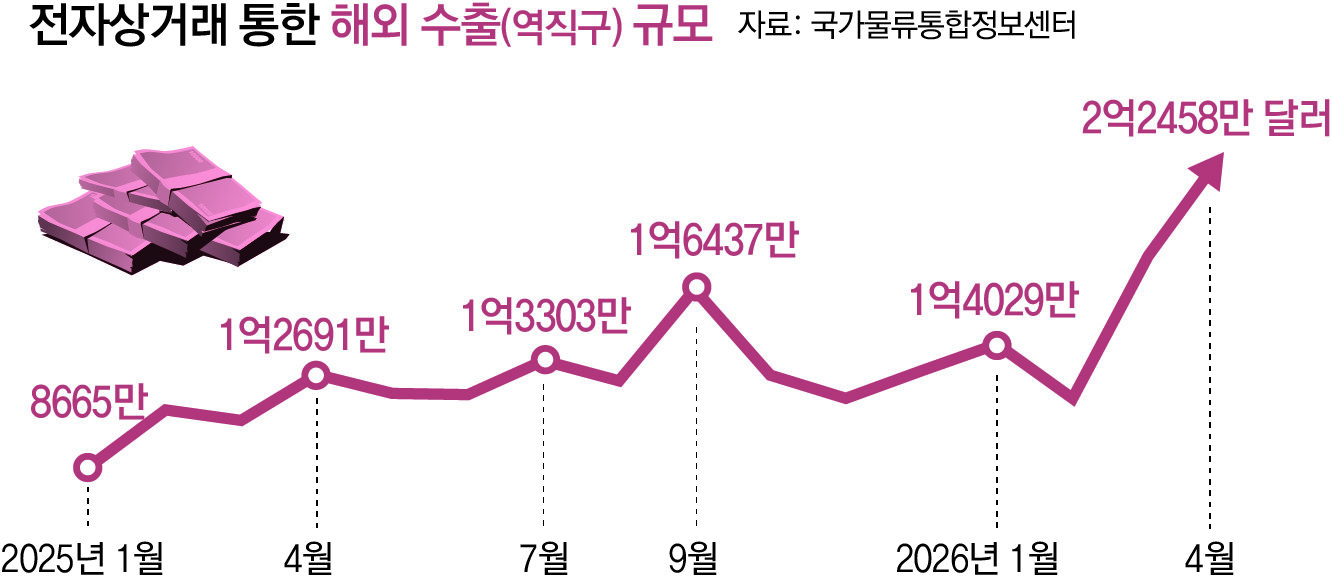
The reverse direct purchase market has been growing rapidly in recent months. According to the National Logistics Information Center, exports via domestic e-commerce reached USD 224.58 million (about KRW 342.8 billion) in April. This represents a 77.0% increase from the same month last year (USD 126.91 million). Since e-commerce export statistics began to be compiled, this is the first time that monthly exports have exceeded USD 200 million.
The recent rise in the won–dollar exchange rate (depreciation of the won) is being analyzed as a catalyst for the expansion of the reverse direct purchase market. The won–dollar rate was in the low KRW 1,300 range in June last year, but surpassed KRW 1,560 on the 6th of this month, hitting a 17-year high. For overseas consumers, a weaker won directly translates into lower dollar-denominated prices for Korean goods, providing a stronger incentive to buy Korean products. For domestic sellers, since overseas sales are settled in dollars, they can expect foreign exchange gains from the higher rate.
The popularity of K-culture has also fueled the growth of reverse direct purchases. Global commerce platform eBay said that export sales from Korean sellers set new record highs for six consecutive quarters from the fourth quarter of 2024 (October–December) through the first quarter of this year (January–March), with last year marking their largest annual sales. Growth is particularly strong for K-pop-related products. Korean-made BTS light sticks recently ranked first globally in both search volume and gross merchandise volume, reflecting expectations for upcoming concerts and world tours. The “Kimjang vest,” a vest worn by domestic K-pop stars that has gone viral on social networking services (SNS), is also popular. On the secondhand trading platform Bungaejangter (Bunjang), overseas transactions of K-pop star merchandise, men’s apparel, and kidult products are increasing. In May this year, the number of reverse direct purchase transactions rose 150.6% year-on-year.
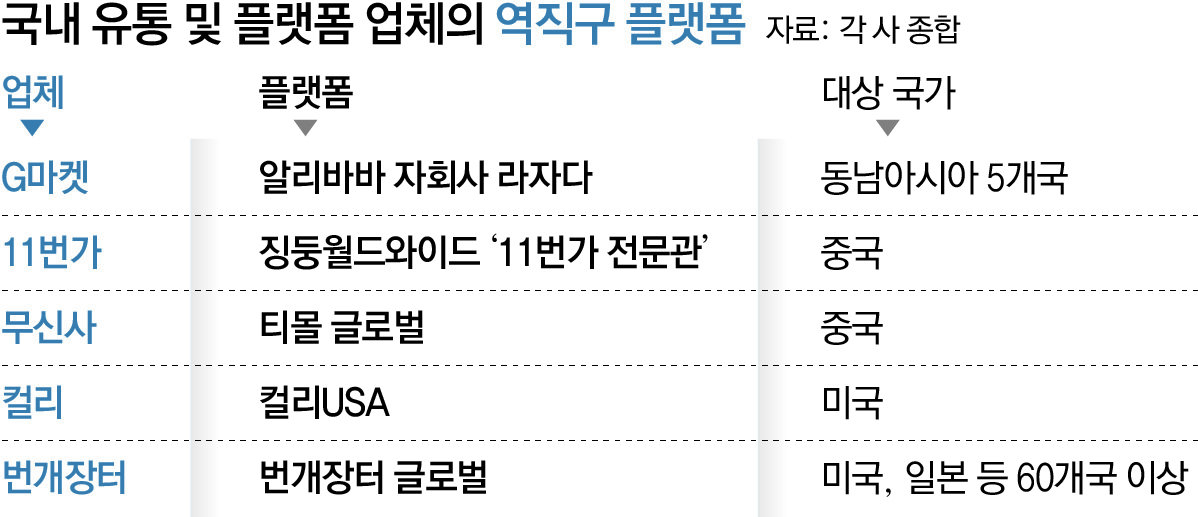
In response, domestic retail and platform companies are stepping up efforts to capture the reverse direct purchase market. Gmarket has partnered with Lazada, an e-commerce platform under Alibaba Group, to enter five Southeast Asian markets: Malaysia, Vietnam, Singapore, Thailand, and the Philippines. As of the first quarter of this year, 8,000 sellers are conducting overseas sales via Lazada, and the number of K-seller products has reached about 7 million. Fashion platform Musinsa has opened an official store on Tmall Global, China’s largest cross-border shopping platform, to expand distribution channels in China for K-fashion brands. Kurly has been operating “Kurly USA Mall,” a U.S. reverse direct purchase site specializing in food, since October last year. Kurly USA Mall excludes products that cannot clear U.S. customs, such as meat, dairy products and alcohol, and has gained popularity by selling Korean products that are difficult to find in the United States.
Seo Yong-gu, professor in the Department of Business Administration at Sookmyung Women’s University, said, “For reverse direct purchases not to remain a temporary fad driven by short-lived exchange rate effects, platform operators must simultaneously strengthen capabilities in logistics, customs clearance, customer service, and local marketing.”
ⓒ dongA.com. All rights reserved. Reproduction, redistribution, or use for AI training prohibited.
Popular News