National project for domestic unmanned aerial vehicle engine development by the Korea AeroSpace Administration
Targeting engines for collaborative combat UAVs and small business jets
Higher power and lower weight than comparable engines with an integrated generator design
Leveraging a 4,500 lbf-class engine to seize early advantage in the aircraft engine market
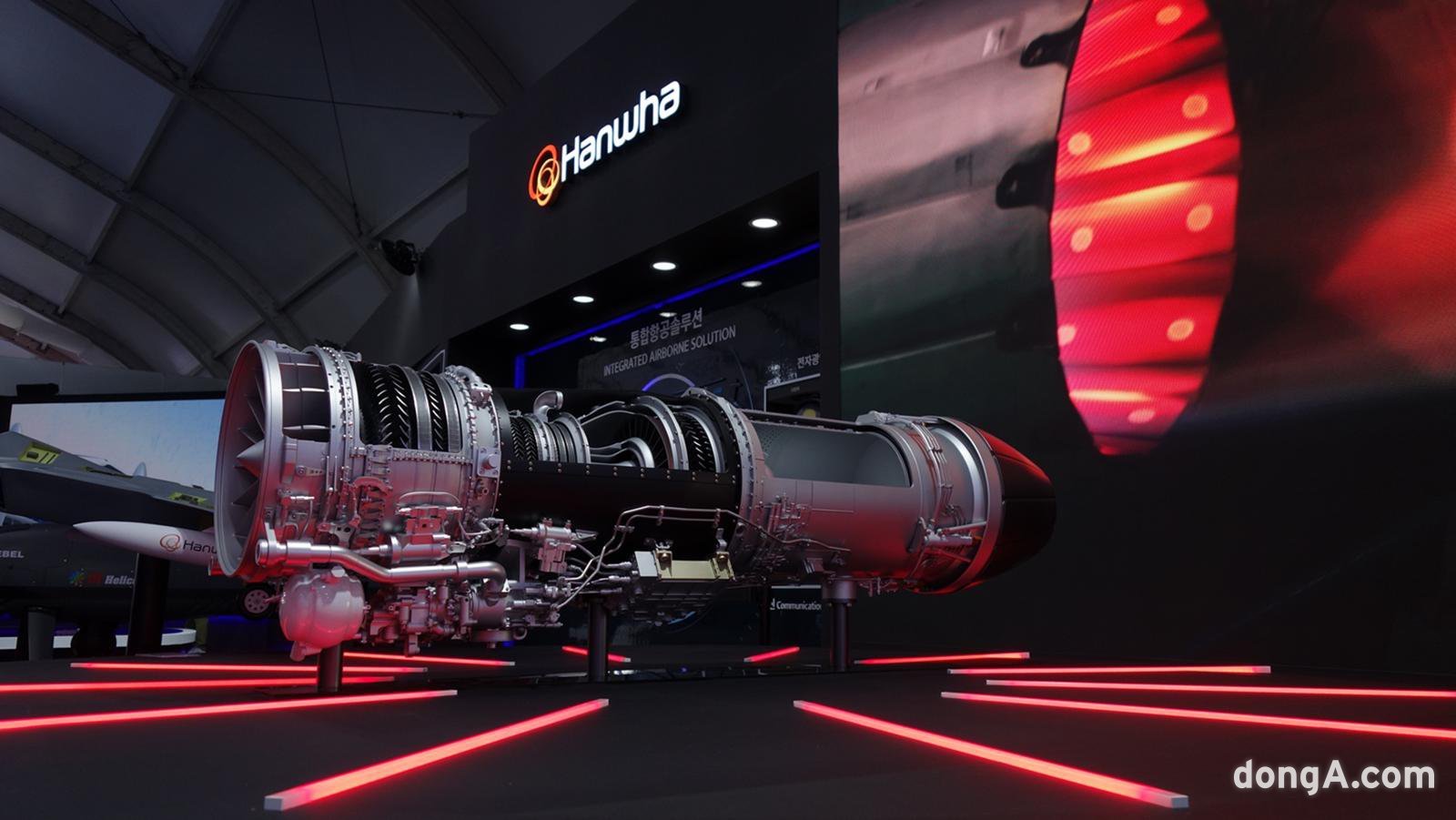
The F414 engine supplied by Hanwha Aerospace. Provided by Hanwha Aerospace
Hanwha Aerospace announced on the 26th that it will launch the development of an unmanned aircraft engine, a core asset for future air warfare, in cooperation with the Korea AeroSpace Administration. Based on public–private cooperation, the company aims to develop, using domestic technology by 2029, a 4,500‑pound‑force (lbf)‑class unmanned aircraft engine that can be expanded for civil use. This is the first time in Korea that a dual‑use (military and civilian) aircraft engine will be developed. For the military, the goal is to secure a Collaborative Combat Aircraft (CCA) system that performs a range of missions together with manned fighter jets.
According to the company, the project will be promoted as part of a national corporate co‑prosperity program, led by Hanwha Aerospace as the prime contractor in collaboration with research institutes such as the Korea Aerospace Research Institute (KARI), universities, and small but strong enterprises. The new aircraft engine will be developed in a configuration that mounts the starter and generator on the engine’s rotating shaft, rather than as external components, for the first time in Korea. Hanwha Aerospace explained that, in particular, it is characterized by supplying higher electrical output than engines of the same class in a stable manner, while its built‑in generator design makes it relatively lighter in weight.
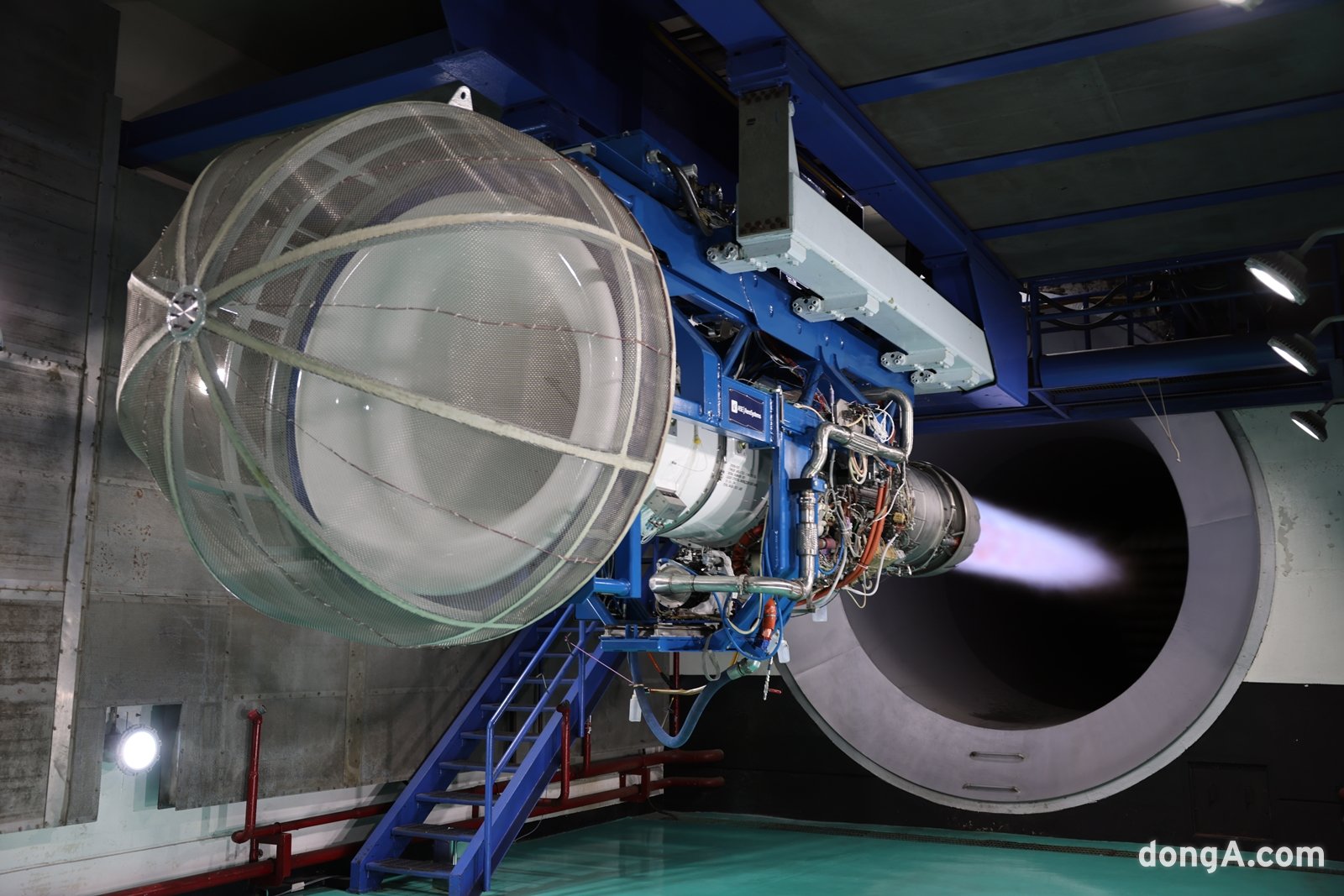
Hanwha Aerospace F414 engine run-up test. Provided by Hanwha Aerospace
The thrust of the 4,500 lbf‑class engine is said to be, in simple terms, the power to lift a weight of about 2 to 2.5 tons vertically. When installed as a twin‑engine configuration (two engines), it can power an aircraft with a maximum take‑off weight of around 10 to 13 tons. This thrust range is reportedly suitable for small passenger aircraft of around 10 seats (business jets) and high‑performance unmanned aircraft. By class, small unmanned aircraft or missiles are below 1,000 lbf, CCA and business jets are in the 3,000–5,500 lbf range, and aircraft such as the T‑50 Golden Eagle and FA‑50 light combat aircraft (F404 engine) are in the 10,000–13,000 lbf range. Major fighters such as the KF‑21, which uses twin F414 engines, the F‑15, and the F‑35 have thrust ranges from at least 17,000 lbf to more than 40,000 lbf. Passenger aircraft from Boeing and Airbus fall in the 50,000–110,000 lbf‑plus range.
A Hanwha Aerospace official said, “This engine can be regarded as optimized for unmanned aircraft that require electric power,” adding, “CCA, which carries out missions together with manned fighter aircraft, requires a large amount of electric power not only for computing necessary for operational deployment based on artificial intelligence (AI), but also for operating radars, electronic warfare systems, and sensors, so stable engine power generation capability is a core technological element.”
The newly developed engine is also planned as a high‑bypass turbofan engine in consideration of dual military–civilian use. As an engine in which the airflow inside is configured for high fuel efficiency, it is expected to be applicable in the future to a range of civil aircraft such as small business jets. Its thrust range is also at a level suitable for business jets.
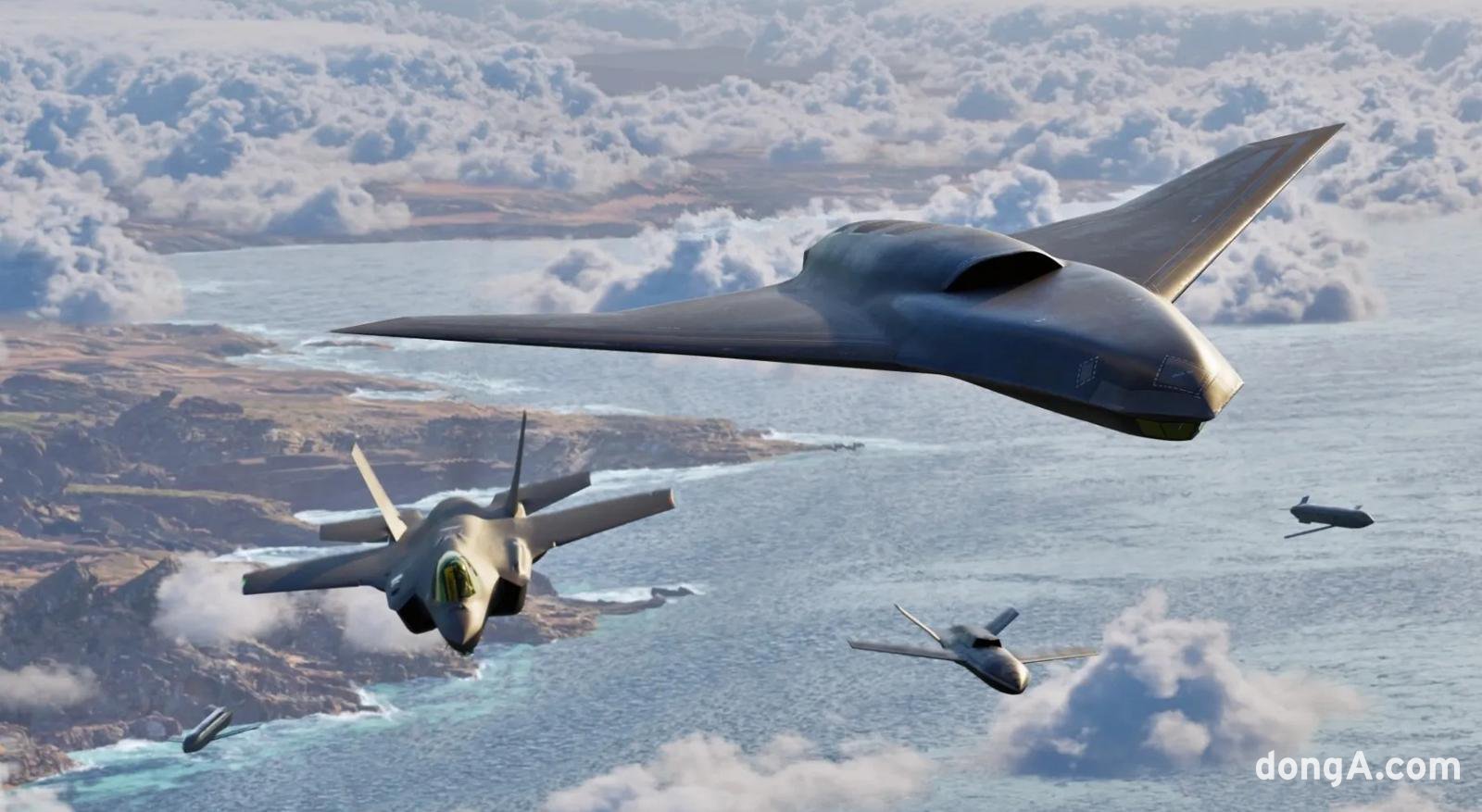
Concept of a Collaborative Combat Aircraft (CCA) (Lockheed Martin Vectis). Provided by Lockheed Martin
Hanwha Aerospace’s strategy to preoccupy the global unmanned aircraft and aircraft engine market
Hanwha Aerospace plans to move to secure a leading position in the global unmanned aircraft market, including CCA, after successfully completing the development of the 4,500 lbf‑class aircraft engine. The industry projects that, as the introduction of CCA accelerates mainly in the United States, more than 3,000 CCAs will be in operation worldwide by the 2040s.
In particular, as rapid development timelines and cost‑effectiveness emerge as key competitive factors in the global defense industry amid recent geopolitical instability in the Middle East and Eastern Europe, Hanwha Aerospace intends to respond to the market by leveraging its accumulated advanced manufacturing capabilities. Building on the revitalization of exports of unmanned aircraft engines, the company also plans to pursue an overall expansion of the domestic aerospace ecosystem.
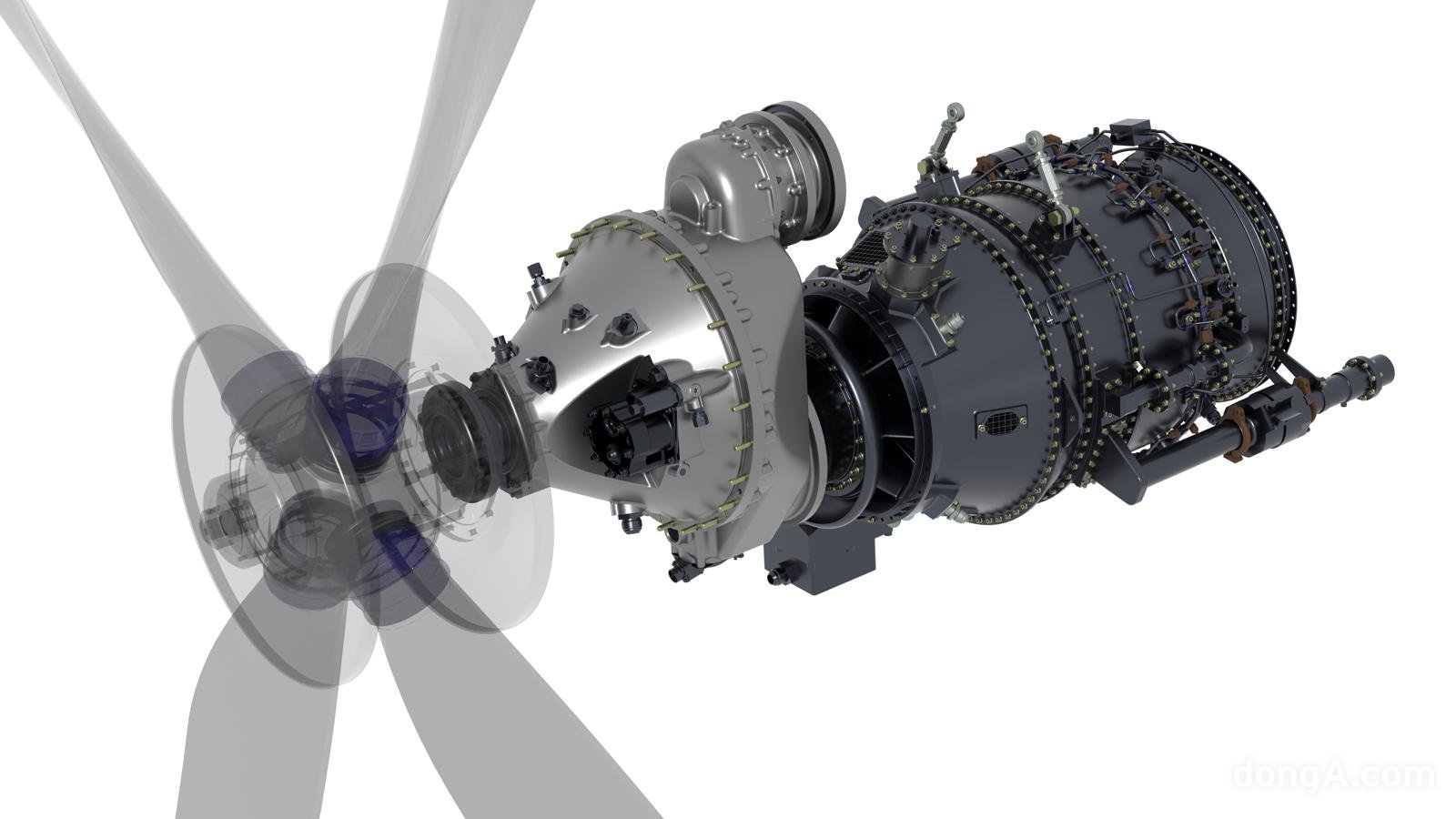
The 1,400‑horsepower turboprop aircraft engine under development by Hanwha Aerospace. Provided by Hanwha Aerospace
In addition to the 4,500 lbf‑class turbofan engine, Hanwha Aerospace is jointly developing with the government various unmanned aircraft engines using domestic technology, including a 5,500 lbf‑class low‑bypass turbofan engine for “low‑observable unmanned wingmen” focused on high maneuverability, and a 1,400‑horsepower‑class turboprop engine for “medium‑altitude unmanned aircraft (MUAV).” It is also participating in the development of core technologies for a 10,000 lbf‑class turbofan engine for “stealth unmanned aircraft.” In connection with this, Hanwha Aerospace previously announced that it would invest KRW 750 billion in unmanned aircraft system and engine development, as well as in building test and mass‑production facilities.
Park Hee‑ho, CTO of the Aviation Division at Hanwha Aerospace, said, “The global unmanned aircraft engine market is still in an early stage where the market structure has not yet solidified, so we will do our utmost to secure technology in advance, contribute to strengthening the Republic of Korea military’s unmanned capabilities, and leap forward as a leading company in the global market.”
ⓒ dongA.com. All rights reserved. Reproduction, redistribution, or use for AI training prohibited.
Popular News