WSJ reports “in talks over a rocket launch contract”
Big Tech joins forces with global space companies
Potential to realize a ‘cost‑effective’ space center
Anthropic, Meta and others also eye space technology
Big Tech company Google and global space company SpaceX have joined hands to establish space data centers. As the artificial intelligence (AI) boom has continued for years and data center infrastructure has become insufficient, Big Tech firms and space companies are moving to pioneer the space data center market through cooperation. Attention is focusing on the feasibility of commercializing space data centers, which are viewed as highly cost-effective because they can use natural cooling and generate electricity from solar power.
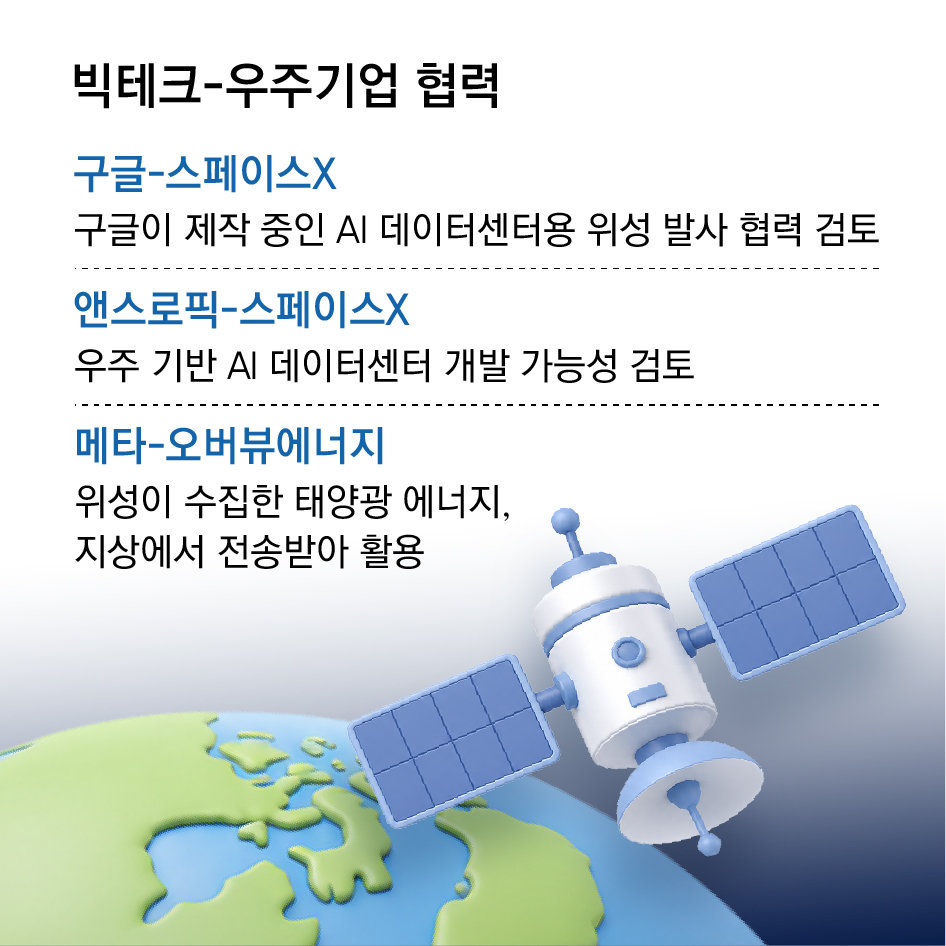
On the 12th (local time), the Wall Street Journal (WSJ) reported that Google, which has long shown interest in securing space data centers, is negotiating a rocket launch contract with SpaceX. If this launch contract is signed, the two companies will cooperate to build “clustered data centers” in low Earth orbit. According to the WSJ, Google is also currently in discussions with other rocket launch companies regarding launch deals.
SpaceX is being cited as the most likely contract partner because it, too, has a “blueprint” for space data centers. In February this year, Elon Musk, CEO of Tesla, announced the merger of SpaceX, which he founded, with xAI (an AI startup), revealing his ambition to build space data centers. He stated that “within two to three years, the cheapest way to implement AI computing will take place in space,” and even filed an application with the US Federal Communications Commission (FCC) to launch 1 million satellites for space data centers.
Google has also shown strong interest in space data centers even before this cooperation began. Last year, Google unveiled “Project SunCatcher,” a plan to perform AI computation in space. The idea is to place small satellites equipped with solar panels and Google’s in-house AI computation chip, the Tensor Processing Unit (TPU), into orbit to carry out AI training and inference in space. Google is currently manufacturing AI satellites together with US satellite startup Planet Labs and plans to launch its first test satellite around 2027. Sundar Pichai, Google CEO, said in an interview with US broadcaster Fox News last year, “I am confident that in 10 years, this approach will become the standard form of data center construction.”

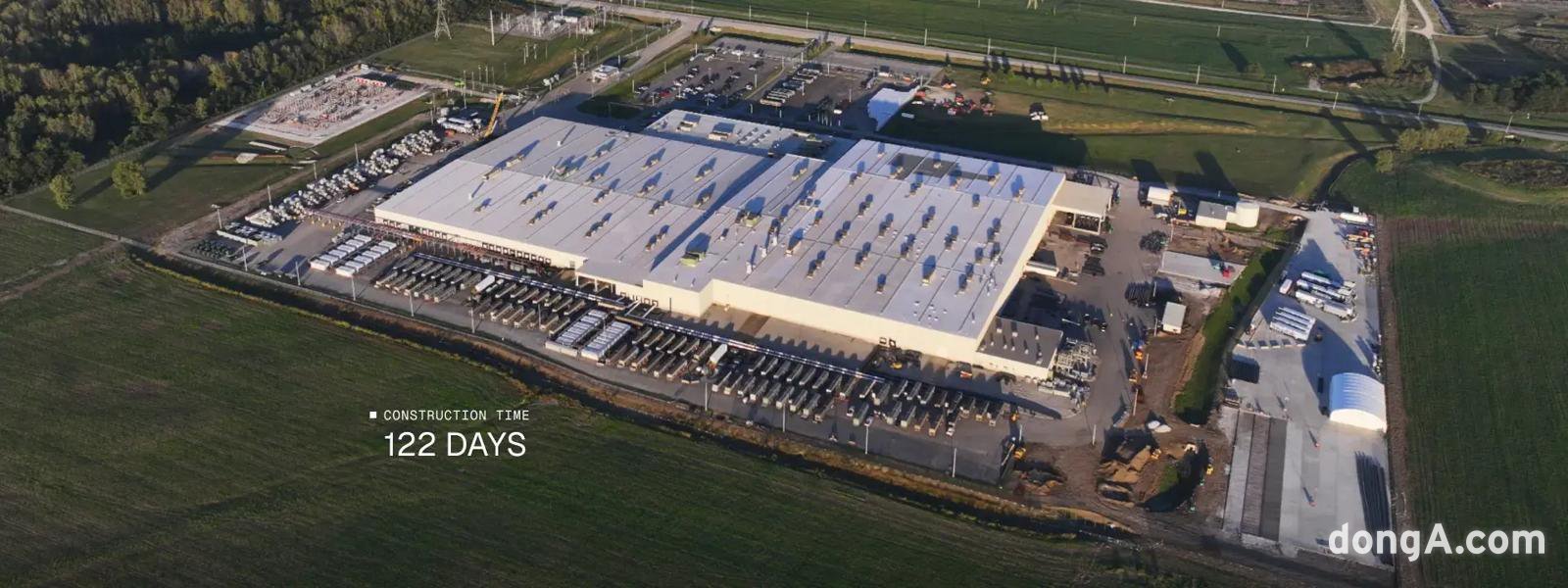
As terrestrial data centers gradually reach saturation, other Big Tech firms as well as Google are showing interest in building space data centers. Anthropic is also recently strengthening cooperation with SpaceX to secure space infrastructure. Earlier this month, Anthropic signed a contract to lease SpaceX’s data center “Colossus 1” and said that it is also reviewing the long-term possibility of developing space-based AI data centers. Meta, while not targeting space data centers per se, signed a cooperation agreement in April this year with energy startup Overview Energy, which has technology to transmit solar power collected by satellites down to Earth. The goal is to tap energy generated in space.
Ahn Hyeong-jun, head of the Space Public Team at the Science and Technology Policy Institute (STEPI), said, “There are still many engineering challenges that must be overcome to build space data centers,” but added, “Given the power shortages and the demand for AI infrastructure capable of processing massive volumes of data, the prospects for commercialization are not small.”
ⓒ dongA.com. All rights reserved. Reproduction, redistribution, or use for AI training prohibited.
Popular News