[Specialized Hospital Series – Daegu Wooridul Hospital]
Treating degenerative discs with endoscopy
Fast recovery allows same-day discharge… Safe even for elderly and diabetic patients
2 cm incision followed by artificial disc insertion… Successful development of minimally invasive spinal fusion
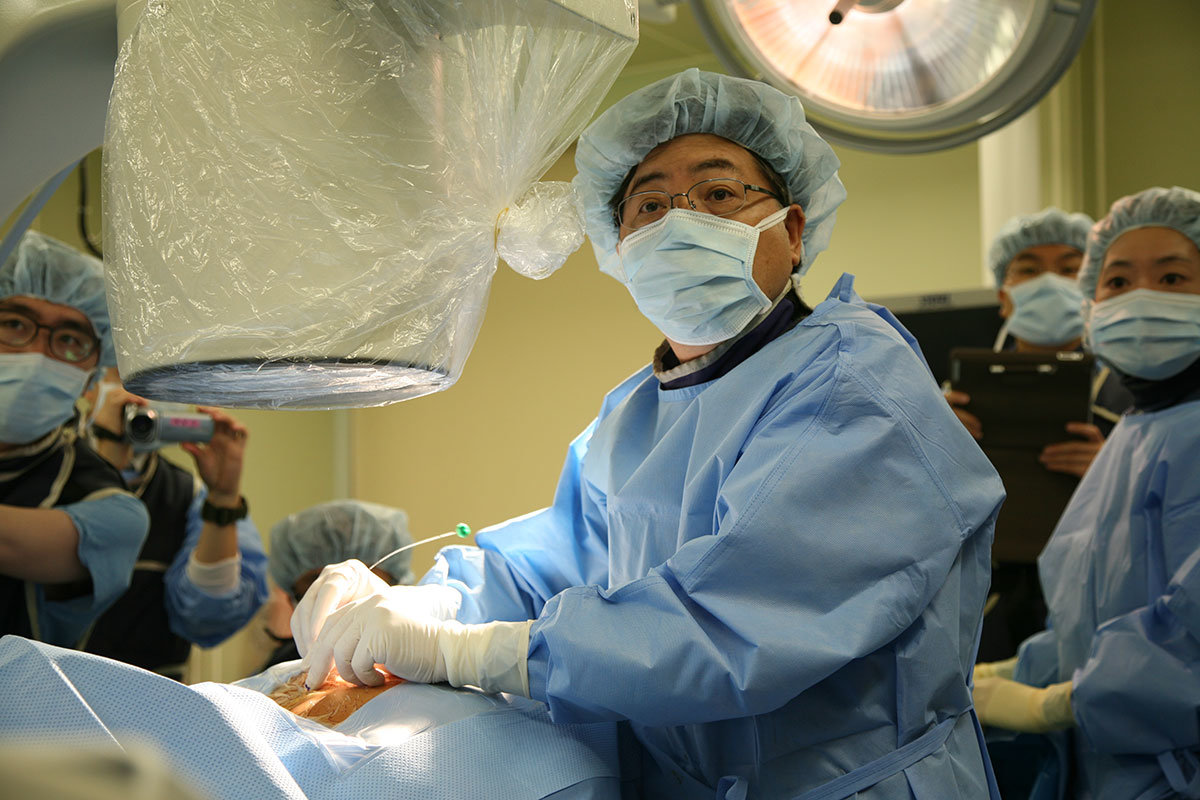
Director Park Chan-hong of Daegu Wooridul Hospital performing neuroplasty. Provided by Daegu Wooridul Hospital
Wooridul Hospital developed the world’s first endoscopic lumbar disc removal surgery in 1992 and expanded and advanced this technique to treat complex cervical and thoracic disc conditions, elevating endoscopic technology to the level of a standard surgical method today. By focusing exclusively on spinal discs for more than 40 years, the hospital has researched and advanced various minimally invasive treatments—such as endoscopic procedures, microscopic decompression, spinal ligament reconstruction, and minimally invasive spinal fusion—establishing itself as a world-class specialized spinal hospital.
Daegu Wooridul Hospital (Director: Park Chan-hong), designated as a spinal specialty hospital by the Ministry of Health and Welfare, has, since its opening in 2007, successfully treated degenerative spinal diseases such as spinal disc herniation and spinal stenosis through a wide range of methods—from non-surgical approaches to endoscopy-assisted surgery—based on Wooridul Hospital’s treatment philosophy of “minimal incision” and “treating the cause” and its minimally invasive treatment technologies.
Degenerative changes in spinal discs cause pain severe enough to interfere with daily life. Degenerative disc disease (DDD), a disc internal disorder that triggers chronic low back pain as the disc interior degenerates, was traditionally treated with screw fixation or artificial disc replacement. Daegu Wooridul Hospital, however, treats degenerative discs using non-surgical methods. Instead of burning the disc with conventional high-temperature radiofrequency, it employs non-thermal pulsed radiofrequency to selectively target only the pain-generating nerves. Because pulsed radiofrequency is used, surrounding nerves are not damaged at all, and the therapeutic effect is excellent. As the procedure does not require general anesthesia or a large incision, treatment time is short at about 15 minutes, recovery is rapid, and same-day discharge is possible. This is particularly satisfactory for busy office workers and overseas patients.
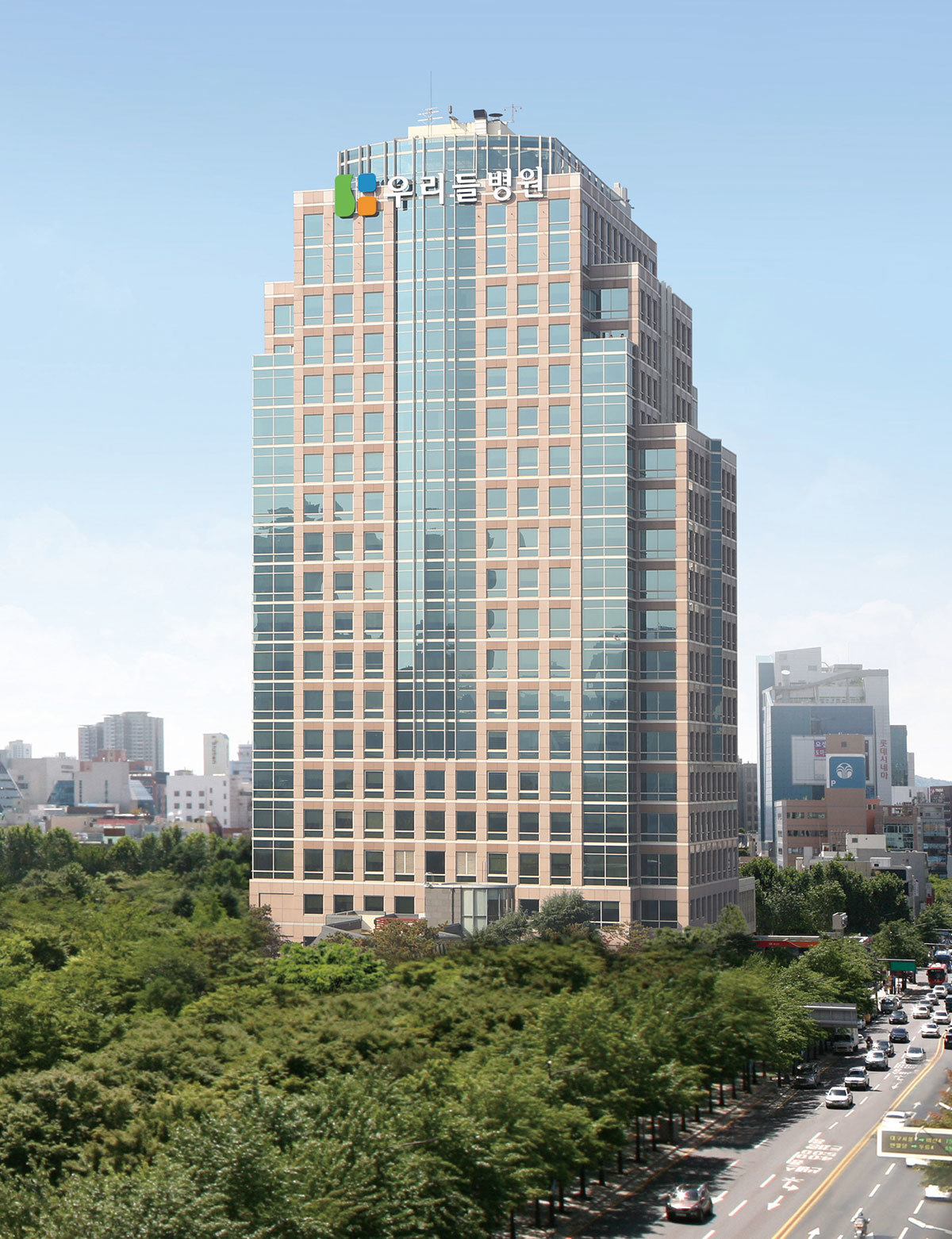
Exterior view of Daegu Wooridul Hospital.
Daegu Wooridul Hospital is also committed to treating spinal diseases using endoscopy. This is a state-of-the-art technique with excellent therapeutic outcomes that does not damage normal tissues such as discs, bones, ligaments, or muscles. Because it does not require bone cutting or disc removal, patients can be discharged on the day of the procedure. Recovery is fast, allowing patients to maintain normal daily activities after treatment. Elderly patients, as well as those with diabetes, heart disease, or osteoporosis, can also receive treatment safely.
Daegu Wooridul Hospital has developed and refined customized endoscopic techniques—including lateral endoscopy, uniportal endoscopy, and biportal endoscopy—that can be flexibly applied depending on the patient’s symptoms and the affected area. In particular, expanded application to cervical spine surgery has significantly reduced incision size and length of hospitalization.
The biportal endoscopic decompression procedure (UBE) is an advanced technique in which two small holes are made in the lumbar area to insert thin tubes: through one, an endoscope is used to magnify the lesion and identify the precise cause, while through the other, surgical instruments are used to remove herniated disc material causing pain and stenotic areas compressing the nerves.
With the accuracy and stability afforded by the use of both hands, endoscopic treatment is possible for spinal canal stenosis, foraminal stenosis, extruded discs where the nucleus has ruptured and migrated, calcified hard discs, and stenosis accompanied by disc herniation.
In addition, the hospital has recently succeeded in developing a minimally invasive spinal fusion technique using endoscopy, demonstrating excellent treatment outcomes for conditions such as spondylolisthesis, spondylolysis, spinal instability, severe disc herniation, and advanced spinal canal stenosis.
The endoscopic spinal fusion surgery (Endoscopic TLIF) newly developed by Daegu Wooridul Hospital is a minimally invasive procedure that combines the advantages of endoscopic technology and anterior approach fusion surgery. Through a small incision of about 2 cm, a thin endoscope is inserted to access the vertebrae accurately without touching bones, joints, or nerves, enabling the safe insertion of an artificial disc through a single portal. Traditional fusion surgery in the past required a large incision and involved significant bleeding, resulting in high risk of complications; by contrast, endoscopic fusion requires only a small incision, does not damage normal tissue, causes minimal bleeding, and allows rapid recovery.
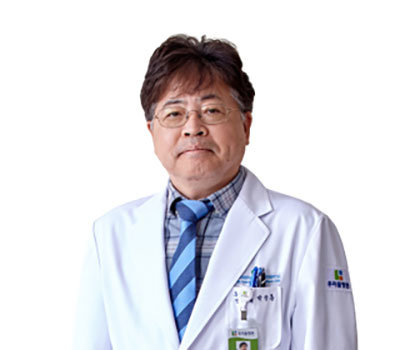
Director Park Chan-hong
Director Park Chan-hong of Daegu Wooridul Hospital said, “With the advancement of endoscopic treatment techniques, spinal patients can now be treated without undergoing large open surgeries that involve cutting bone or damaging normal tissue. Wooridul Hospital has continuously developed and advanced treatment techniques not only for lumbar discs, but also for cervical and thoracic conditions and spinal canal stenosis and spondylolisthesis, which were once thought to be unsuitable for endoscopic treatment.” He added, “Endoscopic treatment is highly preferred by patients because of its short operative time, brief hospitalization, and rapid recovery, but since it requires highly advanced surgical skills, it is advisable to receive treatment from medical staff with extensive experience and expertise.”
ⓒ dongA.com. All rights reserved. Reproduction, redistribution, or use for AI training prohibited.
Popular News