Hyundai Motor’s electrified powertrain technology combined with KAI’s aircraft development capabilities
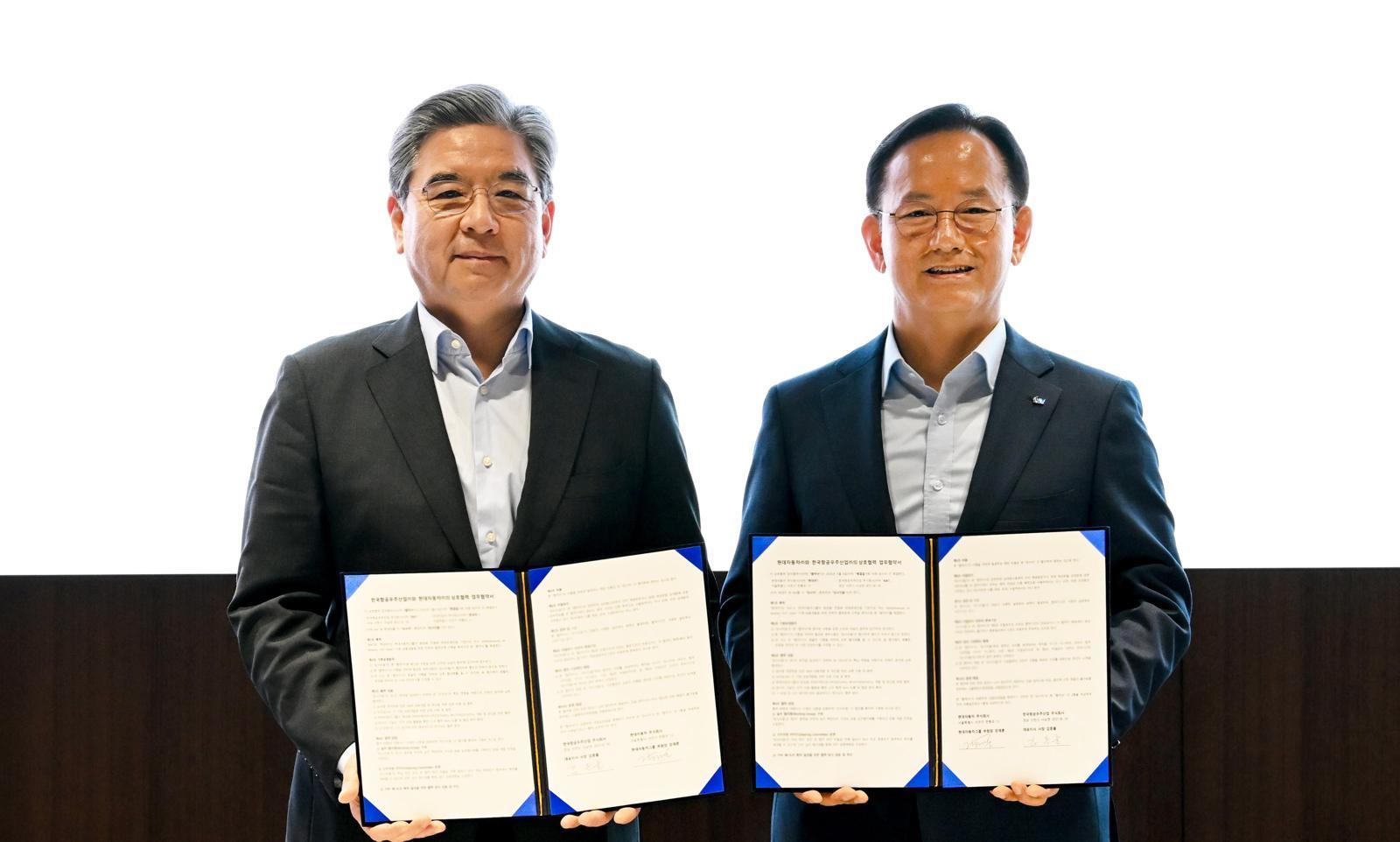
Hyundai Motor Group Vice Chairman Jang Jae-hoon (left) and Korea Aerospace Industries (KAI) President Kim Jong-chul pose for a commemorative photo on the 8th after signing an agreement on “joint development of future air mobility aircraft based on electrified aviation powertrains.” Provided by Hyundai Motor Group
Hyundai Motor Group and Korea Aerospace Industries (KAI) have joined hands to develop Advanced Air Mobility (AAM).
Hyundai Motor Group announced on the 10th that it had signed a “business agreement for the joint development of future air mobility aircraft based on electrified aviation powertrains” on the 8th at the Hyundai·Kia headquarters in Yangjae-dong, Seocho-gu, Seoul.
The agreement aims to leverage Hyundai Motor Group’s capabilities in developing electrified aviation powertrains and KAI’s aircraft development capabilities to develop and mass-produce competitive AAM solutions. AAM refers to next-generation air transportation mobility that moves people or cargo via air routes. Urban Air Mobility (UAM), often described as “flying taxis,” is a representative example, and countries such as the United States and China are already moving toward AAM commercialization. Hyundai Motor Group and KAI agreed to cooperate comprehensively, not only in technology and human resources sharing but also in future areas such as supply chain and certification, as well as customer networks.
Specifically, Supernal, Hyundai Motor Group’s U.S.-based subsidiary specializing in future air mobility, and KAI will jointly develop AAM aircraft, and the two companies will cooperate to commercialize electrified aviation powertrains currently under development by the Hyundai·Kia Aviation Powertrain Division. The two sides also plan to expand new cooperation areas across the broader aerospace industry.
KAI stated, “By combining KAI’s comprehensive capabilities in fixed-wing and rotary-wing systems with Hyundai Motor Group’s mass production systems and mobility ecosystem, it will be possible to develop K-AAM that can lead the global market.” Hyundai Motor Group emphasized, “By introducing future air mobility that is both safe and attractive, the group will expand the horizons of mobility into the skies.”
Meanwhile, Supernal appointed Farhan Gandhi, a leading authority on vertical take-off and landing aerodynamics, as its new Chief Technology Officer (CTO) on the 4th of this month. Gandhi, who has spent more than 30 years in rotorcraft research, is expected to bolster Supernal’s technology development efforts.
Byeon Jong-guk 기자
AI-translated with ChatGPT. Provided as is; original Korean text prevails.
ⓒ dongA.com. All rights reserved. Reproduction, redistribution, or use for AI training prohibited.