LG Group is transforming into a future-oriented tech company focused on services and solutions. Building on the solid technological capabilities it accumulated in traditional manufacturing sectors such as home appliances and chemicals, the group is now accelerating a major shift from simple product sales to becoming a “platform” company that solves customer problems and provides new experiences. Chairman Koo Kwang-mo has emphasized his management philosophy of “speed,” stating that rapid execution takes precedence over a perfect plan. This “speed of execution” is driving a powerful structural overhaul across LG’s core businesses. In particular, in the field of artificial intelligence (AI), the group is pushing ahead with AX (AI transformation), using its proprietary model “EXAONE” to enhance efficiency across all areas from manufacturing processes to customer service. The growth trajectory of its next-generation mobility-centered vehicle components and battery businesses is also noteworthy. By combining its battery technologies with solutions that cover most areas of mobility—from in-vehicle infotainment to lamps and powertrains—the group is solidifying its position as an integrated key partner. This article looks into the quietly but rapidly changing LG Group.
Saudi Arabia has maintained its status as an energy-exporting nation not simply by producing crude oil, but by vertically integrating the entire petroleum value chain from refining to distribution and chemicals. The essence of its competitiveness lay in “structure,” not “resources.”
A similar situation is now unfolding in the battery industry. It is no longer sufficient merely to manufacture good batteries. The real battleground is who can first build an ecosystem that spans everything from materials to cells and systems. This is why LG Group’s moves are attracting attention.
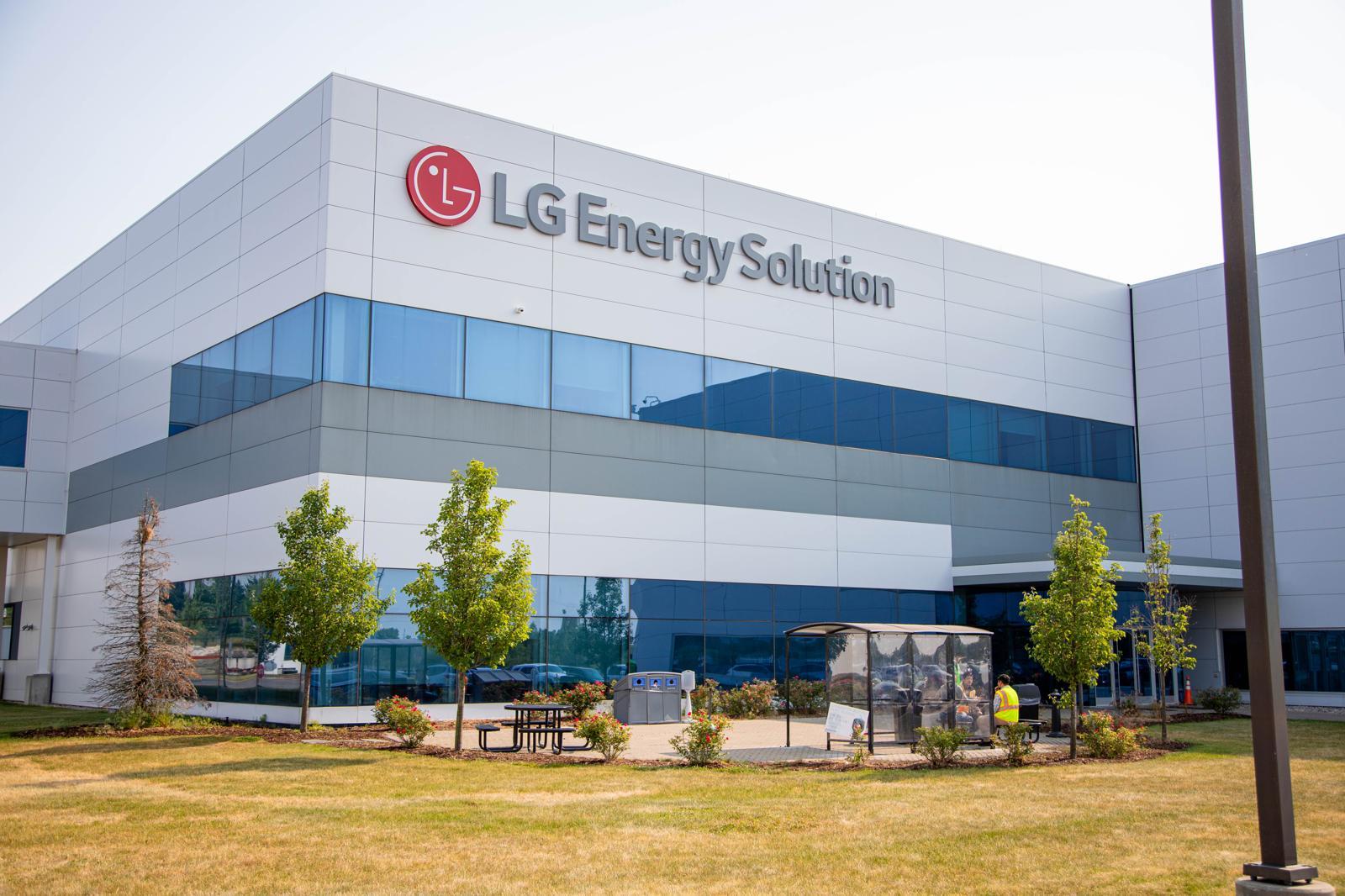
View of LG Energy Solution’s Holland plant in Michigan. Provided by LG Energy Solution
The electric vehicle (EV) battery market is still growing. In 2025, global EV battery usage reached around 1,200 GWh, up more than 30% year-on-year. However, this growth is not the same as before. With the initial phase of explosive expansion now over and automakers adjusting demand and inventories, the mood has calmed, while the market structure is rapidly being reshaped around China.
While China’s CATL is dominating with a market share in the high-30% range and BYD is rapidly catching up with a share in the mid-10% range, LG Energy Solution remains in third place with a share in the high single digits to around 10%, but the gap is widening. The combined market share of the three Korean battery makers has fallen to the mid-20% range, and structural pressure is steadily increasing. Chinese companies, leveraging their domestic demand base and price competitiveness, are taking control of even the mid- to low-priced segments, entrenching a dual structure in which the “volume market” and the “profit market” are separated.
On top of this, changing subsidy criteria and policy uncertainty surrounding the U.S. Inflation Reduction Act (IRA) have further intensified automakers’ conservative inventory management. As a result, LG Energy Solution’s annual revenue in 2025 fell 7.6% year-on-year to KRW 23,671.8 billion. However, LG’s response was not defense, but transformation.
Profitability turnaround amid negative growth… The answer lies in ESSIn the same year, however, operating profit surged 133.9% to KRW 1,346.1 billion from KRW 575.4 billion a year earlier. At the heart of this paradoxical outcome—where profits more than doubled despite revenue contraction—was the strong performance of the ESS (Energy Storage System) business.
Lee Chang-sil, CFO of LG Energy Solution, stated, “Although battery demand overall has weakened due to the slowdown in EV electrification policies and the global economic downturn, we significantly improved profitability through a sales strategy focused on ESS and high value-added products.” A decisive factor was converting production lines at the Holland, Michigan and Poland plants—originally designed for EV batteries—to ESS production, turning idle assets into profit-generating ones.
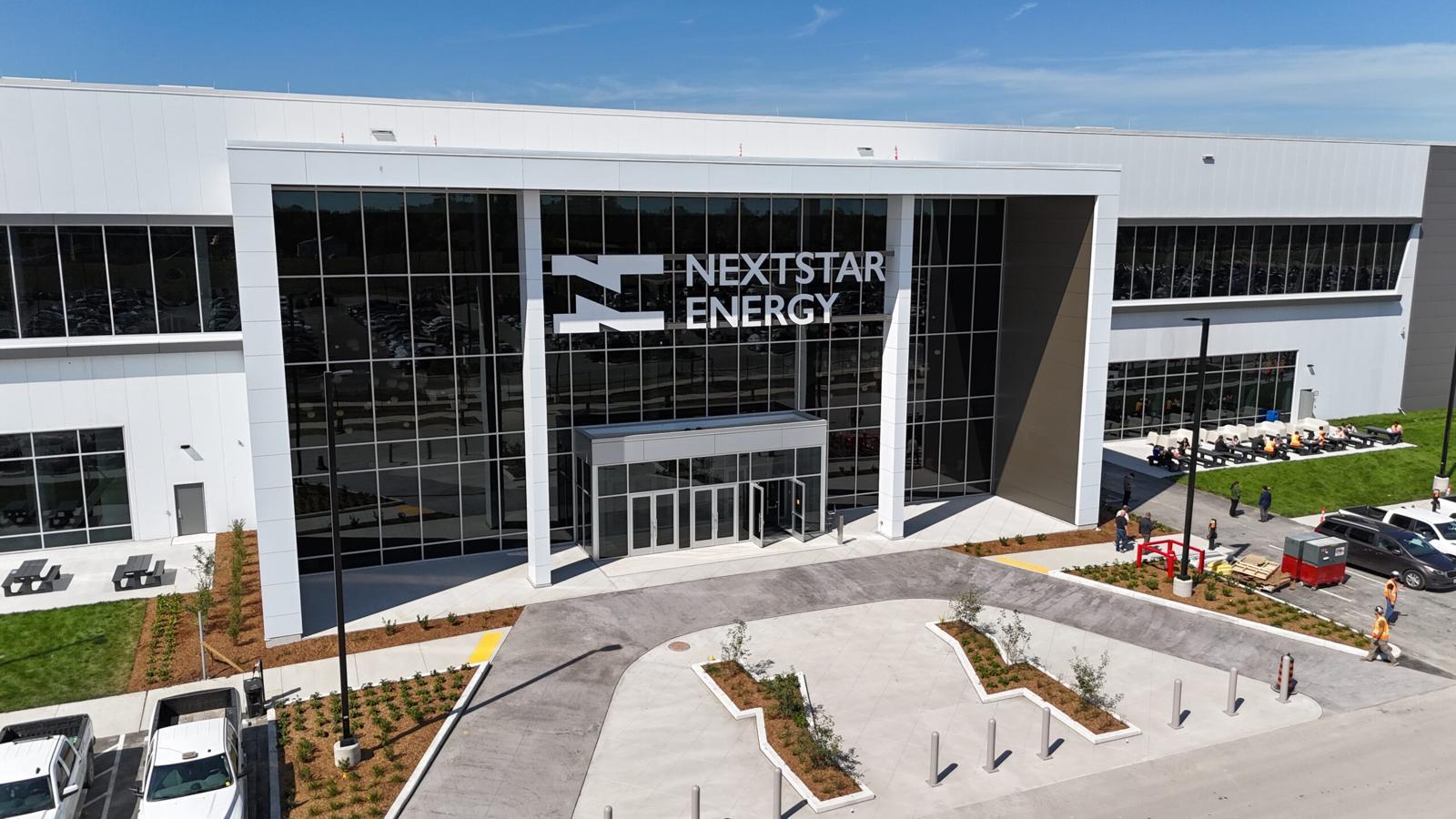
View of NextStar Energy’s plant, a Canadian joint venture that LG Energy Solution converted into a 100% subsidiary. It is currently the only company producing ESS batteries in North America. Provided by LG Energy Solution
LG Energy Solution has secured an order backlog of 120 GWh for ESS and more than 300 GWh for cylindrical 46-series batteries, with cumulative ESS orders exceeding 140 GWh. Supporting moves are also underway. In February this year, LG Energy Solution acquired the remaining 49% stake in its Canadian joint venture with Stellantis, “NextStar Energy,” turning it into a wholly owned subsidiary. The goal is to foster this plant, which is already producing LFP batteries for ESS, as a forward base for attacking the North American ESS market. As a result, LG Energy Solution has secured three ESS production bases in North America alone, including its Holland and Lansing plants in Michigan. It is currently the only company in North America that produces batteries specifically for ESS.
The company also signed a contract worth about KRW 6,400 billion to supply LFP batteries to Tesla from its Lansing plant in Michigan, with the batteries to be installed in Tesla’s large-scale ESS, the “Megapack 3.” By supplying to major global customers such as Terra-Gen and Delta as well, LG Energy Solution is rapidly expanding its customer base in the North American ESS market.
The focus on ESS is not simply because EV demand has faltered. As renewable energy expands and solar and wind power generation increase, demand for power storage will structurally rise in tandem. Compared with EV batteries, ESS demand is less volatile and operates mainly on long-term contracts, so the profit structure is fundamentally different. The market’s growth potential is also overwhelming. The global ESS market is forecast to grow more than sixfold from about 185 GWh in 2023 to around 1,232 GWh in 2035.
LG Energy Solution also expects ESS demand to grow more than fivefold over the next decade as AI data center infrastructure expansion accelerates. While EV batteries are subject to economic cycles, ESS represents a structurally expanding market.
On top of this comes the factor of AI data centers. As a single large data center now consumes electricity on the scale of a small city, battery-based backup systems for stable power supply have become a necessity, not a choice. Batteries are evolving from components for mobility to a core element of power operation systems. It is in this context that LG Energy Solution CEO Kim Dong-myung declared, “The global battery market is entering a ‘value shift’ phase in which value is being reconfigured beyond EVs into a wide range of industries.”
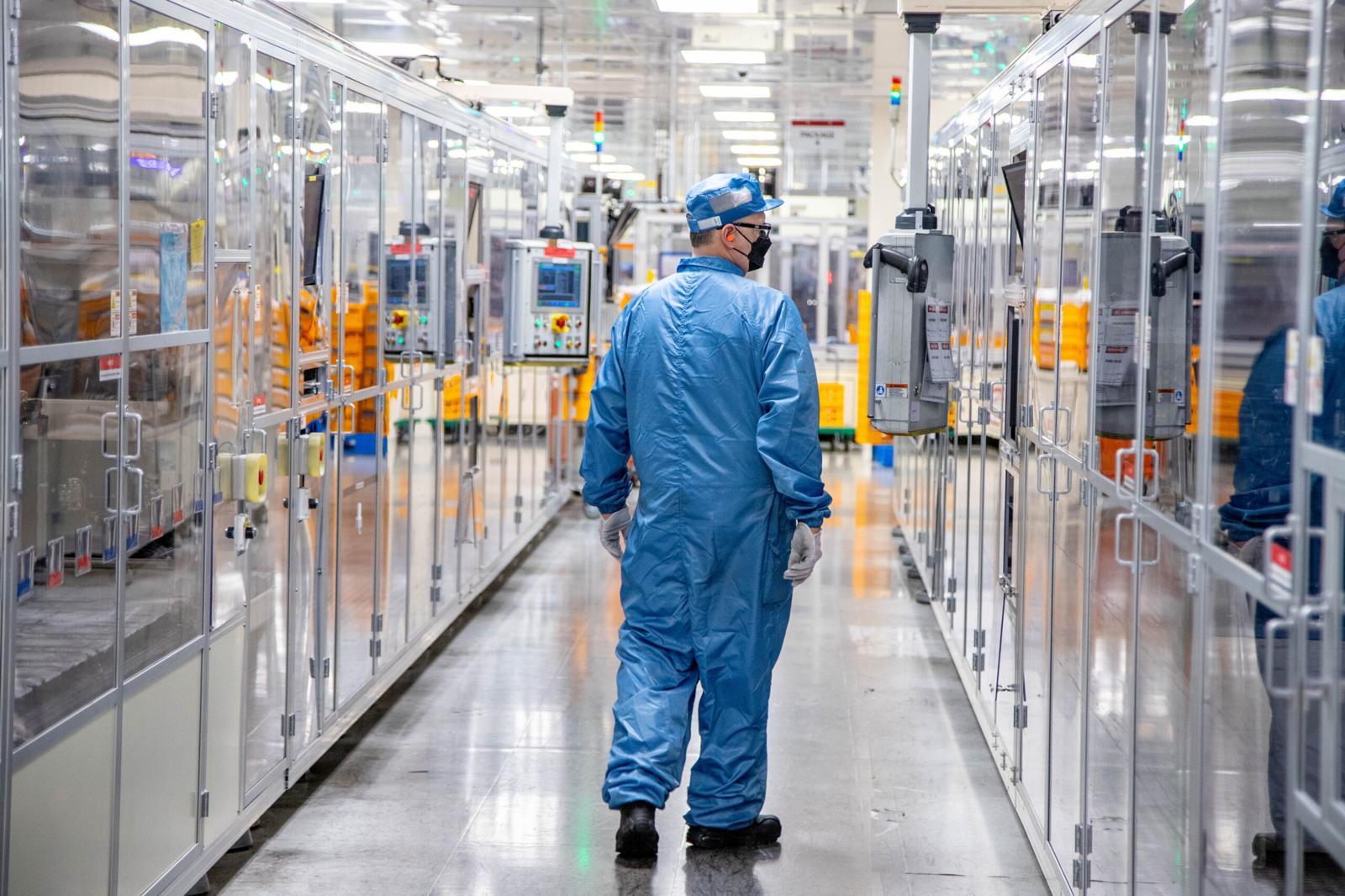
Inside LG Energy Solution’s Holland plant in Michigan. Provided by LG Energy Solution
Not giving up on EVs… ‘Full coverage’ strategy
While LG Energy Solution has been broadening its business scope to ESS and AI infrastructure, its parent LG Chem has focused on fundamental competitiveness in materials rather than competition in battery cells. LG Chem Vice Chairman Shin Hak-cheol has announced a plan to grow battery materials revenue more than sixfold from KRW 4,700 billion in 2022 to KRW 30,000 billion by 2030. Even amid a sluggish EV market, the company proved its external order-taking capabilities by signing a contract with a U.S. firm to supply cathode materials for EVs worth KRW 3,762 billion through July 2029. The Advanced Materials Division is aiming for revenue of KRW 4,500 billion in 2026 and is accelerating development of LFP materials for ESS, high-voltage mid-nickel materials, and sodium-ion battery materials with a commercialization target of 2027.
In the EV market, LG Energy Solution has chosen a strategy of fully diversifying its portfolio to cover a broader market. For high-performance vehicles, it offers pouch-type high-nickel NCMA batteries and cylindrical 46-series batteries with nickel content of 94% or higher; for standard models, high-voltage mid-nickel products; and for mid- to low-priced models, LFP pouch-type products, thereby providing segment-specific solutions.
In particular, the 46-series cylindrical batteries are attracting attention as a next-generation form factor, as they deliver at least five times the energy capacity and output of existing products and offer excellent production efficiency. The company has also achieved results in the Chinese market, known for its strong preference for domestic battery manufacturers. Last year, LG Energy Solution signed a six-year, 8 GWh supply contract for 46-series batteries with Chinese automaker Chery Automobile, enough to power about 120,000 EVs. It was the first time a Korean battery maker had supplied cylindrical batteries on a large scale to a Chinese automaker. Subsequently, following Mercedes-Benz Group affiliates and Rivian, CEO Kim Dong-myung made a surprise announcement at this year’s shareholders’ meeting that the company had finalized a new multi-year contract to supply more than 10 GWh annually of 46-series batteries from its Arizona plant.
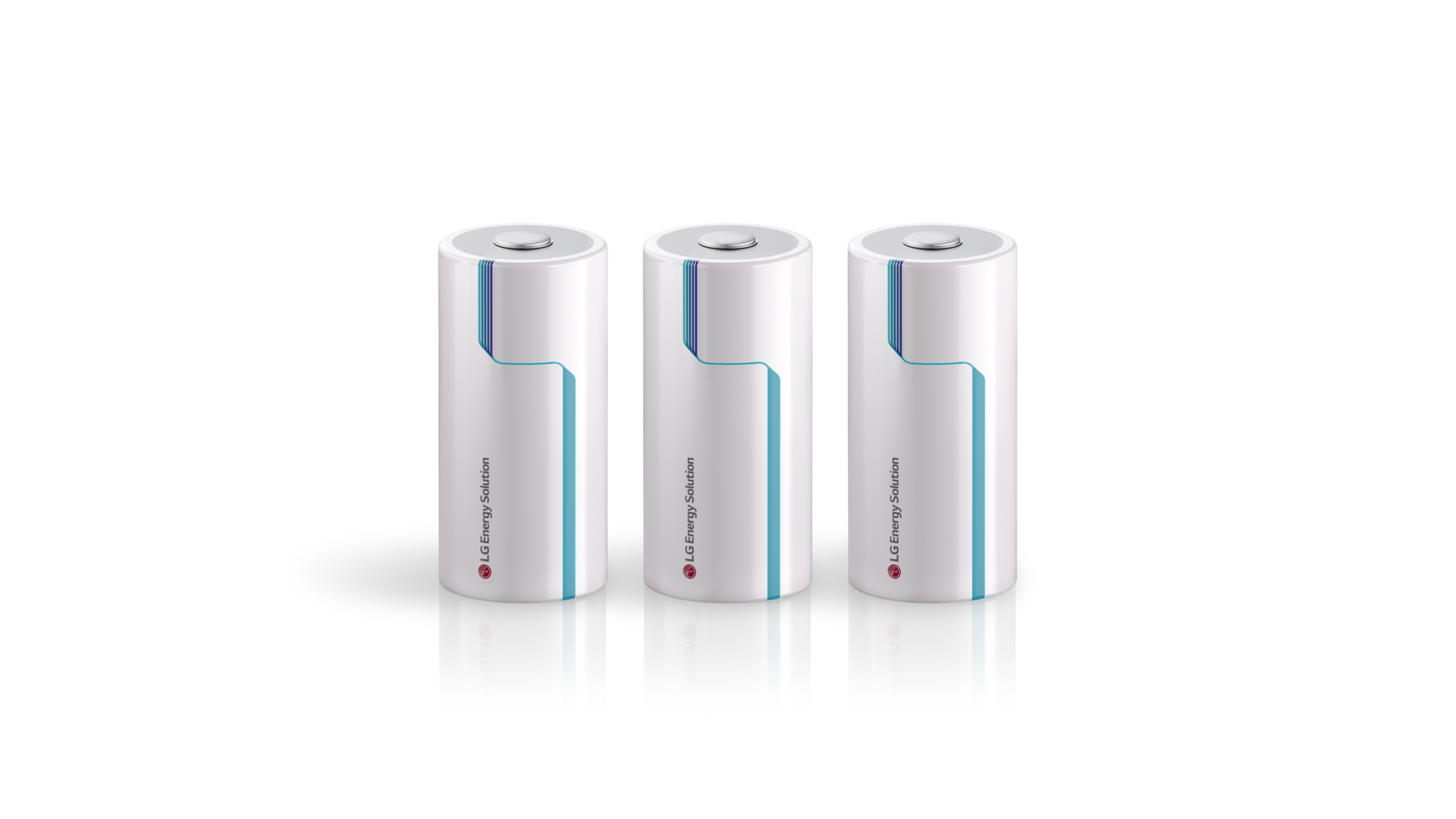
LG Energy Solution’s next-generation cylindrical 46-series batteries. With an order backlog of more than 300 GWh, they have become the key growth driver of the small battery business. Provided by LG Energy Solution
According to the company, LG Energy Solution is the only global battery manufacturer that simultaneously covers multiple chemistries such as NCM, LFP and LMR, as well as all form factors—pouch, cylindrical and prismatic. Going beyond battery cells, it is also strengthening its position as a “total solution provider” that offers not only system integration capabilities through its subsidiary Vertech, but also operation and management functions, including power demand forecasting and trading solutions.
Ultimately, as LG Chem handles materials, LG Energy Solution handles cells and systems, and LG Electronics is responsible for ESS infrastructure and cooling solutions, LG Group is shaping a structure in which the entire battery industry is completed within the group.
While CATL is attempting to transition into an energy company and BYD is solidifying its domestic market with a vertically integrated model that combines batteries and complete vehicles, LG has opted to leverage its premium technologies and system integration capabilities to make the power infrastructure market its new growth axis.
The essence of competition is already shifting. The question is no longer “who makes better batteries,” but “who controls the entire power system.” The battery business, which the late Chairman Koo Bon-moo pushed ahead with steadfastly, saying it “will definitely succeed,” has now become a core pillar driving LG Group’s future. And once again, LG is seeking to redefine what a battery is on its own terms.
LG’s battery strategy in Q&A
Q. What does LG Energy Solution’s 2025 report card look like?
A. On the surface, the numbers are disappointing. Revenue fell 7.6% year-on-year to KRW 23,671.8 billion. The decline in EV demand and the impact of reduced U.S. subsidies hit directly. Profitability, however, tells a completely different story. Operating profit surged 133.9% year-on-year to KRW 1,346.1 billion from KRW 575.4 billion. This was the result of high growth in the ESS business combined with a sales strategy centered on high-margin products. While revenue declined, the company’s profit structure has actually strengthened, according to assessments.
Q. Why is ESS so important?
A. ESS is a structurally growing market aligned with the expansion of renewable energy. Because solar and wind power output fluctuates with weather conditions, power storage systems are essential, and this in turn provides a stable base of long-term demand. The global ESS market is expected to grow to about USD 54 billion (approximately KRW 7,960 billion) by 2026.
Unlike EV batteries, ESS demand is less volatile and is driven mainly by long-term supply contracts. LG Energy Solution forecasts that global ESS installations in 2026 will increase more than 40% year-on-year, and expects ESS to account for up to half of the overall battery market in North America.
Q. What is the relationship between LG Chem and LG Energy Solution?
A. LG Energy Solution was established in 2020 as a spin-off from LG Chem’s Battery Business Division and is a subsidiary in which LG Chem holds about 82% of the shares. When it was listed on the KOSPI in January 2022, it set a record for the largest ever institutional demand forecast.
Their roles in the value chain are clearly divided. LG Chem is responsible for key battery materials such as cathode materials and separators, and has set a long-term target of growing battery materials revenue more than sixfold to KRW 30,000 billion by 2030. Based on these materials, LG Energy Solution manufactures battery cells and supplies them to global automakers and the ESS market. With the parent company and subsidiary respectively handling materials and finished cells, the group as a whole operates as a single integrated battery value chain.
Q. Why did Tesla partner with LG Energy Solution?
A. Tesla announced in 2020 that it would develop its own “4680” battery and aggressively pursued an internalization strategy. However, it soon became clear that in-house production alone could not keep pace with the explosive growth in ESS demand. In addition, after the U.S. government imposed high tariffs in the 40% range on Chinese batteries, Tesla came under pressure to reduce its reliance on Chinese LFP batteries. LG Energy Solution was the only company capable of mass-producing ESS-use LFP batteries in the United States.
Tesla signed a supply contract with LG Energy Solution in July 2025 for LFP batteries worth about KRW 6,400 billion, and batteries produced at the Lansing plant in Michigan are scheduled to be installed in Tesla’s large-scale ESS, the “Megapack 3.” Although the initial disclosure was made without naming the customer, the partnership later became public when the U.S. government explicitly mentioned it in a factsheet for the Indo-Pacific Energy Security Forum.

ⓒ dongA.com. All rights reserved. Reproduction, redistribution, or use for AI training prohibited.
Popular News