Korea Gas Safety Corporation
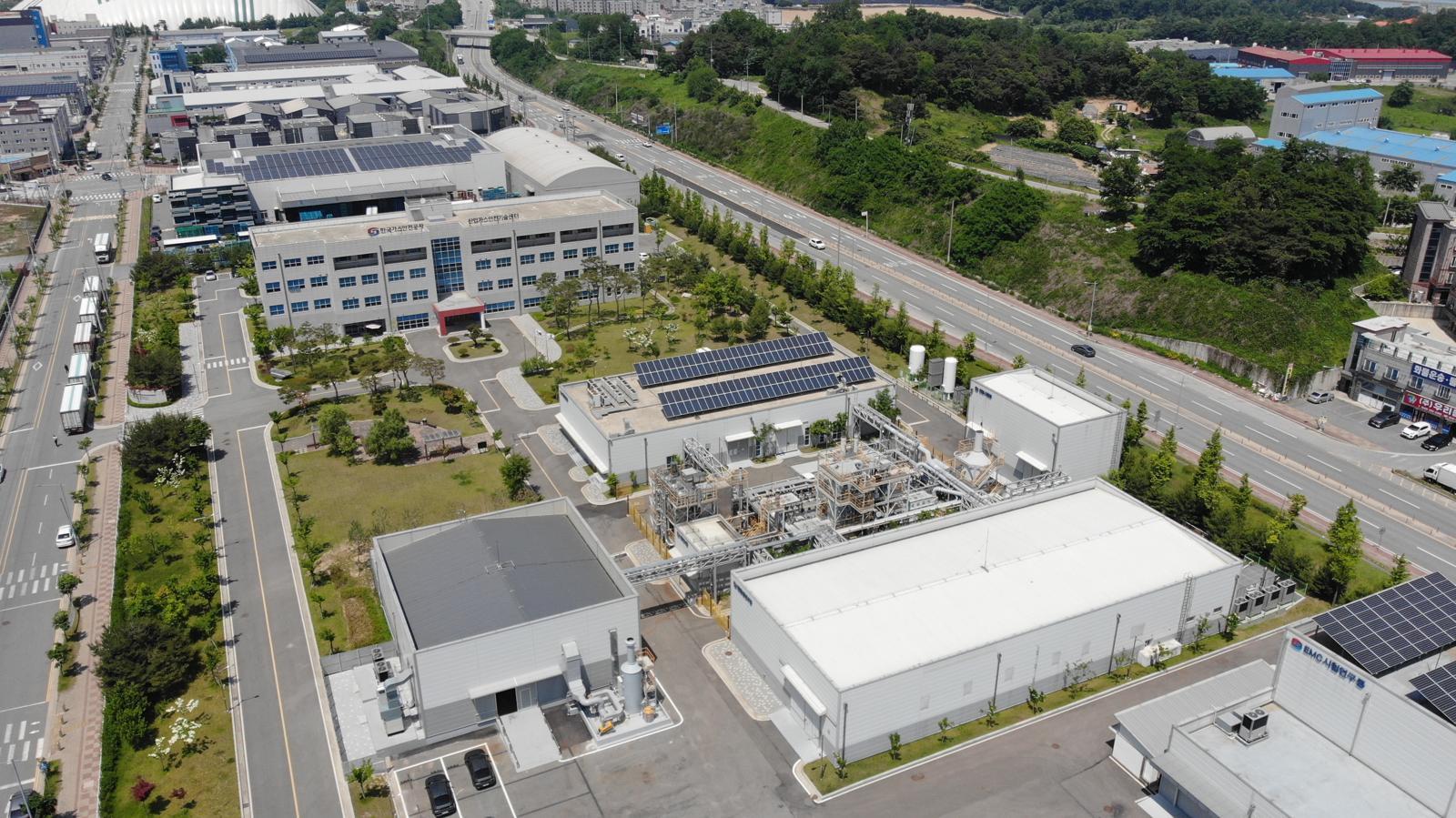
Exterior view of the Industrial Gas Safety Technology Center of Korea Gas Safety Corporation. Provided by Korea Gas Safety Corporation
The importance of safety infrastructure that removes “invisible risks” in production sites is coming to the fore as the domestic semiconductor industry continues its super-gap competitiveness in the global market. The Industrial Gas Safety Technology Center (hereinafter the Industrial Safety Center) of the Korea Gas Safety Corporation (KGS) is supporting the sustainable growth of the K-semiconductor industry based on precursor treatment technology that enables integrated handling of multiple items, the only such capability in Korea.
The “structural risk” created by precursors A precursor refers to a “substance at the stage before becoming the final thin film.” It is a key raw material for forming ultrathin films on wafer surfaces through chemical vapor deposition (CVD) processes and is a crucial factor that determines semiconductor performance and process yield.
However, precursors remaining inside containers after the process is completed can trigger exothermic reactions or toxic gases upon contact with air or moisture, and their risk increases further over time due to degradation the longer they are left unattended. In particular, large volumes of precursors generated during equipment replacement or process changes are difficult for ordinary business sites to handle and can spread as a risk across the entire national strategic industry, underscoring the need for a public-sector response.
KGS Industrial Safety Center evolving into national safety infrastructure To address these risks, the KGS Industrial Safety Center is filling safety gaps at industrial sites based on its neutralization treatment infrastructure for semiconductor precursors.
Established in Jincheon, Chungcheongbuk-do in 2017, the Industrial Safety Center is an institution dedicated to safety management across the entire life cycle of industrial gases. It operates various support programs, including △ neutralization treatment of residual gas cylinders for industrial gases △ neutralization treatment of semiconductor precursors △ safe handling of abnormal cylinders △ toxic gas policy formulation, and has established itself as a core hub for domestic industrial gas safety management. In addition, to ensure the safe treatment of abnormal cylinders in which gas components cannot be identified or valves are corroded and cannot be opened at industrial, academic, and research facilities, it built the country’s only abnormal cylinder treatment system in November 2024 and has successfully launched treatment operations from 2025.
In particular, this year it has drawn up a “mid- to long-term development plan for industrial gas safety and co-prosperity” and is seeking to innovate the domestic industrial gas safety management paradigm through initiatives such as △ establishing an integrated information platform for toxic gas safety △ providing multilingual toxic gas safety data sheets (TSDS) △ introducing AI-based smart control systems.
Precursor neutralization treatment technology fundamentally differs from existing safety management approaches. While the traditional system focused on prevention to reduce the likelihood of accidents, neutralization is evaluated as an essential response method in that it is a “source-blocking safety management” approach that removes the very substances that cause accidents.
Precursors generated in semiconductor processes have high reactivity and toxicity, making it difficult to ensure safety through simple treatment alone. Accordingly, a phased and precise neutralization treatment process is essential. In response to these industrial needs, the Industrial Safety Center operates a two-stage treatment system that combines wet chemical neutralization and electrostatic precipitation, providing composite safety technology that simultaneously removes gaseous hazardous substances and particulate contaminants. Based on this treatment technology, it is responding to the continued growth of the semiconductor industry and, by developing treatment processes for new substances and advancing its neutralization capabilities, is establishing itself as core infrastructure that meets the high-level environmental safety standards required by the semiconductor industry.
ⓒ dongA.com. All rights reserved. Reproduction, redistribution, or use for AI training prohibited.
Popular News