In the heart of Tokyo fashion: Musinsa Shibuya draws queues from MZs to people in their 60s—“A chance to try on clothes I’ve been eyeing,” packed to the doors
LG H&H and Shinsegae International pop-ups also a hit
‘Experiential marketing’ fuels wider influence of K-brands
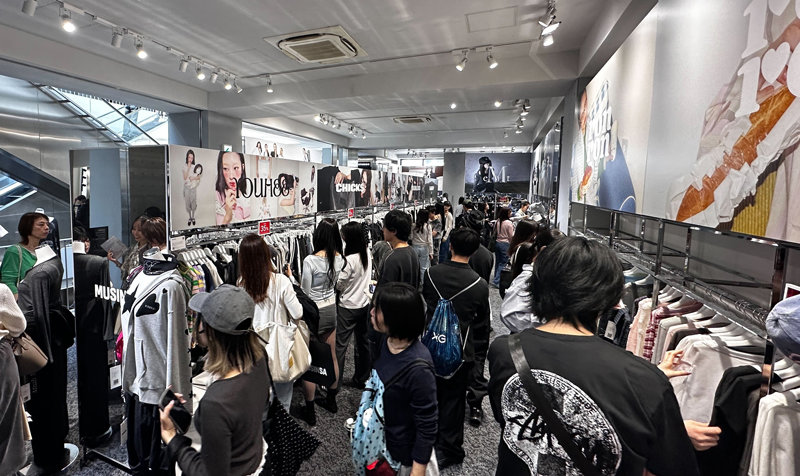
Visitors look around products at Musinsa’s pop-up store in Shibuya, Tokyo, Japan, on the 16th. Provided by Musinsa.
“I rushed here after seeing information about the pop-up store (temporary shop) on social media (SNS). It is a chance to actually try on clothes from Korean brands I have been keeping an eye on.”
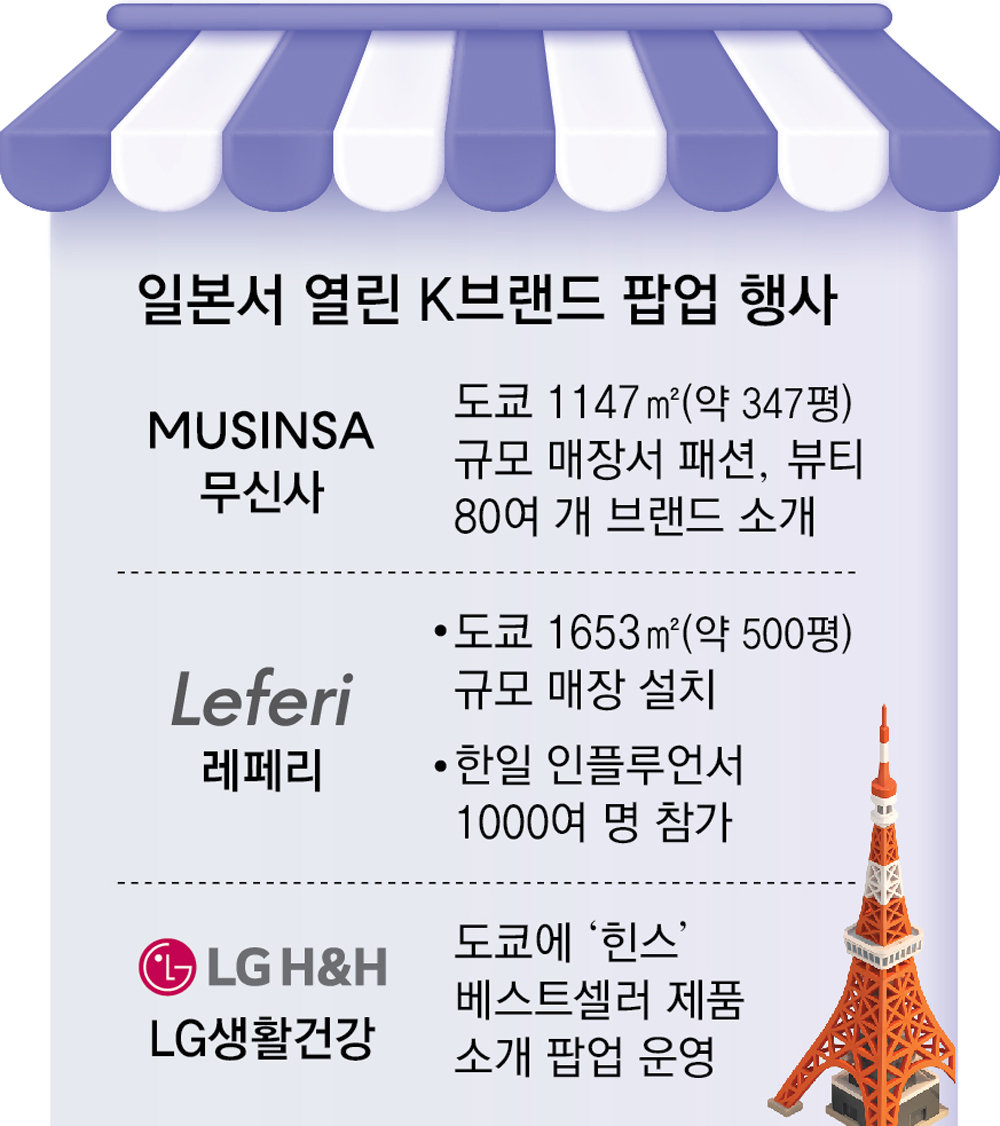
On the 16th at Musinsa’s pop-up store, which occupies an entire three-story building in Shibuya, Tokyo, Japan, 28-year-old Aya Ishiyama made this comment while browsing the displayed products. Despite it being a weekday morning, people ranging from the MZ generation (Millennials + Generation Z) to those in their 60s flocked to the venue, forming a long line. Sixty-year-old Nanako Nishimura also said, “I came because my interest in overall Korean culture has grown, triggered by K-dramas and K-pop.” A Musinsa representative said, “More than 5,000 people visit in a single day on weekends,” adding, “It is so crowded there is barely room to move, even though advance reservations are required for entry.” Since opening on the 10th, the pop-up store has drawn strong popularity, with cumulative visitors reaching about 45,000 by the 19th.
K-beauty and fashion brands are accelerating their push into the Japanese market by leveraging their “pop-up DNA.” Going beyond simple product sales, they are actively promoting the consumption experience itself—“wearing, applying, and enjoying”—as a strategy to rapidly expand the influence of K-brands.
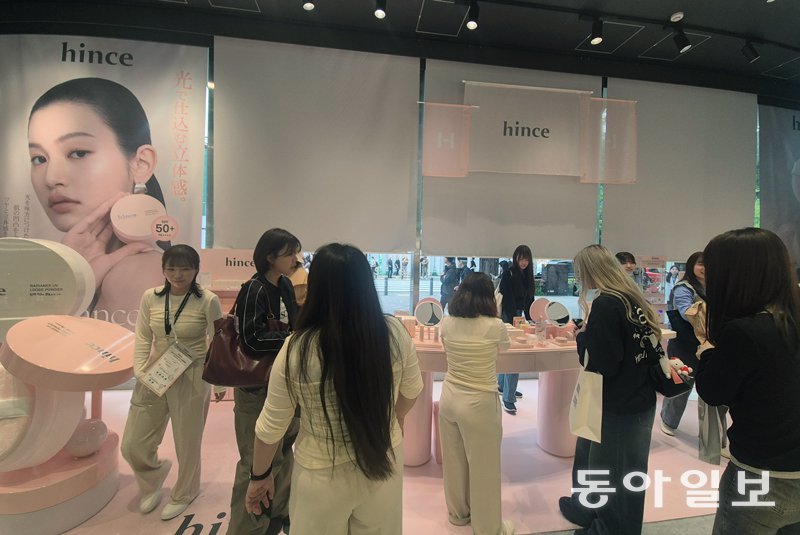
LG H&H’s “Hince” pop-up store in Harajuku, Tokyo, Japan, is crowded with visitors on the 15th. Tokyo = Reporter Nam Hye-jung namduck2@donga.com
Interest in K-brands was evident across Japan. At @cosme TOKYO, Japan’s largest beauty-specialized platform located in Harajuku, Tokyo, visited on the 15th, LG H&H’s “Hince” pop-up store was prominently installed. Consumers alternated between applying lip and cushion products to check the colors, and immediately purchased items they liked. An @cosme employee said, “The number of customers who want to experience K-beauty brands has clearly increased.” At the @cosme store, products from Goodai Global’s TirTir, Beauty of Joseon, and Amorepacific’s Aestura were introduced as the No. 1 to No. 3 products in their respective beauty categories.
Earlier, domestic multi-channel network (MCN) company Leferi held a K-beauty select store in Omotesando, an area dense with luxury brands, in collaboration with Amazon. Products from 11 brands, including Shinsegae International’s “Vidivici,” were showcased. In particular, more than 1,000 Korean and Japanese creators participated to produce product review content and spread it via SNS, combining this approach with the store.
The view is that K-brands’ rush to launch pop-ups in Japan reflects a strategy tailored to local consumer characteristics and distribution structures. Japan remains a consumption market centered on offline channels. According to Japan’s Ministry of Economy, Trade and Industry (METI), the business-to-consumer (B2C) e-commerce penetration rate in 2024 stands at just 9.8%. Japanese consumers show a strong tendency to see, touch, and experience products directly before making purchases.
Changes in consumption patterns have also played a role. There is a shift from “mono consumption,” which focuses on owning goods, to “koto (コト) consumption,” which values experiences and activities. Against this backdrop, pop-up stores have emerged as the most effective means of conveying a brand within a short period of time. Analysts say the effect of operating offline pop-up stores is particularly significant for fashion and beauty, where direct experience is crucial.
Park Yong-min, head of KOTRA’s Japan Regional Headquarters, said, “Based on K-content, an approach that links experience-based marketing, such as pop-ups, to purchases is establishing itself as the success formula for entering the Japanese market.”
ⓒ dongA.com. All rights reserved. Reproduction, redistribution, or use for AI training prohibited.
Popular News