Development of ‘Intelligent Energy-saving Train Automatic Control System (IEOS)’ Industry-academia collaboration project between Korail and Korea National University of Transportation Up to 12.2% energy savings on the KTX-Eum Gangneung Line section Application of SDV technology for ‘software update’… improved operational efficiency “Responding to government policies and carbon reduction targets with energy technology capabilities”
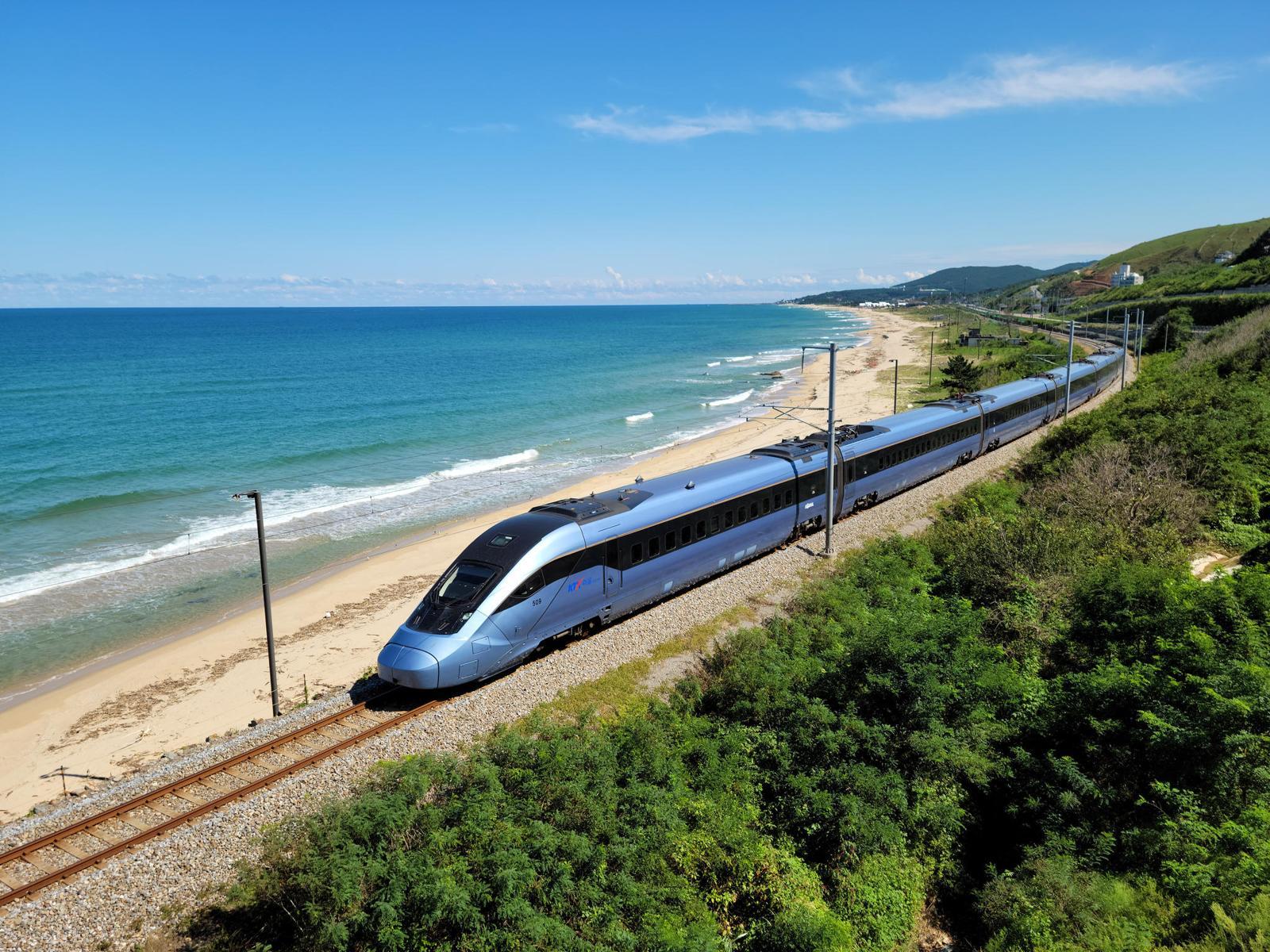
KTX-Eum. Provided by KORAIL
Hyundai Rotem announced on the 17th that, together with Korea Railroad Corporation (KORAIL) and Korea National University of Transportation, it has developed an “Intelligent Energy-Efficient Operation System (IEOS)” for trains.
IEOS is a technology that reduces energy use by setting the optimal speed for each section based on rail track conditions and operating environment, and by minimizing unnecessary acceleration and deceleration. The technology was developed as part of an industry-academia collaboration to enhance railway operation efficiency and achieve carbon neutrality.
Hyundai Rotem, which participated in the joint research and development, was responsible for developing the algorithm that enables operation at an economical speed while maintaining a stable ride quality. The company stated that it verified the energy-saving effect through thousands of repeated driving simulations and demonstration tests in a digital twin environment that reproduces the characteristics of rolling stock identically in virtual space.
Last month, IEOS was actually applied to KTX-Eum trains on the Gangneung Line for a demonstration test. Compared with existing operations, Hyundai Rotem explained that it confirmed an energy savings of 12.2% on the Seowonju–Gangneung section and 10.9% on the Gangneung–Seowonju section.
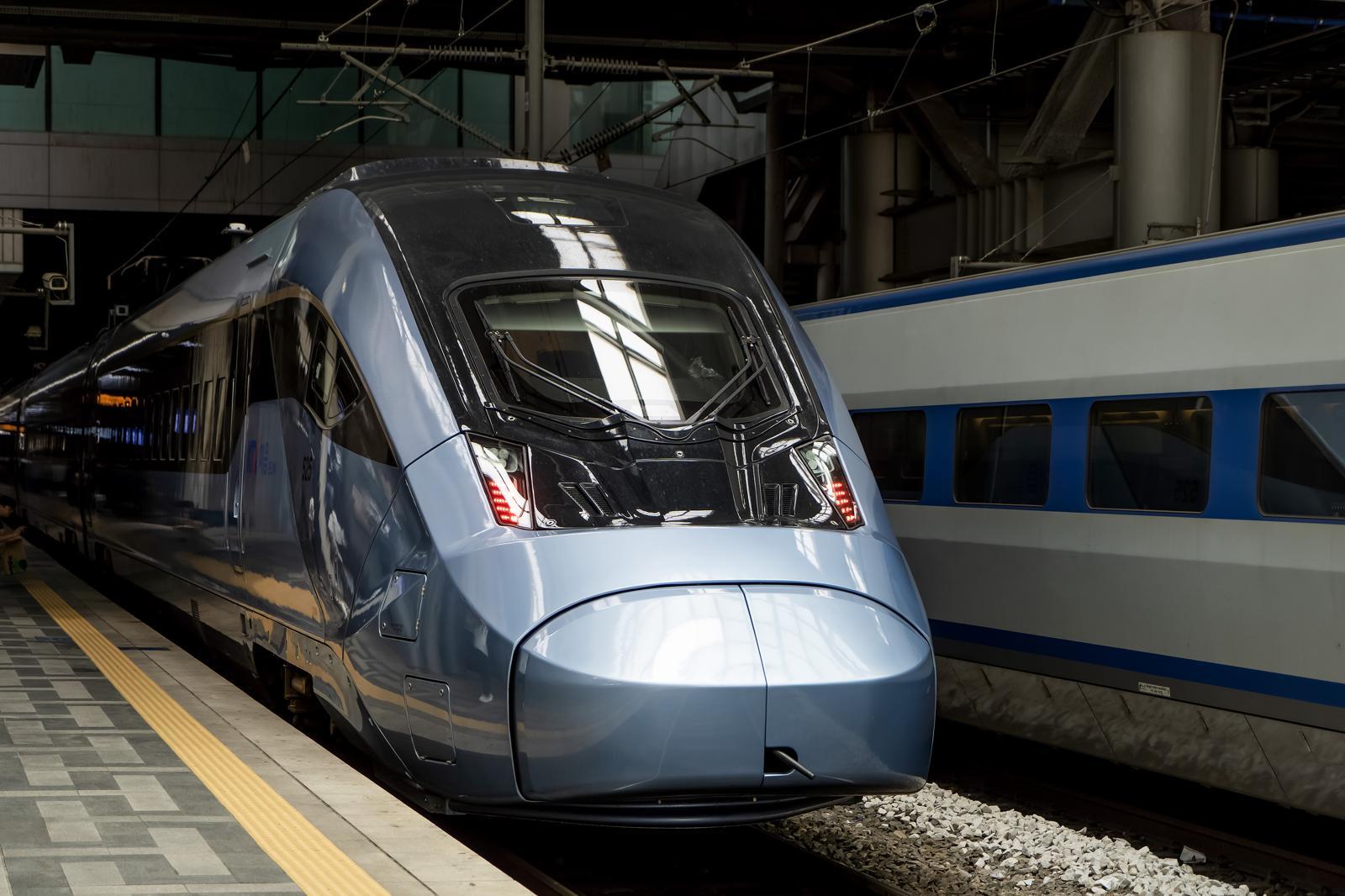
KTX-Eum. Provided by Hyundai Rotem
The newly developed IEOS also incorporates the concept of a Software Defined Vehicle (SDV). In the future, it is expected to be possible to configure functions related to train equipment and parts through software upgrades alone. As this can replace physical modification or replacement of parts, overall train operation efficiency is expected to improve.
Safety has also been secured. IEOS is designed to interface with signaling devices so that the train stops immediately if a problem occurs. According to Hyundai Rotem, this can reduce the driving burden on engineers while improving the uniformity of railway vehicle operation quality.
A Hyundai Rotem representative said, “This achievement is significant in that it has simultaneously enhanced the sustainability and safety of railway technology through industry-academia collaboration,” and added, “We will continue to strengthen our capabilities in various railway technologies, including energy-saving technologies, through steady research and development, and strive to contribute to the realization of carbon neutrality.”
Hyundai Rotem stated that it is proactively responding to the government’s energy-saving policies arising from international uncertainty by expanding R&D on railway energy. The company further emphasized that it is contributing to strengthening energy security. By actively leveraging its energy technology capabilities, it plans to accelerate efforts to reduce value-chain carbon emissions generated throughout its overall business activities—from product manufacturing and supply chain to use and disposal—by 25% by 2030.
Kim Min-beom
AI-translated with ChatGPT. Provided as is; original Korean text prevails.
ⓒ dongA.com. All rights reserved. Reproduction, redistribution, or use for AI training prohibited.