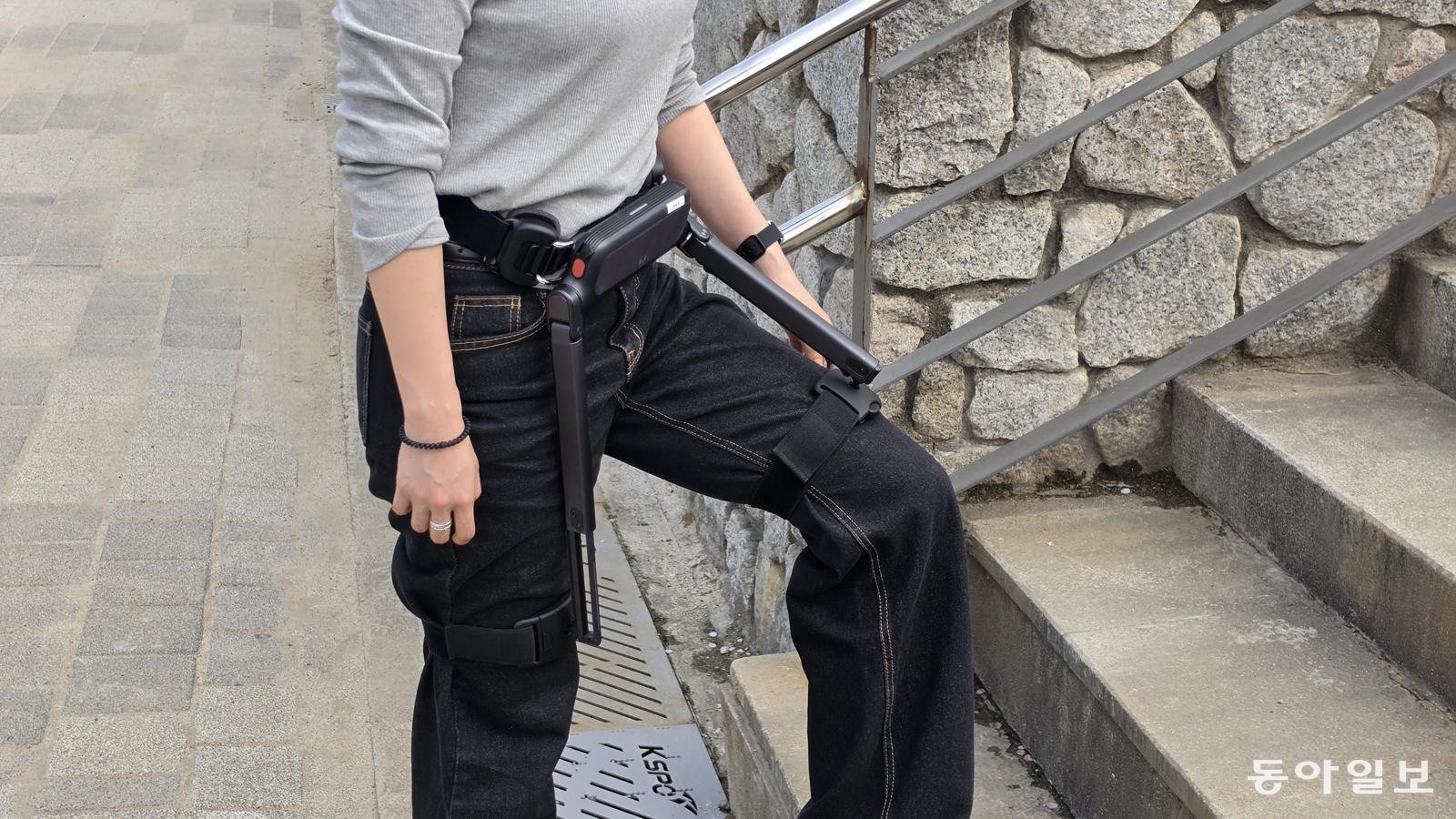
Wearing the walking-assist robot ‘WIM S’… climb 50 stairs in one go without getting winded
Switch modes and you feel the weight in your legs
Wearable robot market to reach KRW 23 trillion by 2034… personalized gait support via app updates
“Try switching the setting from ‘Air’ mode to ‘Balance’ mode.”
On the afternoon of the 13th at Olympic Park in Songpa District, Seoul. Following the instructions of a professional trainer who was formerly a physical therapist, the reporter walked through the park and tapped the “Balance (Left)” button on the smartphone screen. Suddenly, the left leg felt as if it was floating in the air. A gait that had been powered evenly by both legs immediately turned into an uneven walk, with the left leg taking noticeably larger strides.
After walking in this state for about two minutes, the right leg, which normally felt natural, started to feel heavier than usual. The trainer explained, “This function helps maintain gait balance for people whose one leg is impaired, such as Parkinson’s disease patients.”
● Gait assistance linked to an app
In the afternoon of the 13th at Olympic Park in Songpa District, Seoul, a reporter wearing WIRobotics’ walking-assistance robot “WIM S” climbs stairs. WIRobotics stated that it plans to officially launch its subscription service “WIM Premium” on the 20th. Photo by reporter Jeon Hye-jin, sunrise@donga.com
The walking experience took place while wearing WIM S, a walking-assistance robot developed by wearable robot company WIRobotics. WIRobotics is a humanoid robot manufacturing startup founded in 2021 by former engineers from Samsung Electronics’ Robot Development Team. Its core product, WIM S, is an ultra-light wearable robot weighing 1.6 kg that can be easily worn by fastening buckles around the waist and above the knees. It was launched in April last year and is sold for 2.79 million won.
When the robot was first put on, the unfamiliar sensation against the thighs and abdomen made walking feel awkward. However, once WIM S was powered on and linked to its dedicated mobile application, the robot began detecting muscular movements and gently pushing the legs forward. The app screen displayed various walking modes such as “Air,” “Hiking,” “Care,” and “Aqua,” along with real-time data on walking speed, balance, and muscle strength.
While heading toward the park with the “Air” mode, which lightens each step, turned on, a crosswalk appeared. As the pedestrian light turned green, the trainer suggested switching the mode to “Care.” After changing the setting, the robot lifted the thighs more forcefully, making it easy to move quickly without feeling exertion. Once across the crosswalk, switching the mode back to “Air” made the natural weight of the legs, usually unnoticed, suddenly perceptible—like stepping from a trampoline back onto flat ground.
Upon entering the park, a staircase appeared. The mode was changed to “Hiking,” and about 50 steps were climbed. Under normal circumstances, even 20 steps would noticeably quicken the heartbeat, but thanks to the robot’s load-reducing function, climbing all the stairs did not feel strenuous or leave the user short of breath. A WIRobotics representative explained, “On an uphill, the robot lifts the legs, and on a downhill, it supports them, reducing the load on the knees and joints,” adding, “On flat ground, it cuts metabolic energy consumption by up to 20%.”
● Subscription service to launch as well
According to global market research firm HTF Market Intelligence, the global wearable robot market is projected to grow from USD 3.4 billion (about KRW 5 trillion) in 2025 to USD 15.8 billion (about KRW 23 trillion) in 2034.
In particular, “Robotics as a Service (RaaS),” which continuously updates robot software, is emerging as a core business model in the physical AI sector. In line with this trend, WIRobotics plans to officially launch its subscription service “WIM Premium” on the 20th. The service is characterized by providing a customized walking-assistance experience through app updates, such as differentiating assistance between left and right gait. A WIRobotics representative said, “We will enhance the functions based on users’ gait data and feedback and plan to expand the range of applications going forward.”
ⓒ dongA.com. All rights reserved. Reproduction, redistribution, or use for AI training prohibited.
Popular News