[Engine of Growth, Innovative Finance] 4. Corporate Innovative Finance Fueling Startups
‘Robocon’ gains recognition from Samsung Venture Investment… Proves its capabilities after breaking into demanding construction sites
Talks underway with major European construction firms
AI semiconductor unicorn ‘Rebellions’… Investment and valuation surge following SK merger
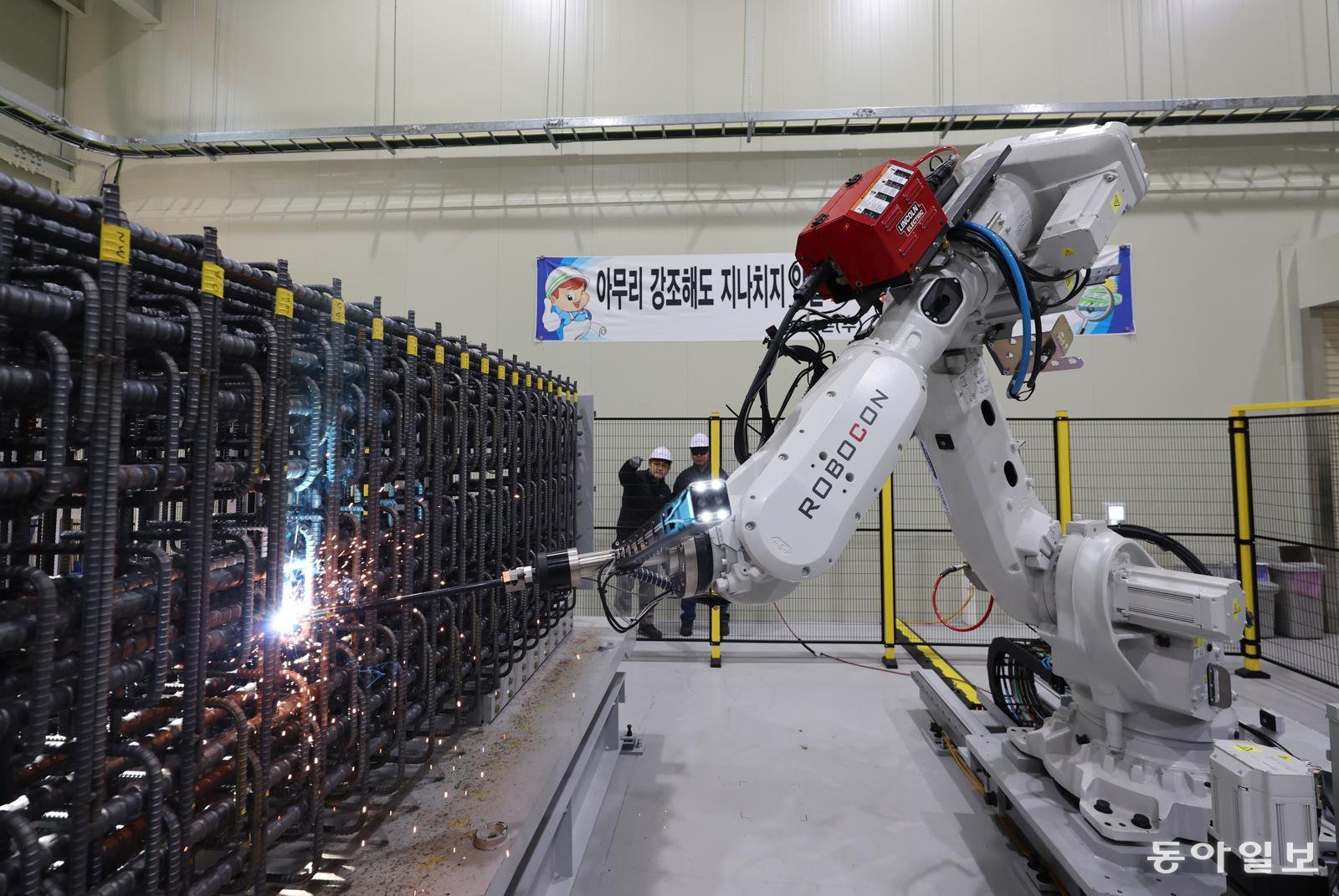
At the Robocon plant in Osan, Gyeonggi Province, an artificial intelligence (AI)-based automation device is welding rebar. Robocon is the only rebar processing and assembly automation solutions provider in Korea. It received investment from Samsung Venture Investment in 2023 and aims to go public within the year. Osan = Reporter Jang Seung-yoon tomato99@donga.com
At the plant of construction automation robot company Robocon in Osan, Gyeonggi Province, which was recently visited, a massive robotic arm was processing heavy rebar by cutting and bending it. On another line, an AI-based robot was performing precision welding in place of human workers, with the entire production process fully automated. Robocon supplies automation solutions developed in-house to construction sites across Korea.
Rebar work, which forms the “skeleton” of a construction site, requires frequent cutting and moving of heavy materials. Because it is carried out manually, piece by piece, at high elevations on tall structures, serious accidents occur frequently. At the Robocon plant, however, robots and AI have been deployed in labor-intensive, high-risk processes to protect workers from danger and significantly shorten construction periods.
Robocon is a startup leading innovation at construction sites with so-called “physical AI,” a combination of robotics and AI. In its early days, even with strong technology, it faced limits in attempting to move into overseas markets. The turning point was investment from a large corporation. Corporate-style “innovation finance” from a conglomerate, with not only capital but also a discerning eye for technology, provided vital momentum.
● Conservative construction sites opened up through conglomerate investment
Robocon spun off in 2020 from an in-house startup at Daehan Steel and developed an automation solution for rebar processing and assembly that had previously relied 100% on manual labor. Although its technology could address chronic issues at construction sites such as labor shortages and safety accidents, every construction company it approached asked, “Do you have any proven cases in the field?” and then turned it away. The breakthrough came with a Series B investment from Samsung Venture Investment in 2023.
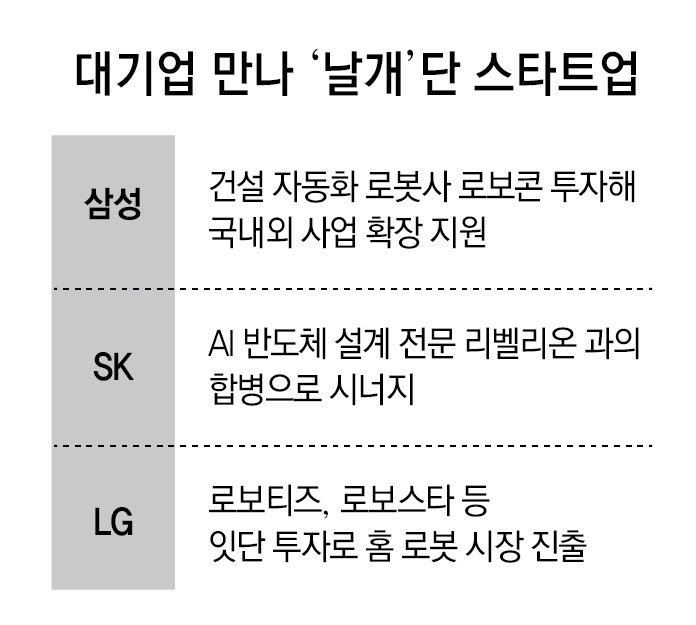
Once Samsung Venture Investment, Samsung’s corporate venture capital (CVC) arm known for investing in promising companies, recognized Robocon’s technological capabilities, the market response changed. Building on this, Robocon was able to prove its technology at major large-scale construction sites in Korea, where safety and quality control standards are particularly stringent.
“Beyond capital investment, we were able to share on-site know-how with Samsung and even file joint patents, cutting in half the more than five years it would normally take to advance our assembly technology,” said Robocon CEO Ban Chang-wan. “The trust we built by meeting their demanding standards became an opportunity to break down the barriers of the conservative construction ecosystem.”
Investment from a large corporation also transformed the industry ecosystem. The rebar assembly market has a vertical structure, running from steelmakers down to secondary subcontractors, making it difficult for startups to discuss technology directly with major players. As trust accumulated through large-scale investment, however, Robocon was able to sign direct contracts with major construction companies such as Hyundai Engineering & Construction and provide its solutions.
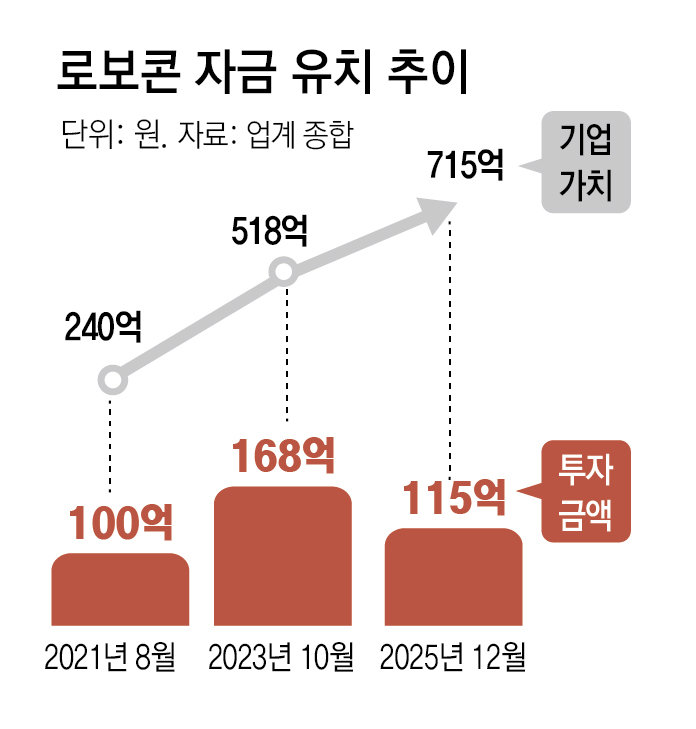
Recently, executives from a major European construction company ranked in the global top 10 for construction capacity visited the plant to negotiate adoption, as Robocon expands its business overseas. It has also completed a Series C funding round with participation from large construction firms. The company’s valuation has jumped in just over two years from the KRW 50 billion range to the low-to-mid KRW 70 billion range. The goal is to launch an initial public offering (IPO) in the second half of this year (July–December). The combination of innovative technology and productive finance is driving change at traditionally conservative construction sites.
● Startup investment driving synergy in semiconductors and robotics
Rebellions, Korea’s first AI semiconductor “unicorn” (a company founded within the last 10 years with a valuation of KRW 1 trillion or more), is another case of gaining wings through a partnership with a large corporation. Rebellions is a startup that has taken on the challenge of the fabless (chip design) sector, considered something of a “barren land” in the Korean semiconductor industry. It is developing neural processing units (NPUs) specialized for AI inference and computation.
To accelerate its business in a rapidly changing AI era, Rebellions merged in 2024 with Sapeon, an SK Telecom affiliate. It faced high entry barriers as a Korean startup going up alone against global big tech companies such as Nvidia and AMD that dominate the AI semiconductor market.
Following the merger, AI business collaboration has intensified with SK Group affiliates including SK Telecom, SK Square and SK Hynix, and the company’s valuation has surged. In a Series C funding round conducted in September last year, Rebellions raised KRW 340 billion, and its valuation was assessed at KRW 1.9 trillion—more than double the KRW 880 billion recognized at the time of its 2024 Series B funding. UK fabless company Arm and Samsung Venture Investment also participated in the Series C round. “Since the merger, having SK Hynix listed as a Rebellions shareholder has been very helpful in explaining our business in the global market,” said Rebellions CEO Park Sung-hyun.
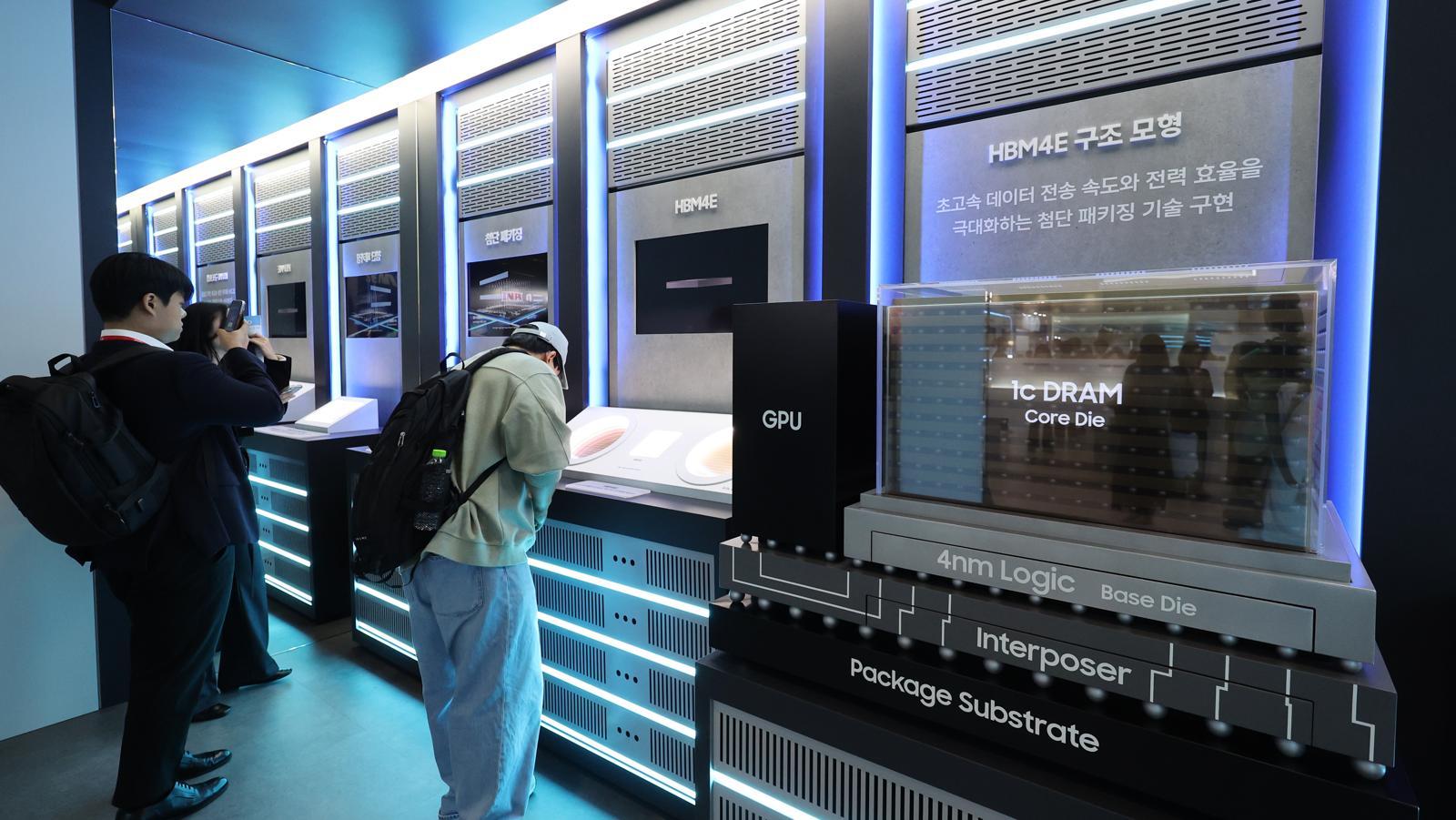
Rebellions is currently working with SK Telecom to deploy its own chips in various domestically developed AI services. Recently, it also began joint development with Arm on servers for data centers. The plan is to move away from a high-performance graphics processing unit (GPU)-centric structure and create synergy in inference AI servers by combining Arm’s central processing unit (CPU) with Rebellions’ NPU.
LG is also generating synergies by linking startup investments to its own businesses. LG Electronics has steadily strengthened its capabilities in robotics by investing in robotics companies, starting with domestic industrial robot manufacturer Robotis in 2017, robot arm specialist Robostar in 2018, and commercial autonomous service robot company Bear Robotics in 2024. The fruits of this strategy drew global attention earlier this year at CES 2026, the world’s largest information technology (IT) and home appliance exhibition held in Las Vegas, where LG’s home robot CLOiD was unveiled. LG Electronics plans to begin on-site pilot applications of CLOiD as early as next year.
Special Reporting Team
▽ Team Leader: Deputy Economic News Editor Cho Eun-ah achim@donga.com
▽ Mokpo and Sinan, South Jeolla Province = Kang Woo-seok; Gumi, North Gyeongsang Province = Shin Moo-kyung
Osan, Gyeonggi Province = Lee Dong-hoon; Ho Chi Minh City, Vietnam = Joo Hyun-woo
Seoul = Jeon Joo-young, Park Hyun-ik, Park Jong-min
ⓒ dongA.com. All rights reserved. Reproduction, redistribution, or use for AI training prohibited.
Popular News