[Engine of Growth: Innovation Finance] 〈3〉 Innovation finance supporting corporate overseas expansion
“Yaholab” repackages and sells Korean content
4,000 flock to Korean-style academic competitions
Financial firms spot potential and invest boldly… expanding market access through local networks
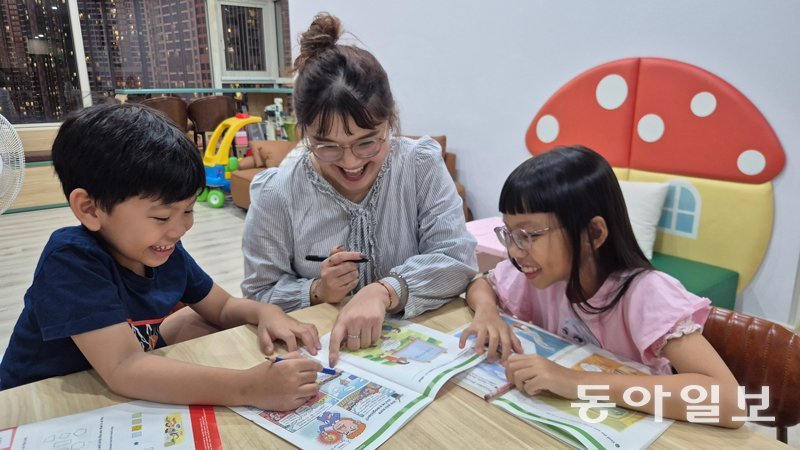
On the 26th of last month (local time), elementary school students Min Min (8, right) and Tuan Min (6, left) study with their math teacher (center) using Korean workbooks at a home in the An Phu area of Ho Chi Minh City, Vietnam. Ho Chi Minh City = Reporter Joo Hyun-woo woojoo@donga.com
“If you fold the shape on the left in half, which one will it look like?” (Teacher)
“Looking at the corners, it seems like it will be shape No. 2!” (Elementary school students)
On the afternoon of the 26th of last month (local time), at a luxury apartment in the An Phu area of Ho Chi Minh City, Vietnam, elementary school students Min Min (8) and Tuan Min (6) answered loudly to their Vietnamese math teacher’s question. In front of the children lay a math workbook explaining the principle of symmetry of shapes in English and Vietnamese. It was teaching material reconstructed from Daekyo’s “Noonnoppi Education” workbooks to match the Vietnamese curriculum.
The teacher conducted a 30-minute class, checking homework and explaining the next unit. While this workbook-based study format is commonplace in Korea, it is considered fresh in Vietnam. Home-visit education in Vietnam usually takes the form of private tutoring that runs for about an hour and a half. Korean workbook lessons are shorter and therefore less expensive, yet are evaluated as delivering comparable learning outcomes for the cost. The children’s mother, Ms. Mi Haing (38), watching the class, said, “The children are preparing for a competition to be held in November this year.”
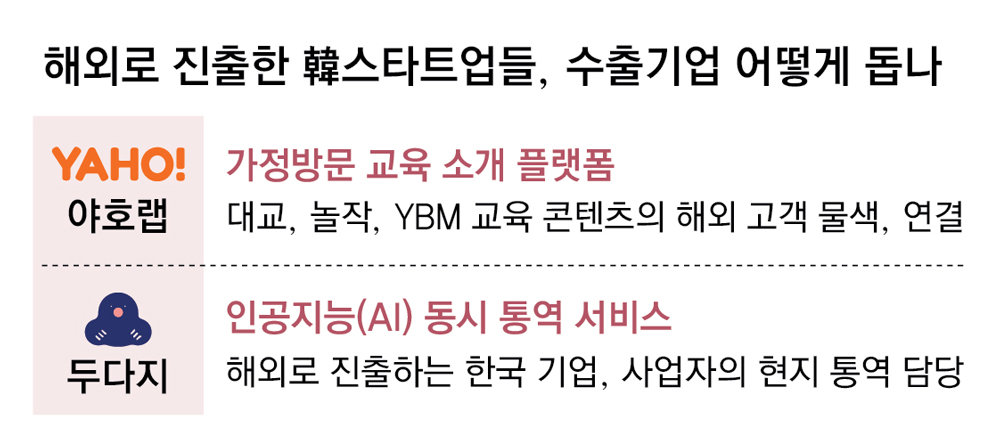
The reason Daekyo Noonnoppi Education has been able to enter Vietnamese households lies in the Korean education startup “Yaho Lab.” Through its home-visit education introduction platform “Toodi,” Yaho Lab repackages and sells Korean education content. It effectively serves as a bridgehead for exporting Korean education content. The growth driver for this startup, which opened export channels for Korean workbooks, was “innovative finance” that boldly invested based on potential.
● Startup backed by innovative finance opens floodgates for “K-edu”
Yaho Lab is introducing a variety of content, including art education linked with Korean art academy “Noljak,” as well as Daekyo Noonnoppi Education. Around 800 Vietnamese households each month experience “K-edu” through Yaho Lab. The number of affiliated teachers exceeds 8,000.
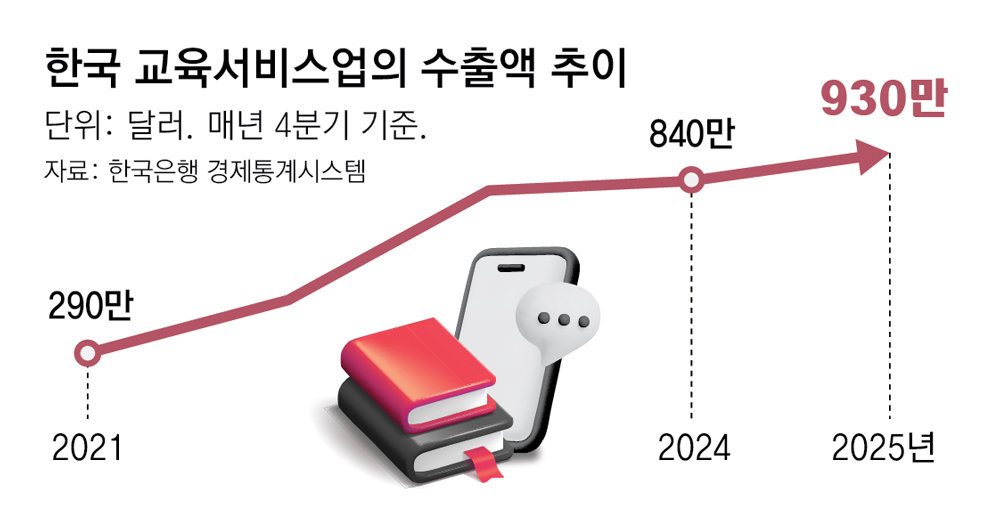
The startup expects that Korea’s private education sector, which has grown on the back of intense educational zeal, will also succeed in Vietnam, where enthusiasm for learning is similarly high. In fact, exports of Korean education services have been standing out recently. According to the Bank of Korea, exports of Korean education services grew from USD 2.9 million in 2021 to USD 9.3 million last year, more than tripling.
Yaho Lab has been steadily rolling out education services in Vietnam that have already been verified in Korea. Capturing demand from Vietnamese parents who want to assess their children’s academic levels, it launched a math competition modeled on those widely held in Korea. The competition has now grown to attract more than 4,000 participants.
Yoon Sun-hee, Chief Operating Officer (COO) of Yaho Lab, said, “We receive many inquiries from education companies that want to enter overseas markets while minimizing risk,” adding, “With Yaho Lab’s expertise in adapting content to local levels, we play the role of an export channel.” Yaho Lab recently secured an additional KRW 100 million investment from a Singapore-based venture capital (VC) firm.
The support of innovative finance was the background that enabled Yaho Lab to become a bridgehead for exporting Korean education content. When Yaho Lab first conceived its education business in Vietnam in 2020, it had ideas but no funds to realize them. It approached policy finance institutions, but was rejected multiple times on the grounds that the business was not domestic. It then caught the eye of domestic venture capital firm The Invention Lab and Korea Investment Accelerator, receiving KRW 150 million in support. Kim Jin-young, CEO of The Invention Lab, said, “We had a successful track record of investing in the domestic childcare matching platform ‘Jaranda,’ so we found Yaho Lab, which has a similar model, very appealing.”
Last year, the company also received a capital injection of KRW 120 million through a startup scale-up program organized by the Ministry of SMEs and Startups, the Korea Institute of Startup & Entrepreneurship Development, and Google Play. The total amount of investment raised in this way comes to around KRW 1 billion. From Woori Financial Group’s startup support program “DINNO Lab,” it also received non-financial support such as introductions to networks of various associations and academy officials in Vietnam.
● Financial institutions pass on overseas expansion know-how to startups
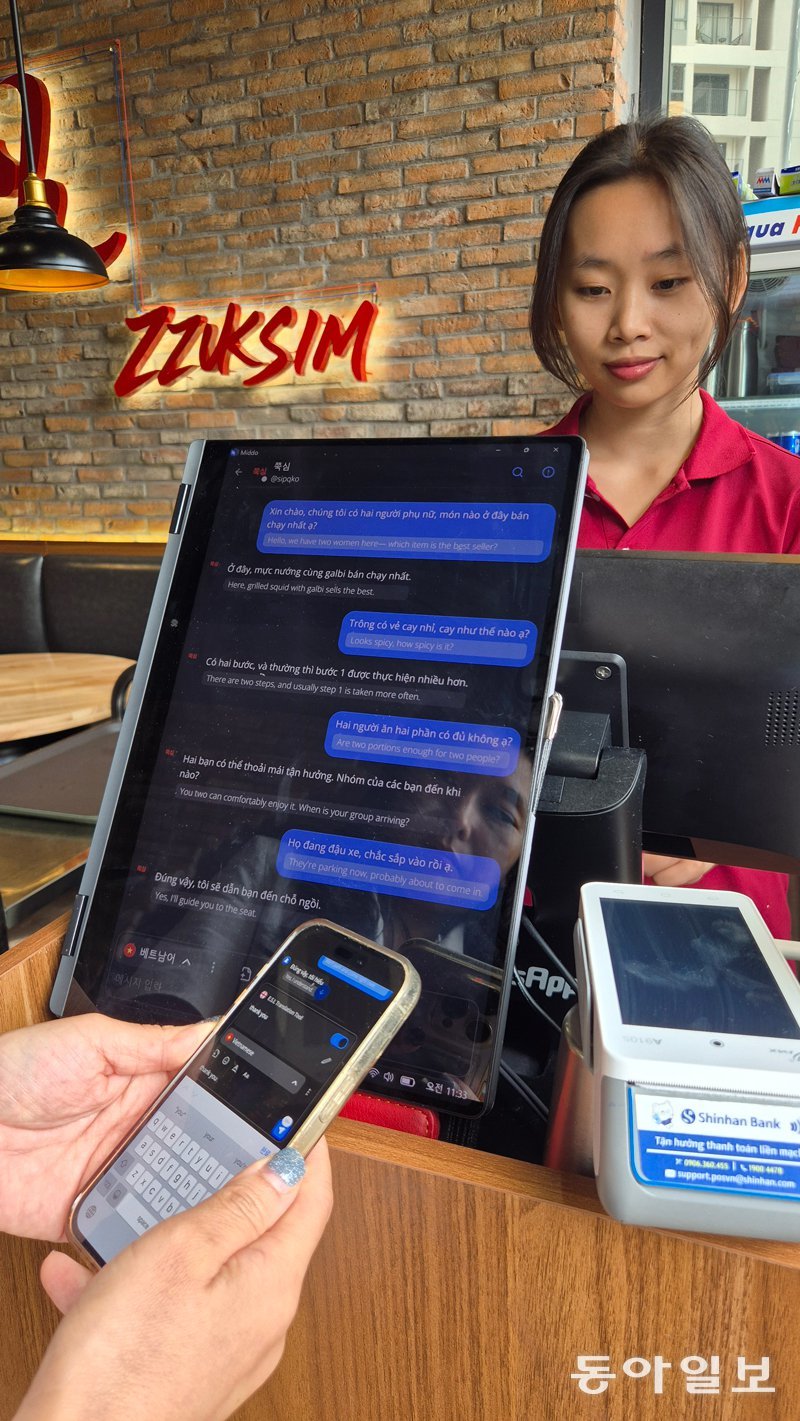
On the 27th of last month (local time), a Korean staff member and a Vietnamese customer communicate using an AI simultaneous interpretation tablet at Korean-style jjukkumi (spicy webfoot octopus) restaurant “Jjukshim” in the Thao Dien area of Ho Chi Minh City, Vietnam. Ho Chi Minh City = Reporter Joo Hyun-woo woojoo@donga.com
Funding is not the only difficulty domestic startups face when expanding overseas. There are also cases where domestic financial institutions provide networks and create business opportunities so that local startups do not have to struggle from scratch. AI-based simultaneous interpretation service “Dudaji” has established itself locally as a supporter of Korean export companies thanks to consulting from a Korean financial institution.
At 12:30 p.m. on the 27th of last month (local time), every table at Korean-style jjukkumi restaurant “Jjukshim” in the Thao Dien area of Ho Chi Minh City had a tablet installed with “Mido,” Dudaji’s AI simultaneous interpretation application. When Vietnamese customer Ms. Phuong Linh (33) scanned the QR code on the tablet screen with her smartphone camera, a chatroom opened. In this chatroom, Linh asked in Vietnamese, “How spicy is the iron-grilled jjukkumi?” and “Is the portion enough for three women to share?” The replies typed in Korean by the Korean staff member in the chatroom were translated in real time into Vietnamese and appeared on the customer’s tablet screen.
Dudaji received assistance from Shinhan Future’s Lab, a startup incubation platform established in Ho Chi Minh City by a financial institution for the first time 10 years ago. A Dudaji representative explained, “By conducting various technology verifications with different companies based on the local network Shinhan Future’s Lab has built on the ground, we were able to broaden our avenues.”
Special Reporting Team
▽ Team Leader: Cho Eun-ah, Deputy Editor, Business News Department achim@donga.com
▽ South Jeolla Province, Mokpo/Sinan = Kang Woo-seok; North Gyeongsang Province, Gumi = Shin Moo-kyung
Gyeonggi Province, Osan = Lee Dong-hoon; Vietnam, Ho Chi Minh City = Joo Hyun-woo
Seoul = Jeon Joo-young, Park Hyun-ik, Park Jong-min
ⓒ dongA.com. All rights reserved. Reproduction, redistribution, or use for AI training prohibited.
Popular News