Atlas Georgia plant to come online in 2029
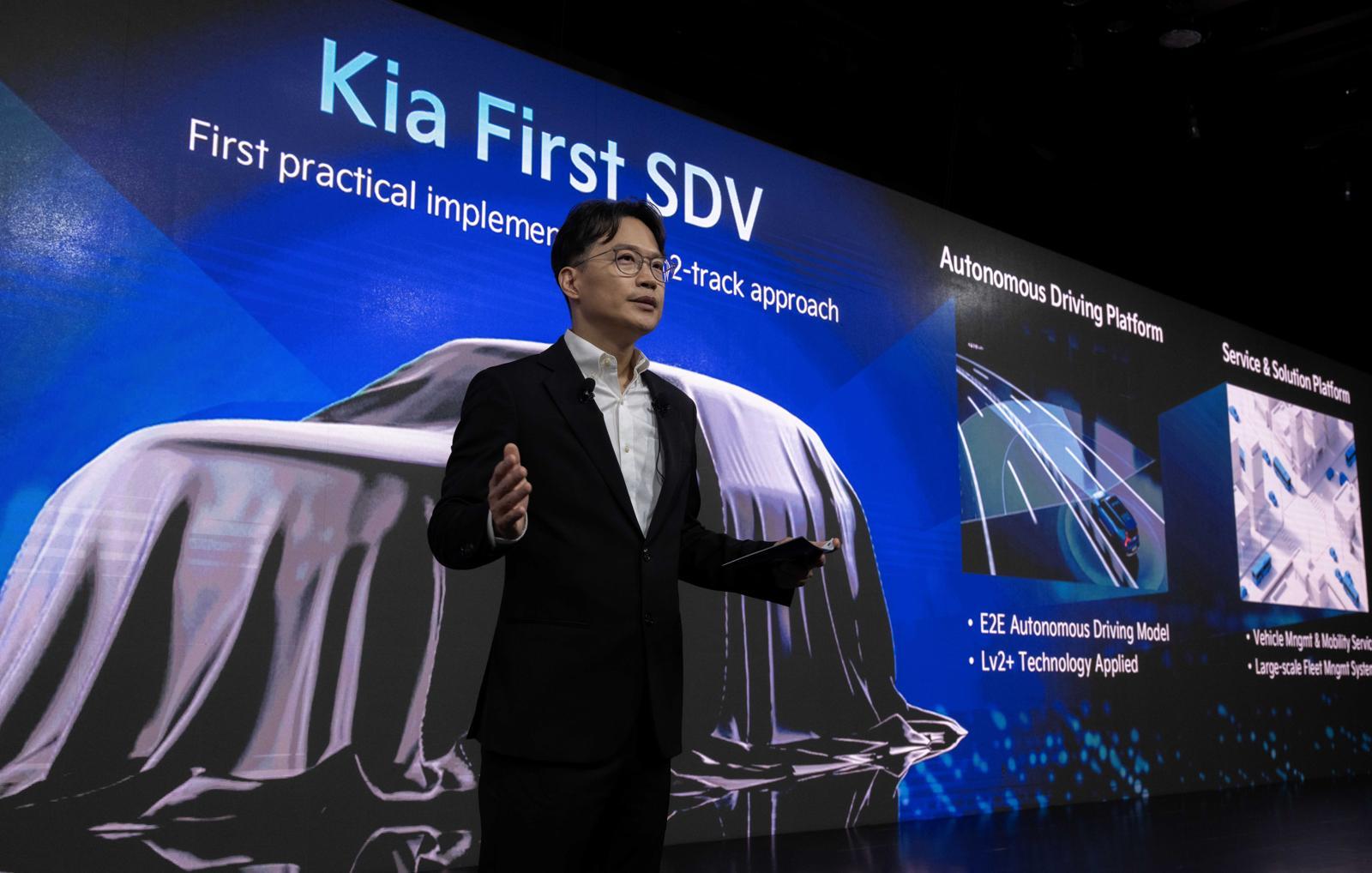
Hyundai Motor Company and Kia AVP Division Head Park Min-woo, President, explains the autonomous driving strategy at the “2026 CEO Investor Day.” (Provided by Hyundai Motor Group)
Kia will invest approximately KRW 49 trillion over the next five years to accelerate its transformation into a “mobility solutions company.”
Through collaboration with global partners such as Nvidia and Google DeepMind, the company aims to realize “Level 2++” technology enabling autonomous driving in urban environments by 2029. Atlas, the humanoid robot that is central to Hyundai Motor Group’s robotics business, will be deployed at Kia’s U.S. plant in the second half (July–December) of 2029.
Kia held the “2026 CEO Investor Day” at the Shilla Hotel in Jung-gu, Seoul, on the afternoon of the 9th and unveiled its mid- to long-term business strategy and financial roadmap. The event, targeting shareholders and analysts, also marked the first “official appearance” of Park Min-woo, CEO of 42dot and Head of the AVP Division at Hyundai Motor and Kia (President). It effectively served as a venue to present Hyundai Motor Group’s overall strategy, with Zak Zdeborowski, Chief Technology Officer at Boston Dynamics and leader of the Atlas development, also joining as a presenter.
Kia first presented its “investment blueprint” for securing future competitiveness. Of the KRW 49 trillion in investment to be made over the next five years from this year through 2030, KRW 21 trillion will be allocated to future growth businesses such as autonomous driving and robotics. The sales target for 2030 is a total of 4.13 million units, including 1 million electric vehicles and 1.1 million hybrid vehicles. The company is targeting KRW 170 trillion in revenue and KRW 17 trillion in operating profit in 2030.
The most notable part of the day was Kia’s concrete plan for the commercialization of autonomous driving. The company plans to complete the development of software-defined vehicles (SDVs) based on “Level 2+” technology, which enables autonomous driving on highways under driver supervision, by the end of next year. It then plans to apply “Level 2++” technology, which allows autonomous driving not only on highways but also in general urban areas, to mass-produced vehicles in early 2029.
The “autonomous driving alliance” formed at the group level with Nvidia was also reiterated. Through this partnership, the group plans to accelerate the standardization of autonomous driving sensors and systems. The approach is to establish a “virtuous data cycle” in which the accumulation of real-world driving data through global annual sales of several million units, as well as training, performance improvement, and product application, are continuously repeated.
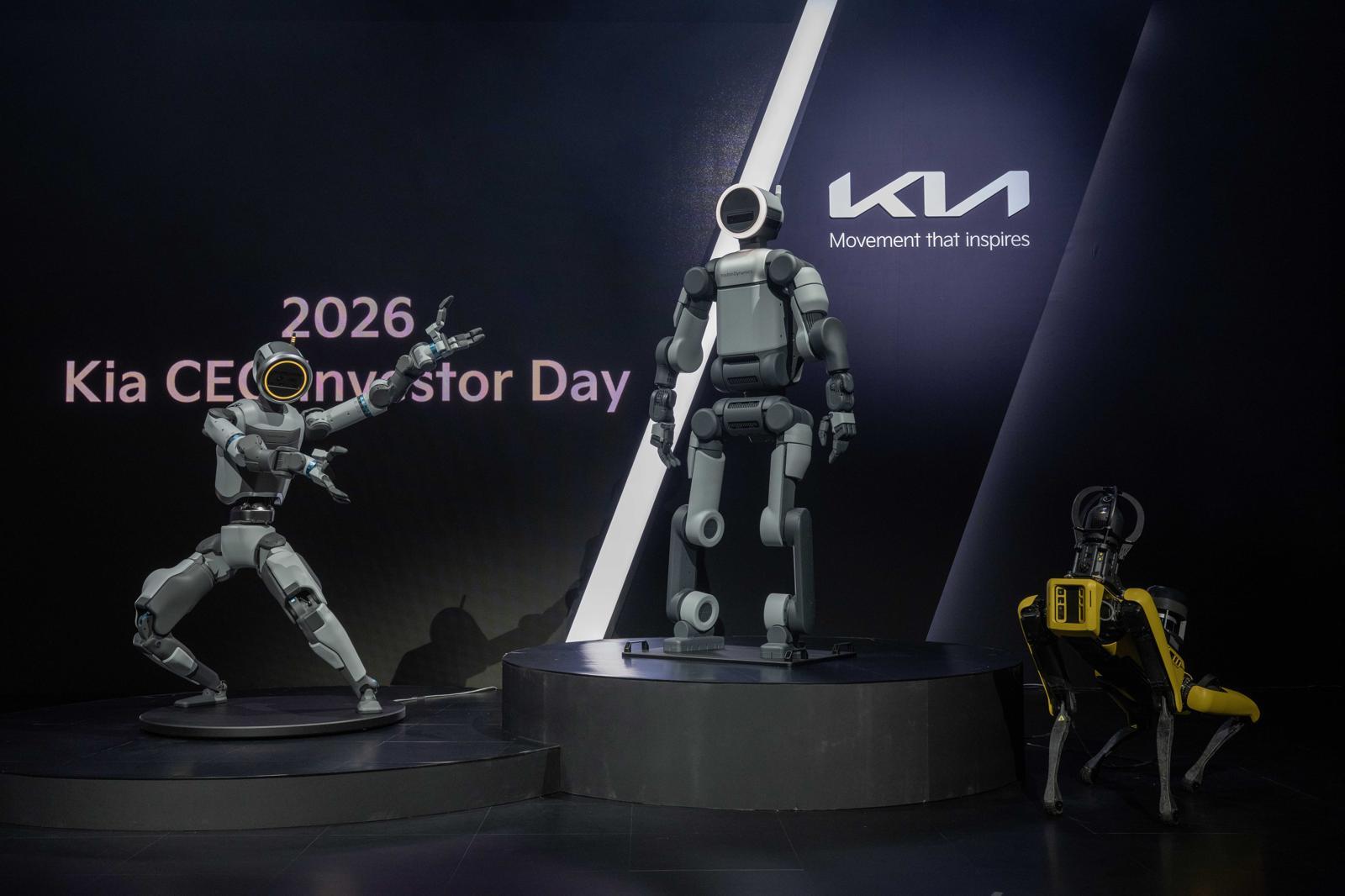
Boston Dynamics’ Atlas and Spot. (Provided by Hyundai Motor Group)
The timetable for deploying Atlas, the core of Hyundai Motor Group’s robotics business, to production sites was also further clarified. Following its planned deployment to Hyundai Motor Group Metaplant America (HMGMA) in 2028, Atlas will be introduced at Kia’s plant in Georgia, U.S. (KaGA) in the second half of 2029.
The company is also seeking to drive innovation in the last-mile logistics market through robots. It plans to build a logistics “full-stack solution” by combining Boston Dynamics’ unloading robot Stretch and the quadruped walking robot Spot with Kia’s purpose-built vehicles (PBVs) PV7 and PV9. The concept envisions Stretch, integrated with PV7 and PV9, loading and unloading cargo, followed by Spot completing the final delivery.
Song Ho-sung, President and CEO of Kia, said, “Along with electric vehicles, hybrid vehicles, autonomous driving, and robotics, we will achieve the fastest growth,” adding, “Even in an environment where internal and external uncertainties are increasing, we will proactively respond to market changes with a differentiated strategy.”
ⓒ dongA.com. All rights reserved. Reproduction, redistribution, or use for AI training prohibited.
Popular News