Fixed-dose combination of pitavastatin 1 mg and ezetimibe 10 mg
Minimizes concerns over adverse effects while maximizing LDL-C reduction
Offers a new therapeutic option for dyslipidemia treatment
“Presents a sophisticated treatment strategy tailored to patient characteristics”
Daewoong Pharmaceutical headquarters. Courtesy of Daewoong Pharmaceutical
Daewoong Pharmaceutical announced on the 1st that it has launched the dyslipidemia combination drug “BaroEzet Tablet” (pitavastatin/ezetimibe combination) and has begun full-scale sales.
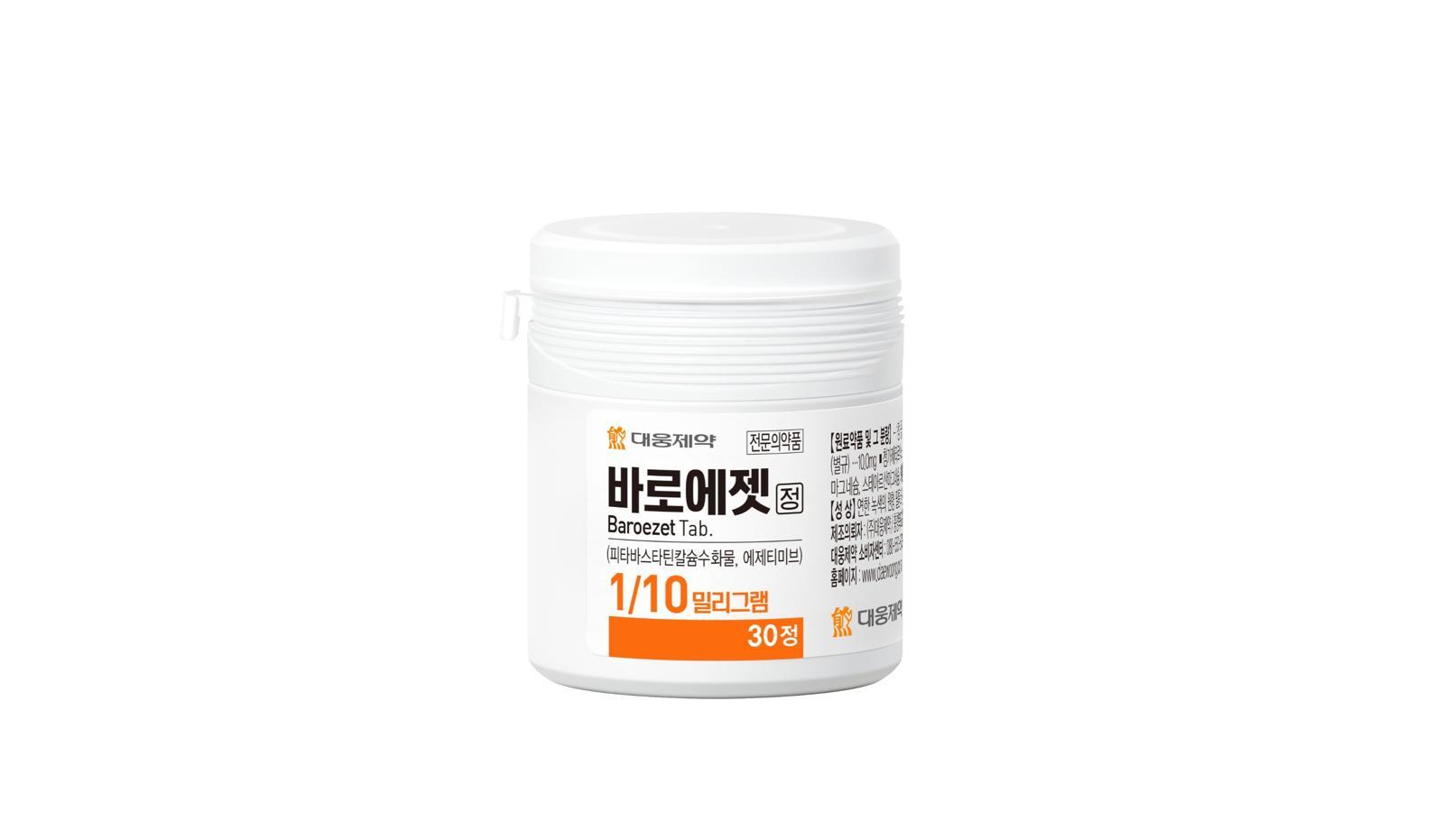
BaroEzet Tablet is a new low-dose combination product that combines 1 mg of pitavastatin and 10 mg of ezetimibe. Its indication is the treatment of primary hypercholesterolemia. With the launch of BaroEzet Tablet, Daewoong Pharmaceutical has further strengthened its dyslipidemia treatment portfolio.
In recent years, treatment of dyslipidemia has been shifting away from stepwise up-titration of statin monotherapy doses toward early combination therapy using low-dose statins with ezetimibe. It is known that as statin doses increase, therapeutic effects tend to plateau while concerns over adverse events such as myalgia grow. In fact, when the statin dose is doubled, the LDL cholesterol (low-density lipoprotein cholesterol) reduction effect improves by about 6%, whereas adding ezetimibe is known to provide an additional reduction effect of approximately 18% or more.
Reflecting this change in treatment strategy, demand for low-dose statin combination products is also increasing. Domestic prescriptions for low-dose combinations based on rosuvastatin and those based on atorvastatin recorded high year-on-year growth rates of 37% and 157%, respectively, last year. Meanwhile, in the pitavastatin/ezetimibe combination market, only the 2/10 mg and 4/10 mg strengths are available, leaving a gap in low-dose options.
Daewoong Pharmaceutical’s BaroEzet Tablet product image. Courtesy of Daewoong Pharmaceutical
Daewoong Pharmaceutical’s BaroEzet Tablet was developed to address this unmet need. By newly providing a 1/10 mg low-dose option among pitavastatin-based combination products, it has expanded treatment choices. Its efficacy was confirmed through a Phase 3 clinical trial conducted in 129 domestic patients with primary hypercholesterolemia. At week 8 of BaroEzet Tablet administration, the LDL cholesterol reduction rate was 43.9%, showing a substantial decrease compared with 29.1% for pitavastatin 1 mg monotherapy. This can be regarded as a level of efficacy similar to that of pitavastatin 4 mg. Daewoong Pharmaceutical expects that for patients currently taking existing pitavastatin combination products at 2 mg or 4 mg, BaroEzet Tablet will be an optimal alternative that maintains LDL cholesterol–lowering efficacy while reducing concerns over adverse events.
In addition, in the BaroEzet Tablet treatment group, non-HDL (non–high-density lipoprotein) cholesterol, which has been attracting increased attention as a cardiovascular risk factor requiring management, decreased by 40.6%, and apolipoprotein B (ApoB) decreased by 34.2%. Overall lipid profile improvement compared with monotherapy was confirmed.
Daewoong Pharmaceutical also stated that the product offers promising applicability depending on patient characteristics. Due to the metabolic profile of pitavastatin, which has low dependence on CYP enzymes, BaroEzet Tablet is expected to reduce the burden of drug–drug interactions in patients taking multiple medications. The company further analyzed that it may be considered as a treatment option for elderly patients and thin female patients, in whom statin-associated muscle symptoms (SAMS) are frequently observed.
With the launch of BaroEzet Tablet, Daewoong Pharmaceutical has strengthened its dyslipidemia treatment portfolio by adding a low-dose pitavastatin-based combination to its existing rosuvastatin/ezetimibe combination “Crezet” and atorvastatin/ezetimibe combination “Litovazet.”
Park Hyung-chul, Head of ETC Marketing at Daewoong Pharmaceutical, said, “BaroEzet Tablet is meaningful as a treatment option that considers both efficacy and the risk of adverse events, being a low-dose pitavastatin-based combination,” and added, “It is expected to contribute to more sophisticated treatment strategies that reflect patient characteristics and metabolic risk.”
ⓒ dongA.com. All rights reserved. Reproduction, redistribution, or use for AI training prohibited.
Popular News