[Bio/Pharmaceuticals] Yuhan Corporation
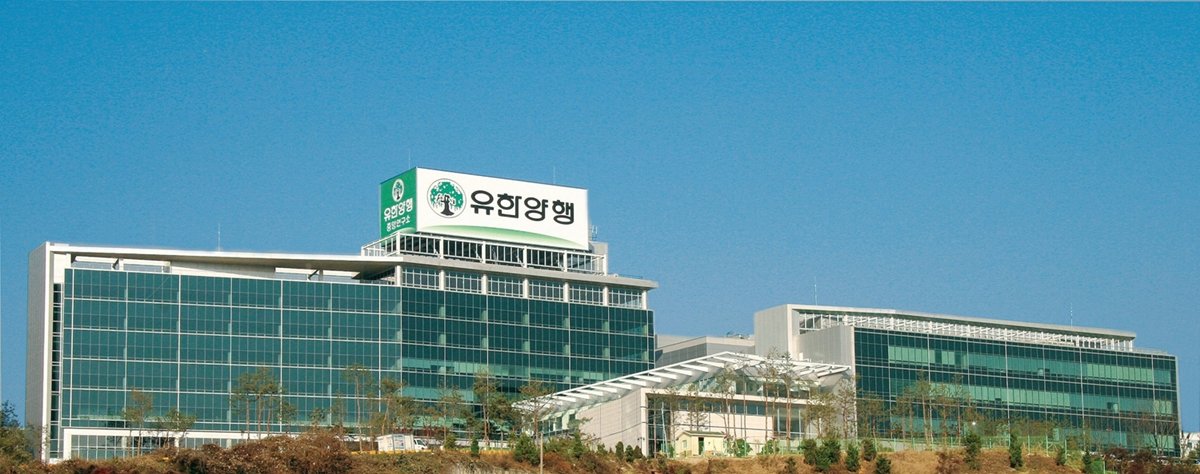
Yuhan R&D Center. Provided by Yuhan Corporation
Dr. Yu Il-han founded Yuhan Corporation in 1926 with the corporate philosophy of “Let us create the best products to help the nation and compatriots.” A century later, that spirit lives on in “Lecraza” (ingredient name: lazertinib), a treatment for non-small cell lung cancer that has become a new option for lung cancer patients worldwide.
Lecraza’s global journey entered full swing in 2018, when Yuhan successfully concluded a technology out-licensing (LO) deal worth about KRW 1.4 trillion with global pharmaceutical company Johnson & Johnson (J&J). At the time, this was the largest-ever deal for a single Korean-origin drug and demonstrated Yuhan’s vision and technological capabilities on the global stage. Lecraza, launched in Korea in 2021, expanded its indication in 2023 to first-line therapy and has since established itself as a standard of care in lung cancer treatment. In particular, the “EAP (Expanded Access Program),” under which the drug was supplied free of charge to patients until reimbursement coverage was granted, is widely regarded as a modern embodiment of the founding spirit of Dr. Yu Il-han.
Lecraza became the first Korean anticancer drug to clear the high regulatory hurdle of the U.S. Food and Drug Administration (FDA), rapidly elevating the status of Korea’s pharmaceutical industry. In 2024, it obtained FDA approval for combination therapy with Johnson & Johnson’s “Rybrevant” (ingredient name: amivantamab), opening the door to entry into the global market. This has been recorded as a symbolic event signifying that the Republic of Korea has advanced from a “peripheral player” in pharmaceuticals to a “global powerhouse in new drugs,” going beyond the success of a single company.
Lecraza: Technology that also considers patients’ quality of life Lecraza, developed by Yuhan, is a third-generation EGFR TKI (epidermal growth factor receptor tyrosine kinase inhibitor) that has changed the treatment paradigm for non-small cell lung cancer. It selectively and precisely targets only resistant mutant cancer cells and brain metastases, while preserving normal cells as much as possible. Beyond treatment efficacy, the drug was designed with careful attention to patients’ quality of life. By securing high “selectivity,” meaning it reacts strongly to mutated EGFR while exerting minimal effects on normal cells, Lecraza has dramatically reduced the incidence of chronic adverse events associated with existing anticancer agents, such as skin rash and diarrhea. As a result, Lecraza has captured both strong therapeutic efficacy and low side effects, establishing itself as a standard in the global market.
In addition, Lecraza has demonstrated exceptional efficacy in patients with brain metastases, a major route of lung cancer spread. The human body has a protective barrier called the blood-brain barrier (BBB), which makes it difficult for drugs to pass through, but Lecraza has strong permeability that enables it to effectively penetrate this barrier and directly attack cancer cells that have metastasized to the brain. This clinical efficacy has been a decisive factor in Lecraza’s rapid rise as a “game changer” in the global market.
Approval of combination drug “Rybrevant” SC formulation accelerates global growth In December 2025, the subcutaneous (SC) formulation of Rybrevant, prescribed in combination with Lecraza, received FDA approval in the United States for once-monthly administration, laying a powerful foundation for securing leadership in the global market. The existing intravenous (IV) formulation had been criticized for its limitations, including a long administration time of up to five hours and a high incidence rate of infusion-related reactions (IRR, about 67%). By contrast, the newly approved SC formulation reduces administration time to just five minutes and lowers the incidence of adverse reactions to around 13–14%, delivering innovative improvements in both safety and convenience.
Yuhan’s commitment toward a new century
This success is the result of Yuhan’s company-wide concentration of capabilities and more than a decade of persistent investment. The “open innovation” strategy of actively embracing external advanced technologies served as a decisive turning point in Yuhan’s transformation into an R&D-centered global new drug company.
The profits generated by Lecraza’s success are being intensively reinvested in next-generation pipelines for the future. To create “second and third Lecrazas,” Yuhan is accelerating global clinical development across oncology and metabolic/immune diseases, including the nonalcoholic steatohepatitis (MASH) treatment “YH25724,” the bispecific antibody anticancer drug “YH32367,” as well as the allergy treatment “YH35324” and the HER2-positive solid tumor treatment “YH35995,” both of which are drawing strong expectations in the global market. A Yuhan official stated, “Building on the achievements of Lecraza, which embodies 100 years of accumulated integrity and trust, the company will move forward into a new century as a ‘global top 50 pharmaceutical company’ dedicated to saving human lives.”
ⓒ dongA.com. All rights reserved. Reproduction, redistribution, or use for AI training prohibited.
Popular News