Extended study on “gallstone prevention effect after gastrectomy”
Results published in the international journal IJS
Gallstone prevention sustained for up to 6 years 8 months after 1 year of UDCA
Gallstone formation rate 57–67% lower than placebo group
“Findings expected to strengthen evidence for guidelines recommending UDCA therapy”
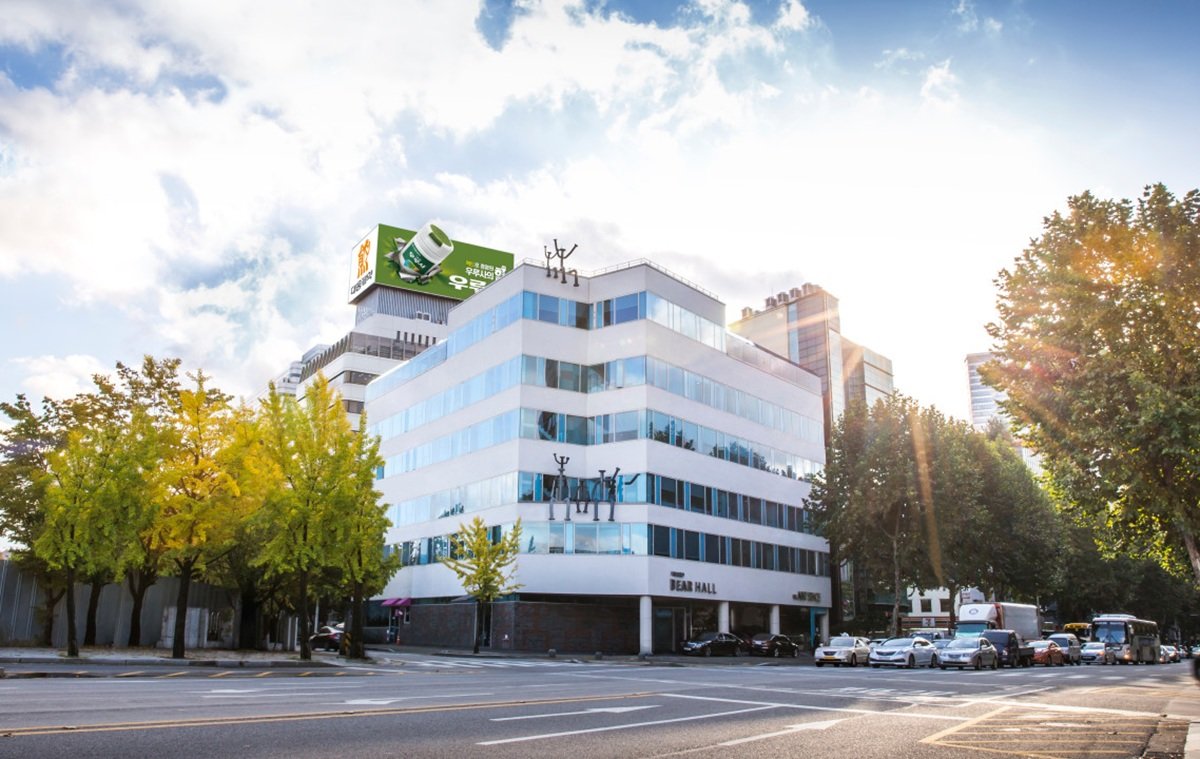
Daewoong Pharmaceutical headquarters
Ursodeoxycholic acid (UDCA), the main ingredient of Daewoong Pharmaceutical’s liver function improver “Ursosa,” has been shown to reduce the risk of gallstones after gastric cancer surgery. Clinical results indicated that, even when UDCA is taken for 12 months after gastric cancer surgery and then discontinued, its gallstone prevention effect persists for up to 80 months.
Daewoong Pharmaceutical announced on the 26th that the results of this study, which evaluated the preventive effect of UDCA on gallstone formation after gastrectomy in gastric cancer patients, were published in the International Journal of Surgery (IJS, Impact Factor 10.3), a top-tier international journal in the field of surgery. The study was conducted by a domestic research team including Professor Park Do-jung of the Department of Gastrointestinal Surgery and Professor Lee Sang-hyup of the Division of Gastroenterology at Seoul National University Hospital.
UDCA maintains gallstone prevention effect long after discontinuation
The notable aspect of this study is that it demonstrated that the preventive effect is maintained for an extended period even after stopping UDCA. Follow-up of the patient group that took UDCA for just 12 months and then discontinued it showed that the reduced risk of gallstone occurrence persisted for up to 80 months. This is reportedly the first large-scale randomized clinical trial in gastric cancer patients who underwent gastrectomy to evaluate the time-course preventive effect of UDCA on gallstone formation. It is being assessed as providing clinical evidence that long-term gallstone prevention can be expected through UDCA administration.
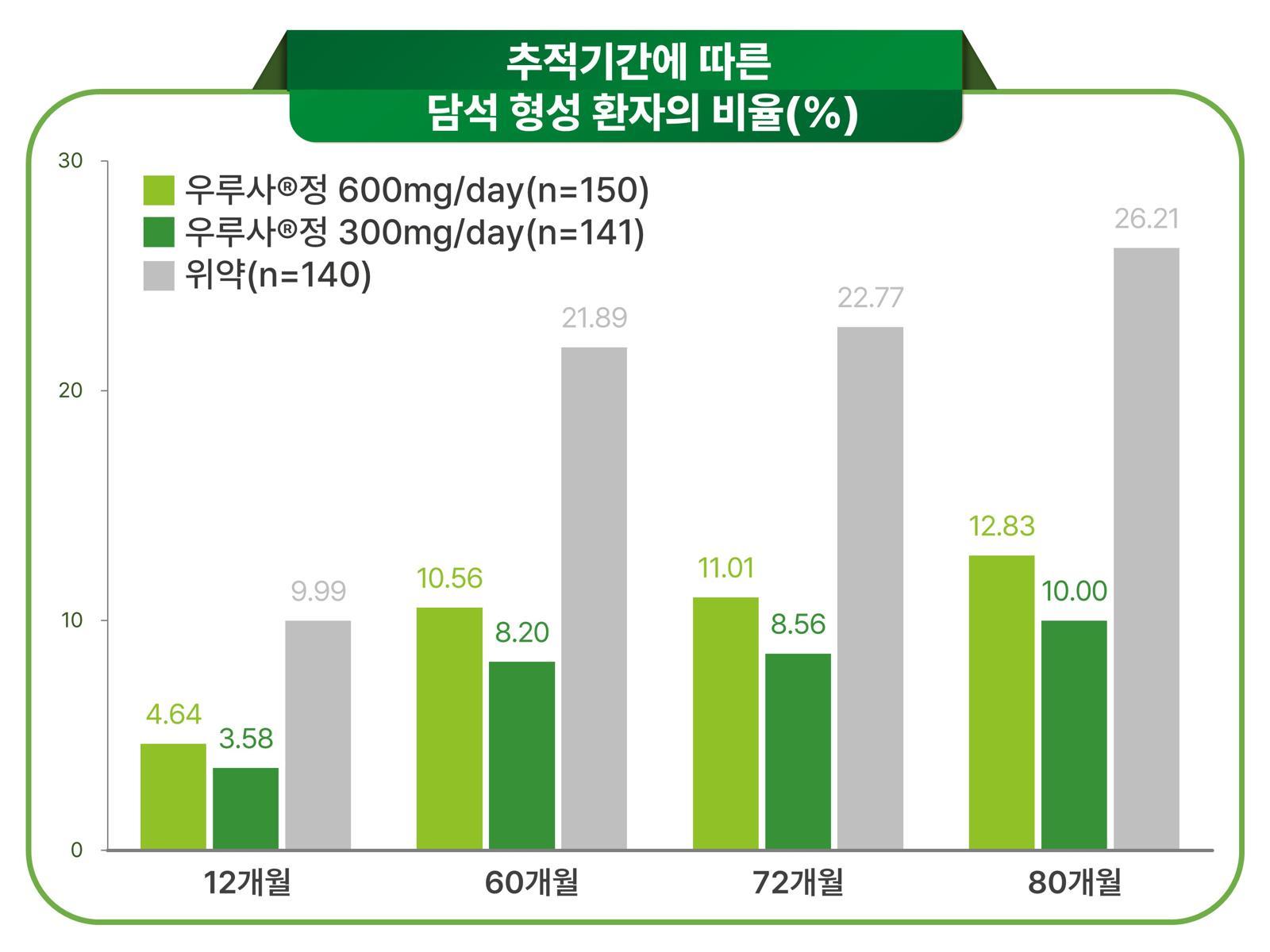
Specifically, Daewoong Pharmaceutical explained that the UDCA treatment groups showed a statistically significant reduction in gallstone risk compared with the placebo group. At 80 months, the incidence of gallstones in the placebo group was 26.21%, whereas in the UDCA groups it was 10.00% in the 300 mg group and 12.83% in the 600 mg group. Compared with the placebo group, the rate of gallstone formation was about 67% lower in the 300 mg UDCA group and about 57% improved in the 600 mg group. Both doses showed statistically significant differences.
This study is an extension of the Phase 3 clinical trial (PEGASUS-D) published by Daewoong Pharmaceutical in JAMA Surgery in 2020, and was conducted as a multicenter Phase 4 study involving patients who had participated in the original Phase 3 trial. The Phase 4 extension study was carried out from 27 September 2021 to 28 October 2022. A total of 431 patients (141 in the UDCA 300 mg group, 150 in the 600 mg group, and 140 in the placebo group) participated in the clinical trial.
Proportion of patients with gallstone formation by follow-up period. Provided by Daewoong Pharmaceutical
Broader evidence base for guidelines recommending UDCA to prevent gallstones after gastric cancer surgery
Gallstones are stone-like masses that form in the gallbladder as bile components harden. After gastrectomy, damage to the vagus nerve and changes in diet can reduce gallbladder contractility, leading to bile stasis. Rapid weight loss further promotes gallstone formation. This mechanism has common aspects with the increased gallstone risk observed with glucagon-like peptide-1 (GLP-1) class obesity treatments such as Wegovy, where decreased gallbladder motility and rapid weight reduction occur.
In fact, gastric cancer patients who have undergone gastrectomy are known to be prone to gallstones. According to this study, the incidence of gallstones in these patients reached up to 32.0%, which is significantly higher than in the general population. The issue is that when gallstones occur after gastric cancer surgery, additional procedures are often required. To treat gallstones, surgical interventions such as cholecystectomy or endoscopic retrograde cholangiopancreatography (ERCP), in which an endoscope directly accesses the bile duct to remove gallstones, are unavoidable. However, in patients whose gastrointestinal anatomy has already been altered by gastric cancer surgery, such procedures are technically challenging and involve higher risk. Therefore, gallstones that develop after gastric cancer surgery can be a burden for both patients, already exhausted by cancer treatment, and healthcare professionals.
In reality, the Korean Gastric Cancer Association’s treatment guidelines (2024) reportedly recommend (conditional recommendation) administering UDCA for one year to reduce gallstone formation after gastrectomy. However, evidence on long-term effects has been insufficient. The long-term follow-up data from this study are expected to serve as a basis for raising the recommendation level when the guidelines are revised in the future. Professor Park Do-jung of Seoul National University Hospital stated, “The finding that a relatively short 12-month administration maintains a gallstone prevention effect for more than six years is a very encouraging result in the treatment of gastric cancer surgery patients,” adding, “This dataset is expected to help raise the evidence level of the current guidelines, which remain at a conditional recommendation.”
Daewoong Pharmaceutical added that, as UDCA is an orally administered drug whose safety has been verified over several decades, it is expected to attract greater attention as a practical clinical option to reduce the complication of gallstone formation after gastric cancer surgery.
Park Hyeong-cheol, Head of ETC Marketing at Daewoong Pharmaceutical, said, “These study results show that long-term follow-up clinical data produced by a domestic research team have been recognized for their value in the international academic arena,” and emphasized, “We plan to continue research related to UDCA and steadily accumulate medical evidence that helps improve patients’ quality of life.”
Meanwhile, Daewoong Pharmaceutical explained that UDCA, a non-toxic bile acid, is expected to provide hepatocyte protection, immune modulation, and anti-inflammatory effects. It is prescribed for the treatment of various liver diseases and for the treatment and prevention of cholelithiasis.
ⓒ dongA.com. All rights reserved. Reproduction, redistribution, or use for AI training prohibited.
Popular News