Reaffirmed: “Grok chips will be developed with Samsung”
Also reconfirmed forecast of USD 1 trillion in cumulative sales
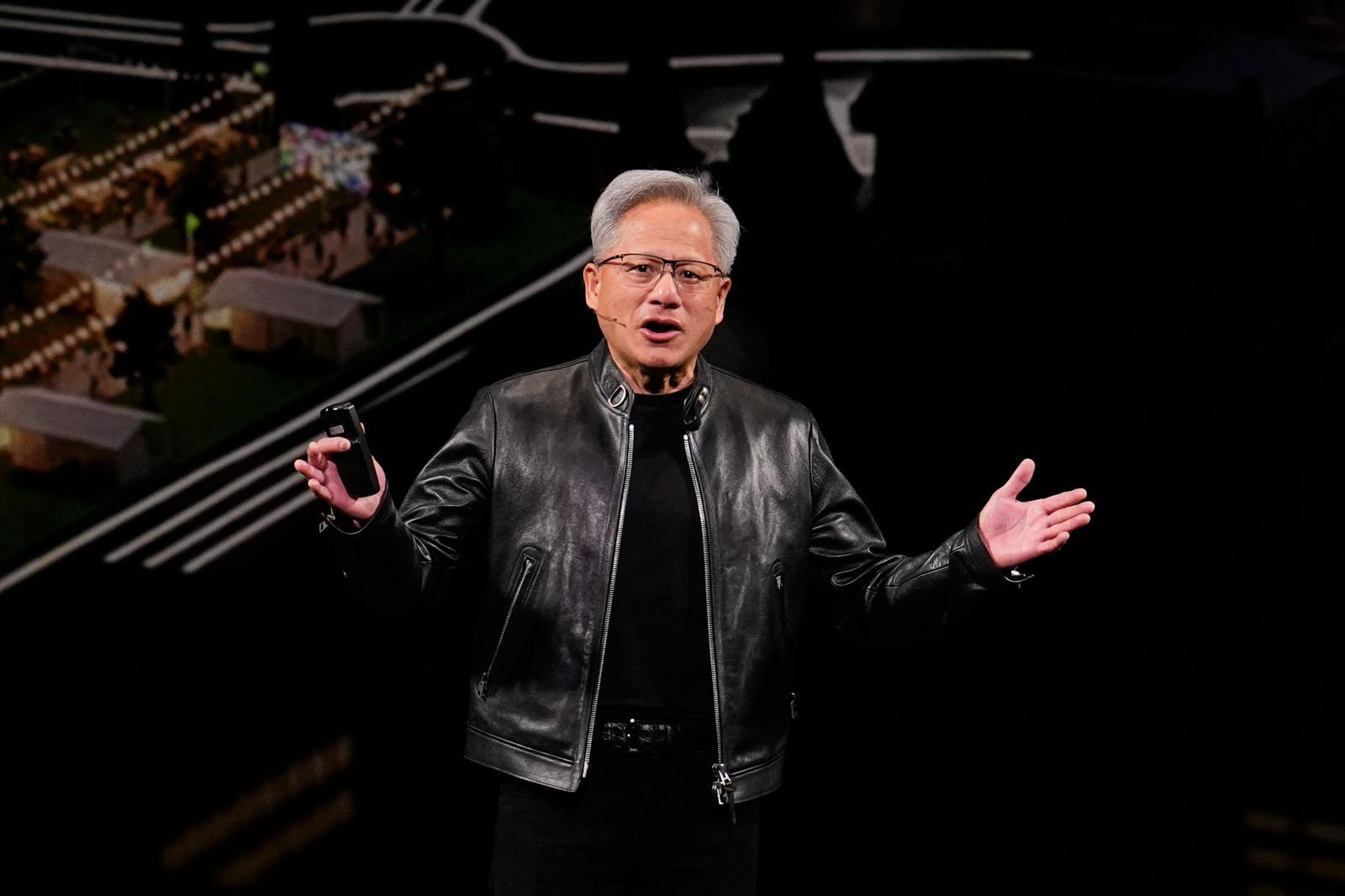
NVIDIA has announced that it will resume exports to China of its high‑performance artificial intelligence (AI) chip “H200.” Jensen Huang, NVIDIA’s Chief Executive Officer (CEO, pictured), stated at a press briefing held on-site at “GTC 2026,” NVIDIA’s annual developer conference in San Jose, California, on the 17th (local time), “We have restarted production (of the H200) in order to export it to China.”
Huang said, “We have received purchase orders for H200 chips from many Chinese customers,” adding, “The supply chain is changing so rapidly that the situation is different even from just two weeks ago.” On the same day, Reuters reported, citing sources, that NVIDIA is also producing inference chips from Groq targeting the Chinese market. The Groq chips NVIDIA is preparing for the Chinese market are reportedly not products with downgraded performance or otherwise specially modified specifications for export to China.
Huang also reiterated cooperation with Samsung at the press briefing. When asked whether NVIDIA is securing manufacturing capacity to meet surging demand for AI infrastructure, he replied, “We are collaborating with TSMC, the best company in the world. Groq chips are being developed in collaboration with Samsung,” and added, “We need a tremendous amount of memory, so we are working with all memory manufacturers.” He thus underscored NVIDIA’s partnership with Samsung Electronics, which is contract‑manufacturing Groq’s Language Processing Units (LPUs) along with High Bandwidth Memory (HBM), a key component of NVIDIA’s AI accelerators.
Huang also reaffirmed his projection that NVIDIA’s cumulative revenue for 2025–2027 will reach USD 1 trillion (about KRW 1,486 trillion). In his keynote speech the previous day, he had declared, “Cumulative revenue from 2025 to 2027 will reach USD 1 trillion.” Huang explained, “The USD 1 trillion in cumulative revenue is a figure based on orders already secured.”
Meanwhile, regarding concerns that the spread of AI will trigger a crisis across the software industry, including the Software‑as‑a‑Service (SaaS) sector, Huang said, “That is completely wrong thinking. On the contrary, demand will surge.” He added, “In the past, the number of engineers was the limiting factor for the software industry,” and predicted, “In the future, AI agent engineers will use software tools.”
ⓒ dongA.com. All rights reserved. Reproduction, redistribution, or use for AI training prohibited.
Popular News