Photo=Reporter Kim Young-ho rladudgh2349@donga.com
Photo=Reporter Kim Young-ho rladudgh2349@donga.com
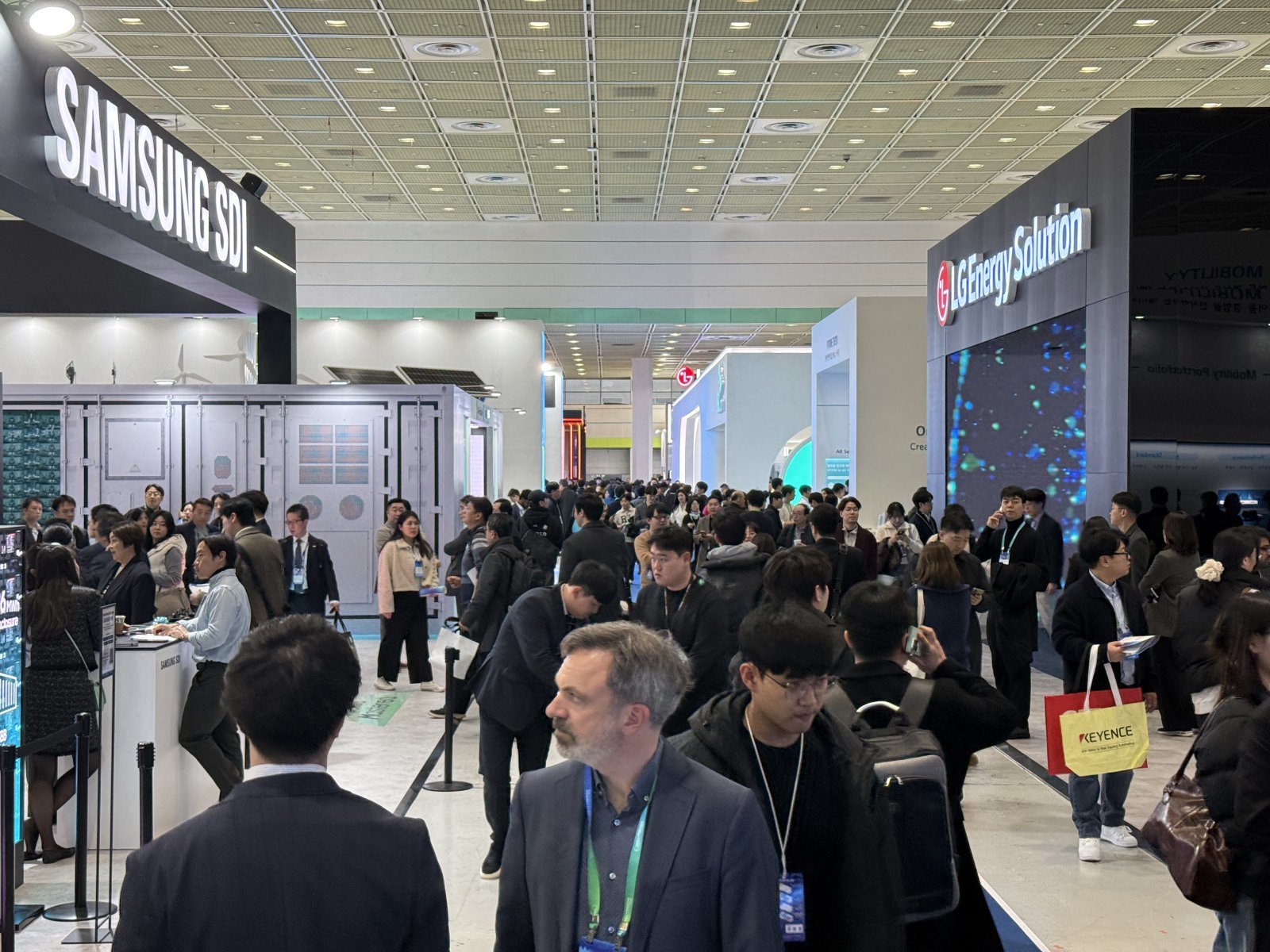
As the waves of prolonged war and supply chain crises sweep across the globe, the initiative in energy has emerged as a core element of energy security, beyond a mere driver of national competitiveness. “InterBattery 2026,” a major trade fair for the battery sector, the core field of the energy industry, has opened at the largest scale on record, bringing together the government and industry as a unified “K-battery One Team.”
This exhibition can be summed up by the theme of “super-gap technology.” Its core pillars are △ CTP (Cell to Pack) technology, which omits modules to increase energy density; △ Korean-style LFP with improved low-temperature performance; and △ safety technologies that respond to emergencies such as fires and blackouts. In particular, the companies showcased energy storage system (ESS) solutions for AI data centers and power grids as new revenue sources to break through the temporary stagnation (chasm) in the electric vehicle market, signaling their ambition to secure a unique competitive edge for K-batteries based on differentiated technologies.
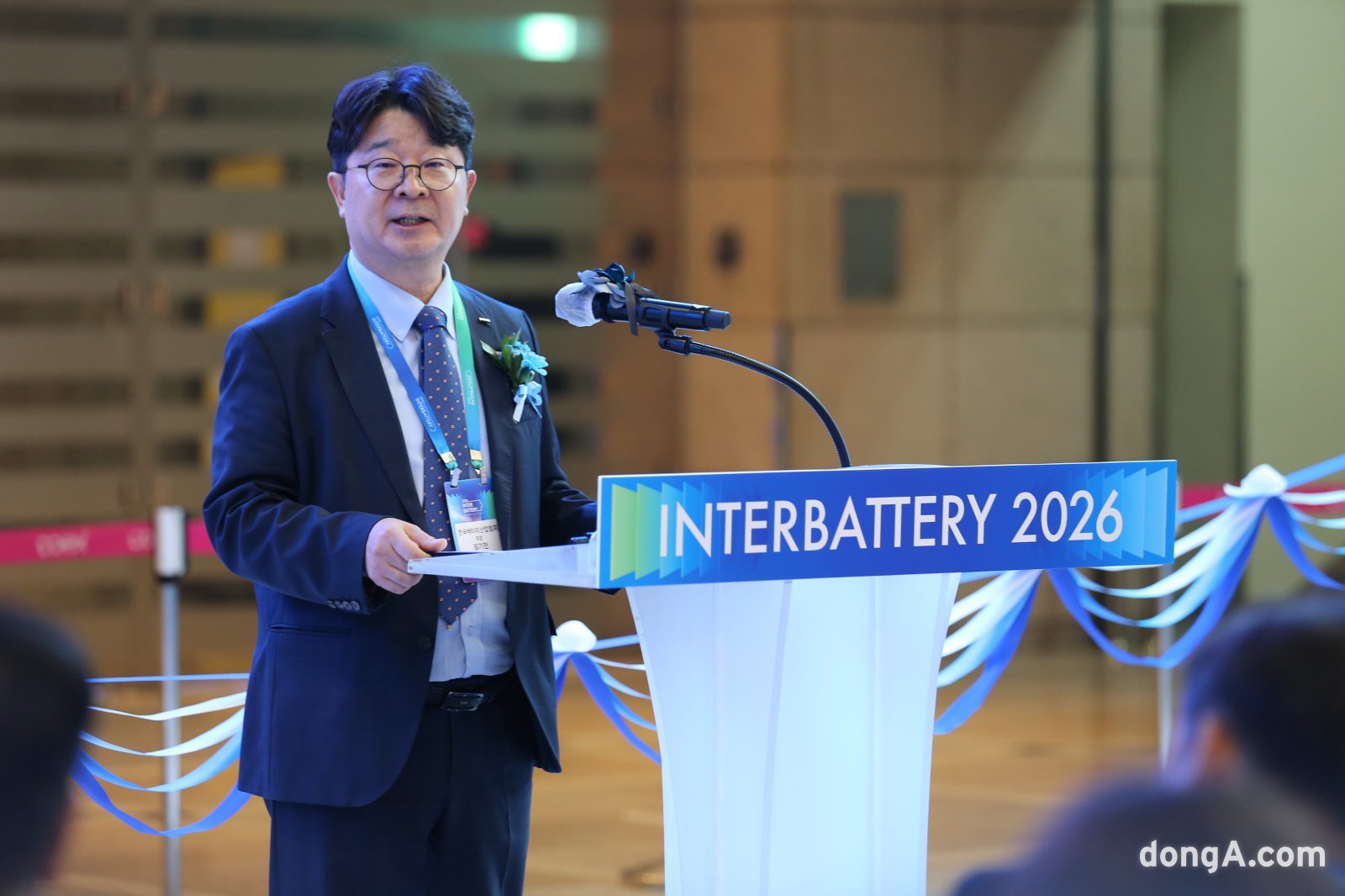
Um Ki-cheon, Chairman of the Korea Battery Industry Association. Photo=Reporter Kim Young-ho rladudgh2349@donga.com
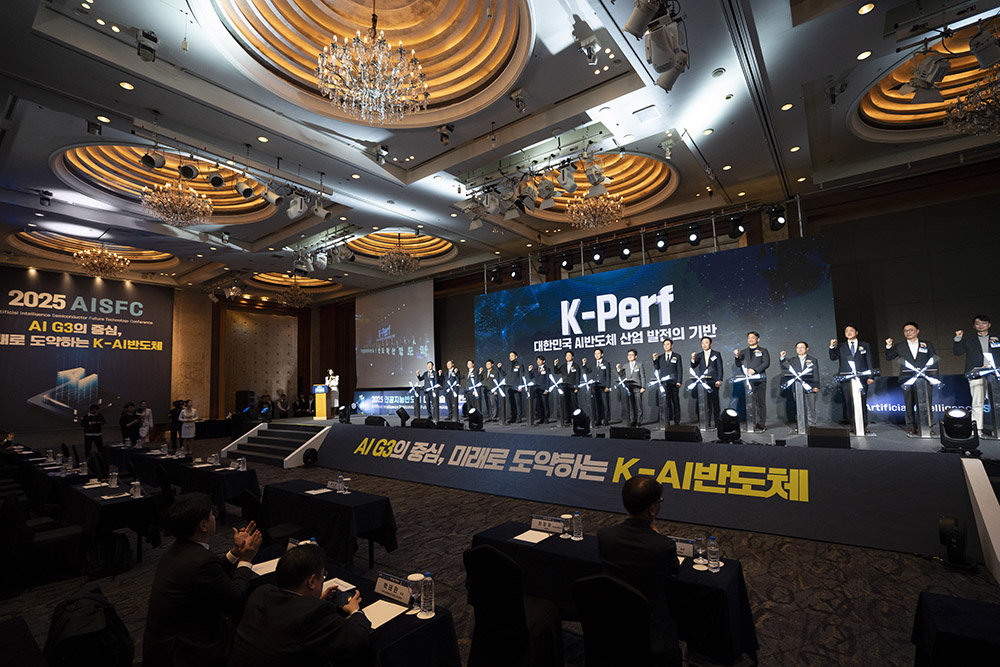
“InterBattery 2026,” which opened on the 11th at COEX in Gangnam District, Seoul, features 5,280 booths from 667 companies across 14 countries. The venue drew large crowds from early in the morning. Um Ki-cheon, Chairman of the Korea Battery Industry Association and CEO of POSCO Future M, who attended the opening ceremony, said that “(InterBattery) has established itself as a leading platform that offers a panoramic view of the present and future of the global battery industry.”
Um added, “Cell makers and materials, parts, and equipment companies must come together as the ‘K-battery One Team’ to overcome supply chain risks,” and pledged that “the Association will devise measures to strengthen industrial competitiveness between companies and the government.”
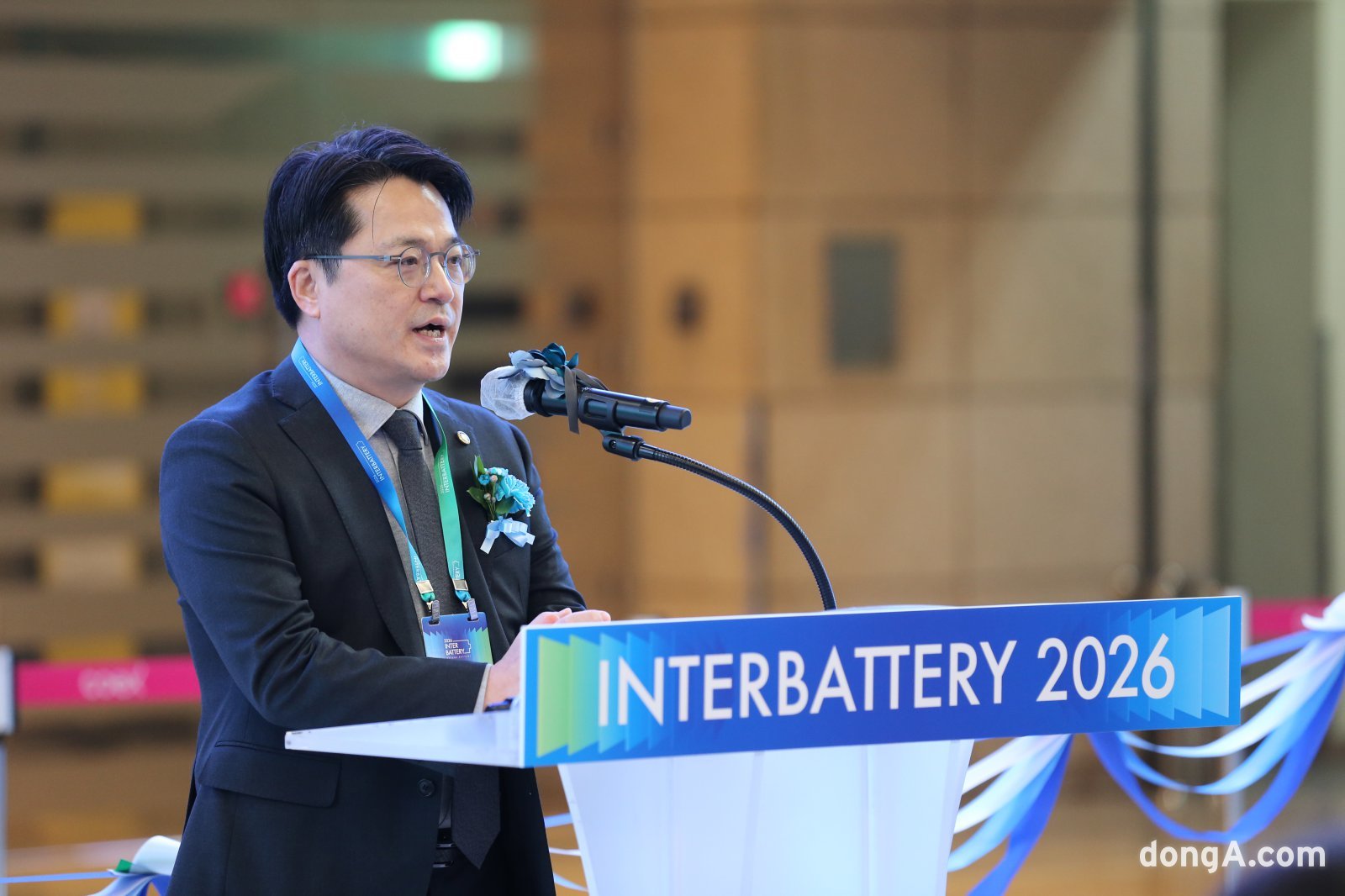
Moon Shin-hak, Vice Minister of Trade, Industry and Energy. Photo=Reporter Kim Young-ho rladudgh2349@donga.com
Moon Shin-hak, Vice Minister of Trade, Industry and Energy, said, “We hope this event will showcase K-battery technology to the world and strengthen global cooperation,” stressing that “the battery industry must maintain world-class competitiveness as a future growth engine for Korea.”
The three main keywords representing this exhibition were △ artificial intelligence (AI) △ safety △ supply chain. In particular, several booths featured “all-solid-state batteries,” regarded as next-generation battery technology that can enable Korea to overtake China.
● AI winds sweeping battery technology: “Batteries as the heart of physical AI”
Photo=Reporter Kim Min-beom mbkim@donga.com
Photo=Reporter Kim Young-ho rladudgh2349@donga.com
Photo=Reporter Kim Young-ho rladudgh2349@donga.com
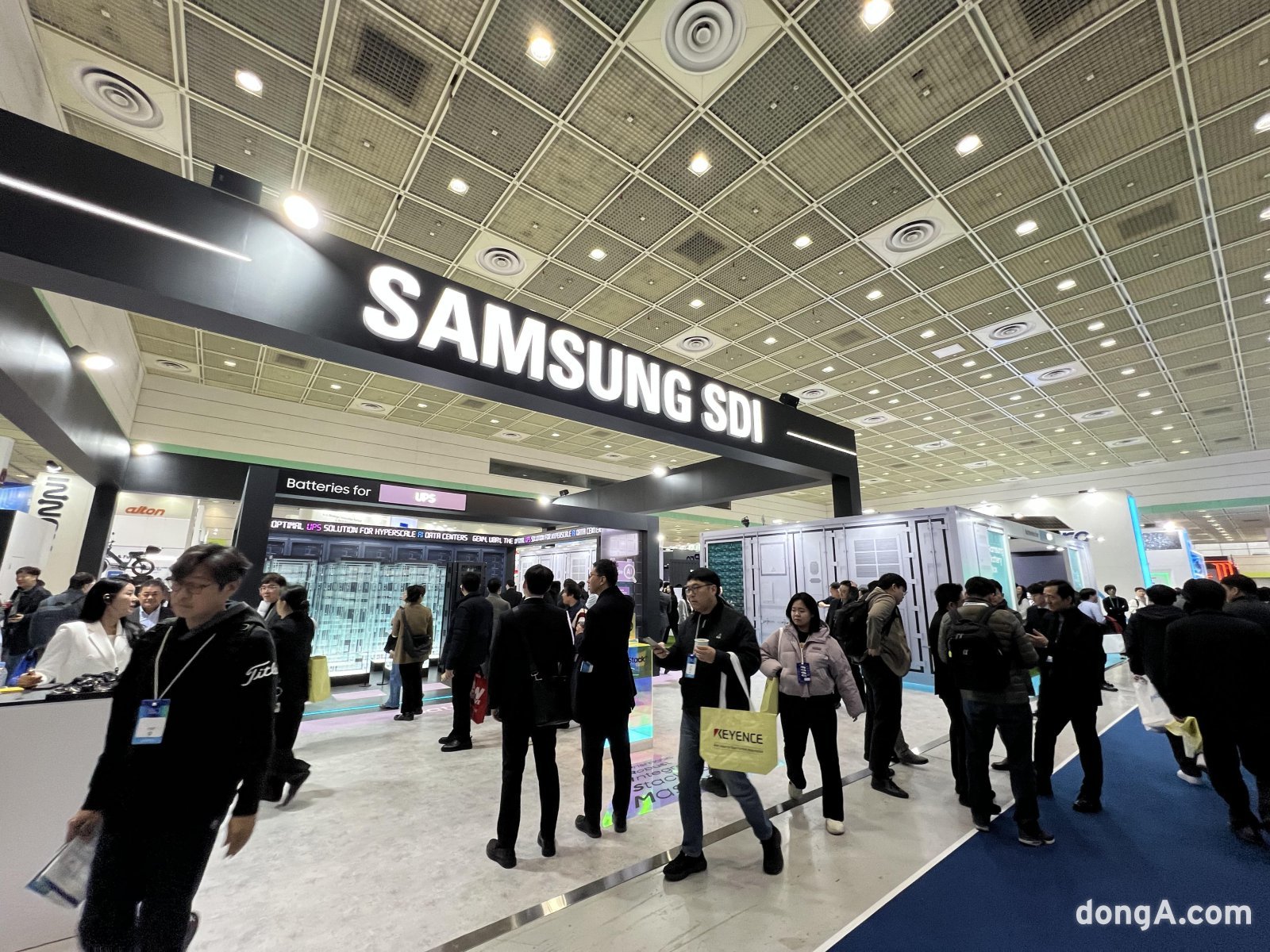
The first booth to catch visitors’ eyes in the exhibition hall was
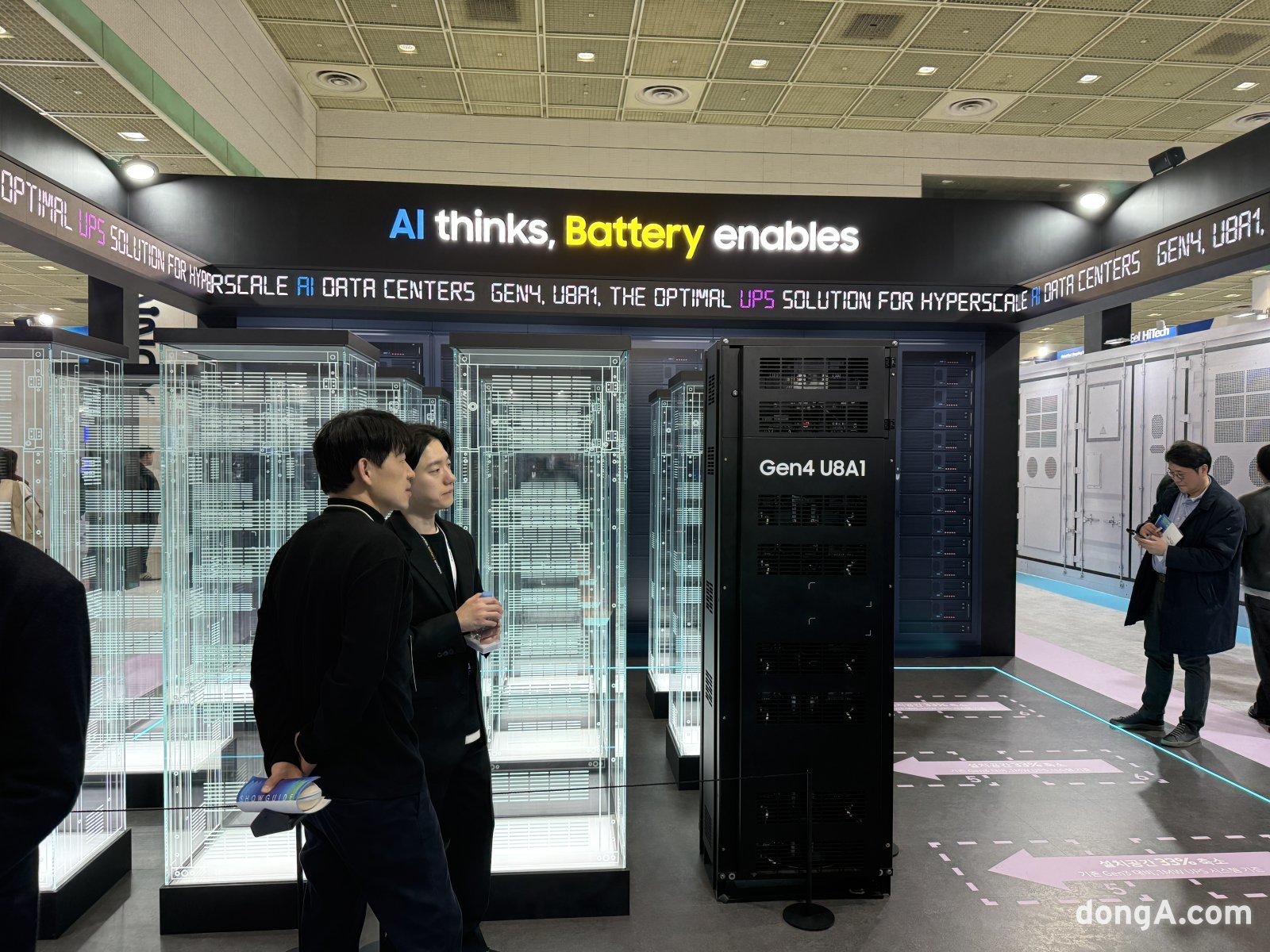
Samsung SDI, which operated the largest booth among participating companies. Under the slogan “AI thinks, Battery enables,” Samsung SDI emphasized that batteries are key infrastructure in the AI era.
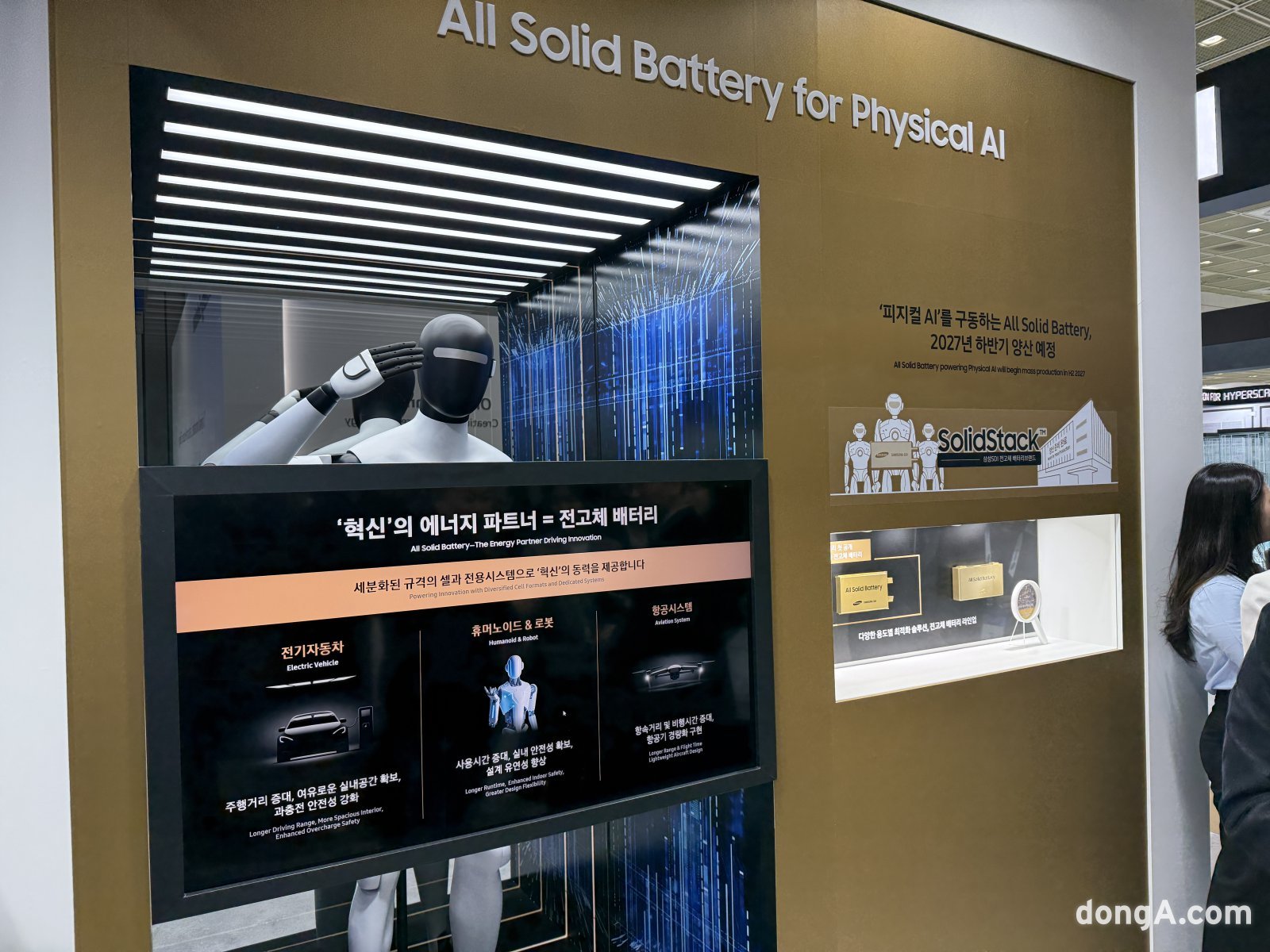
The highlight was the unveiling of pouch-type all-solid-state battery samples under development for “physical AI” applications such as humanoid robots. Batteries used in robots must be compact while satisfying both high output to respond to instantaneous power demands and long operating time. Targeting this, Samsung SDI unveiled for the first time samples of its PrismStack and SolidStack pouch-type prismatic and all-solid-state batteries.
These two brands are intended to underscore design technologies that realize the strengths of prismatic and all-solid-state formats—namely safety and high energy output and density. Samsung SDI currently holds about 1,200 patents related to prismatic batteries and about 1,100 patents for all-solid-state batteries in the United States, the highest number among Korean companies.
Photo=Reporter Kim Young-ho rladudgh2349@donga.com
Photo=Reporter Kim Young-ho rladudgh2349@donga.com
Photo=Reporter Kim Young-ho rladudgh2349@donga.com
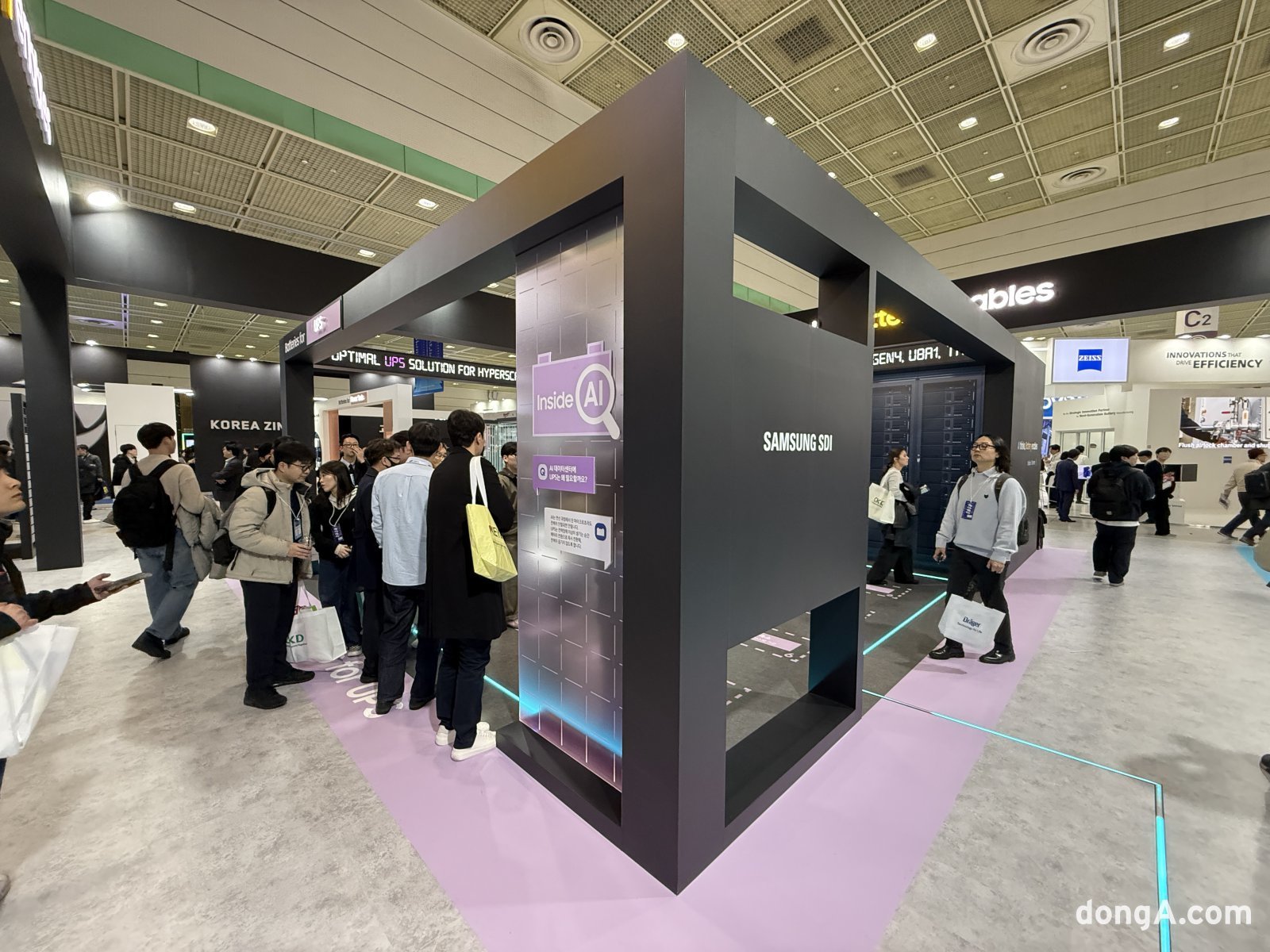
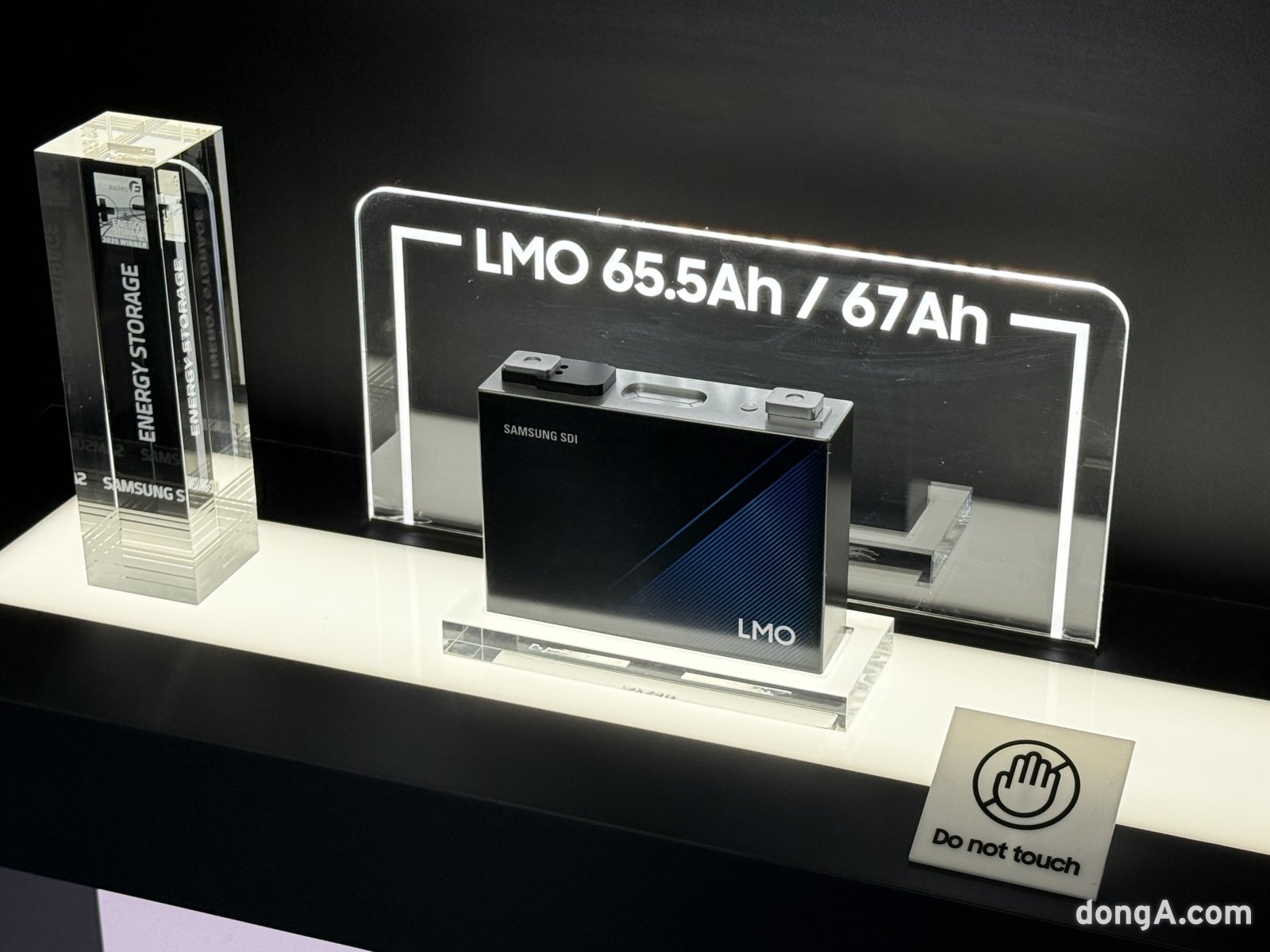
The “Inside AI” zone located at the center of the booth was staged to resemble the data center of an actual IT company. There, a mock-up equipped with the UPS-dedicated battery “U8A1” was displayed. This product, which applies an LMO (lithium manganese oxide) material to a prismatic form factor, improves space efficiency by up to 33% compared with existing solutions and not only responds to blackouts but also stabilizes total power during normal operations.
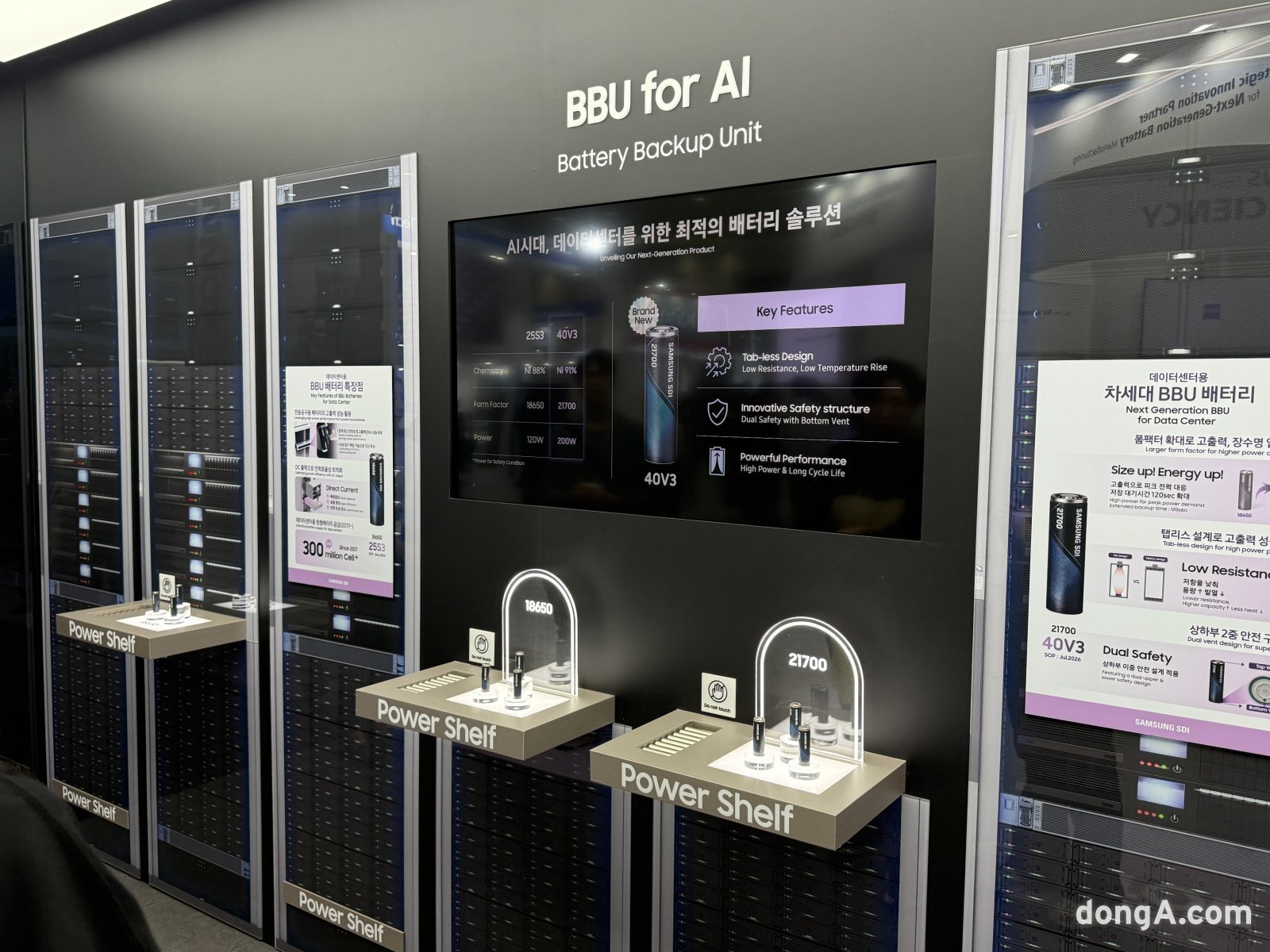
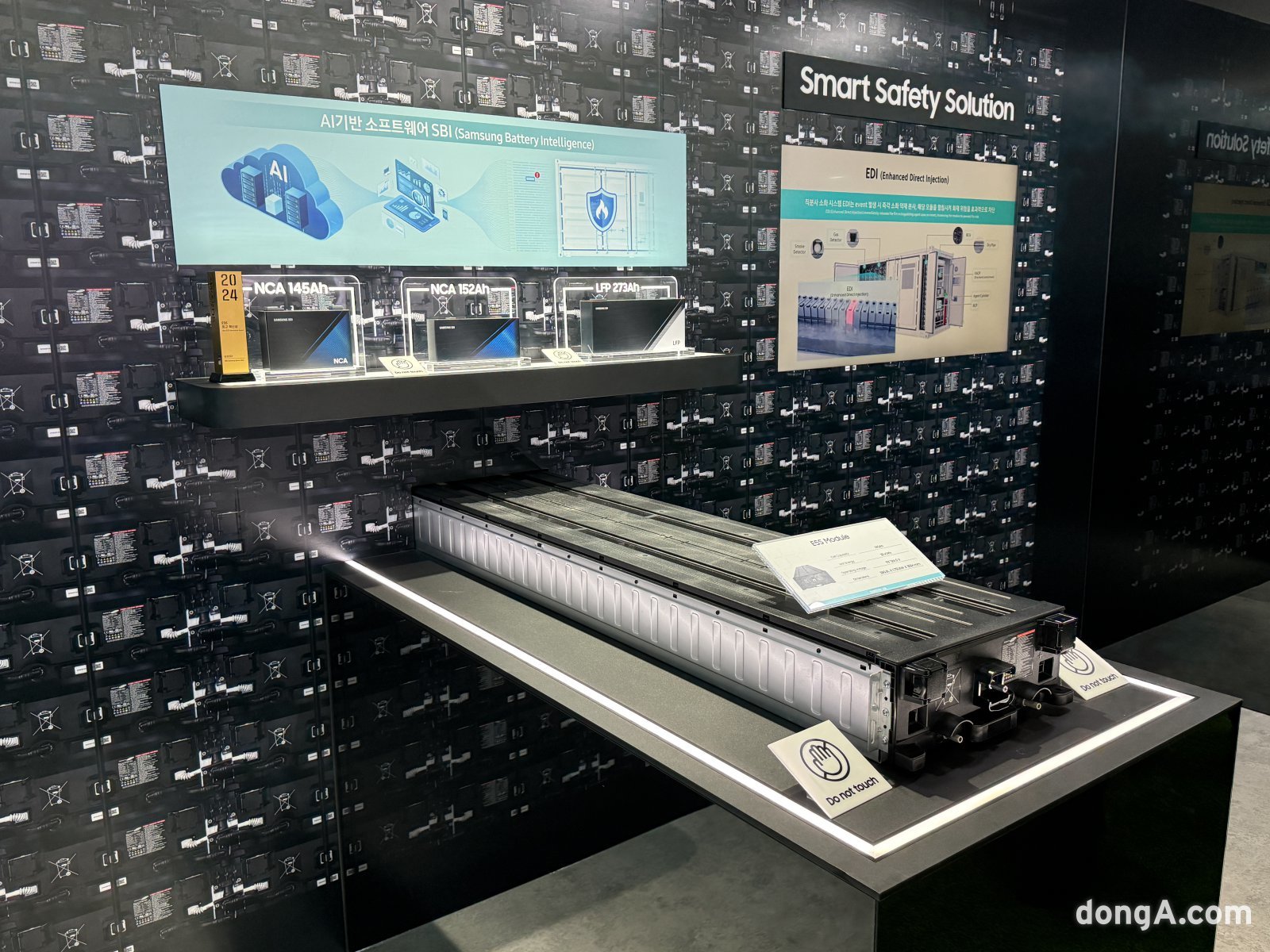
Behind this zone, Samsung SDI also unveiled a high-output battery for BBUs. Installed in data center servers, BBUs immediately supply power in blackout situations to prevent data loss. Samsung SDI explained, “We realized high output by adopting high-nickel NCA cathode materials and SCN anode materials,” adding that “by directly connecting ultra-high-output, high-capacity batteries to servers, the system can respond swiftly and immediately to power peaks.”
Photo=Reporter Kim Young-ho rladudgh2349@donga.com
Photo=Reporter Kim Young-ho rladudgh2349@donga.com
Particularly noteworthy was Samsung SDI’s ESS fire-prevention software “Samsung Battery Intelligence (SBI).” SBI is an AI-based battery health diagnostic system built on analytical technology learned from real-time tracking of more than 1,400 ESS units at home and abroad. It goes beyond simply generating analytical data to assess the quality of operations—such as variations in aging speed and output stability—through proprietary “state diagnostic indices.”
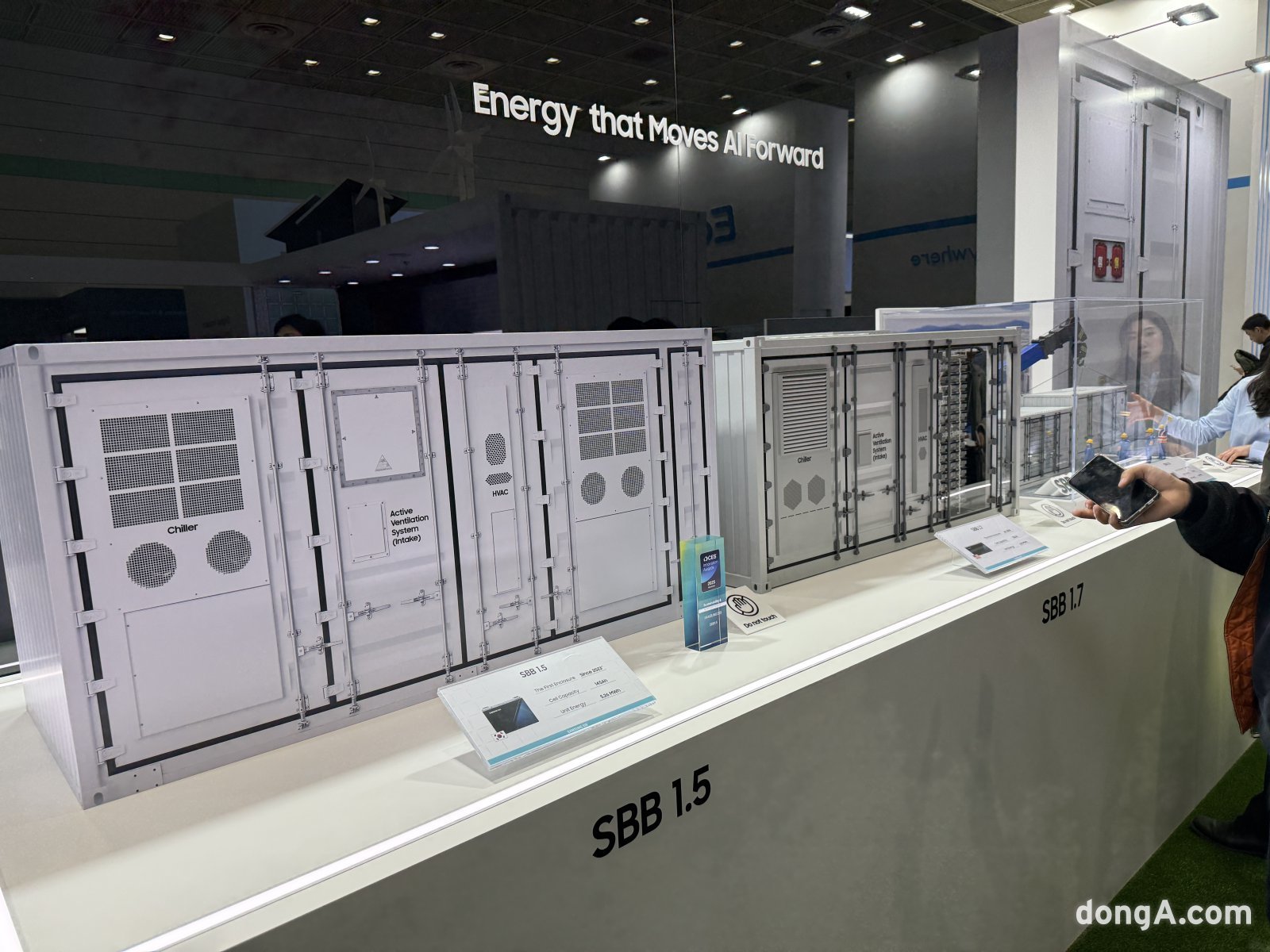
Also attracting interest was “SBB (Samsung Battery Box),” Samsung SDI’s ESS solution unveiled together with SBI. Its modular system incorporates SBI and a triple fire-prevention system. Samsung SDI plans to first introduce SBI in the SBB 1.5 product from October and then gradually expand it to the entire product lineup.
● Safer batteries: “Unaffected by fires or blackouts”
Photo=Reporter Kim Min-beom mbkim@donga.com
Photo=Reporter Kim Young-ho rladudgh2349@donga.com
Photo=Reporter Kim Young-ho rladudgh2349@donga.com
One of the central keywords of this exhibition was electric vehicles. As EV adoption, which had slowed last year, returns to a full-fledged growth trajectory this year, battery safety has emerged as a key factor influencing market trust.
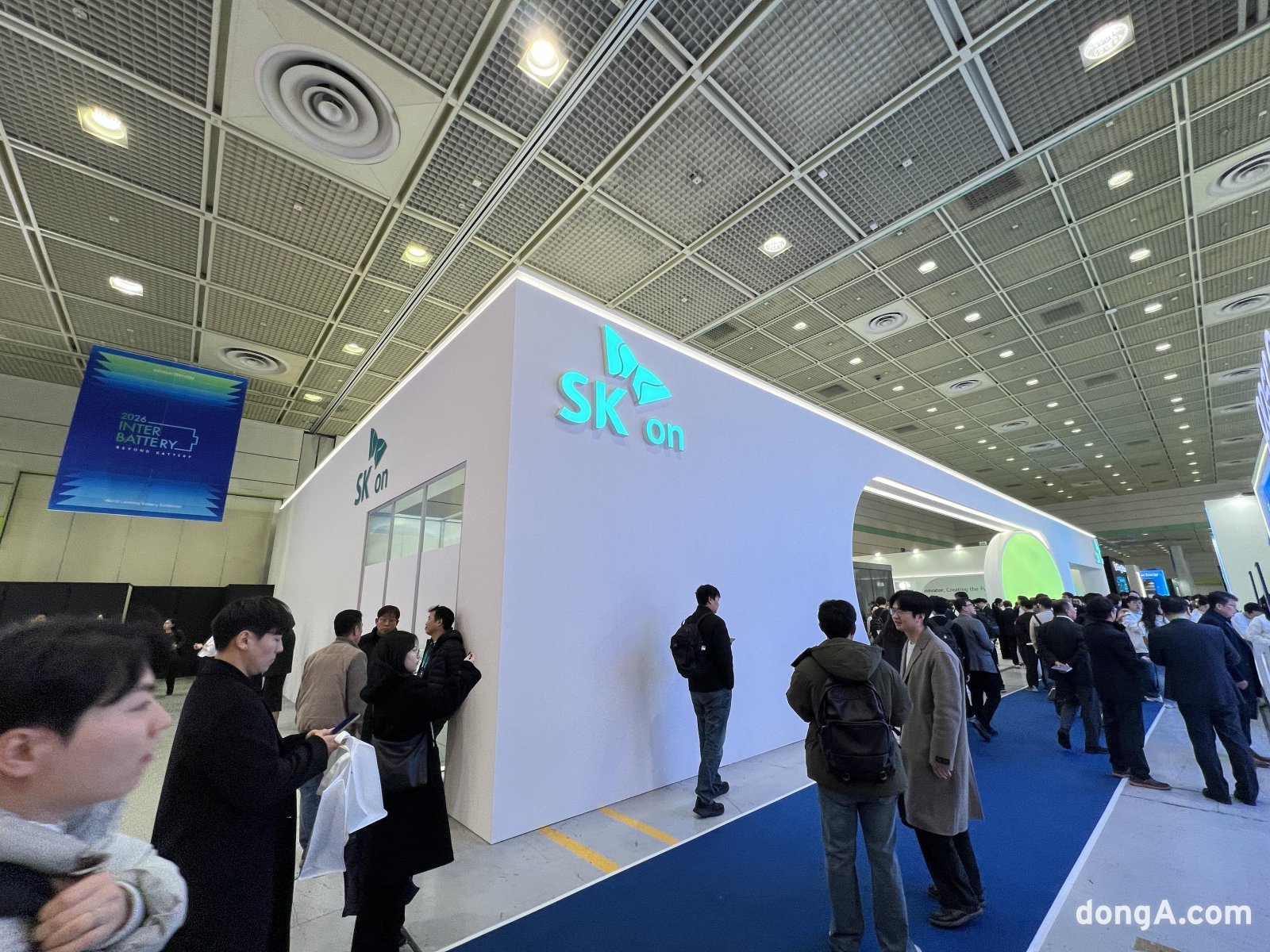
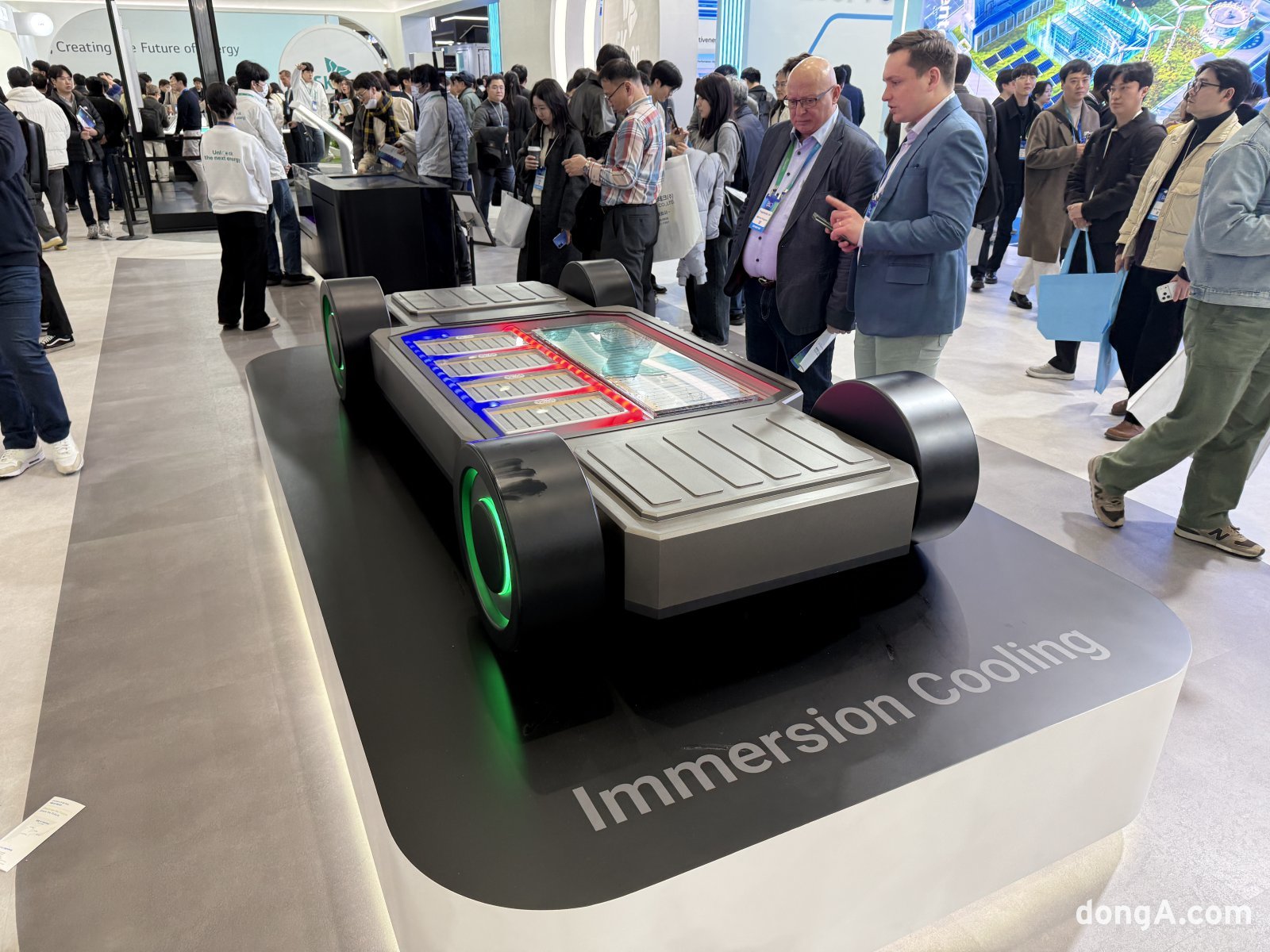
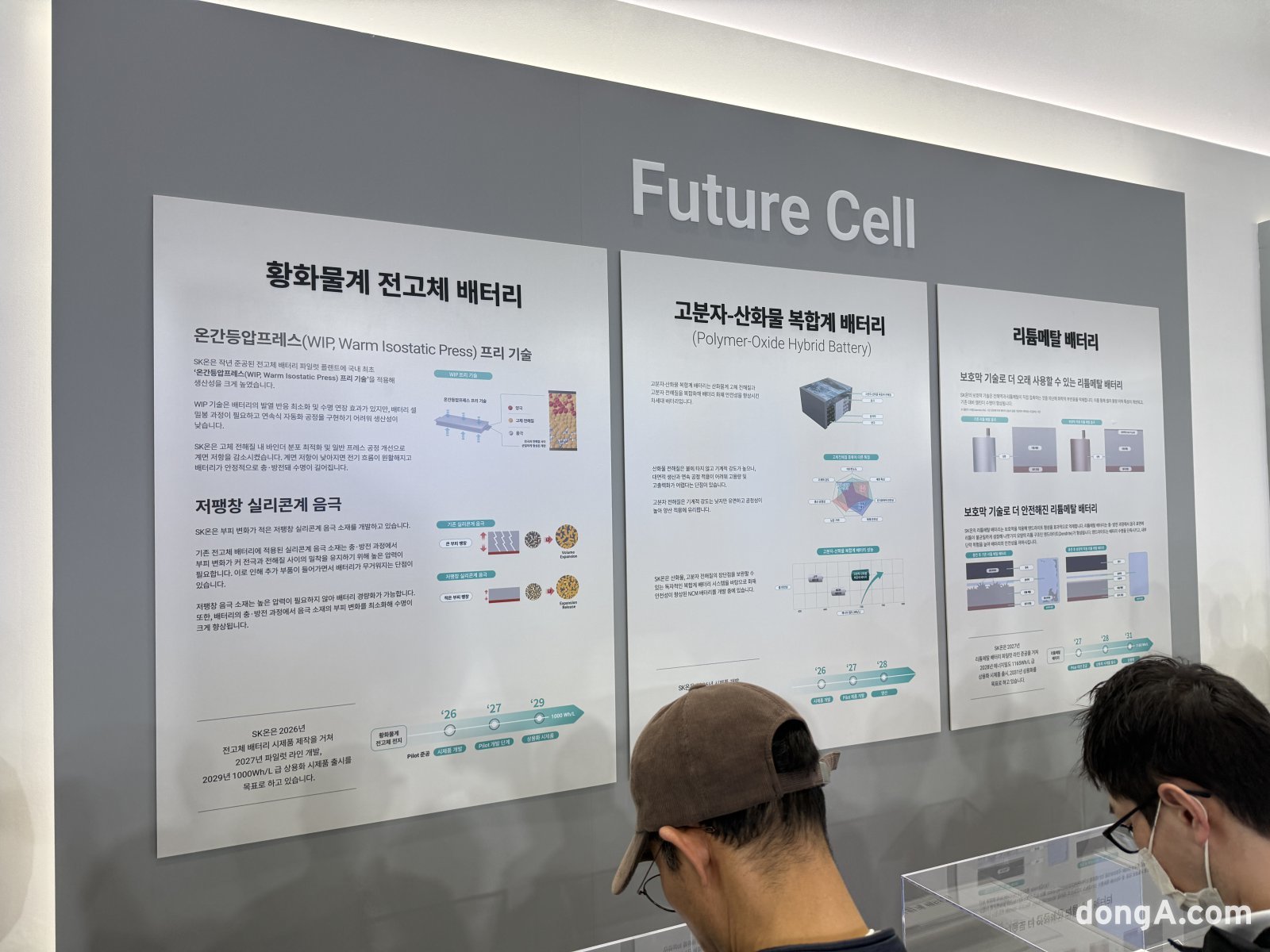
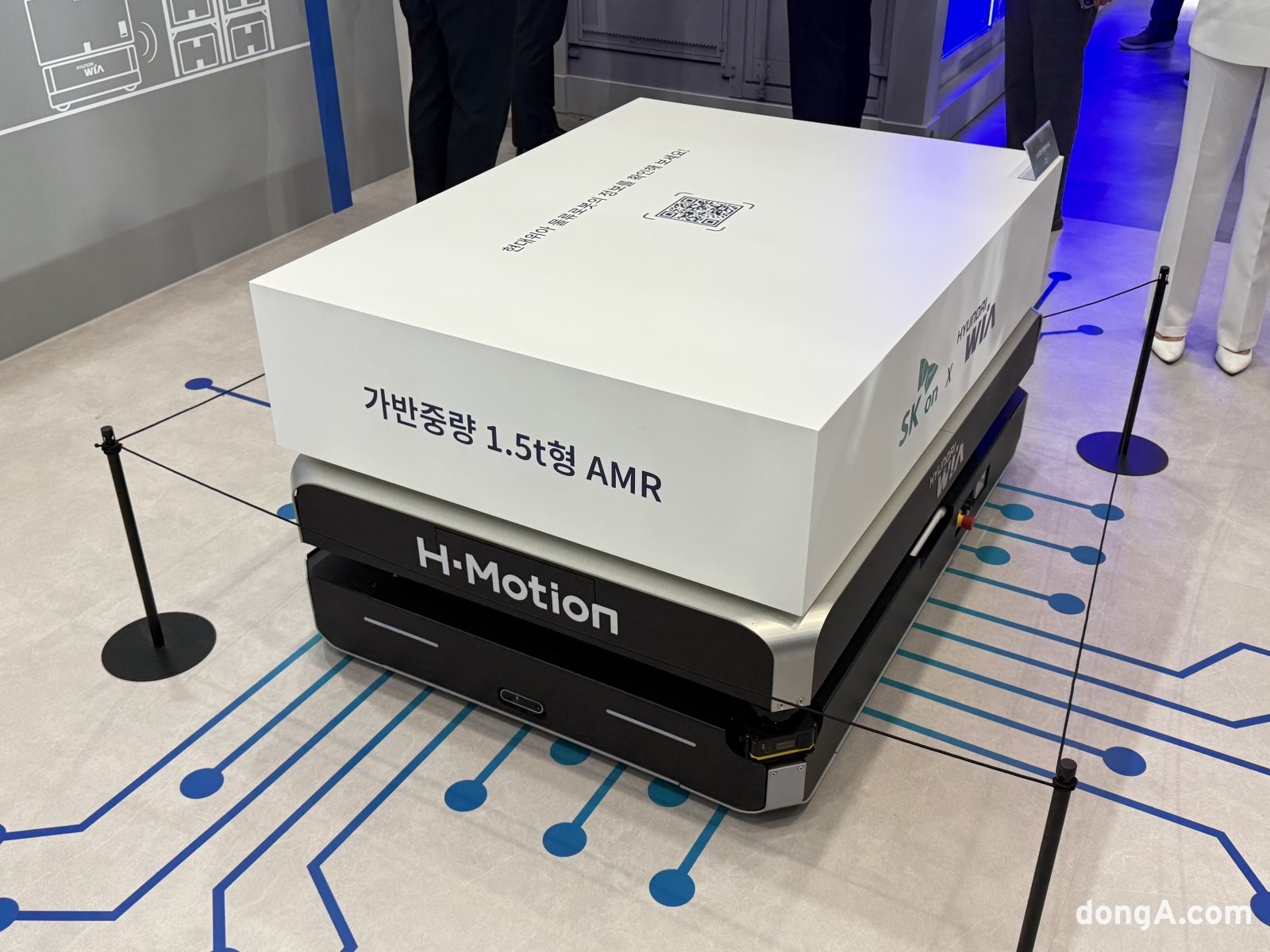
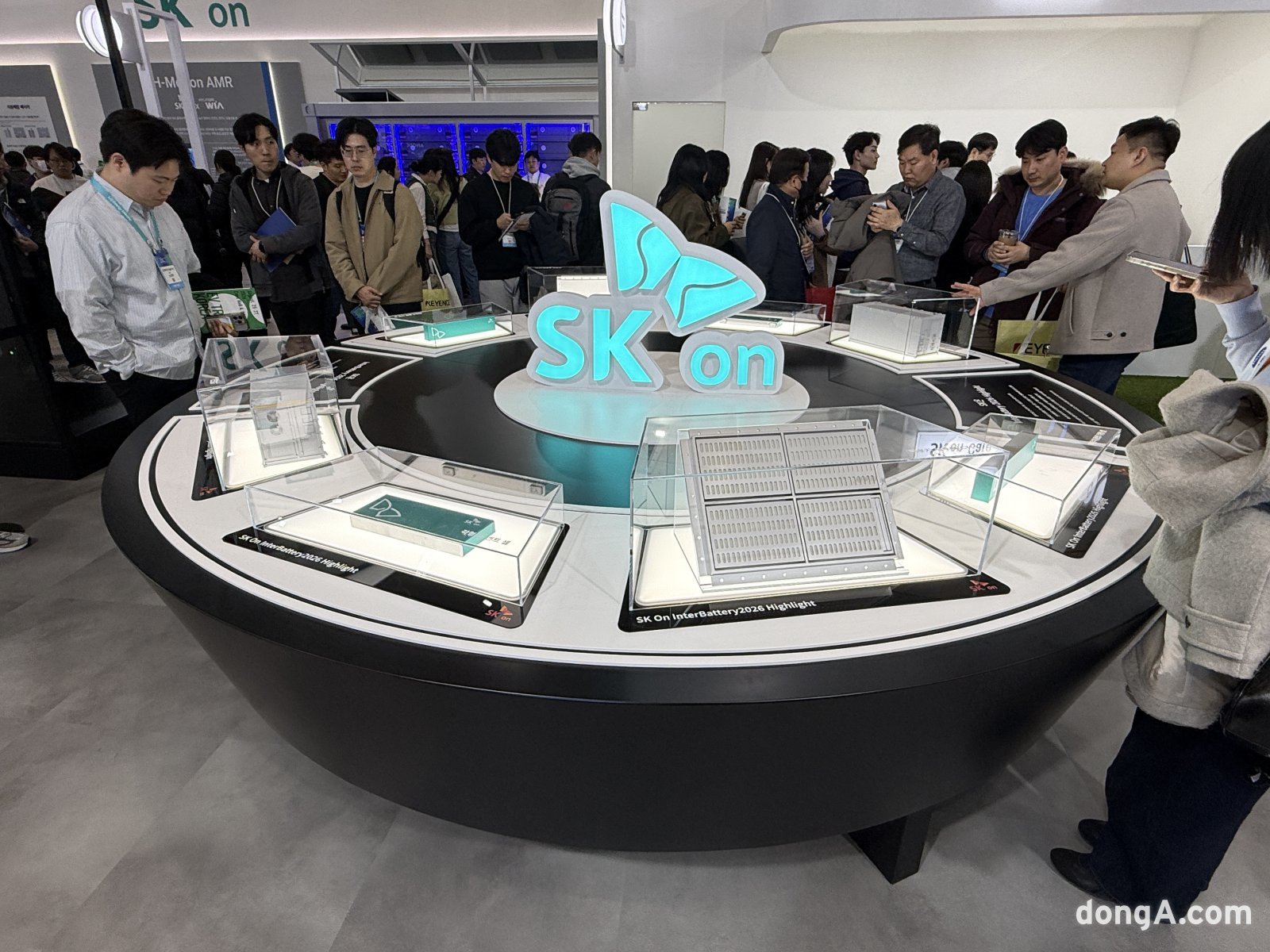
SK On presented three zones—Leading Tech, Core Tech, and Future Tech—under the theme “Unlock the Next Energy.” The highlight of the booth was the “immersion cooling pack” in the Future Tech zone. Co-developed with SK Enmove, this technology immerses battery cells in an insulating liquid to maintain a constant temperature, thereby reducing fire risk. It also preserves battery performance and lifespan in both ultra-low and high-temperature environments. SK On is considering expanding its application to data centers, ships, and urban air mobility (UAM).
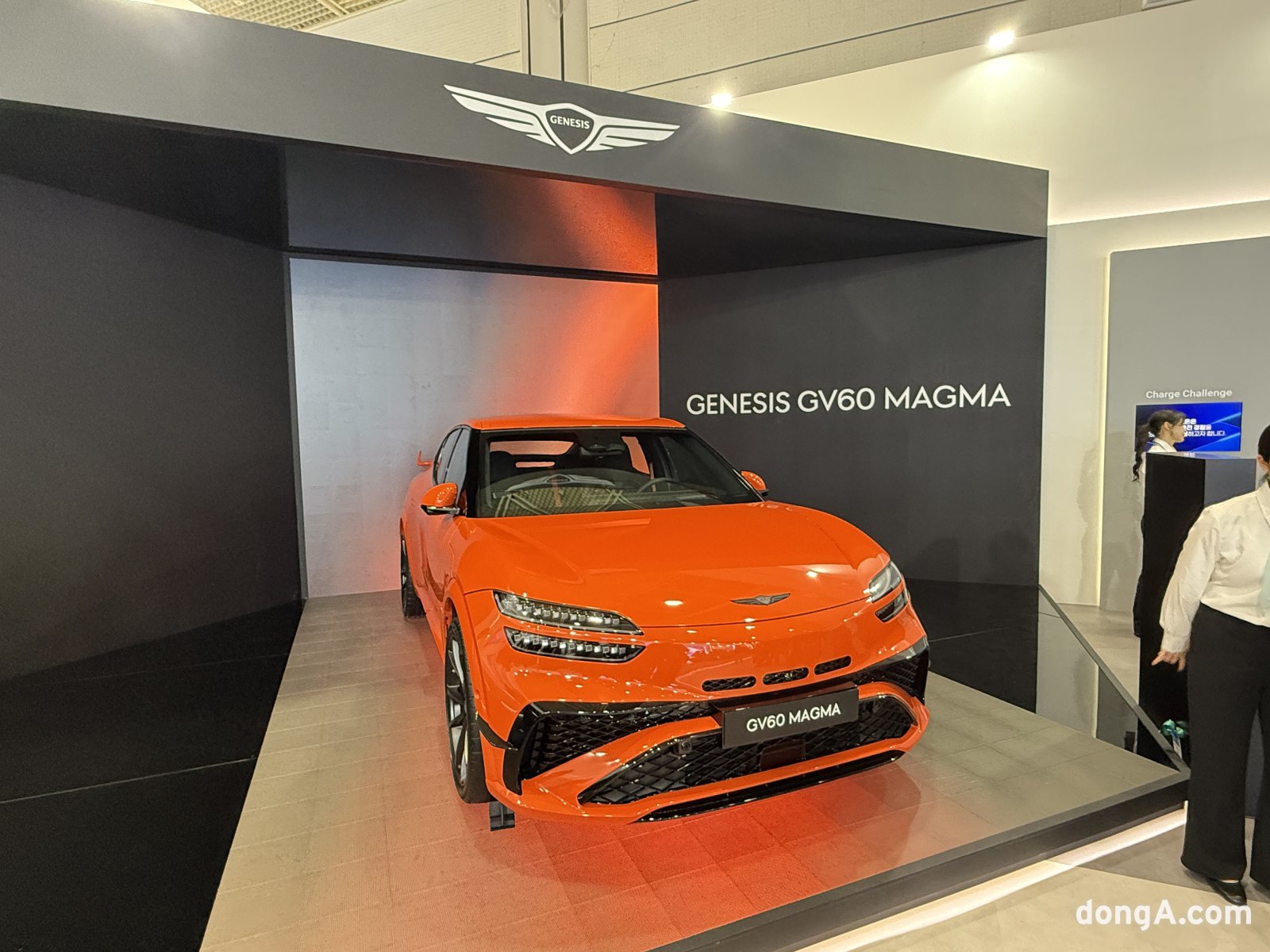
Elsewhere in the booth, SK On and Genesis’s collaborative vehicle, the GV60 Magma, was displayed. The vehicle is equipped with NCM pouch-type battery cells whose nickel content has been increased to the 88%–90% range to deliver high performance.
Photo=Reporter Kim Young-ho rladudgh2349@donga.com
Photo=Reporter Kim Young-ho rladudgh2349@donga.com
Photo=Reporter Kim Young-ho rladudgh2349@donga.com
Photo=Reporter Kim Young-ho rladudgh2349@donga.com
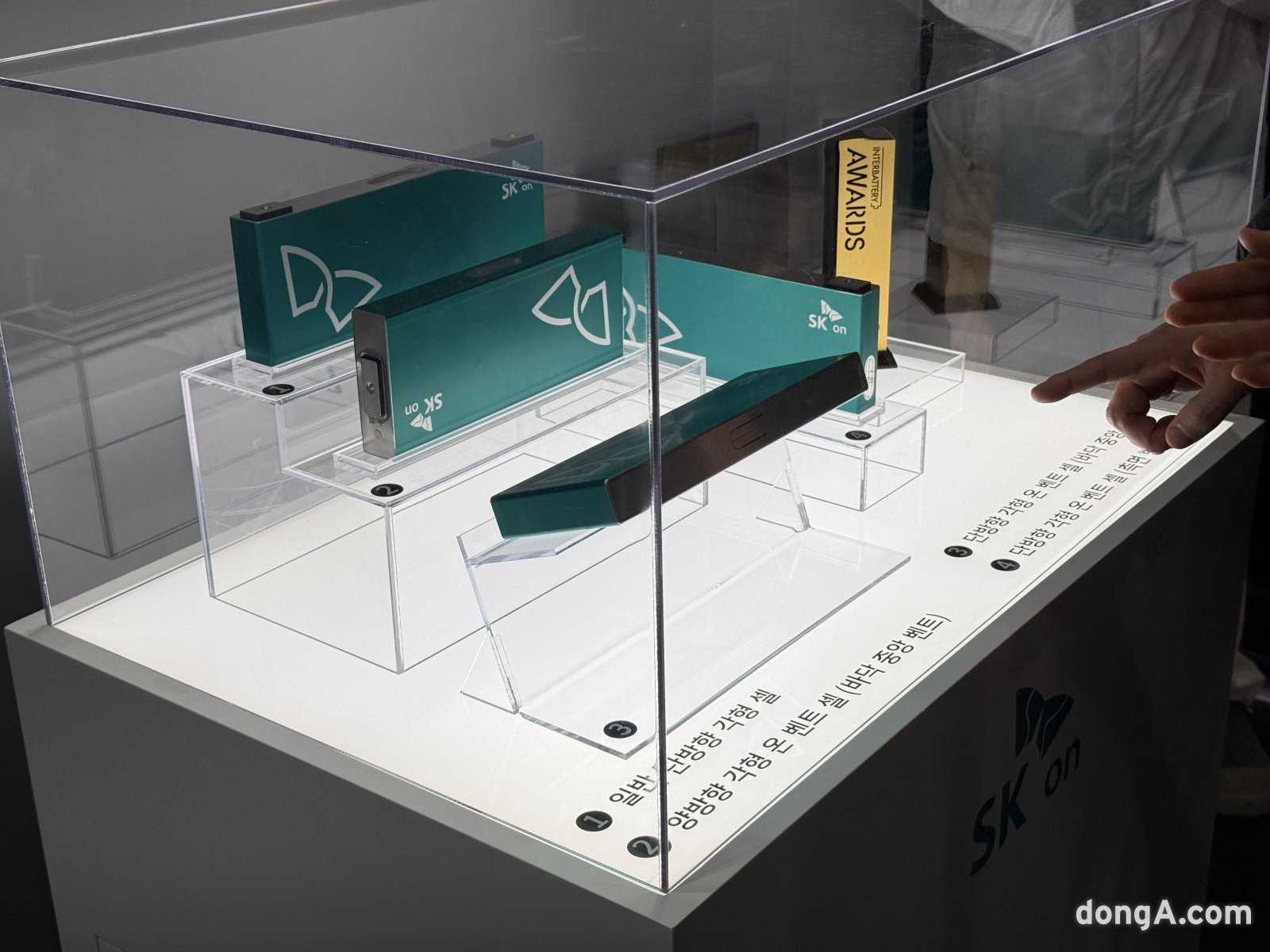
In the Core Tech zone that followed, SK On introduced its CTP (Cell to Pack) battery packaging technology. The “pouch CTP” aims to increase energy density while reducing manufacturing costs. Its structure features a heat-transfer blocking technology that prevents heat from spreading to adjacent cells even when a particular cell experiences a problem.
The “pouch-integrated prismatic pack” unveiled alongside this uses an aluminum prismatic case to encase pouch cells, combining the structural strength of prismatic formats with the design flexibility of pouch cells. It is designed to address both resistance to external impact and adaptability to vehicle design. Also on display was the “large-area cooling CTP,” which enhances cooling efficiency by attaching cooling plates to the broad surfaces of cells, thereby improving cooling performance compared with conventional bottom-cooling methods.
Photo=Reporter Kim Young-ho rladudgh2349@donga.com
Photo=Reporter Kim Young-ho rladudgh2349@donga.com
Photo=Reporter Kim Young-ho rladudgh2349@donga.com
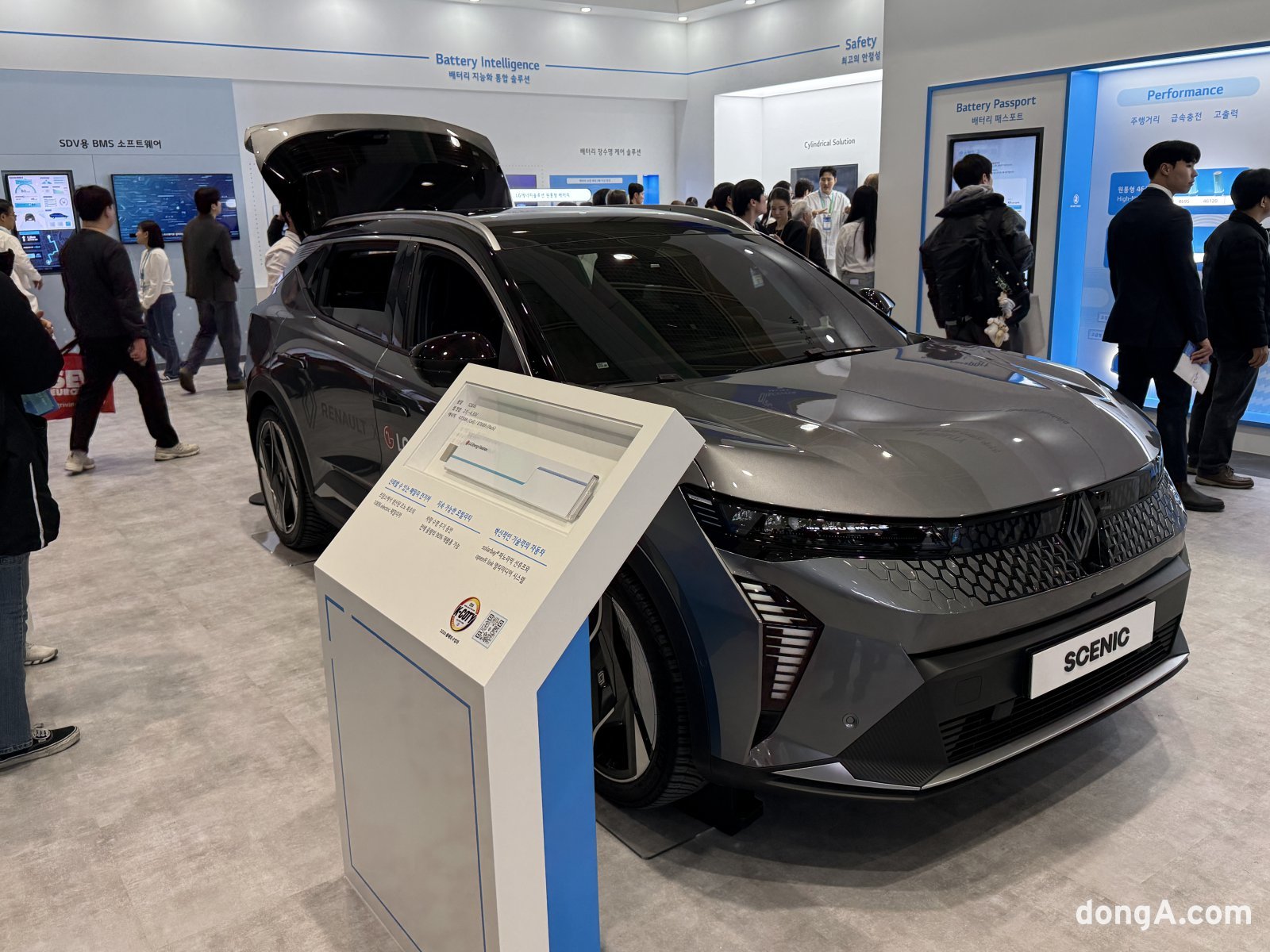
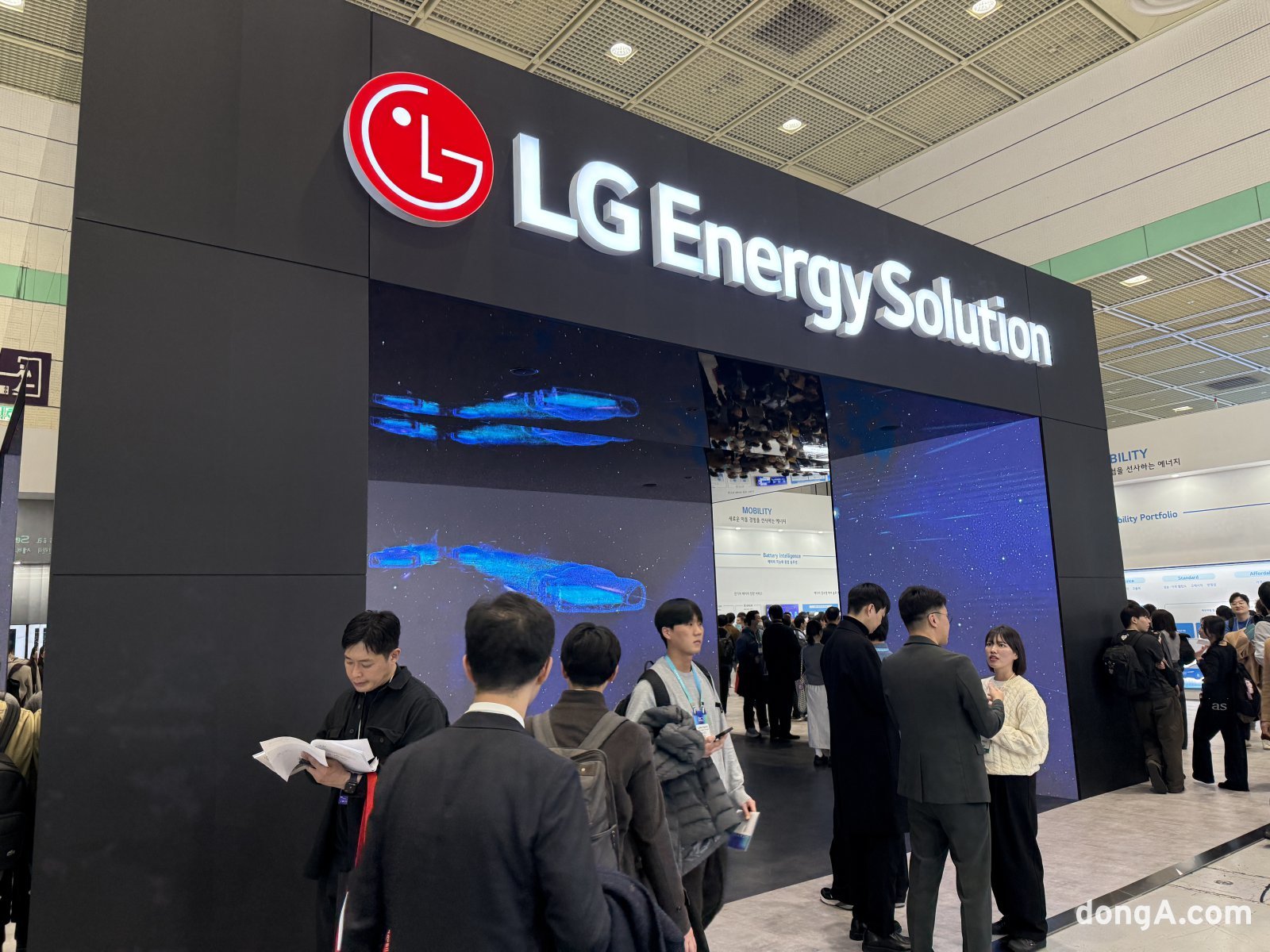
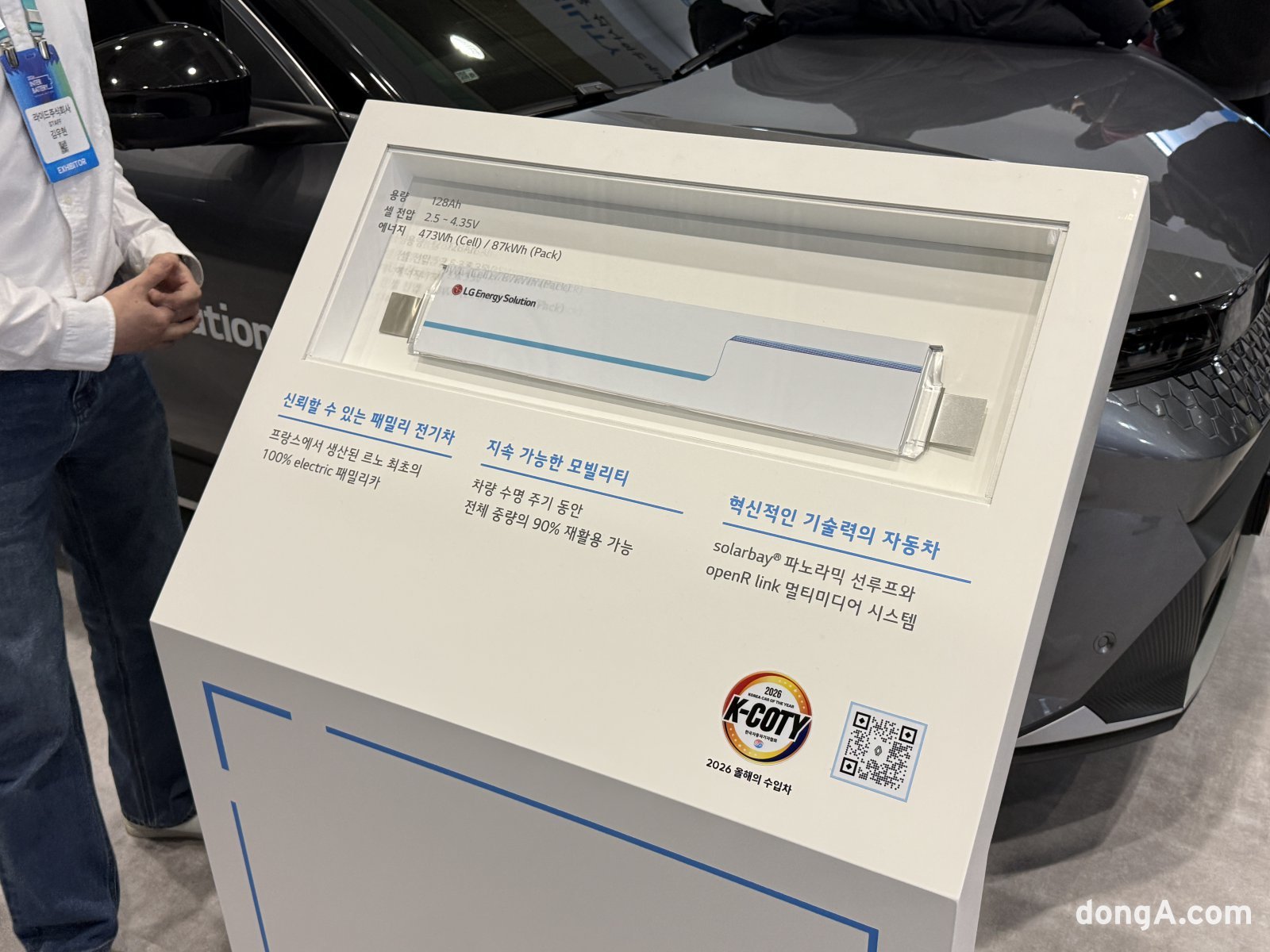
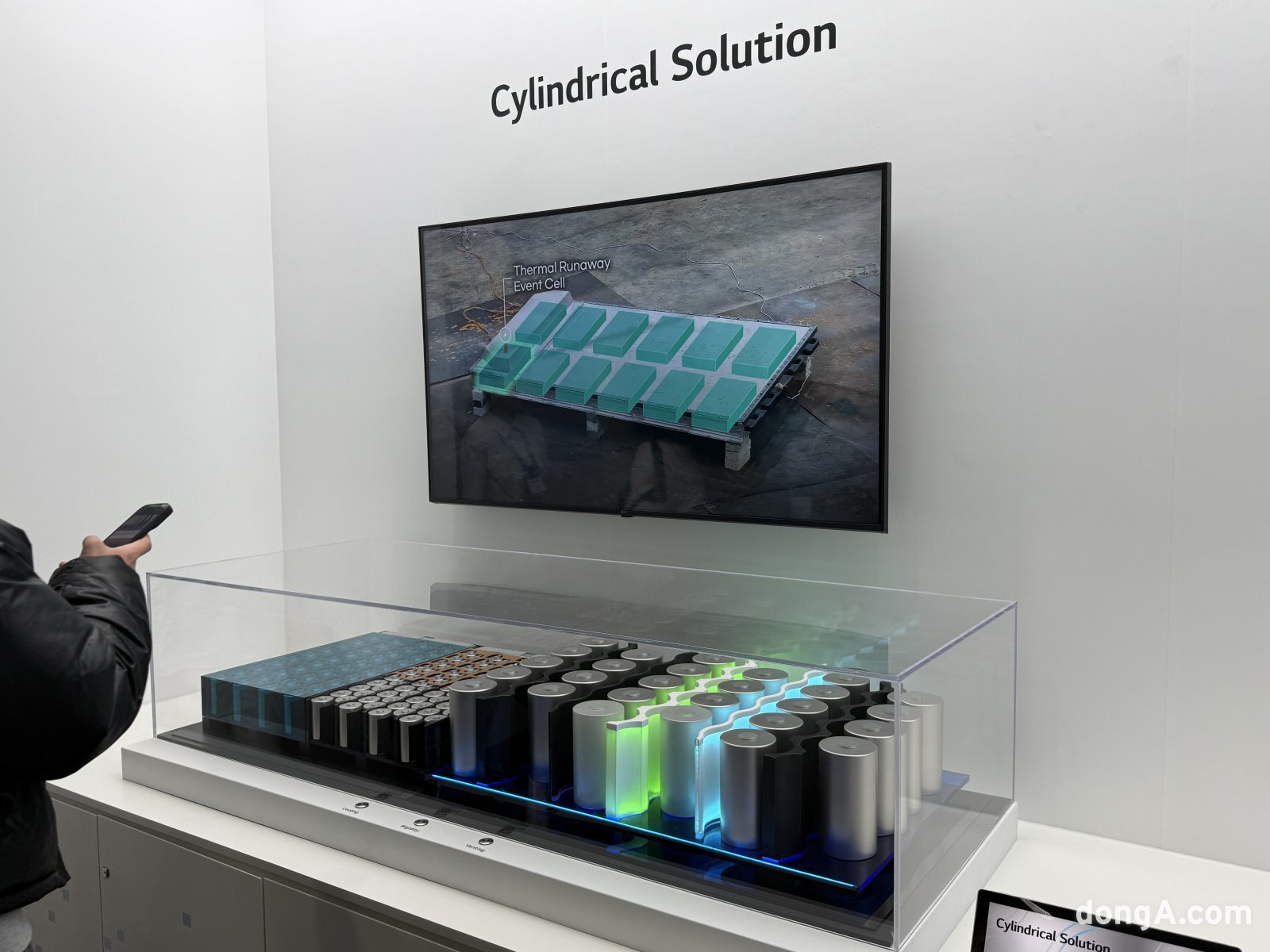
LG Energy Solution also put all-solid-state batteries at the forefront, emphasizing three core keywords: “safety, space efficiency, and high output.”
First, LG Energy Solution presented a “two-track” all-solid-state strategy tailored to market characteristics. For the EV market, where mass production and manufacturing stability are crucial, the company plans to apply “graphite-based all-solid-state” batteries that leverage existing lithium-ion battery processes and material technologies.
Conversely, for markets such as humanoid robots and UAM (urban air mobility), where space constraints are severe, the company aims to first apply “anode-free all-solid-state” batteries by 2030.
Photo=Reporter Kim Young-ho rladudgh2349@donga.com
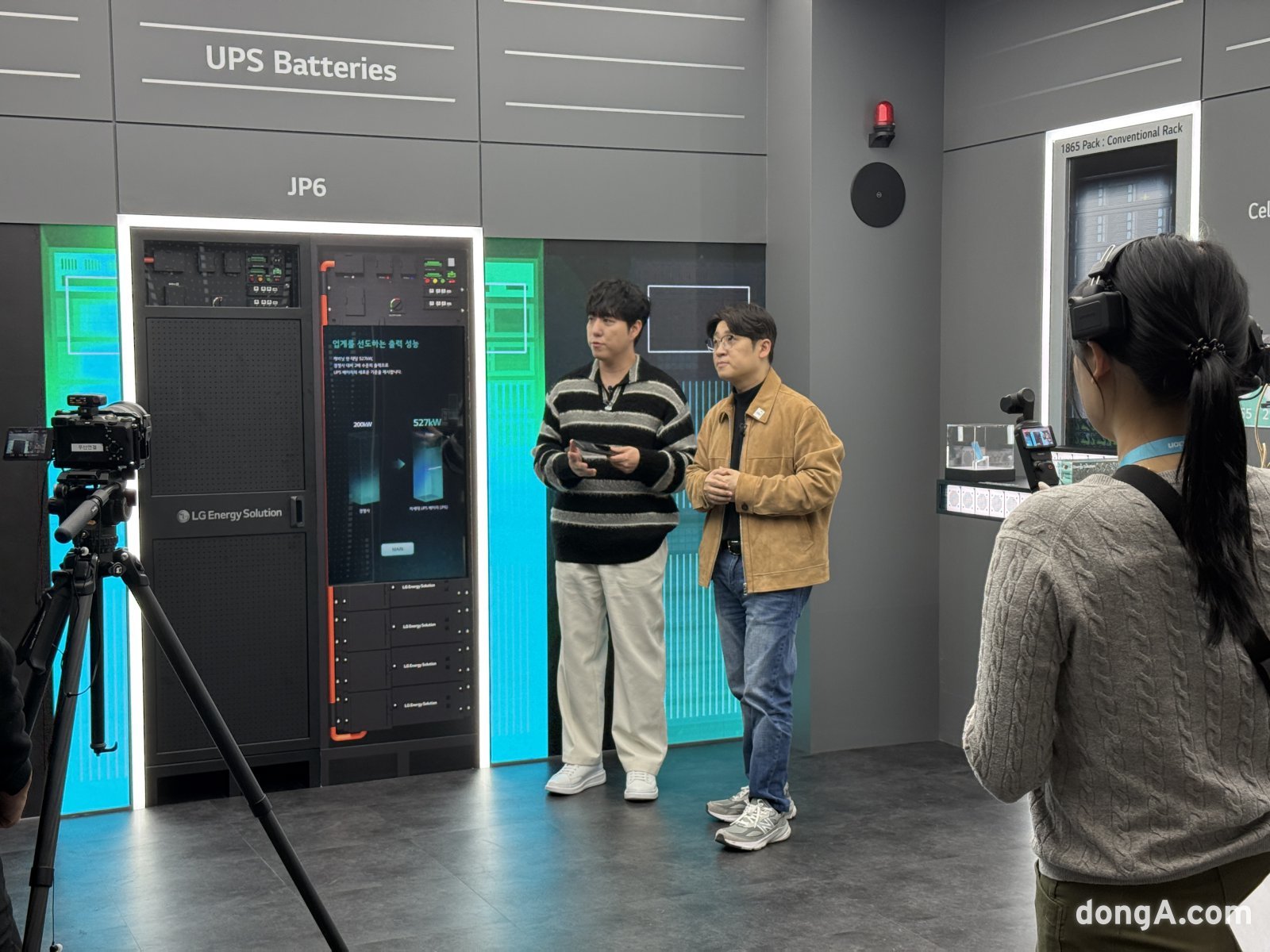
YouTuber Gwedo receiving an explanation at the LG Energy Solution booth. Photo=Reporter Kim Young-ho rladudgh2349@donga.com
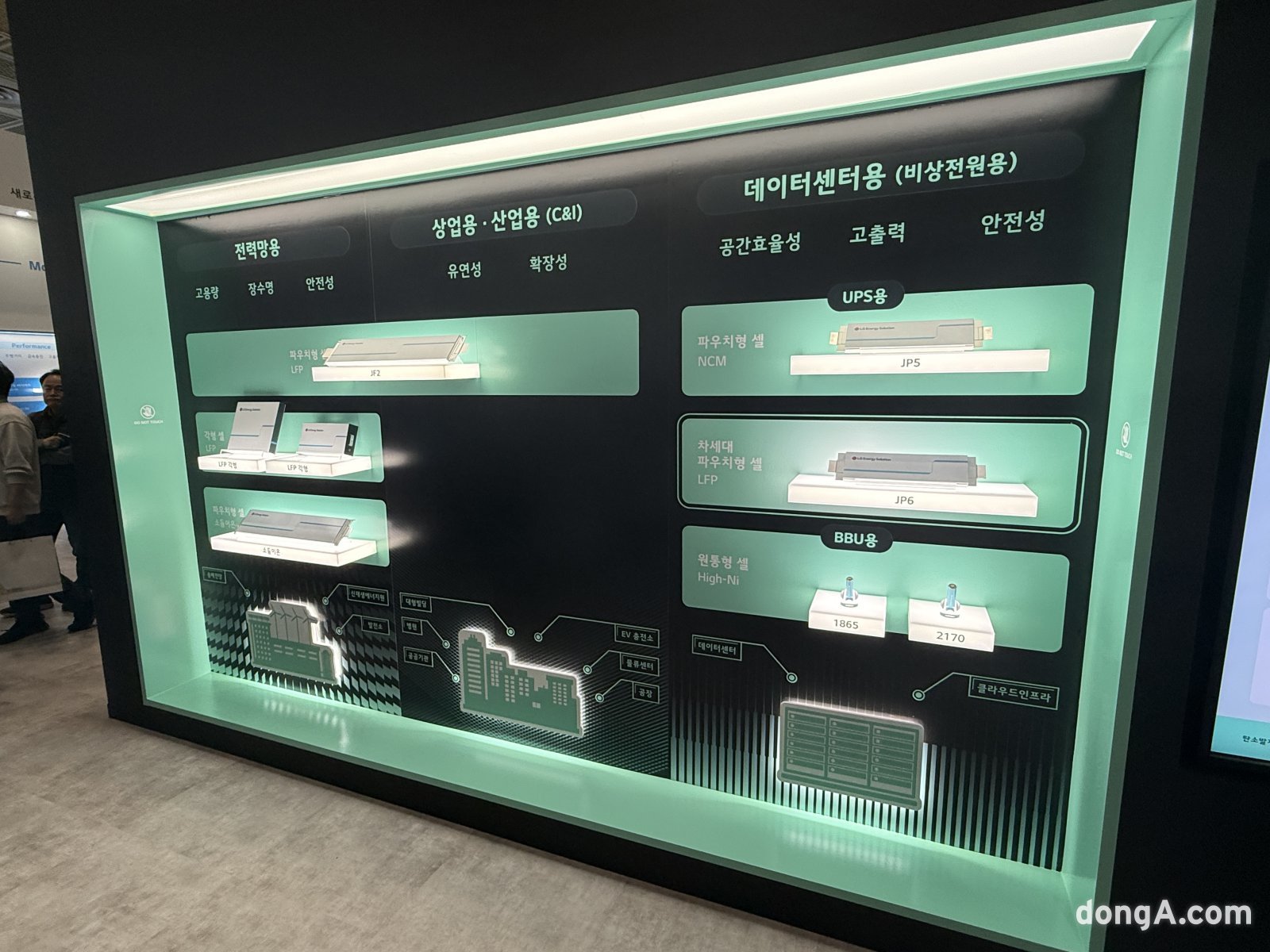
In the data center zone in the middle of the booth, LG Energy Solution unveiled battery cells for UPS and BBU (battery backup units) for AI data centers. These two types of batteries supply emergency power to prevent data loss in emergencies such as blackouts and fires. At the far end of the exhibition area, a “blackout experience zone” was set up where visitors could experience the operation of emergency power systems.
Opposite this area was “JF2 DC LINK 5.0,” a power-grid ESS solution that won
ⓒ dongA.com. All rights reserved. Reproduction, redistribution, or use for AI training prohibited.
Popular News