Riding the wave of the artificial intelligence (AI) revolution, SK has ushered in a new heyday by posting record-high profitability in its semiconductor business. In particular, it set a new milestone in annual earnings based on its overwhelming leadership in the high bandwidth memory (HBM) market, a core component of AI servers, while also marking an all-time high in sales, solidifying its status as a “memory powerhouse.” Having completed its rebalancing, the SK Group now encompasses the full spectrum of global AI solutions. This article examines how SK Group has transformed itself from a semiconductor component supplier into an architect of the global AI ecosystem.
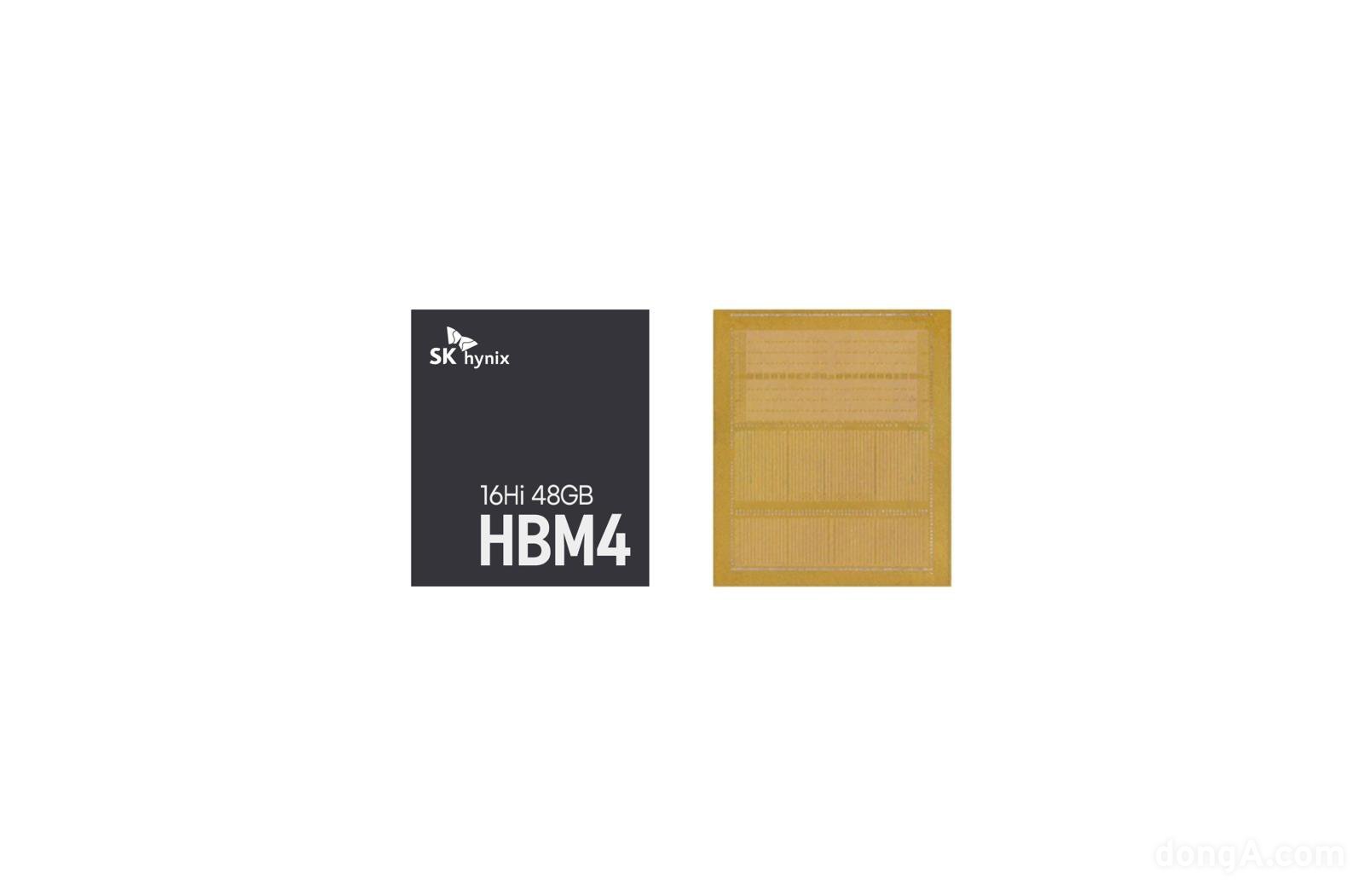
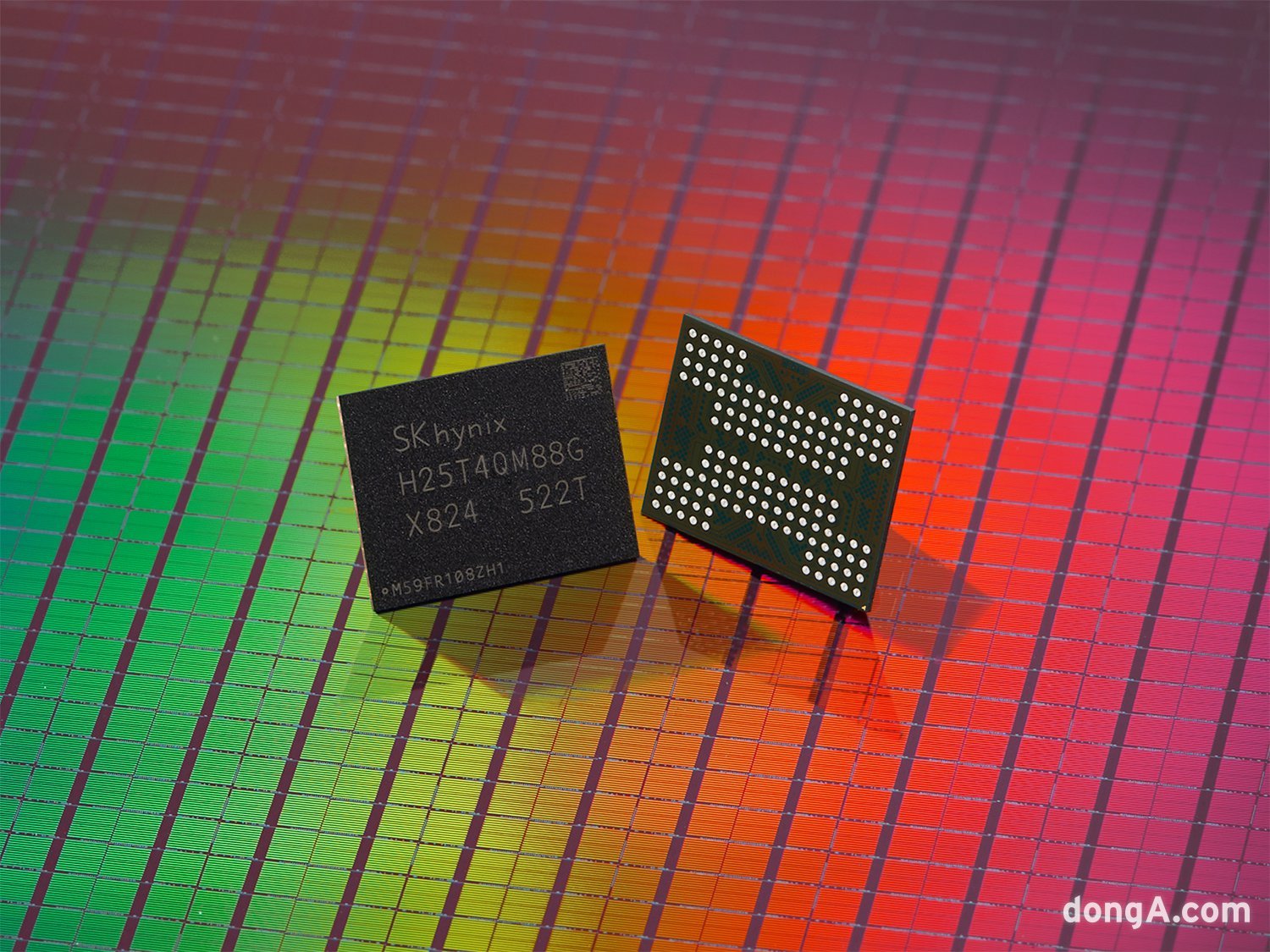
SK hynix HBM4 semiconductor.
In January this year, SK hynix unveiled remarkable results: annual sales of KRW 97.1 trillion and operating profit of KRW 47.2 trillion for 2025. This is being evaluated not merely as a record-breaking performance, but as an event that shifted the center of gravity of Korea’s semiconductor industry. By leading the high bandwidth memory (HBM) market, a key component of the AI era, SK hynix has moved beyond its past status as a follower to establish itself as a “market architect.” This article takes an in-depth look at SK hynix’s technology strategy as it aims for a major leap forward in 2026.
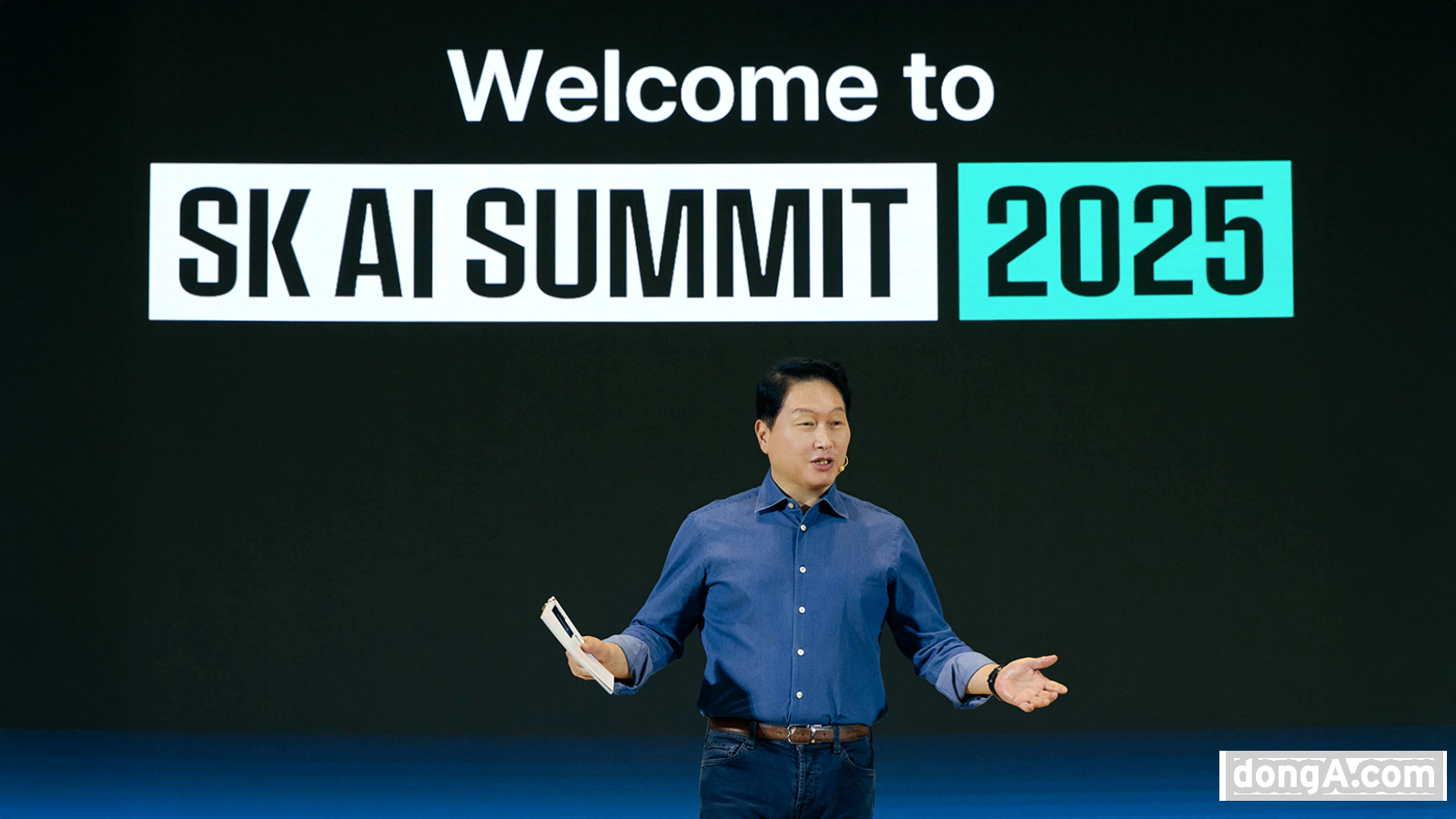
Chey Tae-won, Chairman of SK Group.
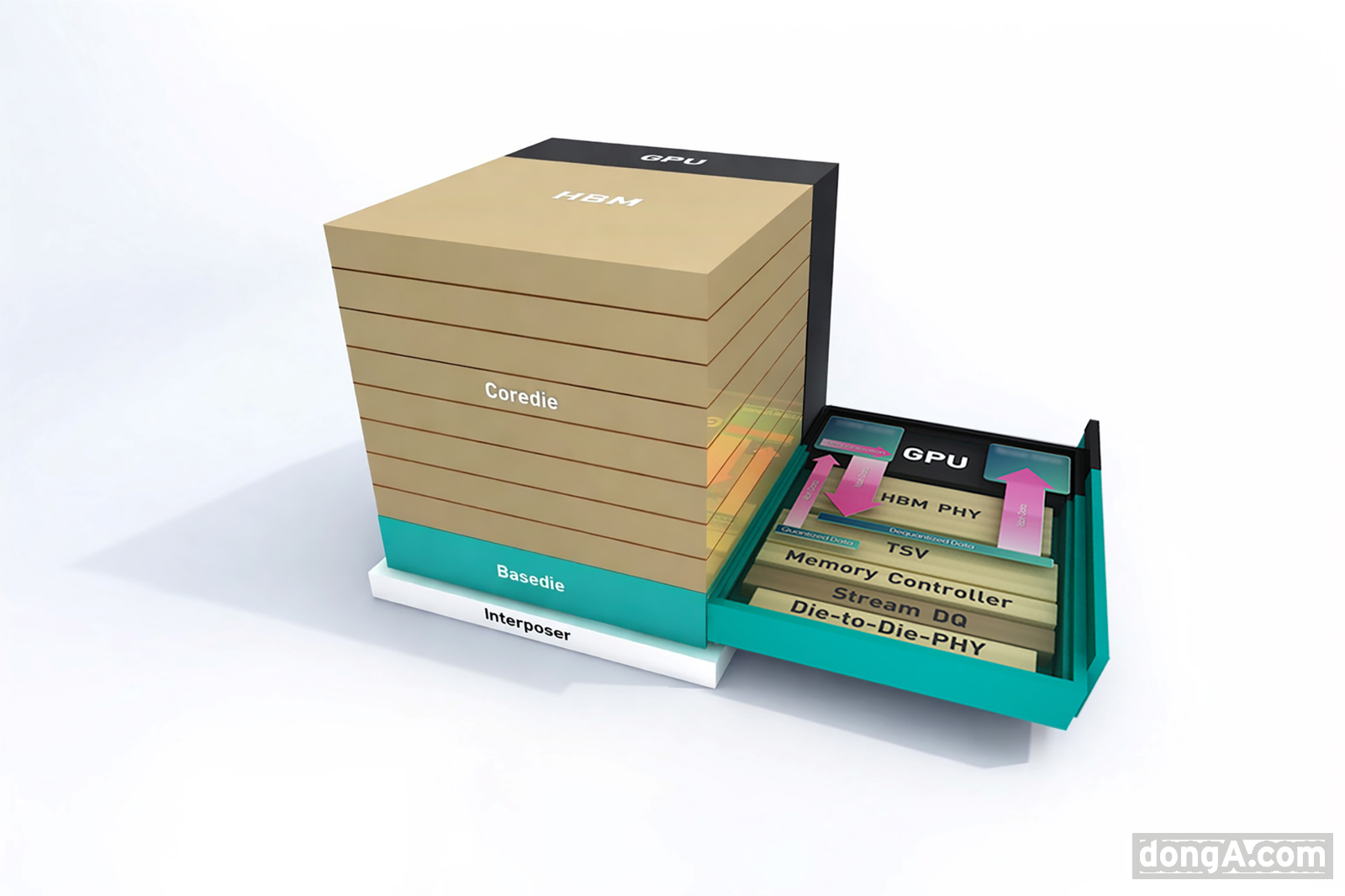
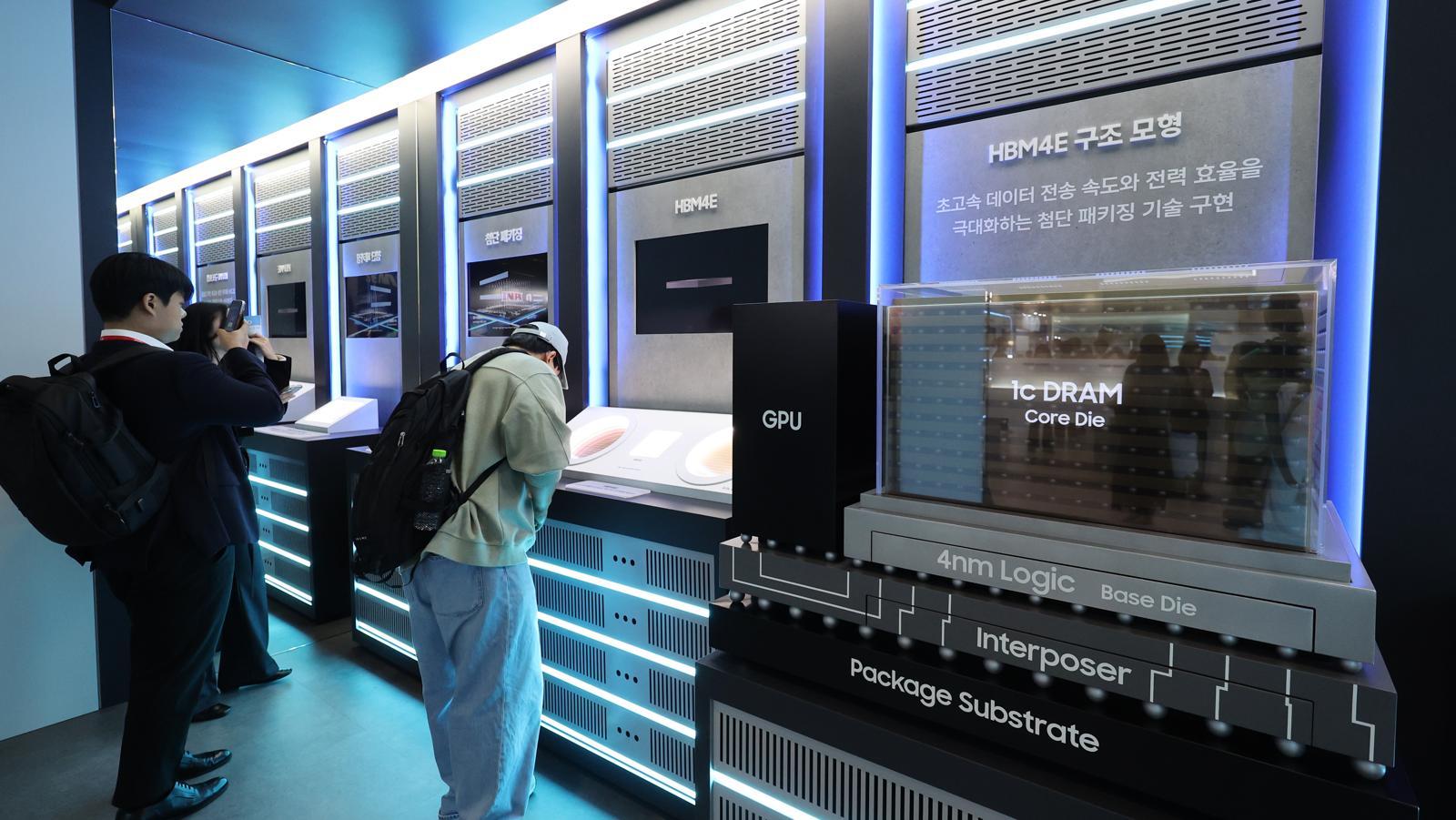
Innovation that resolved data bottlenecks…HBM4 and proprietary process technologyThe core of AI computation lies in how quickly massive volumes of data can be processed. Whereas conventional memory has a planar structure, HBM is a product in which memory chips are stacked vertically, dramatically increasing the data pathways. This innovation is analogous to transforming a narrow road into a multi-level elevated highway system.
Internal structure of SK hynix HBM.
The source of SK hynix’s unrivaled competitiveness is its MR-MUF (Mass Reflow-Molded Underfill) process. Heat generation that occurs when stacking semiconductors vertically has long been cited as a major challenge for the industry. SK hynix secured 2.5 times better thermal dissipation efficiency and improved production stability by injecting a liquid-form special protective material to completely fill the gaps between chips and then curing it all at once.
SK hynix 321-layer QLC NAND semiconductor.
The sixth-generation product HBM4 (16-high), which has completed development, has been selected as a key component for NVIDIA’s next-generation AI accelerator, Rubin. From this generation, SK hynix has formed a technology alliance with TSMC, the world’s largest foundry, and introduced TSMC’s leading-edge 2nm process node to the logic die. By combining its memory manufacturing capabilities with TSMC’s advanced process precision, SK hynix is pursuing an open-platform strategy that pushes performance to the extreme.
The strategic advantage of collaborating with TSMC lies in providing customers with “proven reliability” through partnership with the world’s leading foundry. In the AI era, memory does not operate in isolation; its organic integration with processors is critical. Global big tech companies highly value the “symbiotic ecosystem” established by SK hynix and TSMC, each of which possesses proprietary technological strength.
A decade of strategic patience…“Turning market skepticism into conviction”SK hynix’s current success is not a short-term outcome, but the result of persistent investment over 10 years. When it developed HBM1 in 2013, a world first, many in the market took a skeptical view due to its high price and uncertain demand. In particular, during the semiconductor downturn in 2019, when competitors downsized their dedicated HBM organizations in the name of efficiency, SK hynix made the decision to concentrate the company’s full capabilities on research into next-generation HBM3 technology instead.
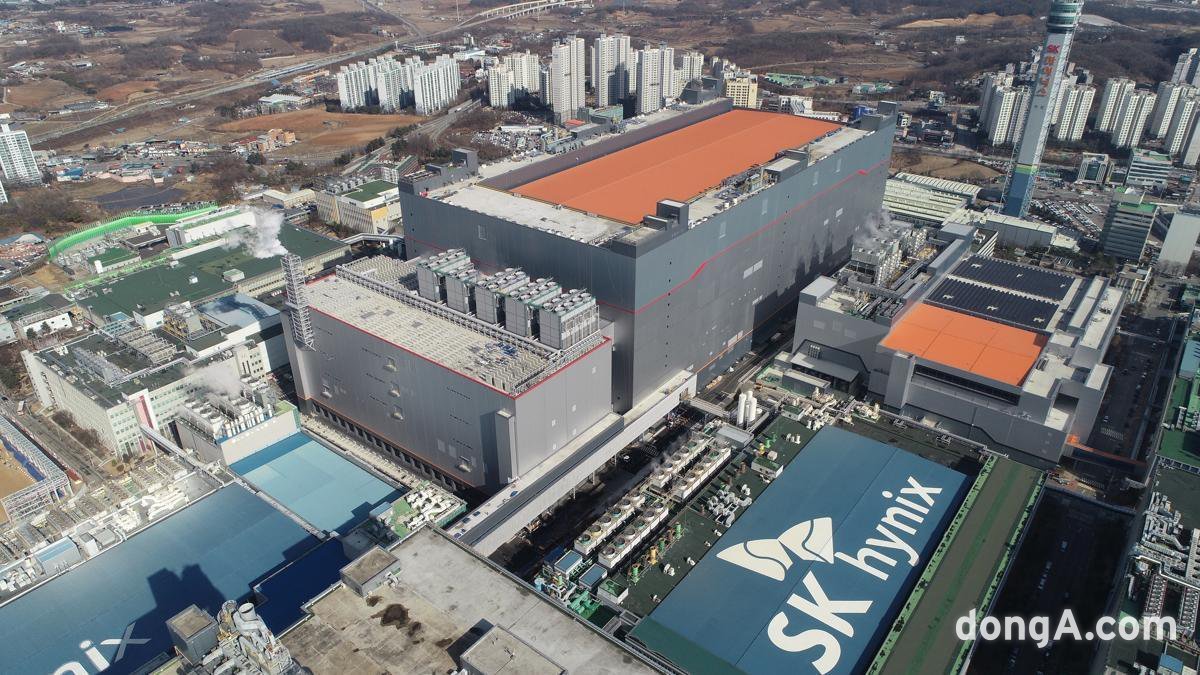
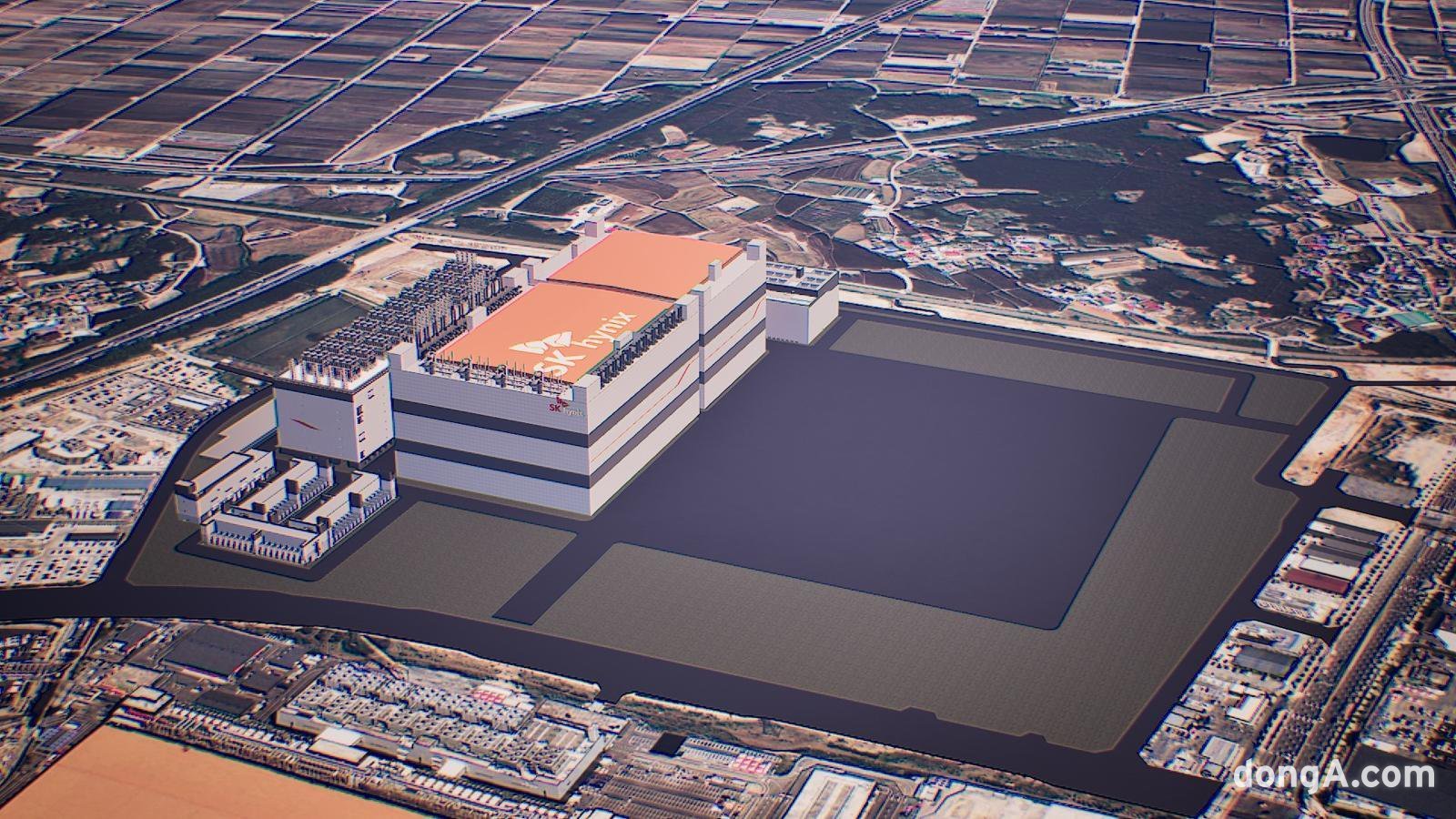
SK hynix semiconductor plant.
At the time, management was reportedly convinced that in the future AI era, memory would move beyond the role of a simple storage device to become a central player in assisting computation. This strategic judgment became a decisive factor in SK hynix being chosen as NVIDIA’s most important partner when the generative AI market began to expand explosively from 2023 onward. It was, in effect, a “prepared victory” achieved by anticipating market shifts and accumulating technological capabilities in advance.
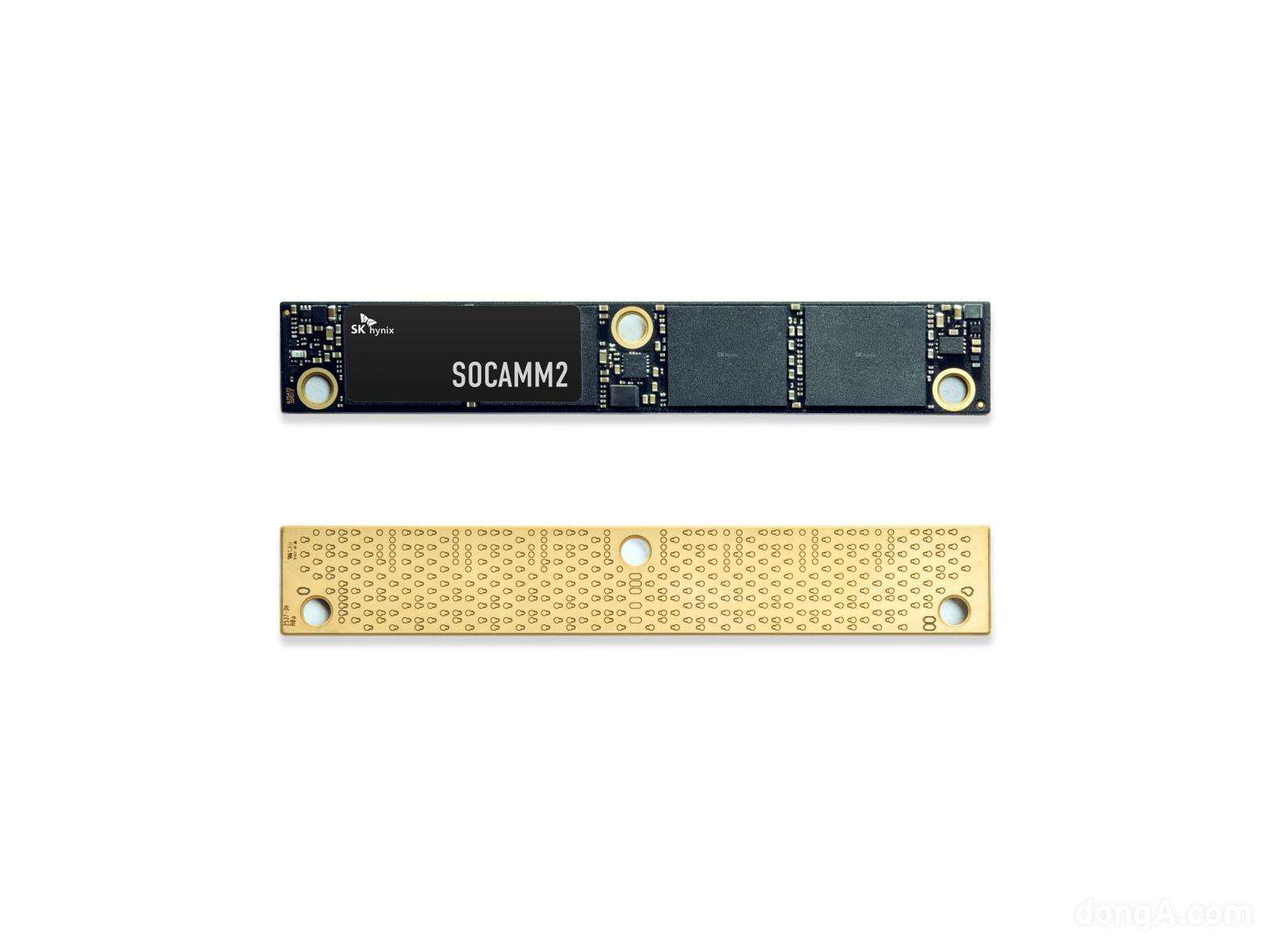
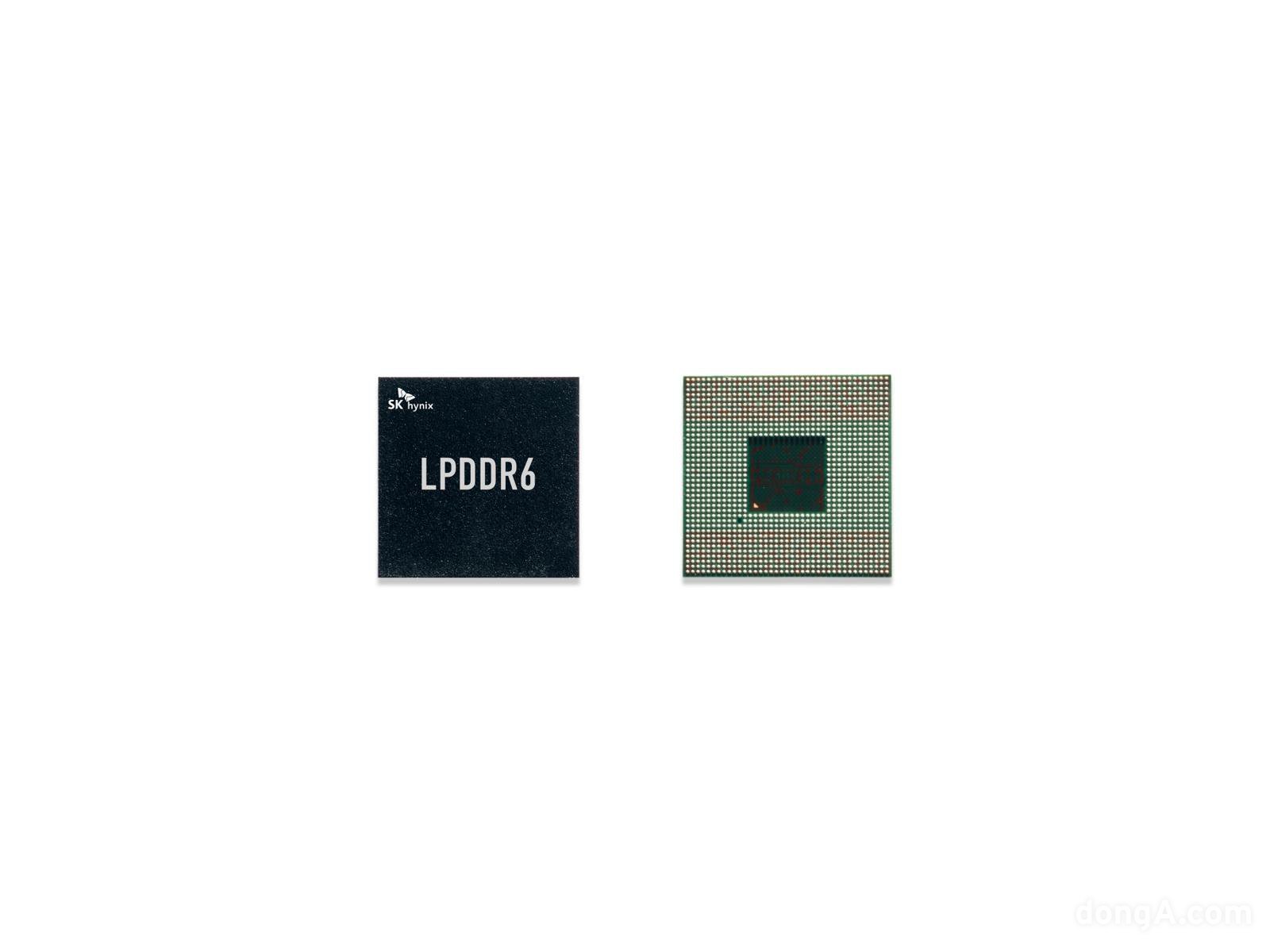
SK hynix semiconductor.
Three growth drivers toward the 2026 “KRW 100 trillion operating profit” milestoneIndustry and financial market forecasts suggest that SK hynix’s annual operating profit in 2026 will approach KRW 100 trillion. The basis for this optimistic outlook can be summarized in three pillars.
First is leadership in the custom HBM market. As global big tech companies demand memory optimized for their AI chips, the share of highly profitable “customized products” is expected to exceed 45% of total HBM revenue.
Kwak Noh-jung, CEO of SK hynix.
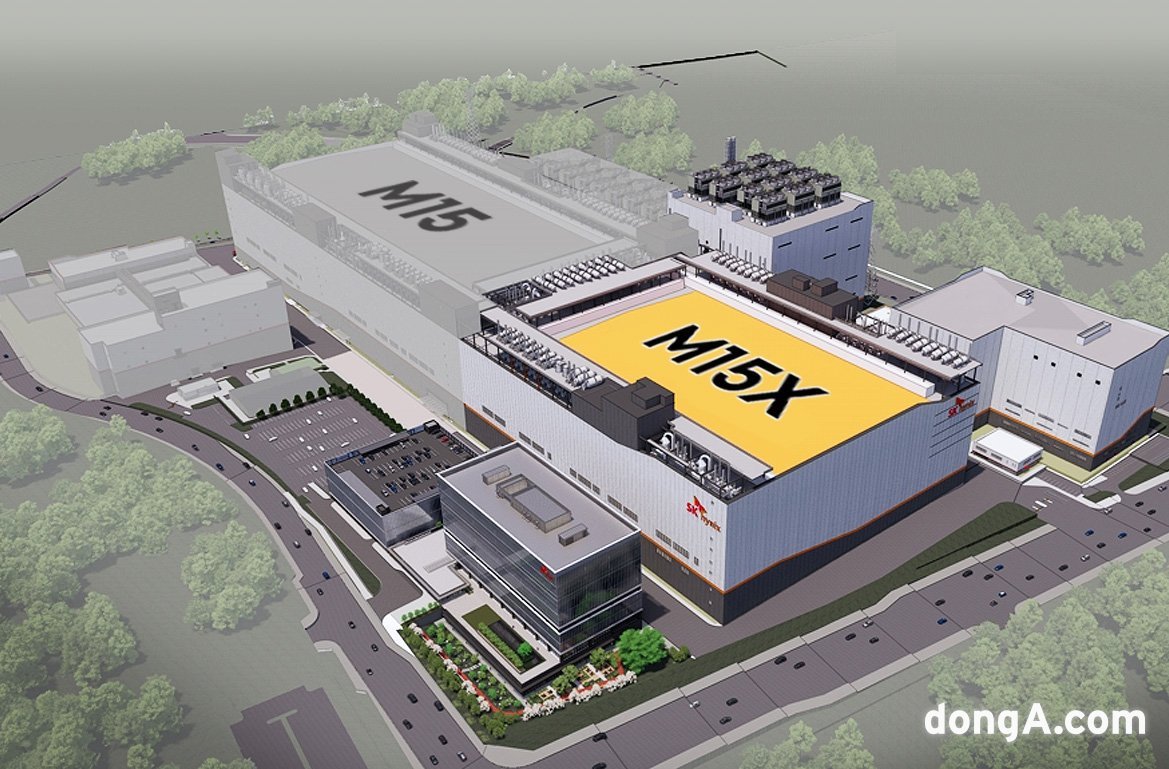
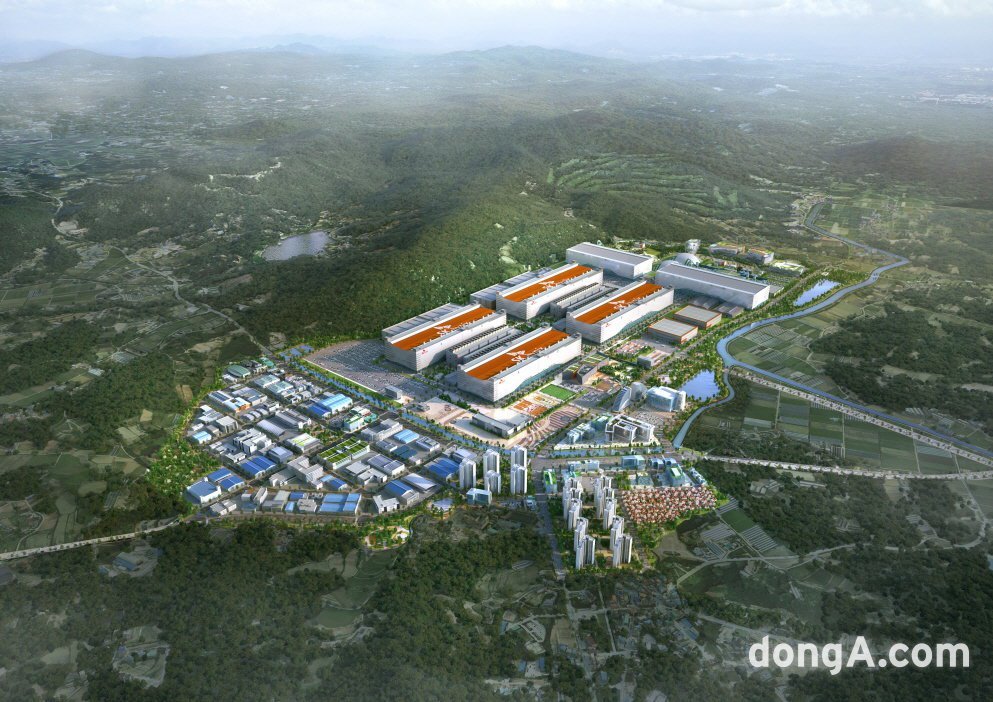
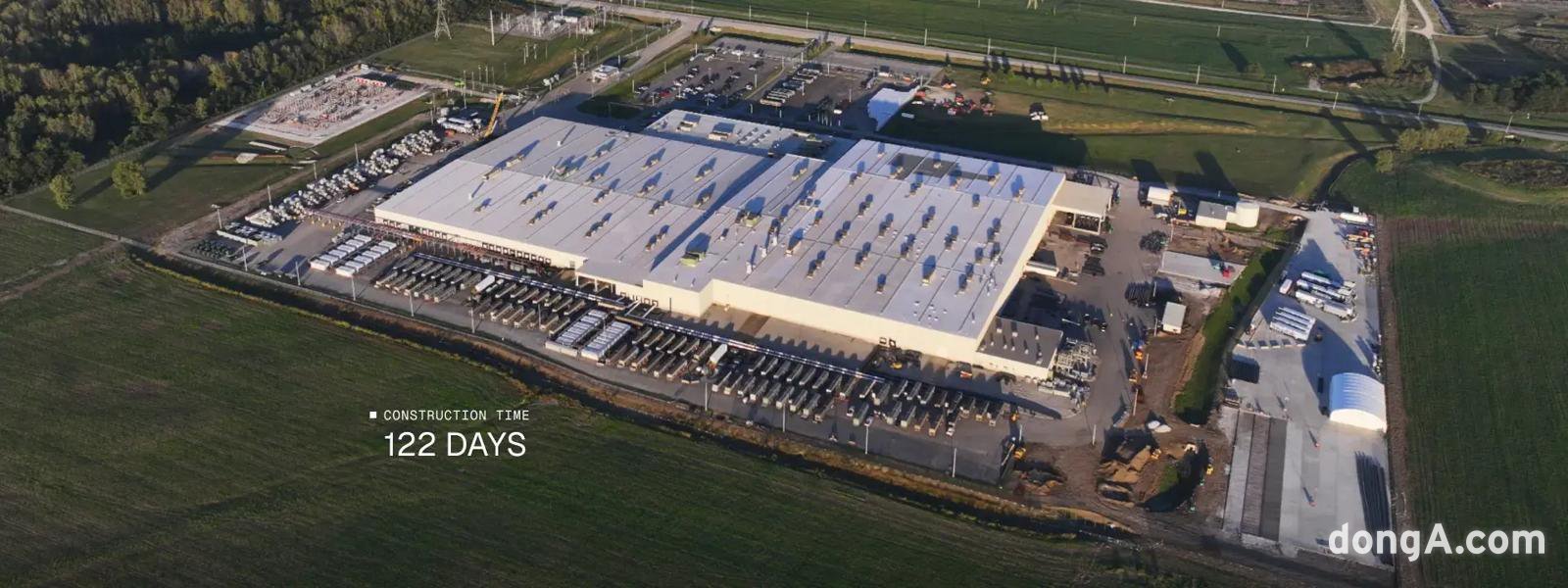
The second driver is the immediate expansion of production infrastructure. With the Cheongju M15X fab having begun full-scale operation this month, SK hynix will double its supply capacity compared with the previous year. In addition, construction of the first plant in the Yongin Semiconductor Cluster is progressing smoothly, with completion targeted for the end of 2026 and operation scheduled to begin in early 2027.
The third driver is the dramatic revival of the NAND business. The NAND segment, previously a drag on earnings, has been transformed into a key “cash generator” responsible for more than 25% of total profit, driven by surging demand for 128TB ultra-high-capacity eSSDs from its subsidiary Solidigm.
Previously, SK hynix CEO Kwak Noh-jung emphasized an optimistic business outlook, stating that the company is evolving beyond a mere component manufacturer into an “AI platform company” that, together with global partners, builds the AI ecosystem for humanity, and that 2026 will be a year in which the world once again confirms SK hynix’s technological standing.
SK hynix semiconductor.
As CEO Kwak’s remarks underscoring technological leadership suggest, even though competitors are ramping up investment, SK hynix is already ahead in commercializing the next-stage “hybrid bonding” technology. This technique, which directly connects copper between chips without using interconnect terminals, is a key technology that maximizes data transfer efficiency while reducing product thickness. With discussions already underway with major customers on the next-generation standard slated for mass production in 2027, SK hynix is viewed as having established a solid technological barrier to entry.
Securities firms maintain “optimistic outlook” for unprecedented resultsIn the securities market, expectations are that SK hynix will post unprecedented results in 2026, with sales of KRW 160 trillion and operating profit of KRW 100 trillion. Major institutions such as KB Securities and Daishin Securities have raised their 2026 operating profit forecasts to at least KRW 100 trillion and as high as the KRW 130 trillion range, predicting the peak of a “memory supercycle.” This is because demand for HBM used in AI data centers continues to outstrip supply, while prices for commodity DRAM are surging more than 40% year-on-year, narrowing the profitability gap with HBM. Operating profit in just the first quarter of 2026 alone is estimated to exceed KRW 24 trillion, implying that SK hynix is poised to break the record for the highest quarterly profit by a Korean company on a continuing basis.
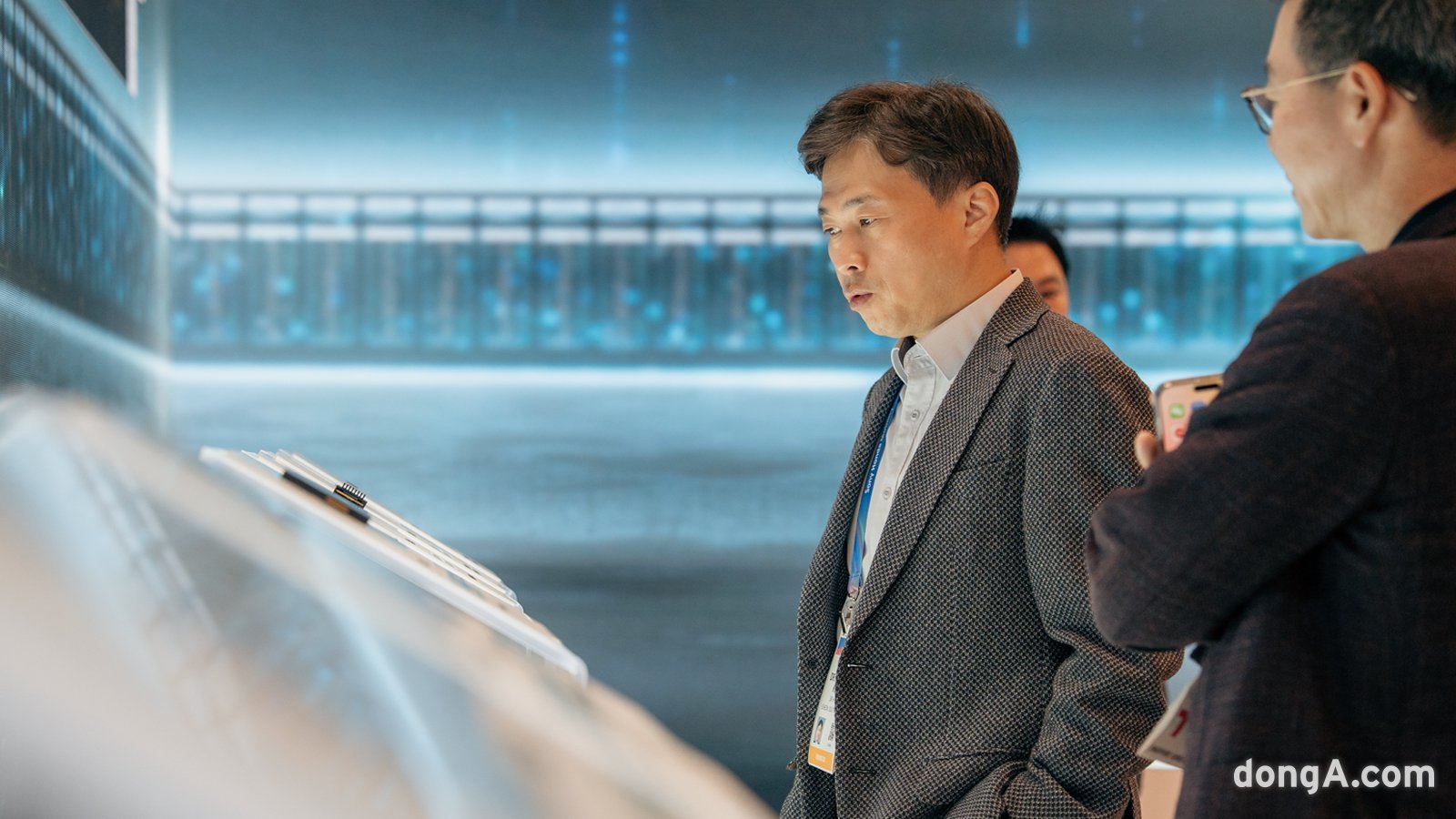
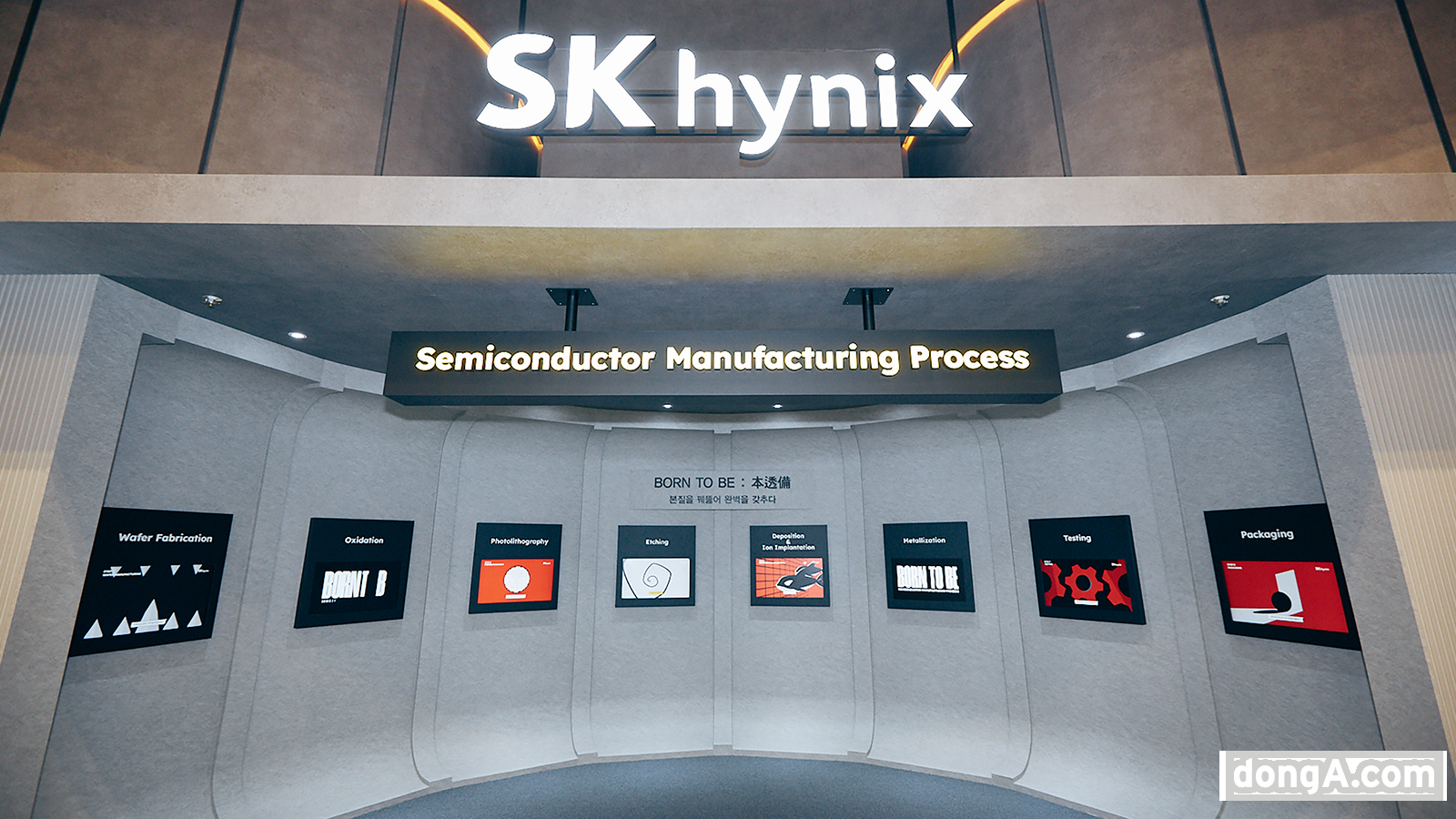
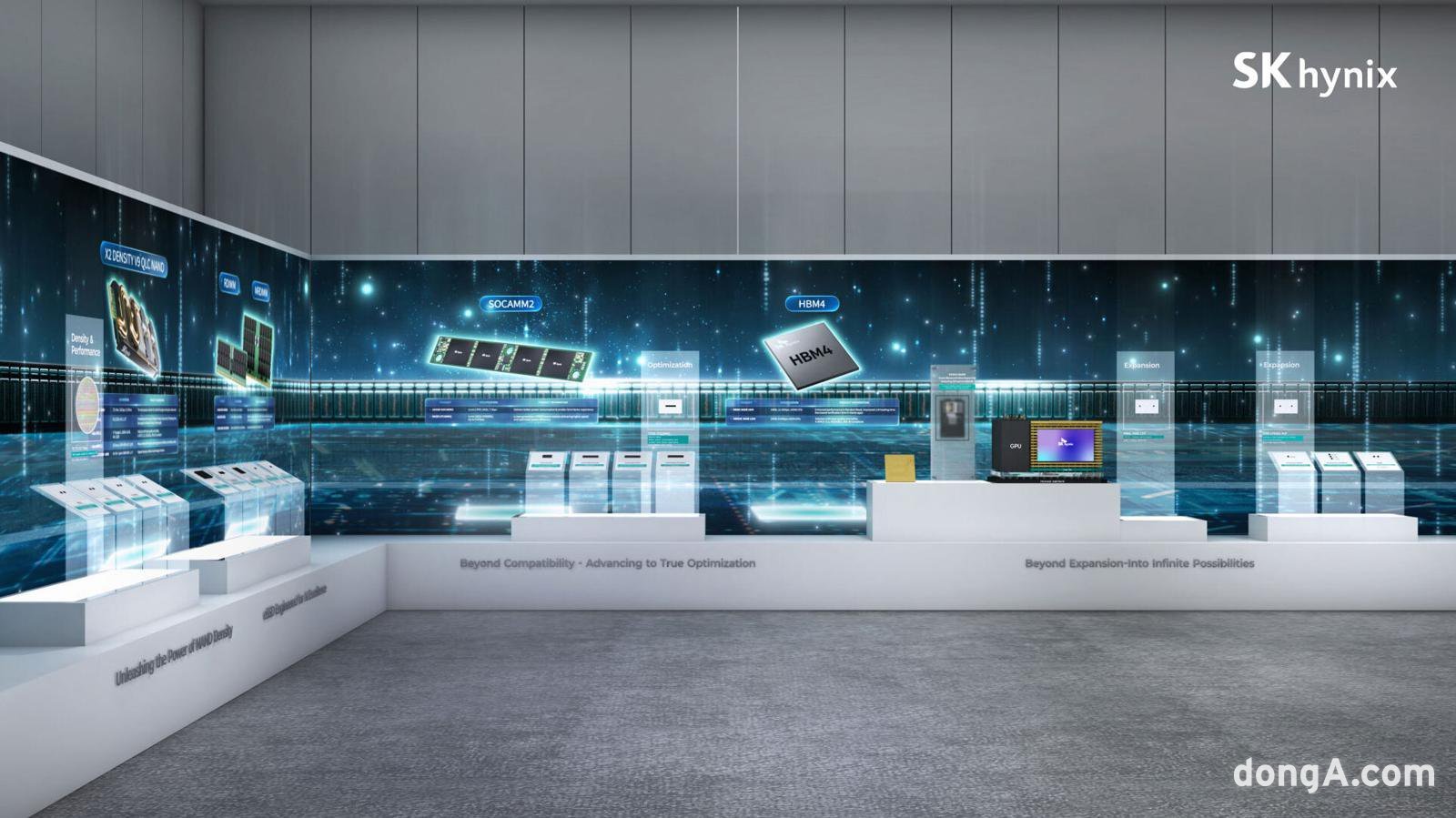
SK hynix CES2026 exhibition.
The core of this optimistic outlook is SK hynix’s overwhelming dominance in NVIDIA’s next-generation platform, Rubin. According to global investment banks such as UBS, SK hynix’s market share in the HBM4 market, which will scale up in earnest in 2026, is projected to reach around 70%. As big tech companies such as Google and AWS expand development of their own AI chips (ASICs), the revenue share of customized HBM—whose selling price is far higher than that of standard products—is expected to exceed 45% of total HBM sales. Industry insiders note that “orders are backlogged to the point that volumes for 2027 are already under discussion,” underscoring that SK hynix is not merely a component supplier but a strategic partner shaping the AI ecosystem.
Aggressive capital expenditure (CAPEX) is also laying the groundwork for future growth. SK hynix is investing approximately KRW 40 trillion this year alone to widen its technological lead. The Cheongju M15X fab, which entered full-scale mass production earlier this month, is serving as a forward base that more than doubles HBM production capacity year-on-year. Furthermore, when the first fab at the Yongin Semiconductor Cluster—set to be the world’s largest single-site complex—begins operation in early 2027, SK hynix’s production efficiency is expected to advance to a new level. This preemptive expansion of infrastructure is anticipated to be the decisive move that will shape leadership in AI over the next decade.
Q&A: Understanding HBM and SK hynix’s technology in simple terms
Q. Why is HBM (High Bandwidth Memory) essential in the AI industry?
A. Because AI computation must process massive volumes of data in real time, data transfer speed is critical. HBM is a product that vertically stacks memory chips to dramatically expand data pathways. It is regarded as an innovation that fundamentally resolves data bottlenecks by transforming a planar road structure into a three-dimensional elevated highway system.
Q. What is the technological background that enables SK hynix to achieve a dominant market share in HBM?
A. The core differentiator is the MR-MUF (Mass Reflow-Molded Underfill) process. To address the heat generation issue that arises during semiconductor stacking, SK hynix injects a liquid protective material, improving thermal dissipation efficiency by a factor of 2.5 compared with conventional methods. This process stability has been a decisive factor in earning the trust of global customers such as NVIDIA.
Q. What is the strategic significance of the technology alliance with TSMC, the world’s largest foundry company?
A. In the AI era, memory is not a standalone component; its organic integration with processors is critical. By combining SK hynix’s memory manufacturing capabilities with TSMC’s leading-edge process technology in an open-platform strategy, the two companies provide customers with proven reliability and optimized performance, thereby building a robust symbiotic ecosystem.
Q. What long-term management strategy has driven SK hynix’s current performance?
A. The key has been strategic patience over the last decade. Since the world’s first development of HBM in 2013, SK hynix has focused its capabilities on next-generation technology research even amid market skepticism, and during the 2019 industry downturn. Preemptive investment and technology accumulation based on forecasting future market changes have led to its current leadership in the generative AI market.
ⓒ dongA.com. All rights reserved. Reproduction, redistribution, or use for AI training prohibited.
Popular News