Seoul National University of Science and Technology Holdings is enhancing the commercialization of its subsidiaries’ technologies and their market competitiveness through the BRIDGE 3.0 project. IT Donga introduces the technological capabilities, commercialization achievements, and entrepreneurial spirit of these technology holding company subsidiaries that are growing with such support.
Social conflict surrounding smoking has been repeated for a long time: confrontation between smokers and non-smokers, crackdowns and civil complaints, and rising urban management costs. The problem clearly exists, but solutions have largely remained at the level of regulation and guidance. To change this long-standing structure, there is a startup that approaches smoking from the perspective of “data infrastructure.” It is Portzone, which operates PuffZone, a smoking location information platform.
Song Jun, CEO of Portzone / Source=IT Donga
Song Jun, CEO of Portzone, defines the smoking issue not as a matter of morality or attitude but as a problem in the information structure. He argues that various conflicts arise when smokers, unable to find legal smoking areas, end up smoking in non-smoking zones. Accordingly, he focused on closing the information gap.
“Why aren’t smoking areas shown on maps?”… App development sparked by a simple questionThe motivation behind Song’s startup was surprisingly simple. As a smoker, he often felt puzzled when searching for information on smoking areas. While there is an abundance of map services that guide users to restaurants, cafés, hospitals, and restrooms, it is difficult to find information on smoking areas.
Song said, “The situation is similar not only in Korea but also overseas. There are about 1.2 billion smokers worldwide, yet there is virtually no integrated smoking location map that can be used across countries and cities. As a result, many smokers fail to find legal smoking areas and end up smoking in non-smoking zones, which leads to complaints and conflict. It creates a structure in which the discomfort of non-smokers and the anxiety of smokers arise simultaneously, with no way out. Therefore, I saw the root cause of the conflict not as the act of smoking itself but as an information vacuum. I concluded that ending the inconvenience for smokers would ultimately end the damage suffered by non-smokers.”
Deciding to build a smoking map, Song resolved not merely to provide simple smoking location guidance but to establish a smoking infrastructure data platform.
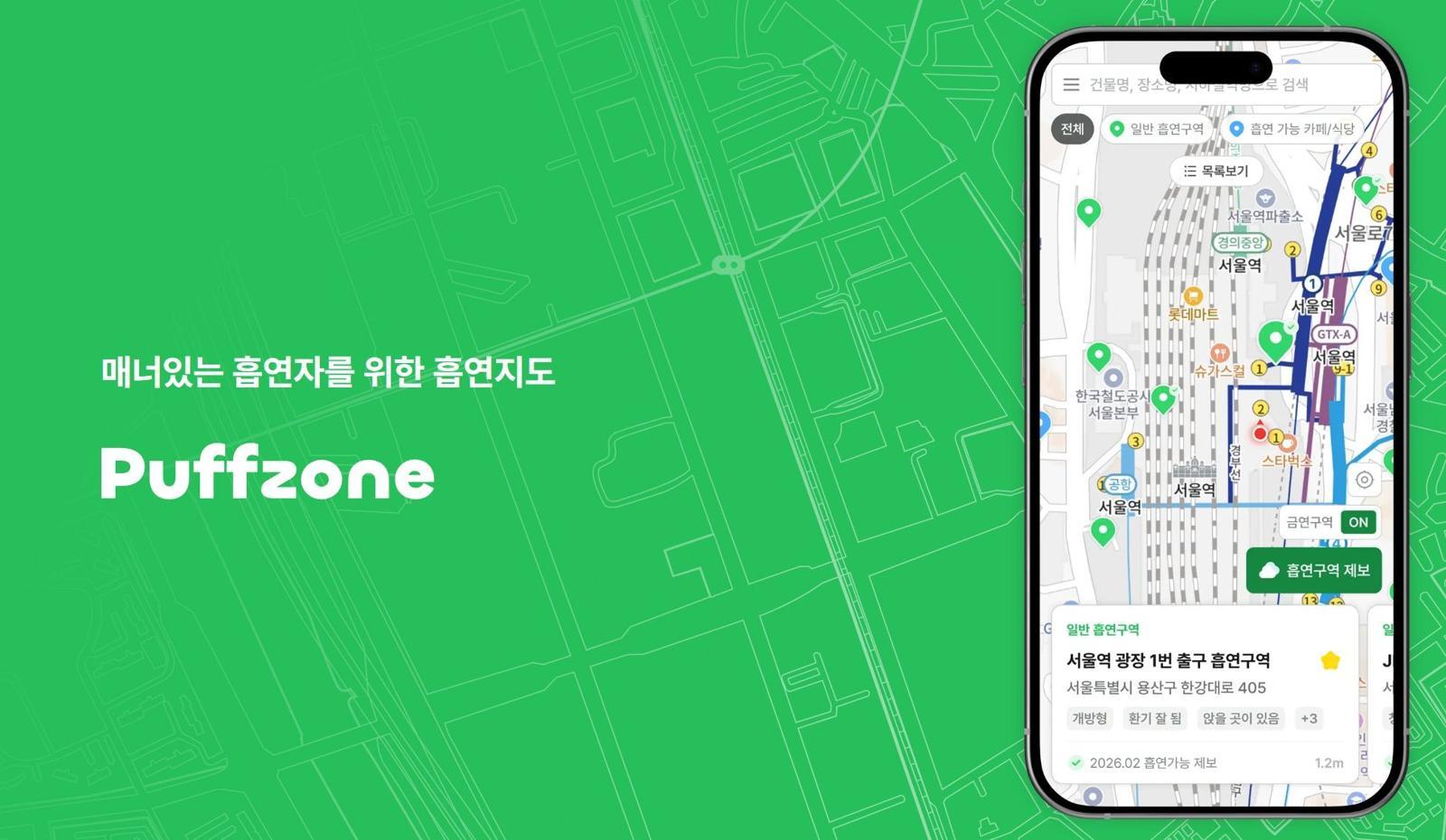
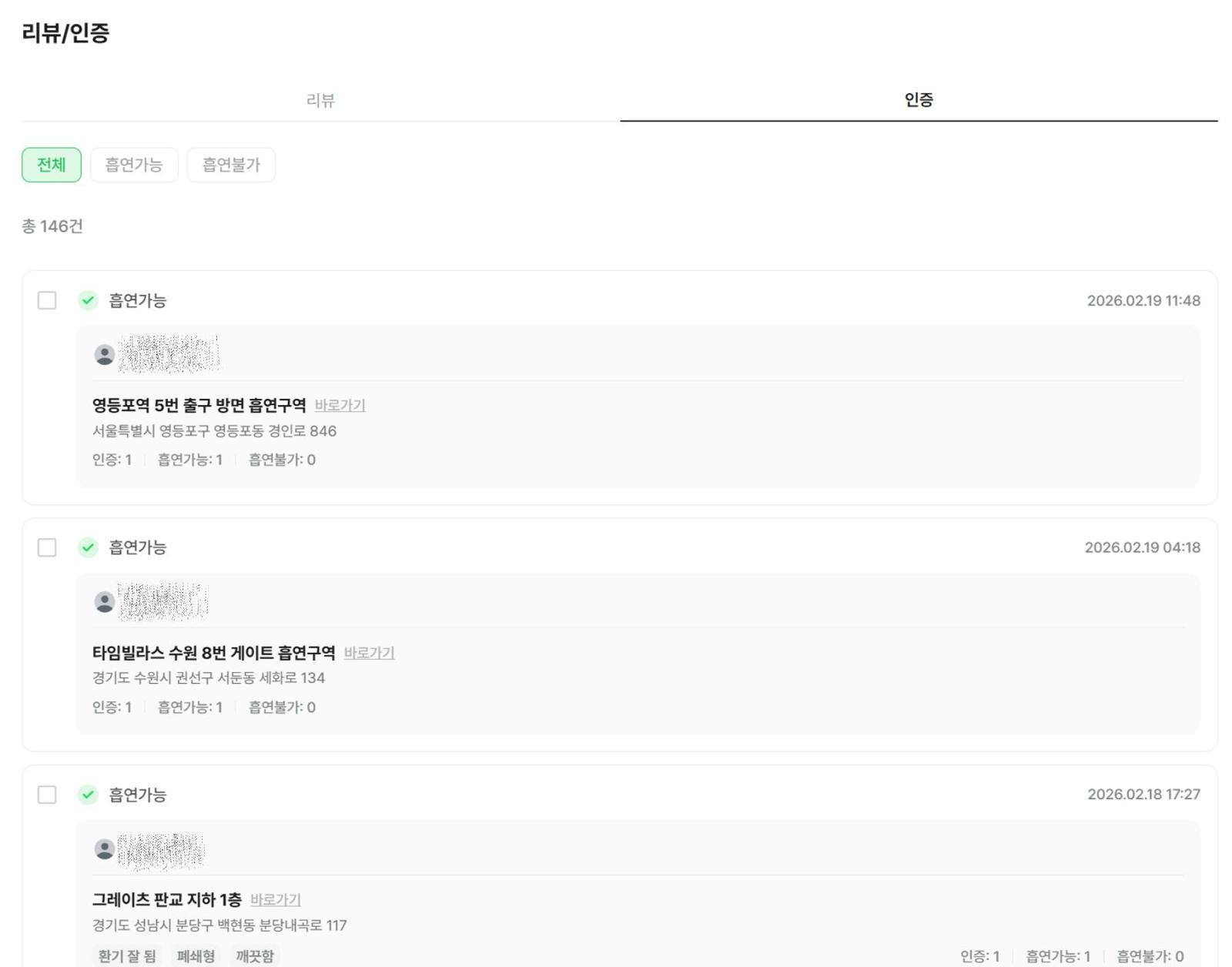
PuffZone service image / Source=Portzone
“PuffZone does more than just mark smoking and non-smoking areas; it structures each space as a piece of ‘urban infrastructure data.’ We built information on smoking and non-smoking zones based on public data and increased accuracy by continuously supplementing it with user reports,” he explained. “The core in this process is spatial data design. We independently developed a system that automatically converts different coordinate systems by country and verifies consistency between public data and user-generated data.”
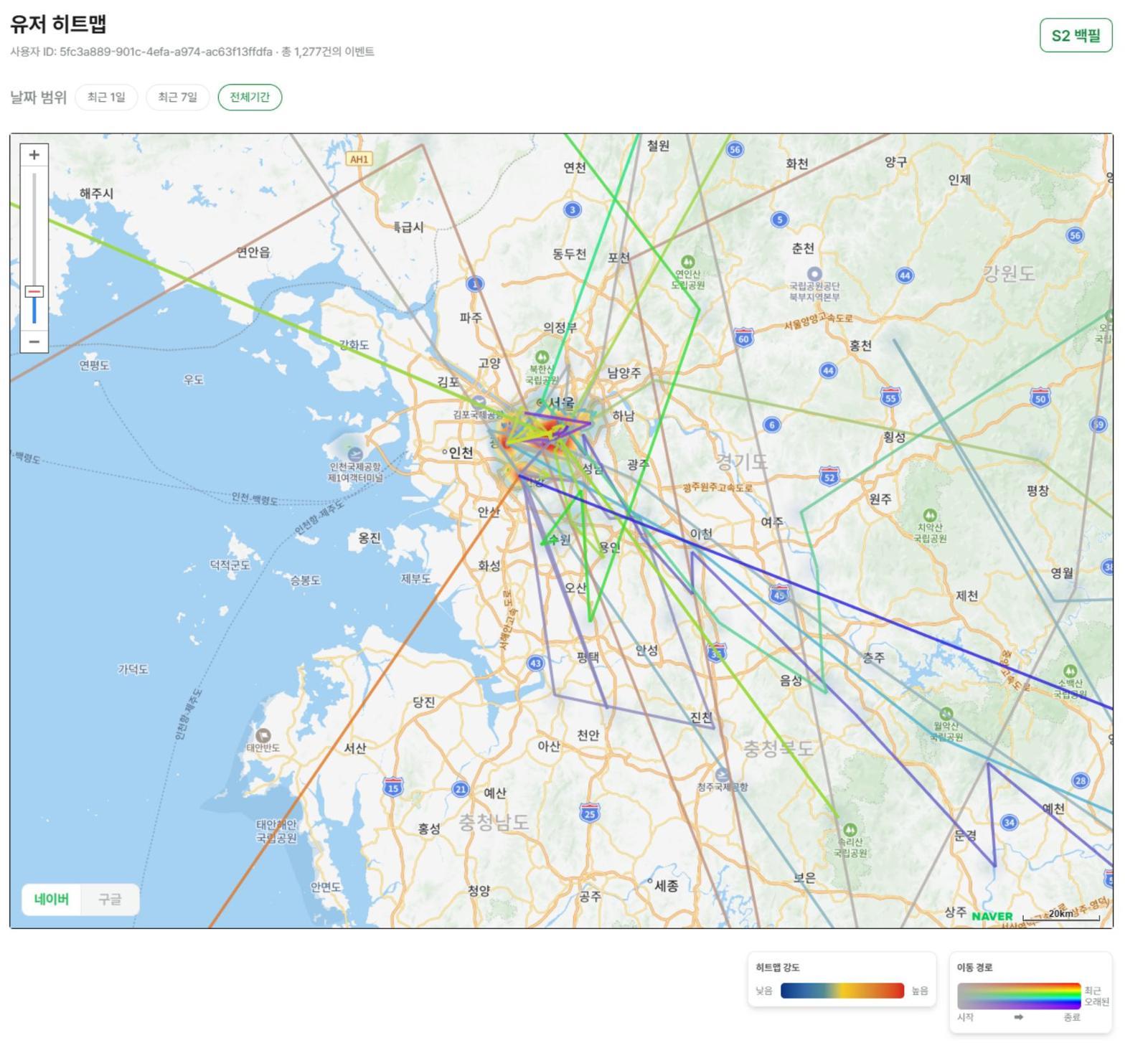
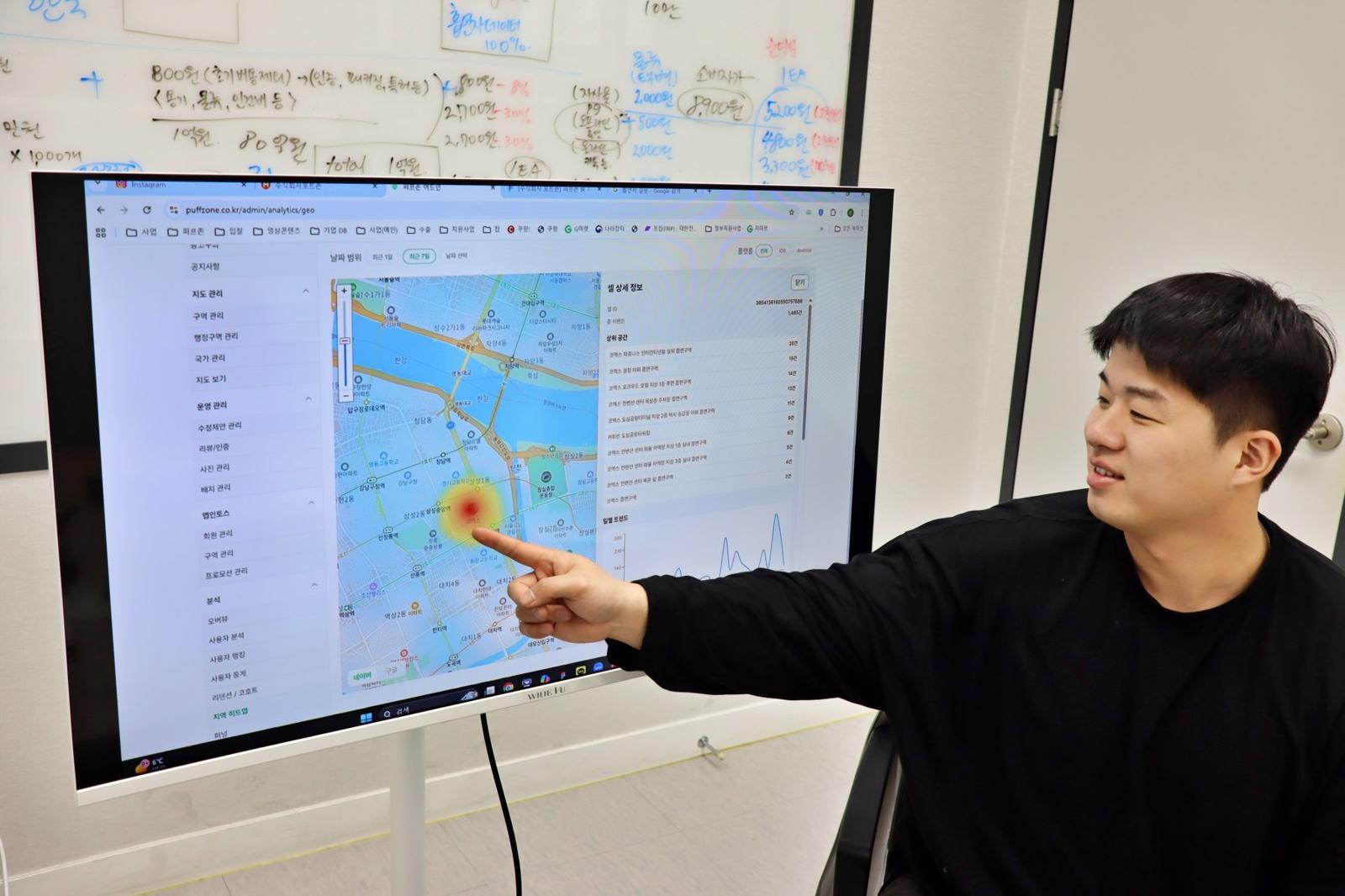
Portzone also utilizes the data accumulated through PuffZone in another way. It collects and uses GPS-based data that quantitatively shows smoker behavior—such as patterns of concentrated smoking demand by region and time, frequency of use, and movement paths.
Visualization of PuffZone users’ movement paths / Source=Portzone
Song said, “If we build data that reflects user characteristics and apply it to advertising, we can implement targeted ads that accurately connect services or stores directly related to smokers, rather than to an unspecified general audience. For example, when a user is actually searching for a smoking area, we can display information about nearby e-cigarette shops or related services at the same time,” adding, “Unlike general ads that are exposed regardless of user behavior, we can provide information based on real situations and context. This is a natural data use case derived from the process of organizing smoking infrastructure.”
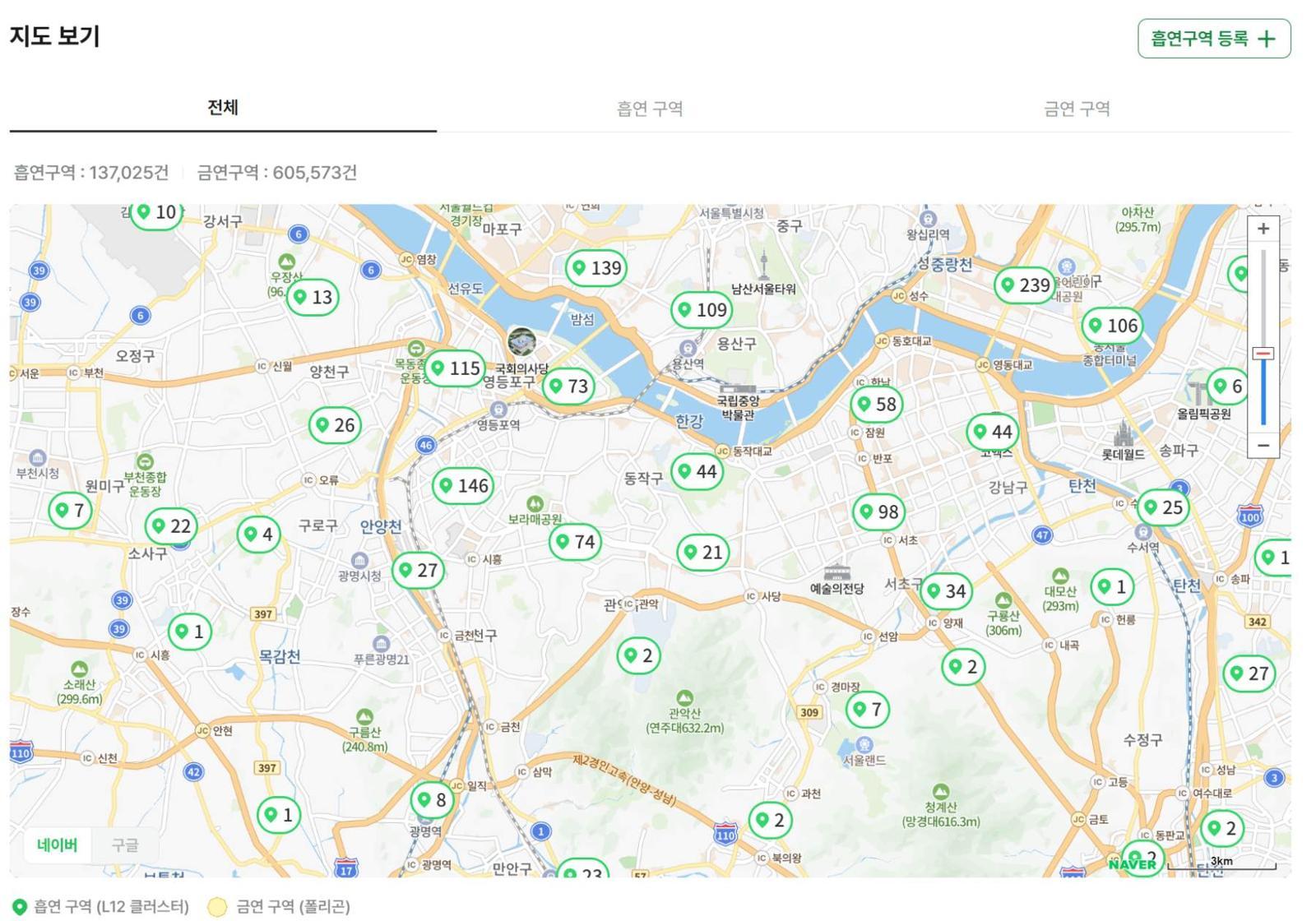
Since the official launch of PuffZone in January 2026, Portzone has accumulated meaningful data in a short period. It has registered more than 130,000 smoking-related spatial information entries and reduced the average time users spend finding a smoking area from several minutes to just a few seconds.
Smoking areas visible on the PuffZone map / Source=Portzone
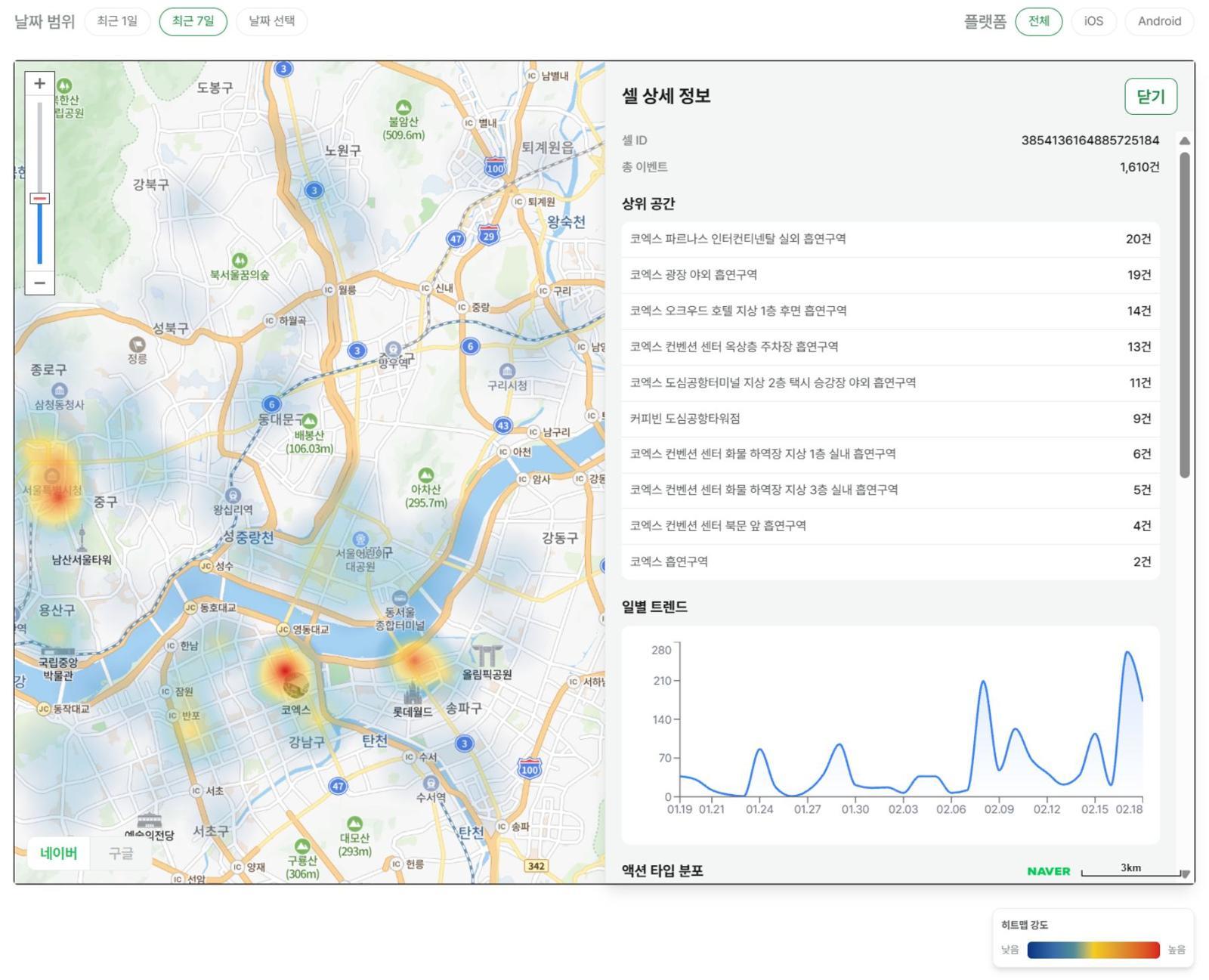
Song said, “If users can quickly identify legal smoking spaces, both unnecessary movement and anxiety are reduced. This can naturally lead to a perceived reduction in discomfort for non-smokers as well. PuffZone is moving toward a stage where it quantitatively grasps smoking behavior by analyzing usage frequency and density by region based on smoker behavior data.”
Detailed view of smoking areas visible on the PuffZone map / Source=Portzone
He continued, “To encourage user participation in PuffZone, we operate a badge-based rating system alongside a report verification system. Users earn points when they submit smoking area information, and those who meet certain criteria receive trust badges. For example, when a submitted smoking area is verified and reflected in the service, points are accumulated and the user’s rating increases based on cumulative activity,” adding, “The goal is not simply to increase the number of reports, but to enhance data accuracy. In addition to the current Toss in-app point rewards, we are considering ways to diversify point compensation by linking with external platforms in the future.”
A PuffZone user verifying a smoking-allowed area / Source=Portzone
Business structure advanced through investment from SeoulTech HoldingsIn its early startup phase, Portzone received support from Seoul National University of Science and Technology (SeoulTech) through its Preliminary Startup Package (2023) and Global Collaboration Program (2025). This support allowed the company to validate its technology, advance its business structure, and review overseas expansion strategies.
Song said, “While completing my undergraduate and master’s programs at SeoulTech, I was able to concretize the service thanks to basic financial support for office space and prototype production provided since my time in the university startup club. Later, by participating in the global corporate collaboration program, I visited Silicon Valley in the United States and had the opportunity to meet local investors and corporate stakeholders,” adding, “In November last year, we met with Japanese investment firms to assess the potential of entering the Japanese and U.S. markets. Through this process, we also attracted investment from SeoulTech Holdings, laying the groundwork for business expansion. Thanks to this, we were able to extend PuffZone’s service coverage to Japan, Hong Kong, and other regions. It was an experience in advancing our business structure while considering data standardization, understanding policy environments, and global scalability. We came to see PuffZone not as a short-term service but as a long-term infrastructure business.”
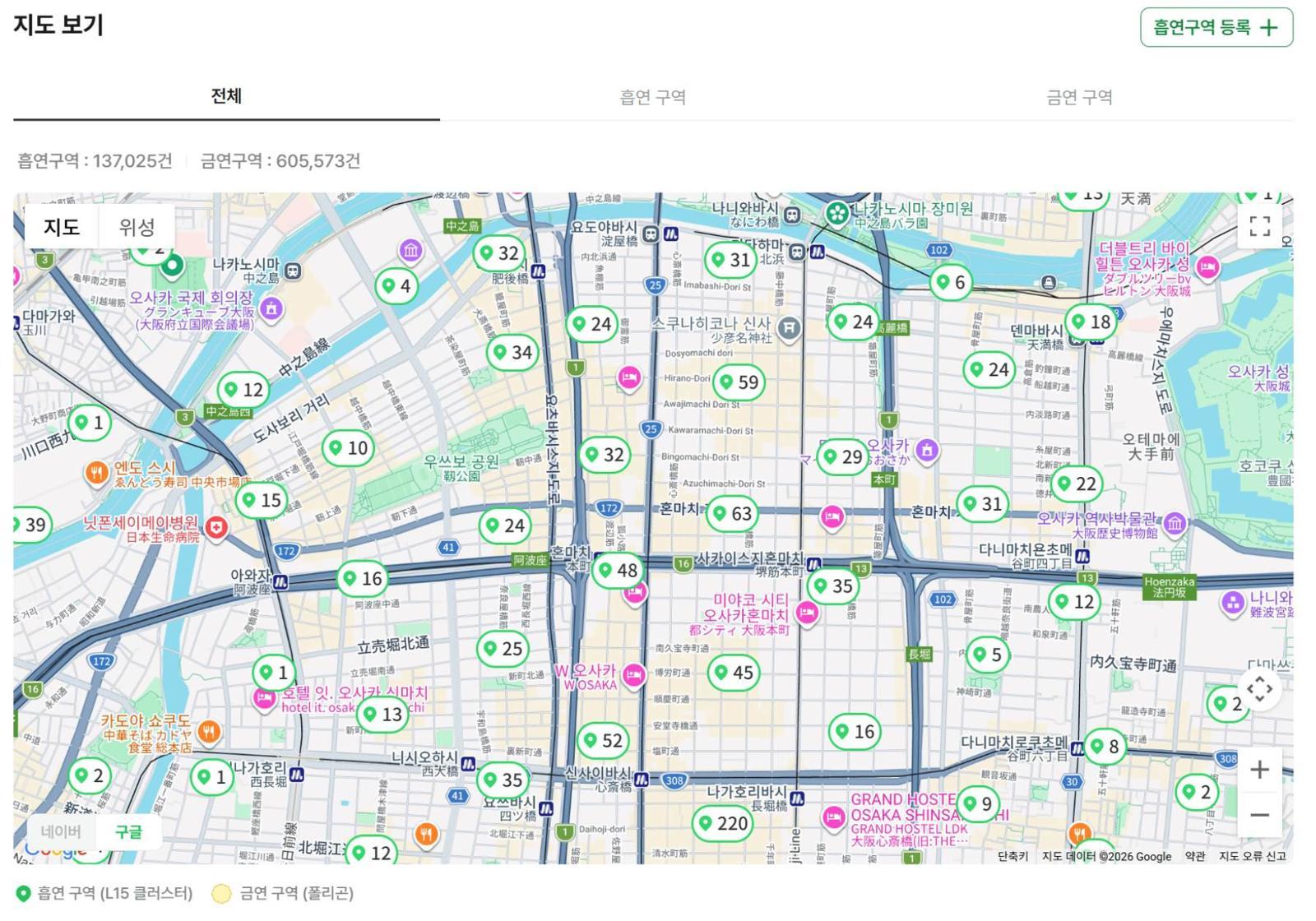
Smoking area information in Japan available through PuffZone / Source=Portzone
Portzone is also participating in the BRIDGE 3.0 project. BRIDGE 3.0 is the “University Creative Assets Commercialization Support Project” operated by the Ministry of Education, aimed at linking universities’ research achievements with companies to promote technology transfer and commercialization.
Song said, “Through the BRIDGE 3.0 project, Portzone experienced the process of connecting universities’ technological and research assets with actual services and business models. We were able to confirm that university research results can be fully utilized even in urban lifestyle data areas such as smoking infrastructure.”
Plan to link smoking infrastructure data with urban policyPortzone’s long-term goal is to link smoking infrastructure data with urban policy. The company plans to open its data in API form in the future so that local governments and public institutions can use it as a reference for urban management and policy design.
Song said, “Currently, some information on smoking areas in Korea is provided through the Public Data Portal, but there are limitations because criteria and formats differ by local government. It is difficult to compare or analyze under uniform standards. In other words, although public data on smoking areas exists, it has structural constraints that prevent its use as a standardized dataset,” adding, “To address this issue, Portzone is refining and standardizing smoking-related data on a nationwide scale based on its own criteria. We combine public data and user reports to filter out duplicate and erroneous information and organize location, type, and usage patterns in a consistent structure. The focus is not simply on aggregating smoking area information, but on processing it into a form that can be used for research and analysis.”
Song Jun, CEO of Portzone / Source=IT Donga
He added, “Once refined smoking data is secured, we expect to collaborate with private and research institutions studying the correlation between smoking and health. Beyond simply identifying whether PuffZone service users are smokers or non-smokers, we are analyzing behavioral patterns, such as whether they use liquid-type e-cigarettes and what their main movement routes are. Based on this, we will be able to provide meaningful data to institutions or policy research organizations studying correlations between smoking, health, and mortality. By linking PuffZone data to urban management and policy, we plan to guide city design from the outset so that smoking areas are installed in line with smokers’ main movement paths. We hope many will take interest in Portzone’s future trajectory.”
IT Donga reporter Kim Dong-jin (kdj@itdonga.com)
ⓒ dongA.com. All rights reserved. Reproduction, redistribution, or use for AI training prohibited.
Popular News