DeepCardio Co., Ltd.
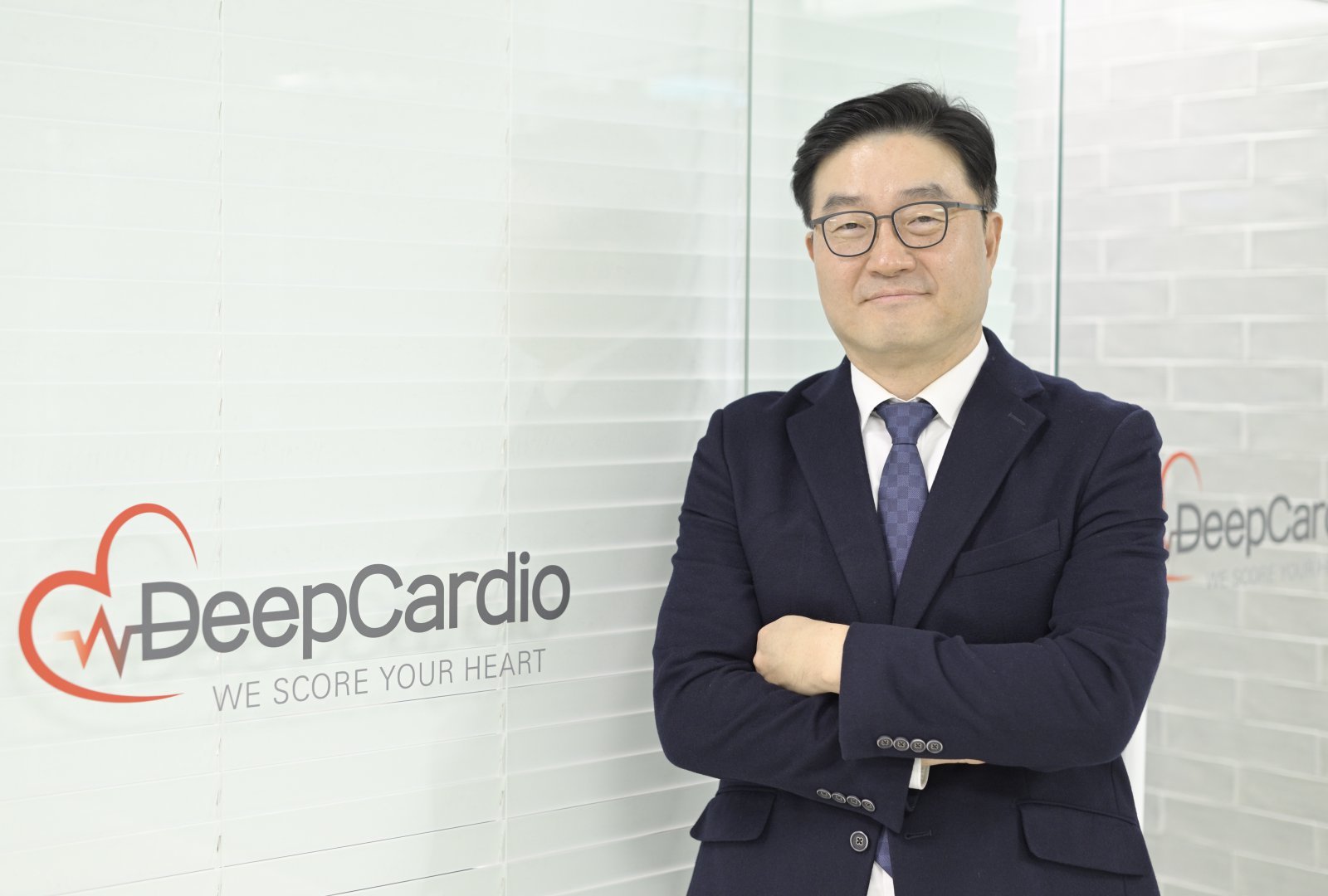
CEO Choi Won-ik
It is not uncommon for a person in their 50s who received a “normal” result from a health check-up to suffer a myocardial infarction a year later. A 10-second electrocardiogram (ECG) cannot reveal hidden risks. Artificial intelligence (AI) is now overcoming this limitation. As technology that reads minute signals within ECGs to predict future risk becomes a reality, it is drawing attention as a key to saving millions of lives in an aging society.
AI that predicts future diseases from normal ECGs DeepCardio Co., Ltd. is a software company that analyzes ECG data with AI to predict not only current but also potential future heart diseases. Founded in 2020, the company was established through collaboration between cardiology professors at Inha University Hospital and AI experts. Its solutions are already being used for real patient diagnosis at more than 30 hospitals in Korea, and it plans to launch an additional 5–6 new products this year alone.
The company’s core technology lies in identifying the risk of paroxysmal atrial fibrillation, which even experienced cardiologists can easily miss, from within what appears to be a normal rhythm. Atrial fibrillation is an arrhythmia in which the heart quivers irregularly and accounts for 20–30% of strokes. The problem is that its symptoms can appear and disappear repeatedly, meaning the condition may not be detected depending on the timing of the test.
“If my ECG is normal, why do I need to undergo tests for an additional week?” DeepCardio’s AI provides an answer to this frequently asked question at health screening centers.
DeepCardio solved this challenge with AI trained on more than 46,000 clinical cases. Its diagnostic accuracy is 0.907, close to the theoretical maximum of 1.0. While most domestic AI ECG companies focus on emergency room–specialized products, DeepCardio has built a solution that covers the full spectrum of heart disease. With a single test, integrated diagnosis is possible for arrhythmia, heart failure, coronary artery disease, and cardioembolic stroke. Three products are currently commercialized, and the lineup is expected to expand to 5–6 products within this year and to more than 15 by next year.
A company created by a patient and a physician together Such field-centered technology development was possible thanks to DeepCardio’s distinctive founding background. In 2018, Professor Choi Won-ik of the Department of Electrical and Electronic Engineering at Inha University visited a hospital after sensing something was wrong with his heart. An ECG was performed, but the results were inconclusive. He visited the hospital several times over the course of a few months, but was repeatedly told that everything was normal. In the end, the abnormal symptoms turned out to be due to paroxysmal atrial fibrillation. Because the symptoms appeared and disappeared, each test happened to capture only normal sinus rhythm.
Holding a PhD in Engineering from Seoul National University, Professor Choi did not simply let this experience pass. Together with his attending physician, Professor Kim Dae-hyuk of the Division of Cardiology at Inha University Hospital, he decided to seek an answer to the question: “Is it not possible to create an AI that can predict the risk of future heart disease even from ECGs that appear normal?” The work of training AI on subtle ECG patterns that are difficult for even clinicians to distinguish with the naked eye was carried out jointly by cardiologist Professor Kim Dae-hyuk, Professor Choi Won-ik, Professor Lee Sang-cheol of the Department of Computer Science at Inha University, and cardiologist Professor Baek Yong-soo, and this led to the birth of DeepCardio in 2020.
Cases in which an attending physician and a patient meet and go on to found a company are rare in Korea. The synergy between doctors, who understand exactly what is urgently needed in the field, and engineers, who can realize it as technology, has been demonstrated through research achievements that include some 190 SCI-grade papers and more than 40 domestic patents. This technological capability has also been quickly recognized in the market. In 2022, the company attracted investment from SoftBank and Daily Partners, and in 2023 it was selected as one of the “AI Startup 100” and received the Korea Excellent Patent Grand Prize. In 2024, its first product received approval from the Ministry of Food and Drug Safety and was designated as innovative medical technology. In 2025, it won a digital cardiology research award from the European Heart Rhythm Association, demonstrating that its technological level is globally competitive.
Life before profit: the conditions for a 100-year company DeepCardio aims to transform the healthcare paradigm of society as a whole through technology. Its goal is to make the ECG test a mandatory item in the National Health Screening Program and to combine it with AI analysis to build a system that detects heart disease in the entire population at an early stage. If realized, this would significantly reduce the incidence of heart-related complications such as cerebral infarction, heart failure, and dementia. The company estimates that disease prevalence could be reduced by 30–40%.
To realize this vision, DeepCardio is pursuing an aggressive growth strategy. It is targeting an initial public offering (IPO) within two years and aims to reach KRW 20 billion in sales by 2028. This year, it plans to secure growth momentum through a Series B funding round. Global market expansion will also begin in earnest. By next year, the company plans to obtain U.S. FDA and European CE certifications to enter overseas markets and intends to expand its sales network through acquisition or partnerships with ECG device manufacturers. It has already formed a channel partnership with GE Healthcare and is conducting joint research on rare diseases with global pharmaceutical company Sanofi.
“ECGs should become a routine management target like blood pressure and diabetes”
Interview with DeepCardio CEO Choi Won-ik During the interview, DeepCardio CEO Choi Won-ik repeatedly emphasized the term “social enterprise.”
He said, “Our reason for existence is not simply to pursue sales and profit, but to contribute to the improvement of human health.” In his view, there is a fundamental problem with the current heart management system. “ECGs are as important as blood pressure and blood sugar, but they are not managed on a daily basis. People only go to the hospital after problems arise.” He expressed confidence that the situation would change completely if ECGs became a mandatory item in the National Health Screening Program and were combined with AI diagnosis. “A significant portion of serious complications such as cerebral infarction, heart failure, and dementia originate from heart problems. If detected early, they can be prevented. We believe our technology can in practice reduce national healthcare expenditures by trillions of won.”
There are, of course, real-world obstacles. He pointed out contradictions in the innovative medical technology system. “With just one ECG test, it is possible to diagnose multiple diseases simultaneously, yet regulations prevent the concurrent application of two technologies. Requiring patient consent every time AI medical technology is used is also a major burden in the field.” Nevertheless, his tone remained confident. “DeepCardio will make Korea the country with the lowest prevalence of cardiovascular disease in the world. That is what will make us a 100-year company.”
ⓒ dongA.com. All rights reserved. Reproduction, redistribution, or use for AI training prohibited.
Popular News