A symbol of Korea–U.S. economic security cooperation… Direct participation in the U.S. critical minerals supply chain
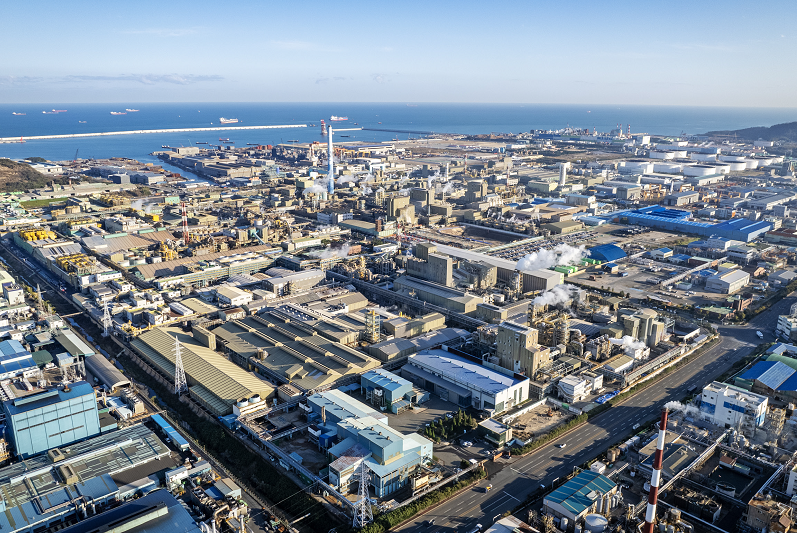
Panoramic view of Korea Zinc’s Onsan Smelter.
Korea Zinc will build a large-scale integrated critical minerals smelter in the United States, accelerating its global supply chain strategy. Through a strategic partnership with the U.S. Department of Defense (War Department) and the Department of Commerce, Korea Zinc has decided to construct the “U.S. Smelter” in Clarksville, Tennessee. The project involves capital expenditure (Capex) of approximately KRW 10 trillion, and the total investment including working capital and financing costs will reach KRW 11 trillion.
The U.S. Smelter will be established as an integrated smelter producing a total of 13 items, including base metals such as zinc, lead, and copper; precious metals such as gold and silver; and strategic critical minerals such as antimony, indium, gallium, germanium, and bismuth. Of these, 11 items are designated as “critical minerals” by the U.S. government. Korea Zinc plans to begin site preparation in 2026 and gradually commence commercial production from 2029.
This investment is significant not merely as the securing of an overseas production base, but because it marks direct participation by a Korean company in the U.S. strategy to achieve self-reliance in critical mineral supply chains amid growing resource weaponization and deepening supply chain instability worldwide. The smelting and refining stage is considered a bottleneck in the critical minerals supply chain, and Korea Zinc possesses world-class technological capabilities and operational know-how in this field.
● Trump administration, foreign media and markets “welcome” move… Emerging as core partner in U.S. strategic industries Key figures in the Trump administration expressed unanimous support for the announcement of the U.S. Smelter construction by Korea Zinc. U.S. Commerce Secretary Howard Lutnick said, “Korea Zinc’s project in Tennessee is a transformational deal that will change the landscape of U.S. critical minerals,” adding, “It will enable large-scale domestic production of 13 critical and strategic minerals essential to national and economic security for sectors such as aerospace, defense, semiconductors, artificial intelligence (AI), quantum computing, and automobiles.”
The U.S. Department of Defense also views this investment as a turning point in reviving the domestic smelting industry. There are expectations that the construction of the new smelter will create jobs in the United States and ease bottlenecks in the supply of strategic minerals across the defense and advanced manufacturing industries. The U.S. government will secure a priority purchase right over part of Korea Zinc’s expanded production volume.
Major foreign media and markets are evaluating the investment as a representative case of Korea-U.S. economic security cooperation and expect it to play an important role in diversifying the global critical minerals supply chain, which is currently concentrated in certain countries. Securities analysts say that by establishing a strategic foothold in North America, one of the world’s largest demand centers for critical minerals, Korea Zinc’s mid- to long-term growth potential and business stability will be further strengthened.
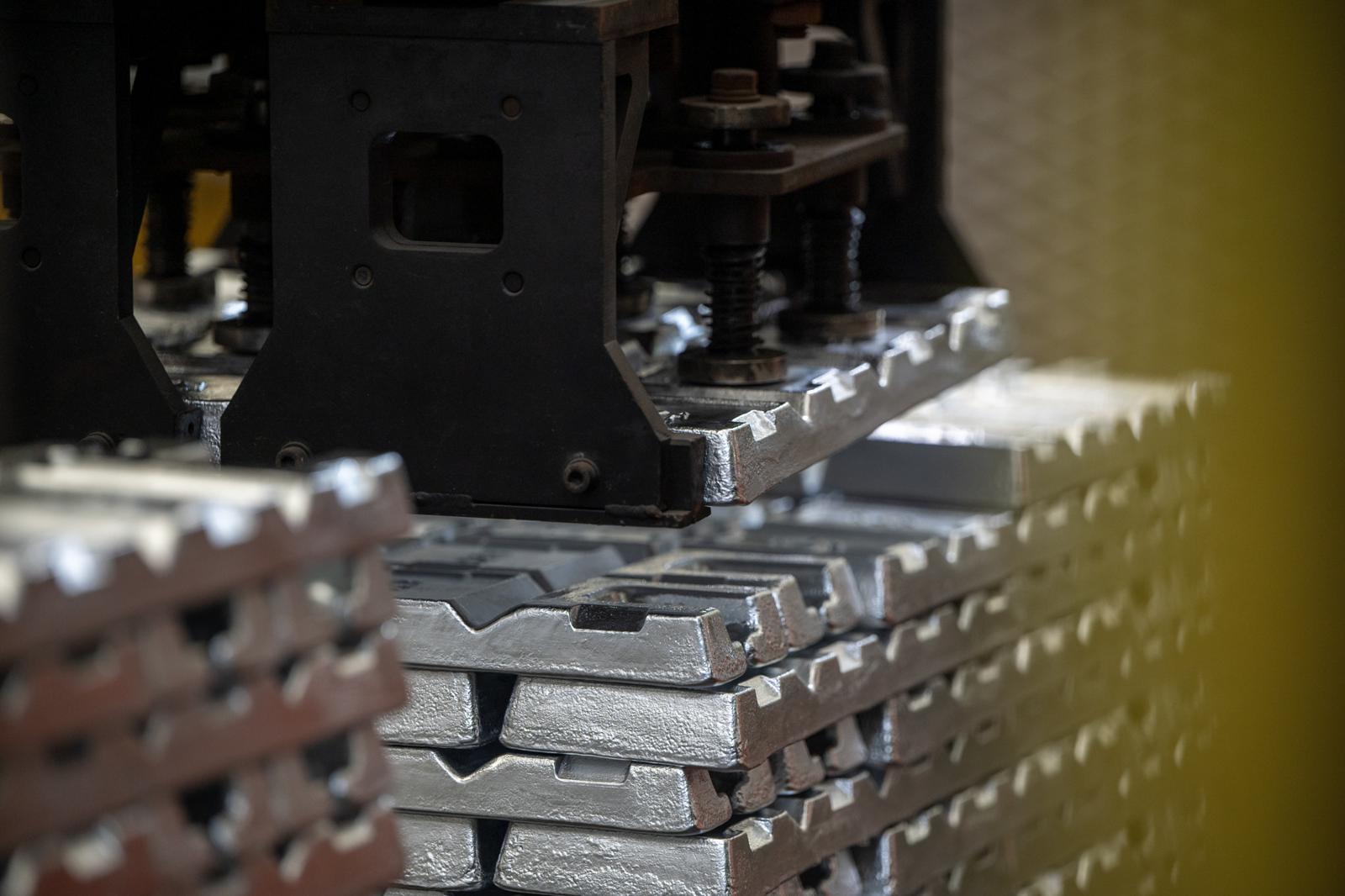
Inside Korea Zinc’s Onsan Smelter
● Parallel investments in the U.S. and Korea… Pursuit of a “two-track growth strategy”Korea Zinc stresses that the U.S. smelter project is not intended to replace or scale down its domestic operations, but is part of a “two-track growth strategy” pursued in parallel with investments in Korea. The company plans to execute domestic investments of around KRW 1.5 trillion centered on the Onsan Smelter in Ulsan by 2029 without delay.
In Korea, it will invest in facilities for strategic minerals, including the establishment of germanium and gallium recovery processes and expansion of bismuth production capacity. Through this, it aims to strengthen the foundation for stable domestic supply of materials essential to advanced industries such as defense, semiconductors, and power semiconductors. In addition, it will establish a new R&D center in Songdo, Incheon, to expand research into future growth engine technologies, including recycling, energy, artificial intelligence (AI), and robotics.
The company also plans to continue expanding employment. As some of the Onsan Smelter workforce will be deployed for the construction and operation of the U.S. Smelter, Korea Zinc intends to hire additional replacement staff and personnel to operate new facilities. Accordingly, the company has decided to more than double the planned recruitment of new university graduates in 2026 compared with its previous plan. The number of Korea Zinc employees has steadily increased over the past five years, and this trend is expected to continue.
● Opposition from Young Poong and MBK seeking control of Korea Zinc… Application for injunction to prohibit new share issuanceDuring the process of promoting the U.S. smelter project, certain shareholders Young Poong and MBK Partners filed for an injunction with the court to prohibit the issuance of new shares, raising objections over the establishment of a local joint venture (JV) and the plan for a third-party allotment capital increase. They argue that in the course of a large-scale investment promoted in cooperation with the U.S. government, a third-party allotment capital increase could dilute the shareholding and voting rights of existing shareholders, thereby potentially infringing on shareholder rights and interests.
In particular, they contend that the JV equity structure and financing methods linked to the U.S. smelter investment could affect the future governance structure of Korea Zinc, and are therefore challenging the overall investment decision-making process and procedures.
Through this injunction application, Young Poong and MBK seek a court ruling on whether the issuance of new shares and financing methods adopted in the course of the project comply with the Commercial Act, the Capital Markets Act, and the company’s Articles of Incorporation.
They also question whether the decision on such a large-scale overseas investment has been sufficiently explained and reviewed by the board of directors and shareholders, and whether adequate safeguards for shareholder protection have been put in place. In addition, they emphasize the need to verify how the cooperation framework with the U.S. government will affect the company’s value and shareholder interests over the long term.
● Korea Zinc: “Part of strengthening global competitiveness in critical minerals”In response, Korea Zinc explained that the construction of the U.S. Smelter is part of a mid- to long-term growth strategy to respond to surging demand for critical minerals in North America, and is not a project aimed at excluding specific shareholders or weakening Korea’s industrial base. The company emphasizes that this project is not a decision made solely by Korea Zinc, but a multilateral initiative promoted in consideration of the involvement of the U.S. government, multiple investors, and U.S. laws and regulations.
It also stated that all procedures, including the establishment of the joint venture and financing, are being carried out in compliance with the Articles of Incorporation, the Commercial Act, the Capital Markets Act, and the board of directors’ regulations. Dividend payments and shareholder rights are clearly defined under the Commercial Act based on whether shareholders are listed on the shareholder registry as of the dividend record date, which the company describes as a basic operating principle of the capital market.
A Korea Zinc official said, “The construction of the U.S. Smelter is a strategic choice to enhance both the company’s sustainable growth and national economic competitiveness amid intensifying global supply chain instability,” adding, “In tandem with investment in the United States, we will pursue domestic investment, employment stability, and technological advancement, and evolve into a world-class non-ferrous metals and critical minerals company.”
ⓒ dongA.com. All rights reserved. Reproduction, redistribution, or use for AI training prohibited.
Popular News