[SeoulTech x ITDonga Joint Project] The Preliminary Startup Package Support Program (hereinafter “Preliminary Startup Package”) is a major startup support initiative of the Ministry of SMEs and Startups and the Korea Institute of Startup & Entrepreneurship Development that helps launch promising ideas. As an operating institution for the 2025 Preliminary Startup Package, the Startup Support Group of Seoul National University of Science and Technology supports the growth and development of nascent companies. ITDonga, together with the Seoul National University of Science and Technology Startup Support Group, examines promising startups currently in growth.
Every autumn, streets in the city are covered with colorful maple and ginkgo leaves. While this creates beautiful scenery, the fallen leaves later remain as a chronic urban problem. The leaves that fall all at once become waste and are mostly landfilled or incinerated, which leads to environmental issues.
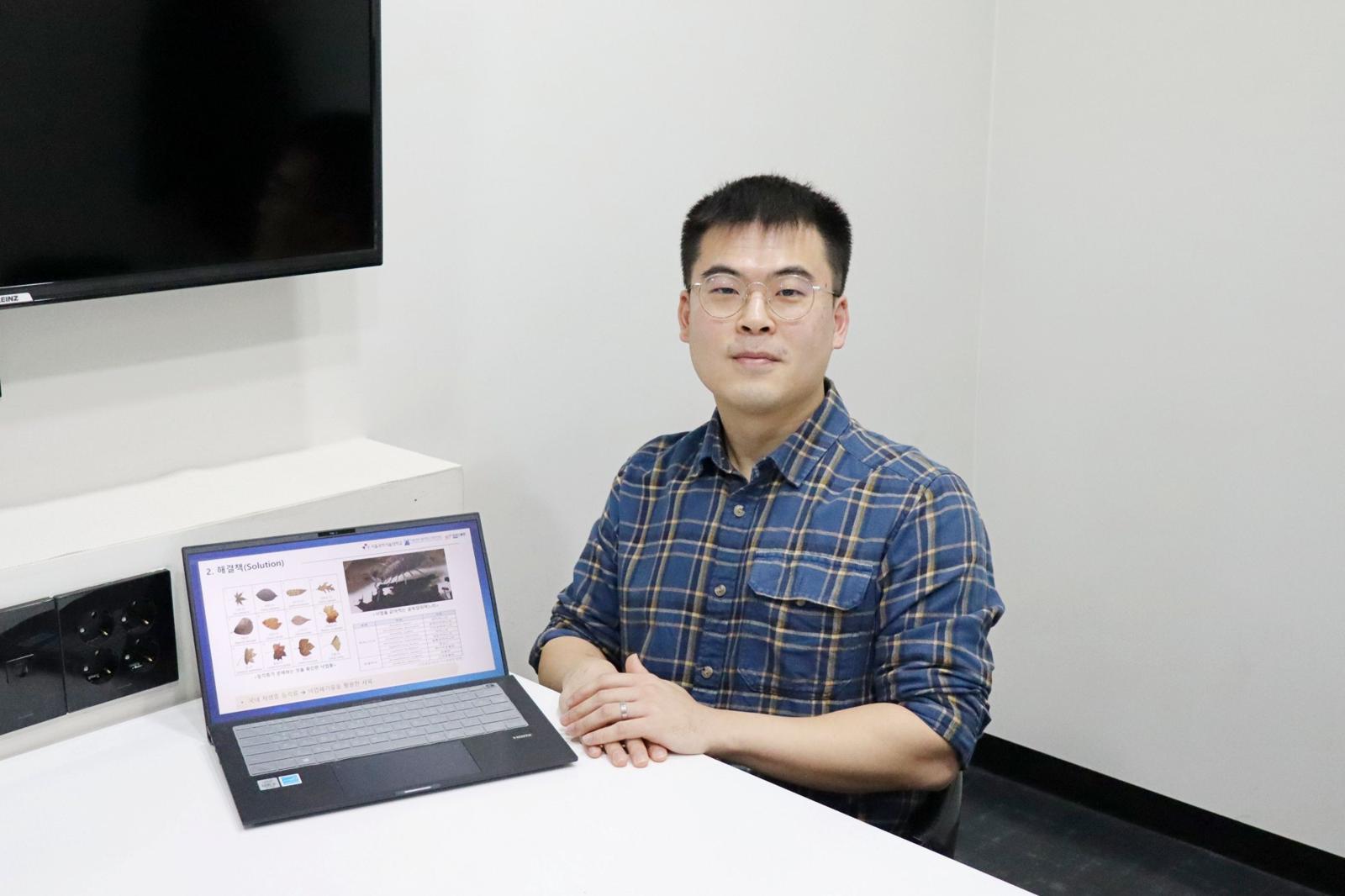
Lee Seung-hoon, CEO of Dot Decomposer Bio Lab / Source=ITDonga
As demand grows for new, efficient ways to recycle fallen leaves, a startup is approaching this problem with solutions drawn from natural ecosystems. Dot Decomposer Bio Lab has conducted research on decomposing fallen leaves using isopods, commonly known as pillbugs or woodlice. The company has also established optimal smart farm breeding conditions that enhance the decomposing capability of isopods and promote their growth. It is a climate-tech startup aiming to circulate isopods as high value-added resources and thereby contribute to solving environmental problems.
Arthropod enthusiast links personal interests to social issuesLee Seung-hoon, CEO of Dot Decomposer Bio Lab, says that since childhood he “has practically raised every kind of bug,” illustrating his strong interest in arthropods. He earned a PhD with a thesis on discovering useful substances and genes using insects, and during his doctoral studies he developed his personal interest in isopods into ideas for addressing social issues. He said, “I founded Dot Decomposer Bio Lab to show that social problems can be solved through the power of arthropods within nature’s circulation mechanisms and that this can be converted into industrial value.”
The first example is a smart farm that uses isopods to solve the problem of fallen leaf waste in an eco-friendly way and recycle it into high value-added resources. CEO Lee explained, “Just as industrial insects such as black soldier flies are used to treat food waste, I believed that identifying appropriate species in nature to solve social issues is the most natural and eco-friendly approach,” adding, “Isopods have not previously been utilized as a species, but a fallen leaf waste management method using them can supplement existing limitations and enable the creation of new value.”
Industrialization strategy based on an isopod smart farm
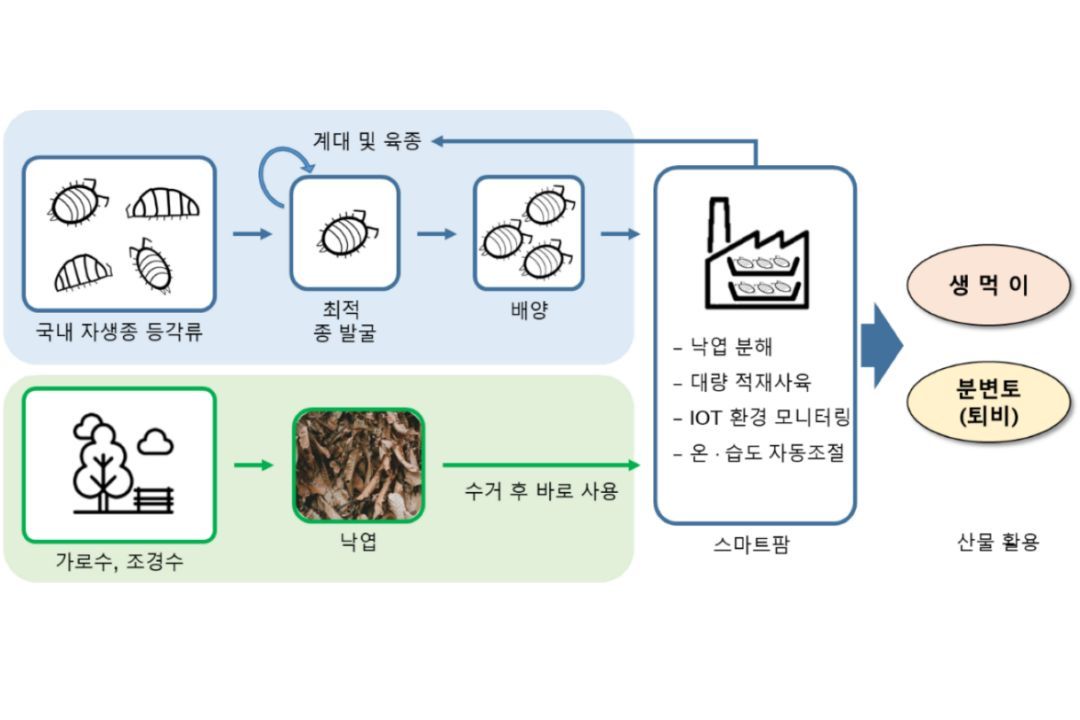
Dot Decomposer Bio Lab’s smart farm for decomposing fallen leaf waste using isopods / Source=Dot Decomposer Bio Lab
The core item of Dot Decomposer Bio Lab is a “smart farm for decomposing fallen leaf waste using isopods.” In soil ecosystems, fallen leaves are decomposed by soil microfauna and microorganisms and return to the earth; among them, isopods chew and shred the leaves and facilitate decomposition. CEO Lee has transplanted this principle into a smart farm. The process of leaf decomposition that occurs in nature is reproduced within the smart farm, and the efficiency is enhanced by controlling the breeding environment.
The company plans to utilize isopods mass-produced in the smart farm for ▲fallen leaf waste processing ▲live feed for reptiles, birds, and other animals ▲and fecal soil as a natural fertilizer. First, it receives fallen leaf waste from landscaping trees and treats it in the isopod smart farm to help resolve issues related to landfilling and incineration. CEO Lee said, “Compared with other industrial insects, isopods can be bred at high stocking densities, and they are optimized for smart farm breeding because they do not generate noise, odor, or wastewater. We compiled these characteristics and secured data to build a pilot-scale smart farm.”
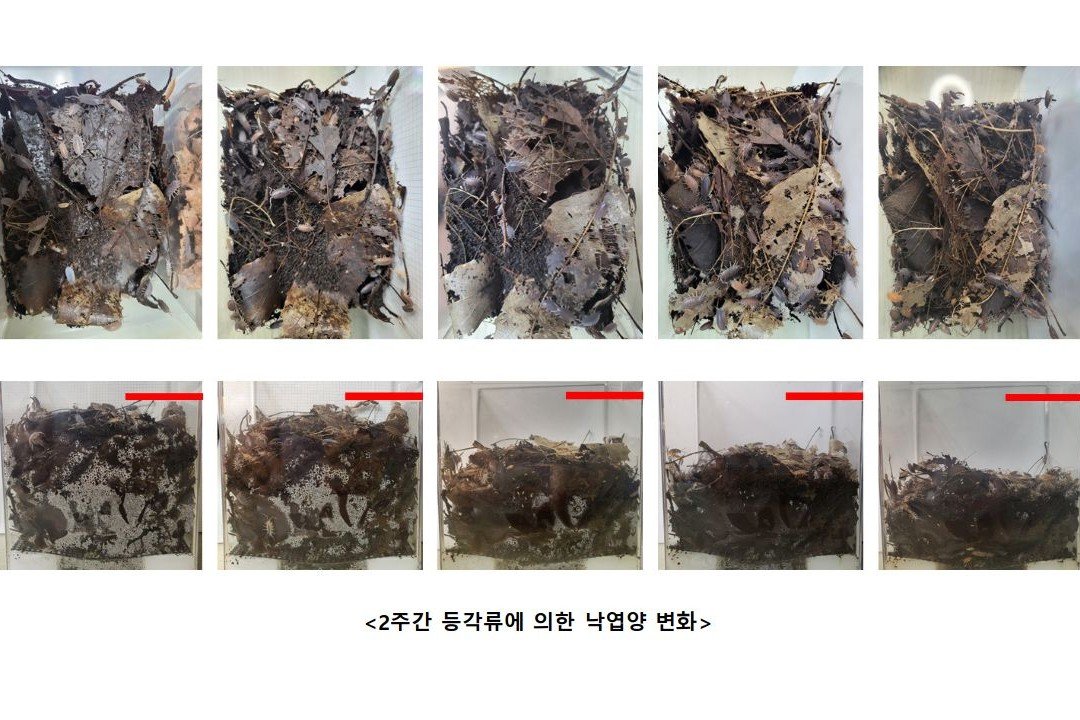
Reduction in the volume of fallen leaves in a decomposition experiment using isopods / Source=Dot Decomposer Bio Lab
In addition, isopods grown on fallen leaves are effective as feeder organisms in the pet market for raising reptiles and amphibians. CEO Lee said, “Isopods are used both domestically and overseas as live feed or as ‘janitors’ that decompose waste in terrariums,” adding, “Compared to traditional mealworms or crickets, they have higher calcium content and can be supplied in various sizes, which differentiates them.”
Dot Decomposer Bio Lab is not only utilizing the isopods themselves but is also exploring the potential uses of their decomposition by-product, fecal soil. CEO Lee emphasized, “The fecal soil excreted by isopods after consuming fallen leaves has fine and uniform particles. Overseas research has shown that its high nitrogen content helps plant growth,” and “While only a few people currently specialize in breeding isopods, Dot Decomposer Bio Lab is differentiated by pursuing industrialization based on research-driven data.”
Component analysis of isopods for commercialization… building scientific evidence
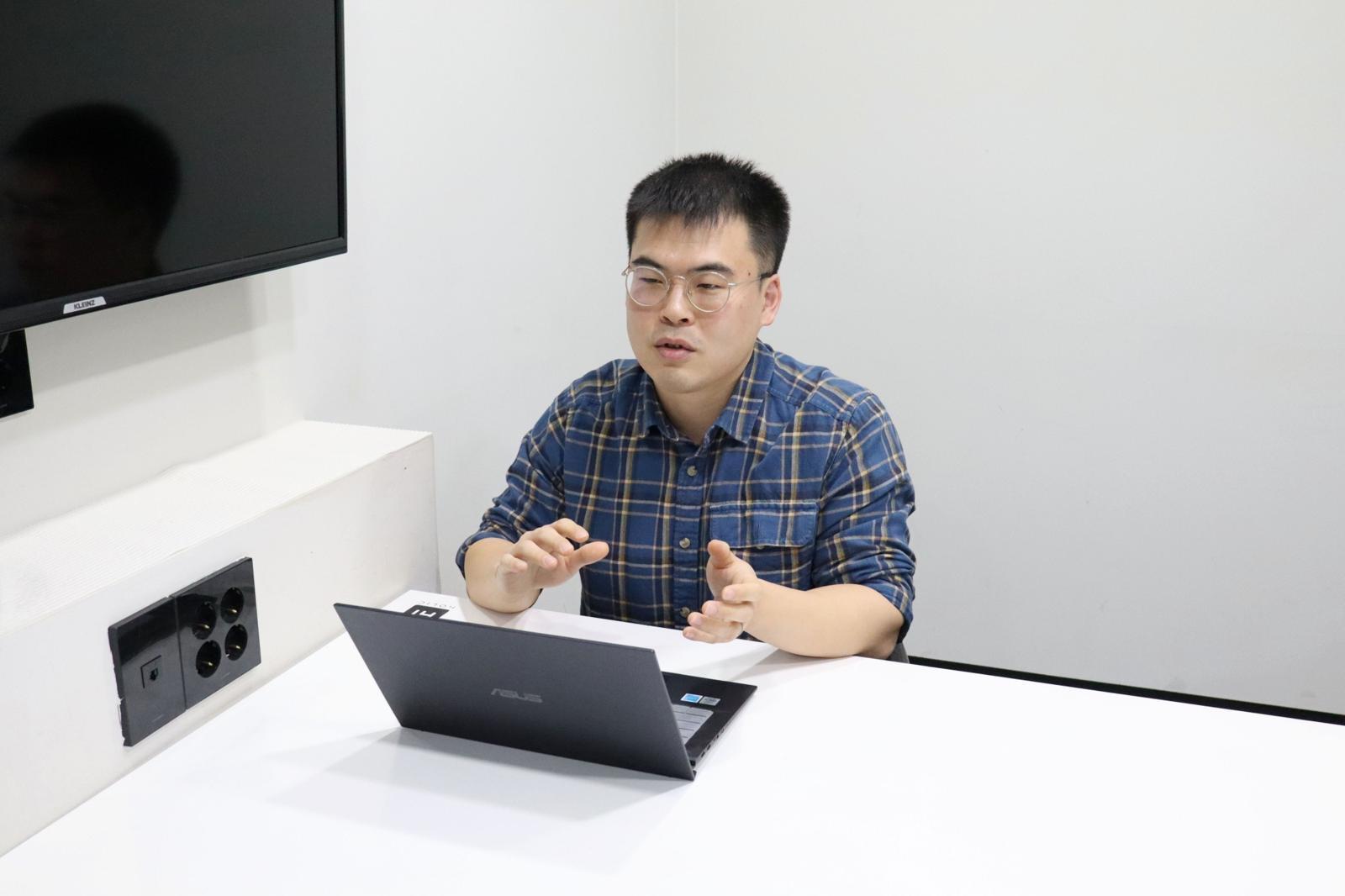
Lee Seung-hoon, CEO of Dot Decomposer Bio Lab / Source=ITDonga
Dot Decomposer Bio Lab is currently at a small-scale mass production stage and aims, through sequential scaling up, to establish itself as an essential system for building next-generation smart cities. In particular, as this is an unprecedented field in Korea, the company is prioritizing the accumulation and verification of basic data. Through continuous research it has established optimal smart farm breeding conditions, and last year it completed a patent application for its technology to enhance isopod decomposition capabilities and promote growth.
The company is also investing efforts in component analysis and data accumulation to secure scientific evidence. CEO Lee stated, “Through component analysis of isopods, we are demonstrating with data that they have sufficient nutritional value,” and “We are continuing to study the composition and effects of fecal soil, and are preparing to publish the academically verified results in papers.” He is also considering ideas for future application of artificial intelligence (AI) technologies to analyze the components of fallen leaves.
CEO Lee said, “As this is a new industry group, there were challenges during the research process, and we experienced many trial-and-error issues related to taxation, patents, and other aspects while launching the business. The incubation program of the Seoul National University of Science and Technology Startup Support Group was of great help.” He added, “We received systematic, customized, step-by-step support ranging from startup education tailored to preliminary entrepreneurs to presentation training and mentoring. We also received feedback from various experts and were able to share our concerns through networking programs.”
In the short term, Dot Decomposer Bio Lab plans to focus on establishing scientific evidence and strengthening capabilities, and after securing demonstrative data, it will move into full-scale business expansion. The company also plans to seek opportunities and research experience in leading arthropod research countries such as the United States and the Netherlands and to promote its solutions there. CEO Lee said, “Beyond isopods, we also aim to discover the industrial utilization potential of various decomposer organisms and expand our research, and ultimately to provide related knowledge and experience as educational content,” adding, “Ultimately, Dot Decomposer Bio Lab will perform a role that integrates three areas: solving environmental problems, arthropod research, and economic value creation.”
Reporter Kim Ye-ji, ITDonga (yj@itdonga.com)
ⓒ dongA.com. All rights reserved. Reproduction, redistribution, or use for AI training prohibited.
Popular News