Article at a GlanceThe following are the reasons Pulmuone grew into an “ESG model student.”
1. Since its founding, Pulmuone has clarified the direction of its ESG management by redefining its purpose and values, the reason for the company’s existence, based on the opinions of stakeholders including the board of directors, customers and employees.
2. Companywide ESG initiatives were promoted based on a systematic ESG decision-making structure that identifies ESG strategies and tasks (Plan), executes them and manages performance (Do), and monitors them (Check).
3. Through purpose-driven management workshops, employees were motivated to take pride in and feel passion for their work and to participate in ESG practices.
4. Using purpose as a lever, existing business areas are being expanded and reorganized into “Sustainable Foods,” thereby scaling up innovation targeting the global market.

One of the deepest concerns of a successful founder may be, “How can the precious company nurtured with such care be turned into an enduring organization?” The intensity of the passion and energy that drove employees to race toward a goal in the early days of a startup declines over time and as the business becomes more diversified. No matter how well a system is designed, its meaning inevitably fades if it does not evolve in response to changes in the times and in people. The law of entropy, which states that nature inevitably falls into disorder without an inflow of energy, applies equally to organizations. However, there is a moment when the speed of entropy growth within an organization can accelerate most rapidly. It is when management changes. In particular, when a founder who symbolized the founding spirit steps down from a management position, the organization is put to the test of change.
In 2018, the shoulders of Lee Hyo-yul, who was appointed as the first professional manager to serve as CEO of Pulmuone (hereafter CEO)
1
, were also heavy with responsibility. Nam Seung-woo, the former CEO who had successfully led the company for the past 33 years (currently an adviser to Pulmuone Foundation), stepped down, and Lee became the first professional manager to oversee Pulmuone. Outside the company, the decision by the controlling shareholder
2
to hand over the CEO position to someone outside the family was regarded as both unusual and refreshing. However, within Pulmuone, it was a foreseeable move. About 3 years before stepping down, Nam publicly announced that he would transfer management control not to his children but to a professional manager after 2017, the year he turned 65. Lee Hyo-yul, then CEO of Pulmuone Foods, was considered the leading candidate for the next CEO position, and in 2017 he was appointed as co-CEO of the holding company Pulmuone and underwent management training through an official management succession process.
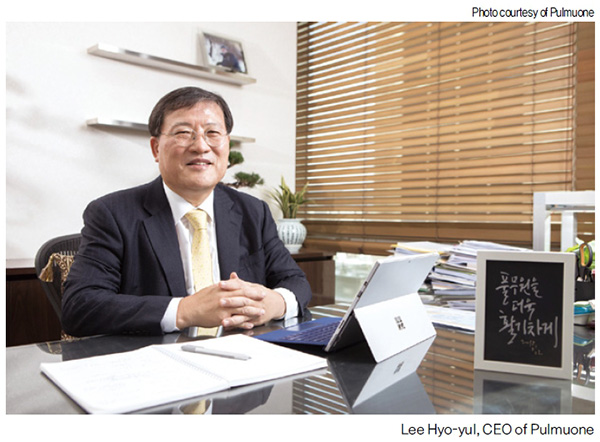
When the CEO took office, Pulmuone was continuing its steady growth, not only boasting an overwhelming No. 1 market share in Korea in the tofu and bean sprout sectors but also surpassing 2 trillion KRW in sales through the success of innovative products such as fresh noodles and cold-pressed juice. Moreover, Lee was a well-prepared CEO recognized by all Pulmuone employees. In 1983, 1 year before Pulmuone’s founding year of 1984, Lee joined Pulmuone Enzyme Food and was one of the founding members who went to work at 3 a.m. every day with Nam, delivering bean sprouts and tofu while contemplating a better future through healthy food. Having shared Pulmuone’s growth history for the past 38 years, Lee was known among employees as “Employee No. 1.”
Copyright Ⓒ 동아비즈니스리뷰. All rights reserved. 무단 전재, 재배포 및 AI학습 이용 금지










 경제·경영 질문은


 닫기
닫기