Stanford University tracks cognitive decline for up to 12 years Superagers vs. dementia patients: distinct patterns of brain-region connectivity identified Applied to over 1,300 cognitively normal adults The more similar their brain activity to dementia patients, the higher their future risk of cognitive decline “Can predict earlier than existing tests”
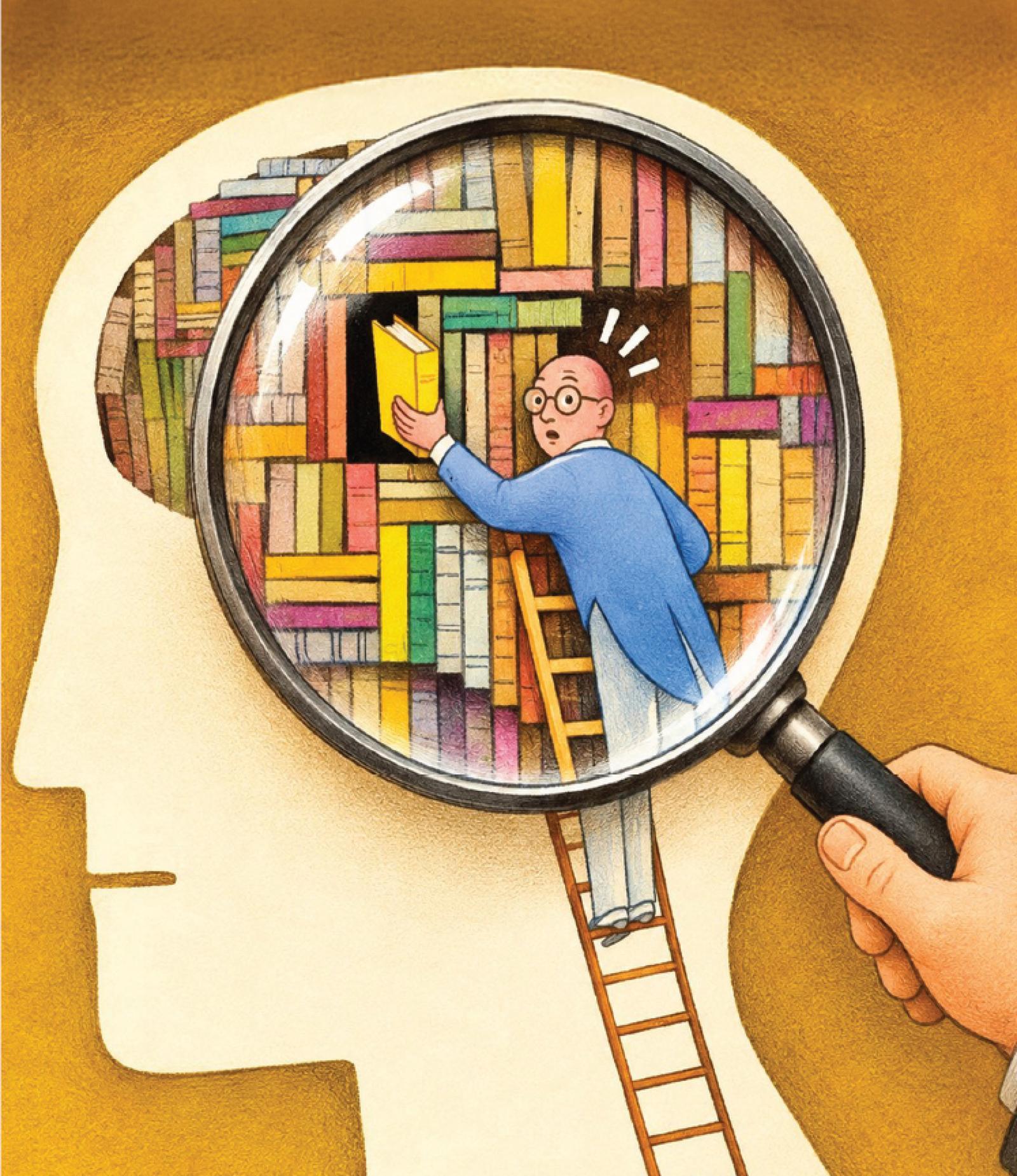
Researchers have reported that even people who show no problems on memory tests may reveal future dementia risk when their brain activity is examined. This is because older adults with exceptional memory and patients with Alzheimer’s disease exhibit different patterns of brain activity. Attention is focusing on whether this could open the way to identifying high‑risk individuals before symptoms appear, and using this for prevention and treatment.
● Normal memory, but different brain activity
A research team at Stanford University School of Medicine in the United States published these findings on the 4th (local time) in the international journal Science Advances. Alzheimer’s disease is the most common cause of dementia and is a condition in which memory and judgment gradually decline.
The initial comparison group in the study comprised 180 adults aged 75 or older with outstanding memory and 110 patients with Alzheimer’s disease. The former group maintains memory performance comparable to that of younger people and is referred to as “Superagers.” In this study, older adults with memory function equivalent to that of a typical 45‑year‑old were classified as Superagers. The researchers used functional magnetic resonance imaging (fMRI) to scan participants’ brains while they lay still and rested. The aim was to see which brain regions were highly active and how strongly different regions were connected. Even during sleep or quiet rest, various parts of the brain remain continuously active and interconnected.
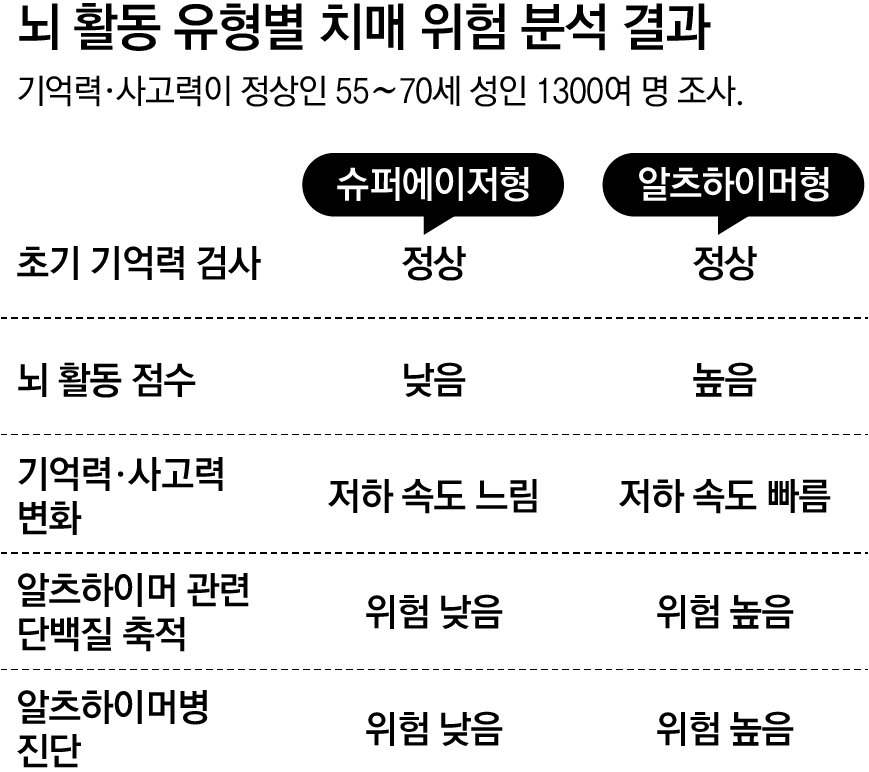
The two groups showed differences in how brain regions responsible for memory and judgment exchanged information. In Superagers, the connections between the anterior brain regions involved in planning and decision‑making and the regions that integrate various types of information were relatively strong. In contrast, patients with Alzheimer’s disease showed stronger connectivity in lateral brain regions involved in memory and language processing. Based on this, the team developed an analytical method that scores how closely each person’s brain activity pattern resembles either of the two groups.
The researchers then analyzed brain activity in more than 1,300 adults aged 55–70 who had no apparent problems with memory or thinking ability. Although all fell within the normal range on standard memory tests, their brain activity patterns differed. Some were similar to those of Superagers, while others were closer to those of Alzheimer’s patients. Analysis of follow‑up data over as long as 12 years showed that individuals whose brain activity resembled that of Alzheimer’s patients tended to experience faster subsequent decline in memory and thinking. They also faced a higher risk of accumulating Alzheimer’s‑related proteins in the brain and of actually being diagnosed with the disease. By contrast, those whose patterns resembled Superagers tended to maintain their memory relatively well.
● Expectations beyond early detection, toward prevention
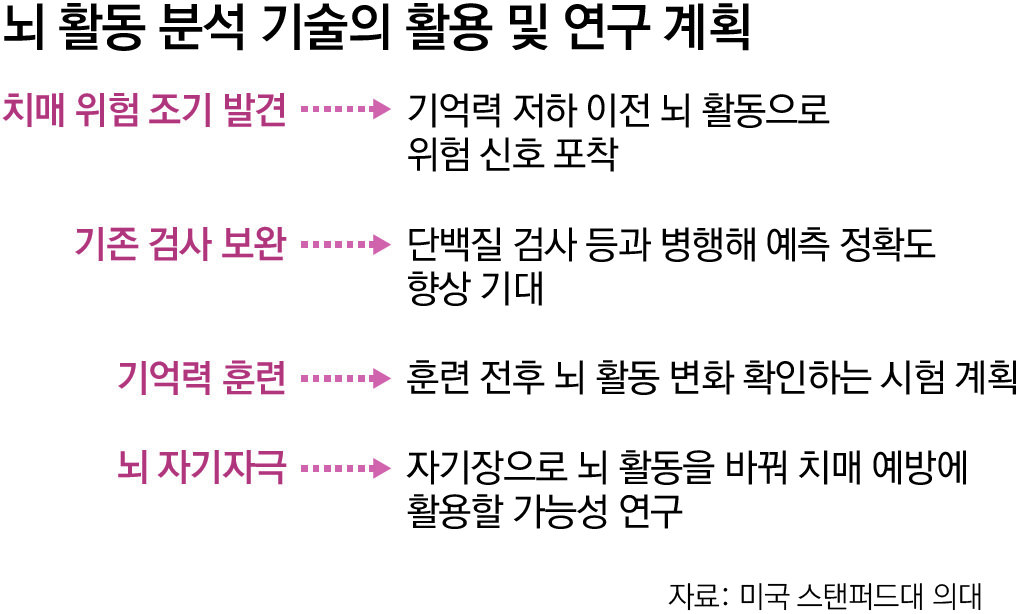
This study indicates that warning signs of risk may appear in brain activity even before memory decline becomes apparent. Until now, efforts to detect Alzheimer’s disease at an early stage have largely focused on assessing the accumulation in the brain of abnormal proteins called amyloid‑beta and tau. The research team suggested the possibility of identifying risk through brain activity before such protein changes become pronounced. Zhao Kanhao, a researcher at Stanford University School of Medicine, said, “This analytical method was able to detect risk at an earlier point than existing tests,” adding, “If used together with conventional tests, it will further improve predictive accuracy.”
The team plans to investigate whether brain activity can be steered in a healthier direction through memory training or by stimulating the brain from outside the skull using magnetic fields. Transcranial magnetic stimulation is used to treat depression, but its preventive effect on dementia has not been verified. Jang Wei, a professor at Stanford University School of Medicine who led the study, said, “What is important is to intervene at an early stage,” and added, “If risk signals can be accurately identified, there is hope that new therapeutic technologies could reverse or prevent cognitive decline.”
However, there are still considerable challenges before this can be applied to the early clinical diagnosis of dementia. Seo Sang‑won, a neurology professor at Samsung Medical Center, said, “Results of brain activity analysis are not yet standardized, so scores may vary depending on the hospital that conducts the test,” and added, “Additional validation will be needed before it can be used in routine clinical practice.”
Jeon Hye-jin
AI-translated with ChatGPT. Provided as is; original Korean text prevails.
ⓒ dongA.com. All rights reserved. Reproduction, redistribution, or use for AI training prohibited.