[Public Enterprise Heartfelt Management] The Future of K-Agriculture and Rural Communities
Building Export Competitiveness with ‘Seolhyang’ and ‘Maehyang’ Varieties
Combining Domestic Strawberry Breeds with Vertical Farming and AI Technologies
Exporting Strawberry Cultivation Techniques Now Used in 61 Countries
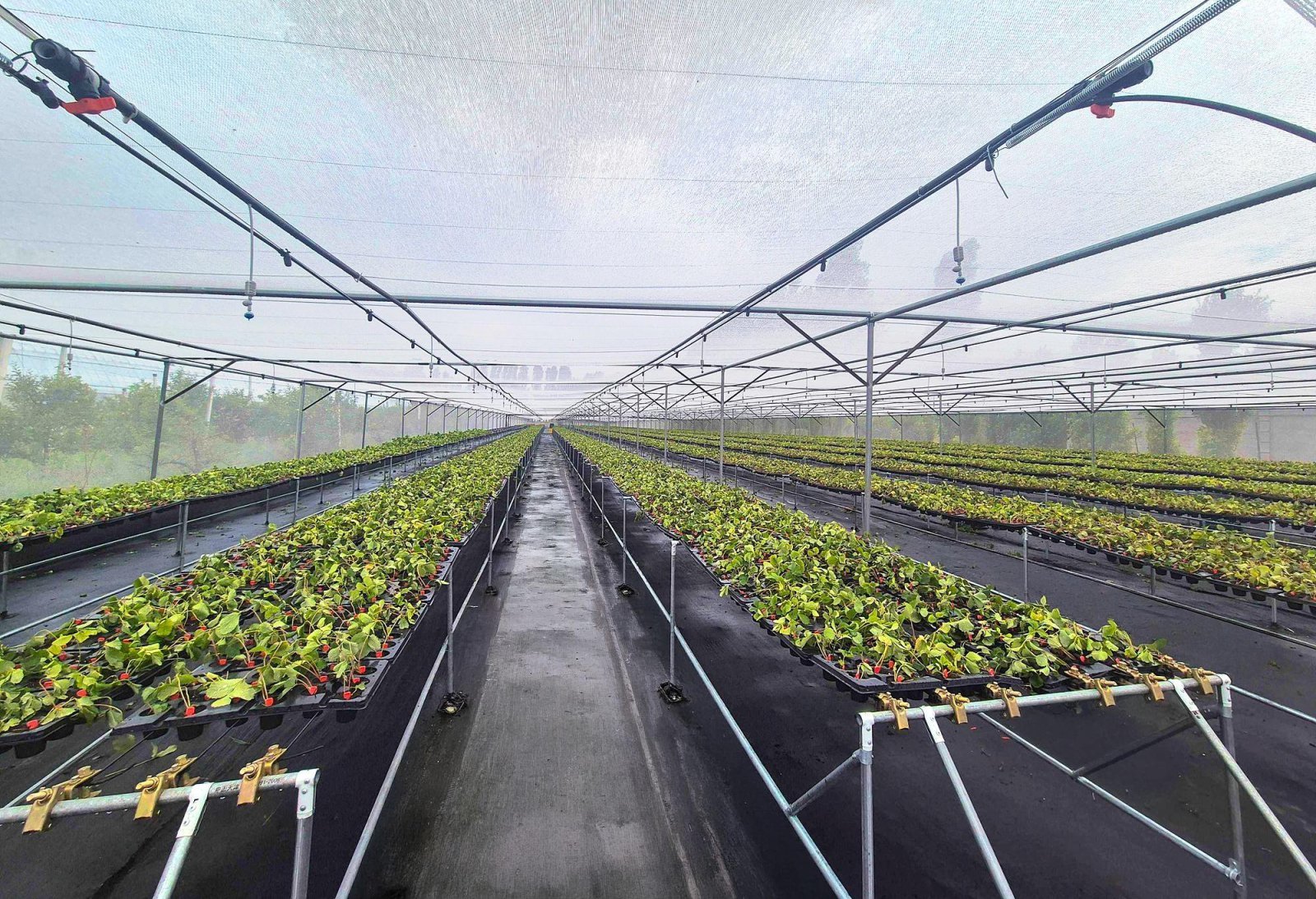
Strawberry nursery farm established by Permit in Uzbekistan. Provided by Permit
Strawberries, once enjoyed mainly in midwinter, are now transcending seasonal and national borders to dominate dining tables around the world. According to data from the Ministry of Agriculture, Food and Rural Affairs and the Korea Agro-Fisheries & Food Trade Corporation (aT), exports of Korean strawberries reached USD 72 million (about KRW 95.6 billion) in 2025. In the first half of 2026, exports posted USD 60.98 million (about KRW 80.8 billion), up 15.5% from the same period a year earlier, marking even stronger growth. Consumers in 61 countries, including those in Southeast Asia, are seeking out Korean strawberries.
In the past, strawberry farmers cultivated Japanese varieties such as ‘Janghee’ and ‘Yukbo’. Substantial royalty payments were sent overseas every year. However, the situation reversed from the mid-2000s as new domestic varieties such as ‘Seolhyang’ and ‘Maehyang’ were commercialized.
New domestic strawberry varieties have a milder acidity and are rich in juice, suiting the palate of Asian consumers. Their firm flesh prevents bruising during long-distance transportation, contributing to the expansion of overseas exports.
Strawberries are difficult to grow. From the nursery stage, when young seedlings are raised, through to harvest, temperature, humidity, light, and nutrients must be finely controlled to produce deep flavor and aroma. Even slight climate changes can halt growth and trigger the spread of pests and diseases.
The agricultural sector is addressing these challenges with advanced technologies. Smart farms that automatically control temperature, humidity, carbon dioxide concentration, and nutrient solution supply have rapidly taken root among farms. Going a step further, vertical farms, which stack multiple cultivation layers indoors to grow crops, are transforming the industry by increasing both the quality and yield of strawberries.
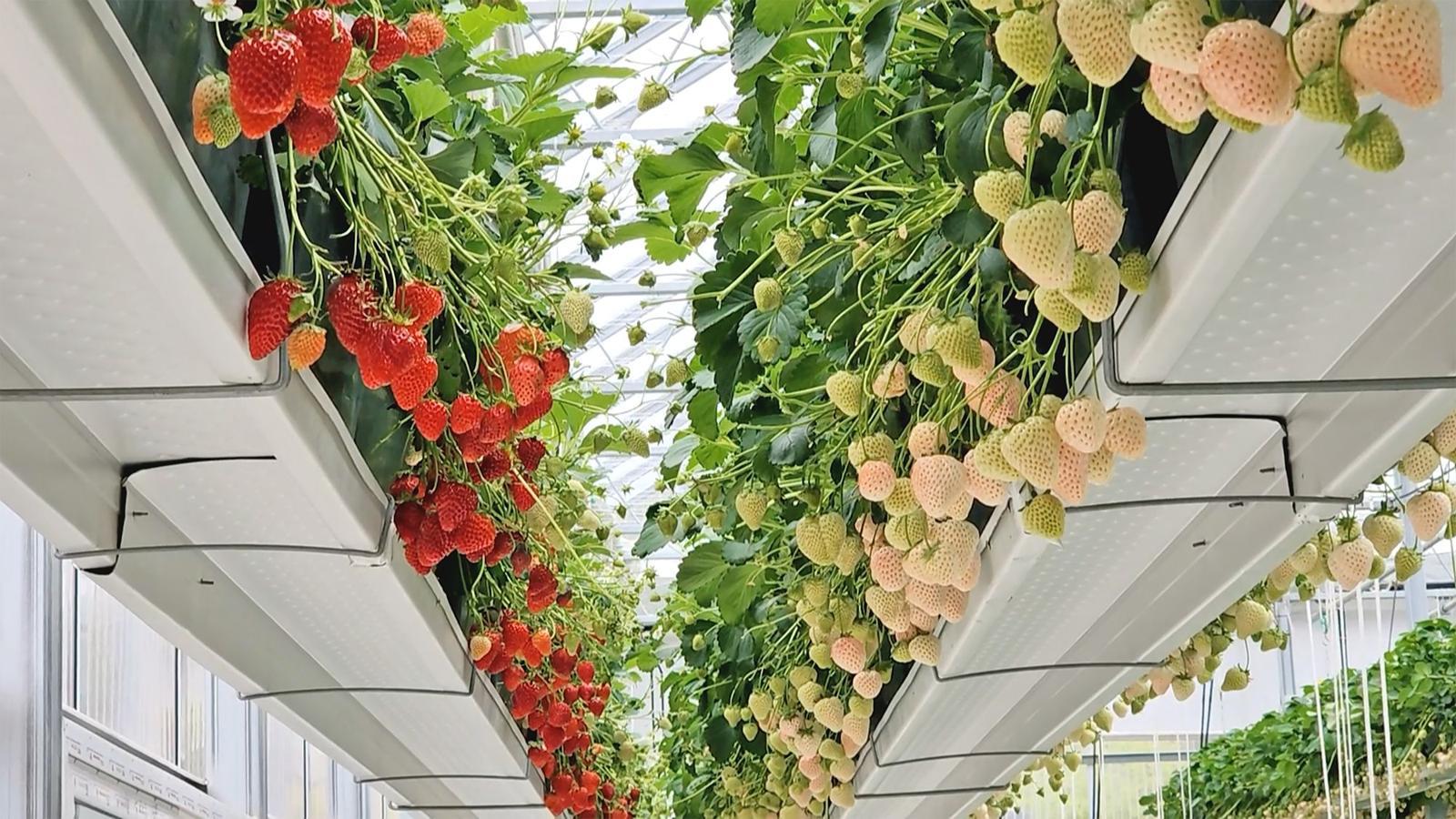
Cultivation of Permit’s new strawberry varieties 1943 and Cinderella in a vertical farm.
Vertical farms maintain a stable environment throughout all four seasons regardless of weather conditions. As cultivation layers are stacked upward like apartment floors, the cultivation area can be expanded severalfold even on limited land. They also offer the advantage of being installable virtually anywhere.
Artificial intelligence (AI) growth management systems have boosted the production efficiency of strawberries. Cameras and sensors monitor, in real time, the size and color of strawberry leaves and the development of the fruit. Based on accumulated data, AI autonomously creates optimal growing conditions for strawberries.
The expansion of Korea’s strawberry exports is underpinned by superior varieties, cultivation technologies, and efforts to develop overseas markets. In addition, tariff benefits under existing free trade agreements (FTAs) are being utilized in the export process. Existing FTAs that Korea has concluded with key trading partners such as ASEAN, Vietnam, and Singapore have helped enhance the price competitiveness of Korean strawberries in export markets. They have also significantly reduced costs for local importers bringing in premium Korean strawberries.
Meanwhile, concerns have been raised that market opening under FTAs could impose burdens on domestic agriculture. In response, the government has prepared domestic FTA support measures worth KRW 44.2 trillion between 2008 and 2025 to strengthen the competitiveness of the agricultural sector and minimize damage. These policies are designed to support farms adversely affected by agricultural market liberalization. In 2025 alone, the government provided about KRW 110 billion in state funds for projects including modernization of high-quality orchard facilities, dissemination of smart farms combined with information and communication technology (ICT), and the establishment of bases for export-oriented production complexes.
Farms that have adopted smart agriculture, such as smart greenhouses and environmental control systems, are seeing benefits including increased agricultural output and improved quality. According to a 2025 survey on smart agriculture, farms that introduced smart agriculture recorded a 20.6% increase in yield per unit area for facility horticulture and a 23.9% improvement in the yield of top-grade products per unit area compared with pre-adoption levels.
An increasing number of domestic companies are expanding overseas market entry based on accumulated cultivation technologies and varietal competitiveness. Smart agriculture company Permit is a prime example. The company has advanced beyond exporting strawberry fruit to exporting domestic strawberry varieties, vertical farm facilities, and cultivation technologies as a package.
After building the first to third NongHyup Smart Farm Support Centers and gaining field experience, Permit recently unveiled a “fifth-generation indoor strawberry vertical farm” that reduces energy consumption. By applying water-cooled cooling technology to dissipate heat with water, the system lowers the heat generated by lighting and saves electricity. According to Permit, this reduces power consumption by about 30–40% compared with conventional air-cooled systems that rely on wind for cooling.
AI cultivation solutions and robot technologies based on field data from agricultural sites have reduced labor costs and improved operational efficiency. In Permit’s strawberry vertical farm of about 1,000m² in Icheon, Gyeonggi-do, the harvest per strawberry plant increased from 850g to 1,200g—about 41%—after the application of AI solutions. Korean-style vertical farms and cultivation technologies are attracting attention in countries with challenging climate conditions, including China, Malaysia, Singapore, Indonesia, Mongolia, Saudi Arabia, and Uzbekistan.
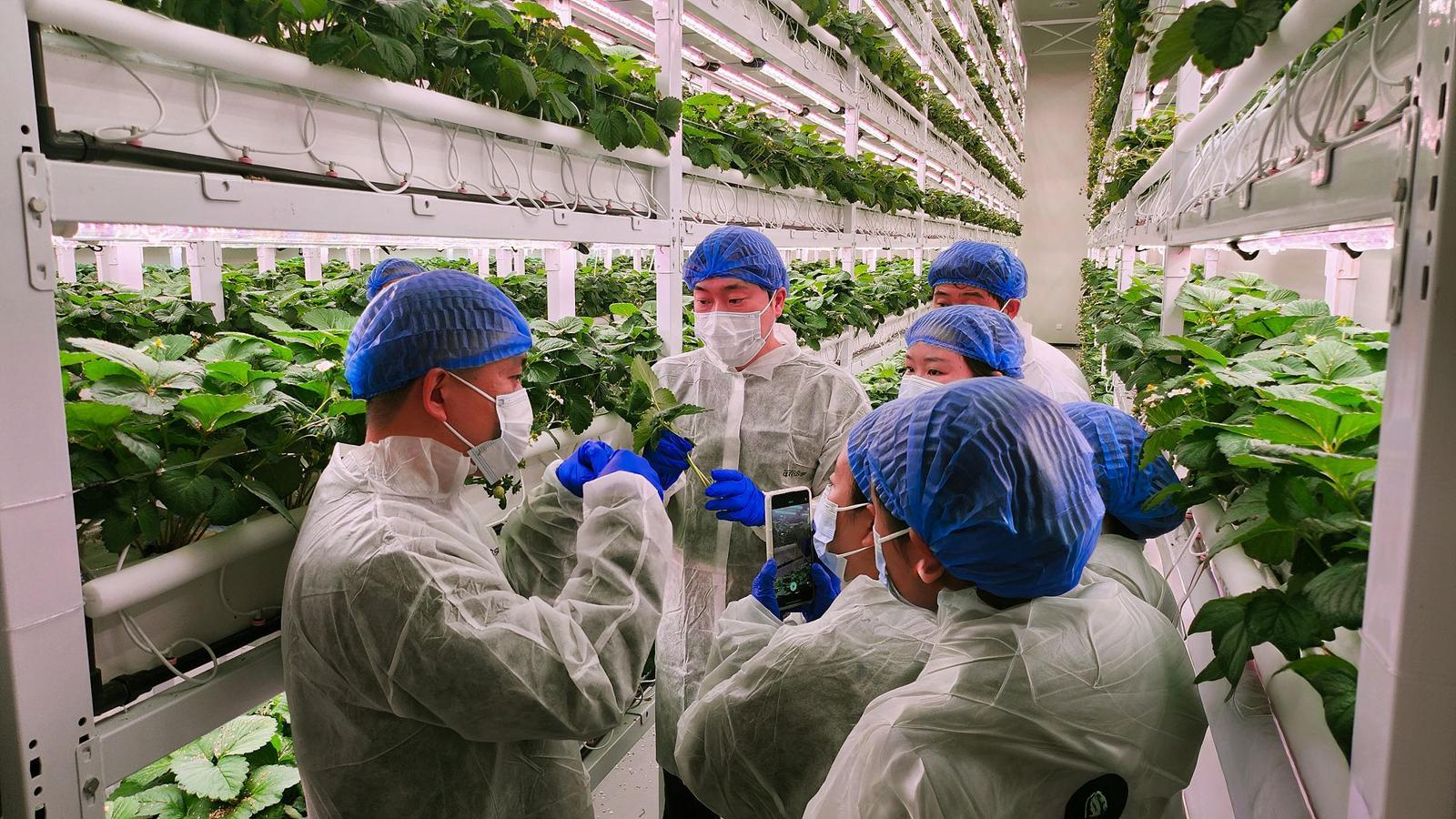
Permit installing and inspecting a strawberry vertical farm in Chengdu, China.
There are also moves to supply domestic strawberry varieties overseas and secure royalty revenue. In February 2026, Permit signed an exclusive license agreement with “Zhongnong Yixiang,” an agricultural technology company under the Chengdu Academy of Urban Agriculture, leveraging its proprietary 1943Permit strawberry variety (Plant Variety Protection No. 11120, Korea Seed & Variety Service). The company is also pursuing an application for plant variety protection in China for its subsequently developed strawberry variety ‘Tinkerbell’.
Permit has built an “AI Strawberry Value Chain” that integrates the entire process from strawberry seed development and seedling cultivation to AI-based cultivation management, post-harvest sorting and distribution, and exports. Using tissue culture technology, the company grows clean mother plants free of pests and diseases and supplies them to farms. Harvested strawberries are sorted at Permit’s own local distribution center and then sent through its distribution network. This structure allows farmers to focus solely on farming without worrying about sales channels and secure stable profits, while companies obtain stable volumes of uniform-quality products and enhance export competitiveness.
Permit is rapidly expanding its vertical farming and hydroponic technologies, proven with strawberries, to China, Uzbekistan, Singapore, and Malaysia. The company aims to help farms cultivate high-value crops hydroponically during the summer fallow period for strawberries, thereby boosting farm income.
Korean smart agriculture is now expanding beyond improving productivity and product quality competitiveness to become a high value-added export industry that encompasses varieties, facilities, and AI operation software. This is expected to create a virtuous cycle in which farms secure stable income sources resilient to climate change and the agri-industry gains sustainable growth momentum through global market expansion.
Park Sun-gi, CEO of Permit, said, “FTAs have expanded opportunities to access overseas markets, but to maintain competitiveness over the long term, domestic varieties, cultivation technologies, and distribution systems must develop together,” adding, “We will continue to expand smart agriculture technologies and operating models tailored to local environments so that Korean strawberries can be produced stably in many countries around the world.”
※Production support: Ministry of Agriculture, Food and Rural Affairs · Korea Rural Economic Institute
ⓒ dongA.com. All rights reserved. Reproduction, redistribution, or use for AI training prohibited.
Popular News