Data moves through undersea optical fiber… Over 99% of intercontinental transmission relies on it
Meta and Google announce large-scale investment plans… Korean cable industry anticipates rising demand
National Assembly introduces special bill to foster related industries
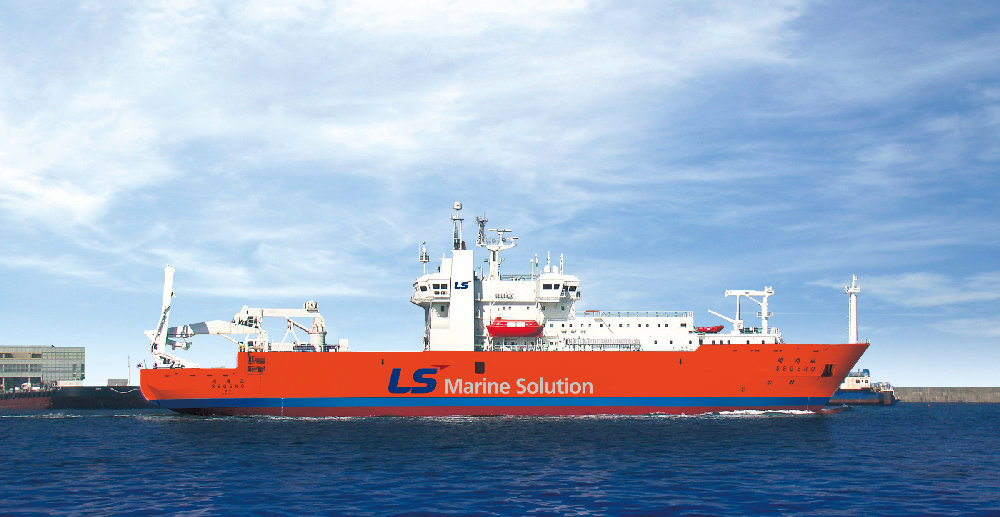
‘Segyero’ cable-laying vessel for submarine communication cables of LS Marine Solution. Provided by LS Marine Solution
The race to invest in artificial intelligence (AI) infrastructure is spreading beyond semiconductors, data centers, and power grids to include submarine communication cables. As AI data centers are built across the world and data traffic surges, there is a growing need for networks that can transmit and receive this data rapidly. While global big tech companies such as Meta and Google are directly investing in submarine cables, South Korea has also seen the introduction of its first special act aimed at fostering the related industry.
‘Submarine communication cables’ are core communications infrastructure that transmit data between countries via optical fiber installed under the sea. According to the International Telecommunication Union (ITU), more than 99% of intercontinental data transmission worldwide relies on submarine cables.
● AI infrastructure investment extends to submarine cables
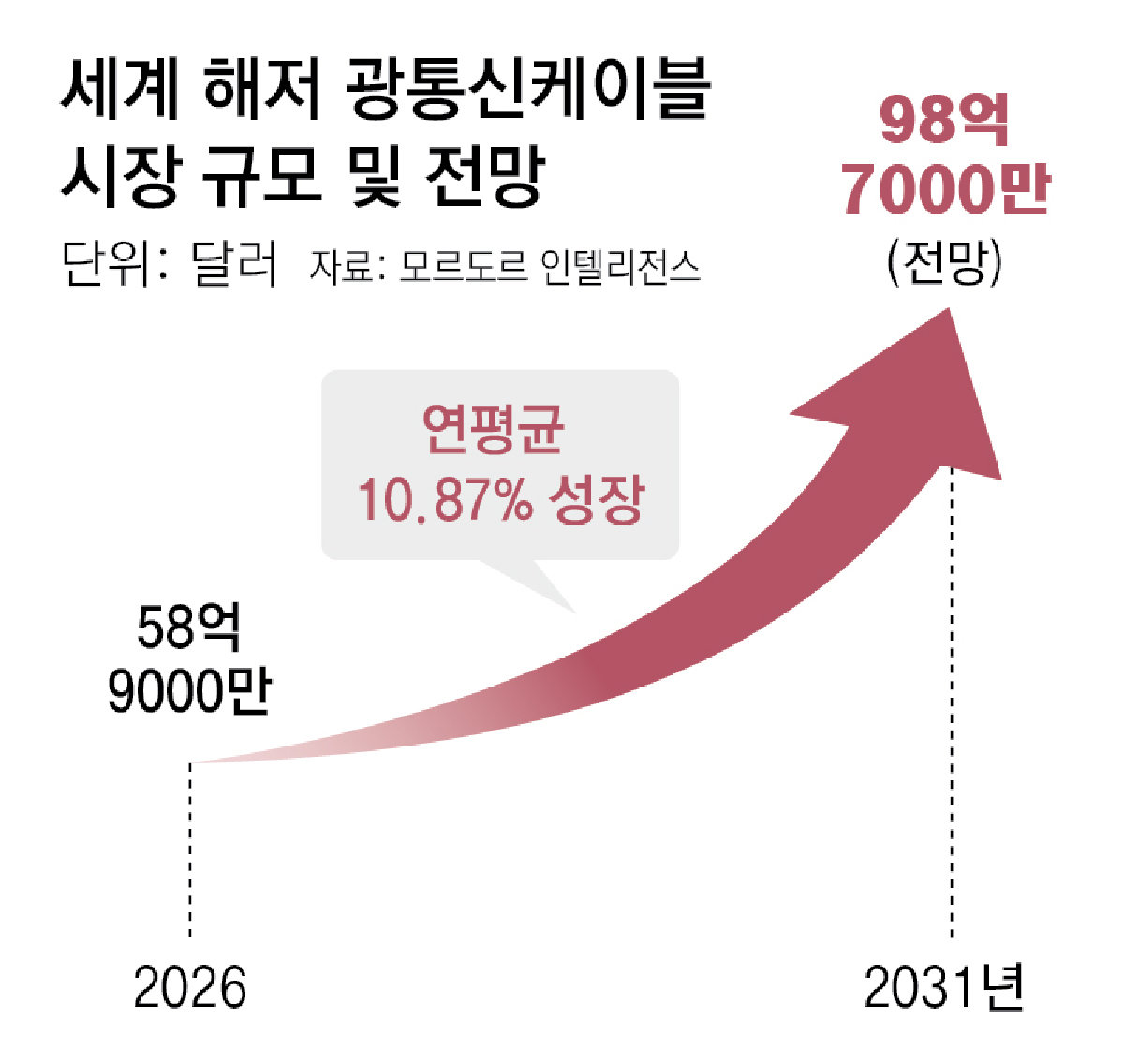
As AI utilization becomes more advanced through technologies such as “AI agents,” the importance of submarine cables is increasing further. As real-time “tasks” expand beyond simple question-and-answer services, cross-border data transmission demand inevitably rises. Market research firm Mordor Intelligence forecasts that the global submarine optical communication cable market will grow from USD 5.89 billion (approximately KRW 8.5 trillion) this year to USD 9.87 billion (approximately KRW 14.3 trillion) by 2031. The compound annual growth rate is projected at 10.87%.
Big tech companies building AI data centers are already investing in submarine cables. Meta in September announced a plan to build “PETAL,” a submarine communication cable of around 7,000 km connecting the United States and France. Scheduled to open in 2029, PETAL is a transoceanic submarine cable designed to transmit data at 1,000 terabits per second (1 petabit per second), the first of its kind in the world. Google is investing USD 1 billion (approximately KRW 1.4 trillion) to expand a trans-Pacific submarine communications network linking the United States and Japan, and is also pursuing construction of submarine cables connecting Australia and Thailand.
This is creating “business opportunities” for the domestic cable industry as well. LS Cable & System, Taihan Cable & Solution, and Gaon Cable produce not only power cables but also optical communication cables.
● Domestic telecom operators also ramping up investment
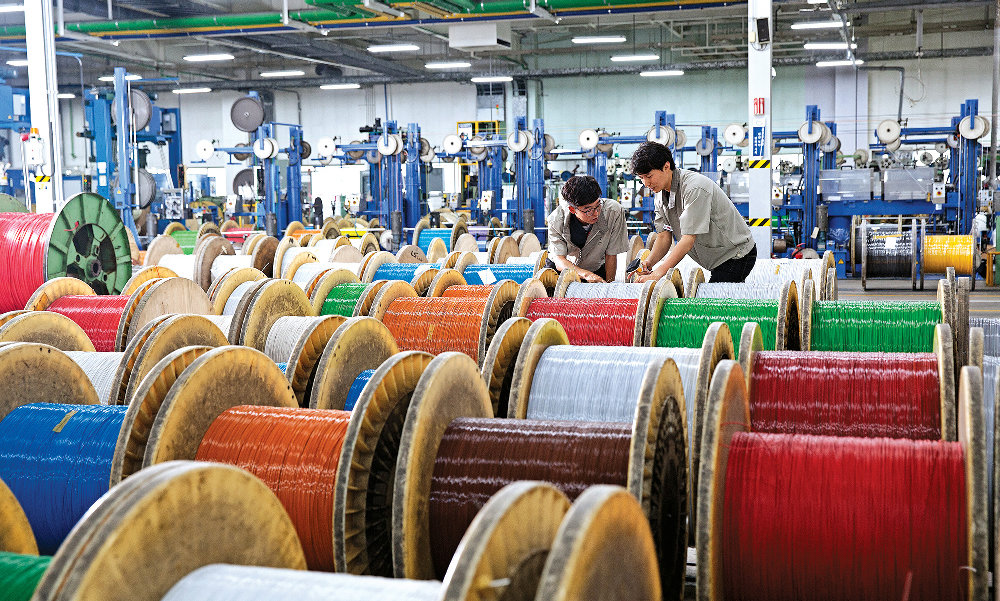
Optical fiber production site for LS Cable & System communication cable optical fiber. Provided by LS Cable & System
However, because submarine cable construction requires massive costs and long lead times, and separate permits must be obtained under multiple laws, the scale of submarine cable infrastructure in South Korea has lagged behind that of competitor countries. According to the telecommunications industry, only nine submarine cables are currently in operation in South Korea. The industry estimates that Singapore has 32 and Japan 23 submarine cable systems, far outpacing South Korea. Building a single cable can cost up to KRW 1.5 trillion and may take more than 15 years to recoup the investment, while negotiations over compensation with fishers have also been a burden, according to assessments.
In response, on the 27th, Kim Eui-kyeom, a lawmaker of the Democratic Party of Korea, introduced the “Special Act on the Promotion of Submarine Communication Cable Deployment and the Fostering of the Industry” as the lead sponsor. The special act provides for the simultaneous processing of 12 types of permits and approvals, including maritime use permits and environmental impact assessments. It also simplifies emergency restoration procedures in the event of cable damage and establishes a legal basis for government support. In addition, the act allows for the designation of special zones for submarine cable facilities and mandates the creation of public-private councils to mediate conflicts among stakeholders, including fishers and local residents.
Domestic telecommunications operators are also moving to significantly expand investment in submarine cables. KT plans to invest around KRW 1 trillion in submarine cables by 2031 to expand its international communications network. SK Broadband, together with Japan’s SoftBank and the United States’ Verizon, is jointly building a submarine cable of about 12,500 km connecting South Korea, the United States, Japan, and Taiwan, with completion targeted for 2028. Dreamline is investing approximately KRW 34 billion to build a “landing station” in Saemangeum, North Jeolla Province, where submarine cables will be connected to terrestrial communication networks.
ⓒ dongA.com. All rights reserved. Reproduction, redistribution, or use for AI training prohibited.
Popular News