Unverified medical information on social media causing spate of harm
Patients stopping medication see conditions worsen
“62% of medical videos are just personal experiences with no evidence… some even distort data to sell health supplements”
Warnings grow over “unverified information damaging people’s health”
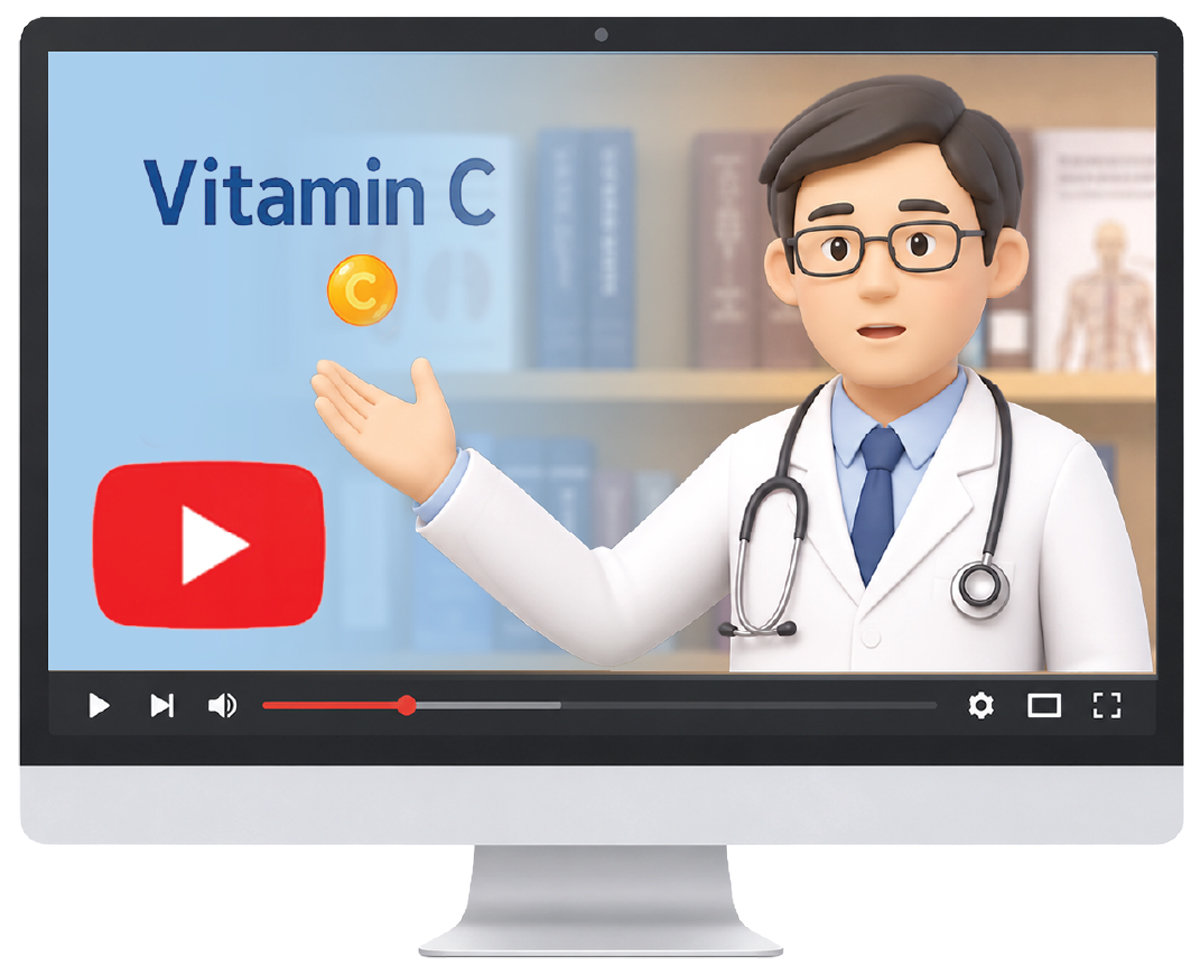
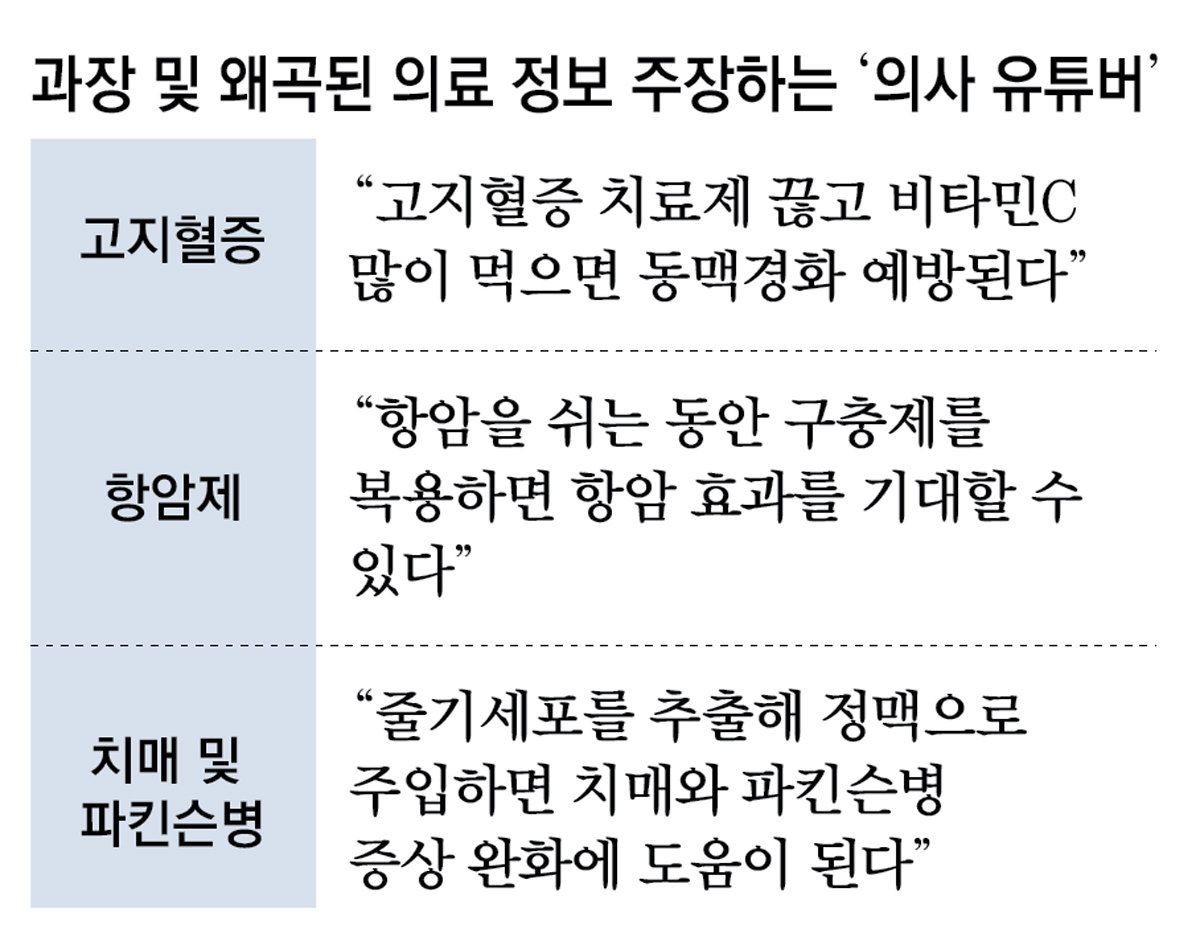
In a YouTube video that has garnered more than 1.3 million views, a private practitioner who introduced himself as a functional medicine doctor claimed that “the side effects of dyslipidemia drugs are too great” and argued that “if total cholesterol levels fall after taking dyslipidemia drugs, the risk of death actually increases.” On another YouTube channel, a dentist explained that “if you stop taking dyslipidemia medication and take vitamin C, you can prevent arteriosclerosis.”
At its academic conference last month, the Korean Society of Lipid and Atherosclerosis presented these videos and stated, “These are cases where non-specialist physicians with poor understanding of cardiovascular disease are disseminating distorted information. Patients must not arbitrarily discontinue medications prescribed by their specialists or miss the appropriate timing for treatment by relying on such information.”
As unverified medical information spreads mainly through YouTube and social networking services (SNS), cases are increasing in which patients stop taking medication or refuse treatment. Concerns are being raised that the abundance of inaccurate information online may harm patients’ health.
● 97% of physicians “Have treated patients who stopped treatment based on online information”
According to the medical community on the 21st, in a recent survey conducted by the Korean Society of Lipid and Atherosclerosis of 158 board-certified specialists, 96.8% of respondents answered that they had “experienced patients who discontinued treatment based on incorrect online information.” There was also a case of a patient who, relying solely on online information, arbitrarily stopped taking the medication prescribed by the attending physician and returned two weeks later after low-density lipoprotein (LDL) cholesterol levels had doubled.
The society pointed out that particular caution is needed because distorted information about statins, used as dyslipidemia treatment, is the most commonly encountered. Statins are prescribed as first-line therapy for lowering low-density lipoprotein (LDL) cholesterol, known as “bad cholesterol,” and for cardiovascular disease, but online there is information circulating such as “they melt muscles,” “they cause dementia,” and “they cause diabetes.”
Chung Ki-seok, President of the National Health Insurance Service, said, “YouTubers’ claims that magnify the side effects of proven pharmaceuticals and tell people to stop taking them are wrong.” Park Sang-min, professor of cardiology at Nowon Eulji Medical Center, said, “Some YouTubers distort medical or health data or link it to the sale of health functional foods.”
● “62% of cancer and diabetes YouTube videos lack evidence”
Although the number of “doctor YouTubers” and “health influencers” appearing on SNS is increasing, a significant portion of the medical information they provide is exaggerated, distorted, or inaccurate.
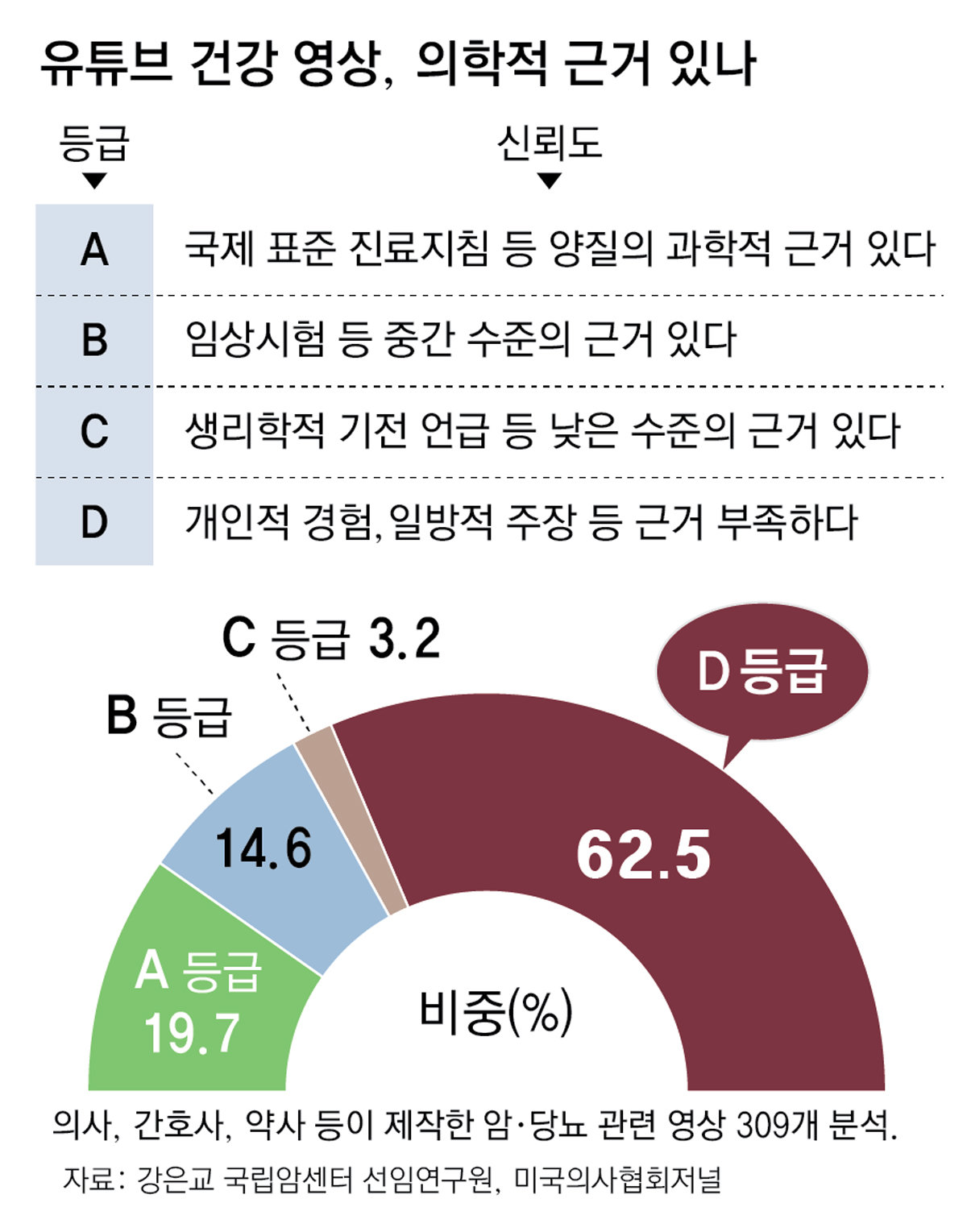
According to a study by Kang Eun-kyo, senior researcher at the National Cancer Center, published in the international journal JAMA (Journal of the American Medical Association), only 19.7% of 309 YouTube videos posted by physicians, nurses, and others on cancer and diabetes contained sufficient medical evidence. By contrast, 62.5% of the videos contained personal experiences or claims for which evidence had not been verified. Despite this, videos with insufficient medical evidence had, on average, 35% more views than those backed by sufficient evidence.
Kim Sung-geun, spokesperson for the Korean Medical Association, pointed out, “When a physician disseminates inaccurate information that is not based on his or her professional expertise, it can have a much greater impact than information delivered by artificial intelligence (AI) or non-experts, and is therefore more dangerous.”
In particular, where there is no curative treatment, unverified medical information is being indiscriminately spread by targeting patients’ hopes for a cure. On YouTube and other platforms, distorted information such as “taking anthelmintics while taking a break from chemotherapy can provide anticancer effects” is easily found. This is based on the notion that anthelmintics are known to inhibit cell division, but the medical community explains that there is insufficient medical evidence. In relation to neurodegenerative diseases of the brain and nervous system such as dementia and Parkinson’s disease, false claims are also spreading, such as “injecting stem cells improves blood flow and helps alleviate symptoms.”
Professor Park said, “To prevent patients from being misled by distorted information, each academic society needs to disseminate accurate guidelines through a variety of channels.”
ⓒ dongA.com. All rights reserved. Reproduction, redistribution, or use for AI training prohibited.
Popular News