Will the world’s most valuable unlisted company soon proceed with the largest initial public offering (IPO) in history? The topic is SpaceX, which has recently emerged as a hot issue in the global investment community. There is growing speculation that Elon Musk’s space company SpaceX will launch an IPO in the second half of this year.
While expectations are rising that “this is huge, it must be worth investing in,” there is also a cautious counterview asking, “Wait. Is it really worth that valuation?” In any case, if it materializes, the
SpaceX IPO will undoubtedly be an event comparable to this year’s Olympics or World Cup. This article takes an advance look.
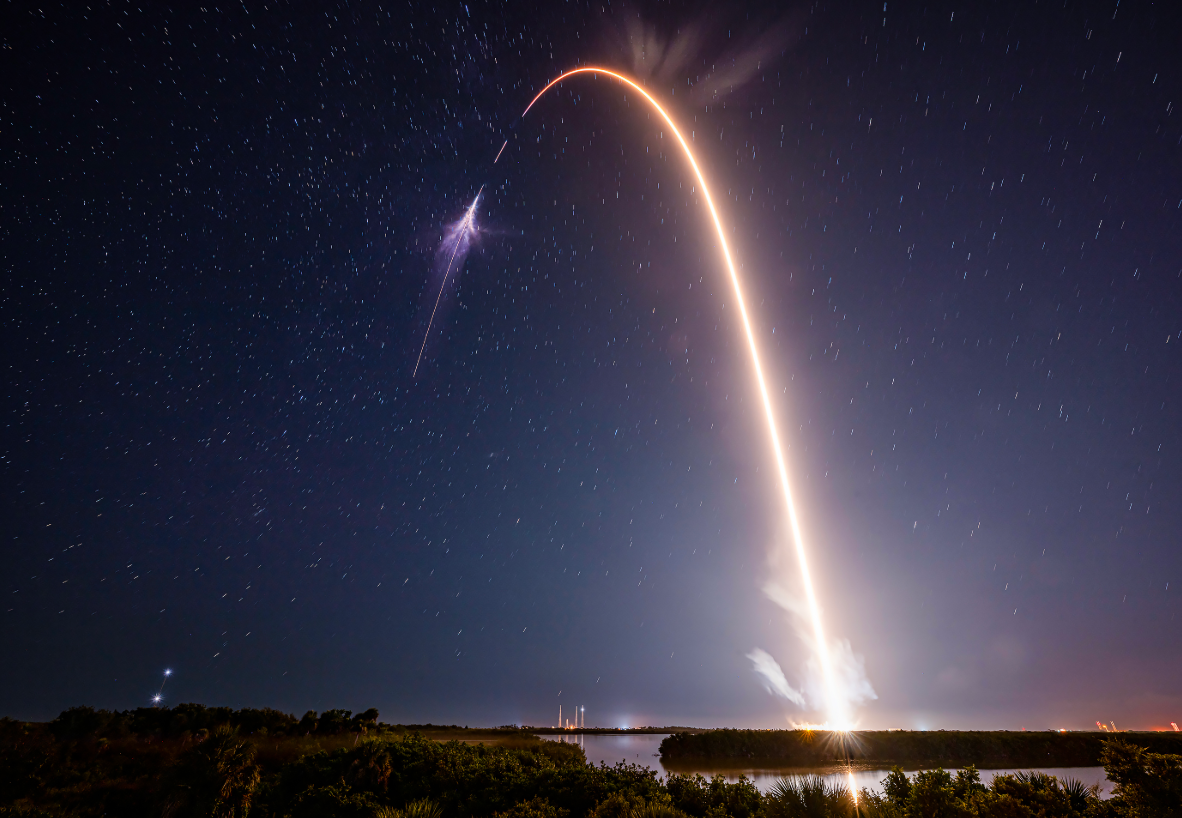
Can Elon Musk’s space company SpaceX set a new record for the largest IPO ever? Source: SpaceX
*This article is the online version of the Deep Dive newsletter published on January 21. Subscribe to Deep Dive, “economic news that draws you in as you read,” as a newsletter.https://www.donga.com/news/Newsletter
Has Musk changed his mind?
SpaceX was founded in 2002 by Elon Musk. With its “reusable rockets,” it dramatically reduced the cost of reaching space and brought a revolution to space travel. Through “Starlink,” which has launched more than 10,000 satellites into low Earth orbit, it has come to dominate the global satellite communications services market. For now, it is hard to find a rival capable of competing with this
world’s largest space company.
As an unlisted company, SpaceX was valued at an astonishing
USD 800 billion (approximately KRW 1,180 trillion) in private share transactions late last year. It overtook OpenAI (valued at USD 500 billion) to become the most valuable unlisted company in the world.
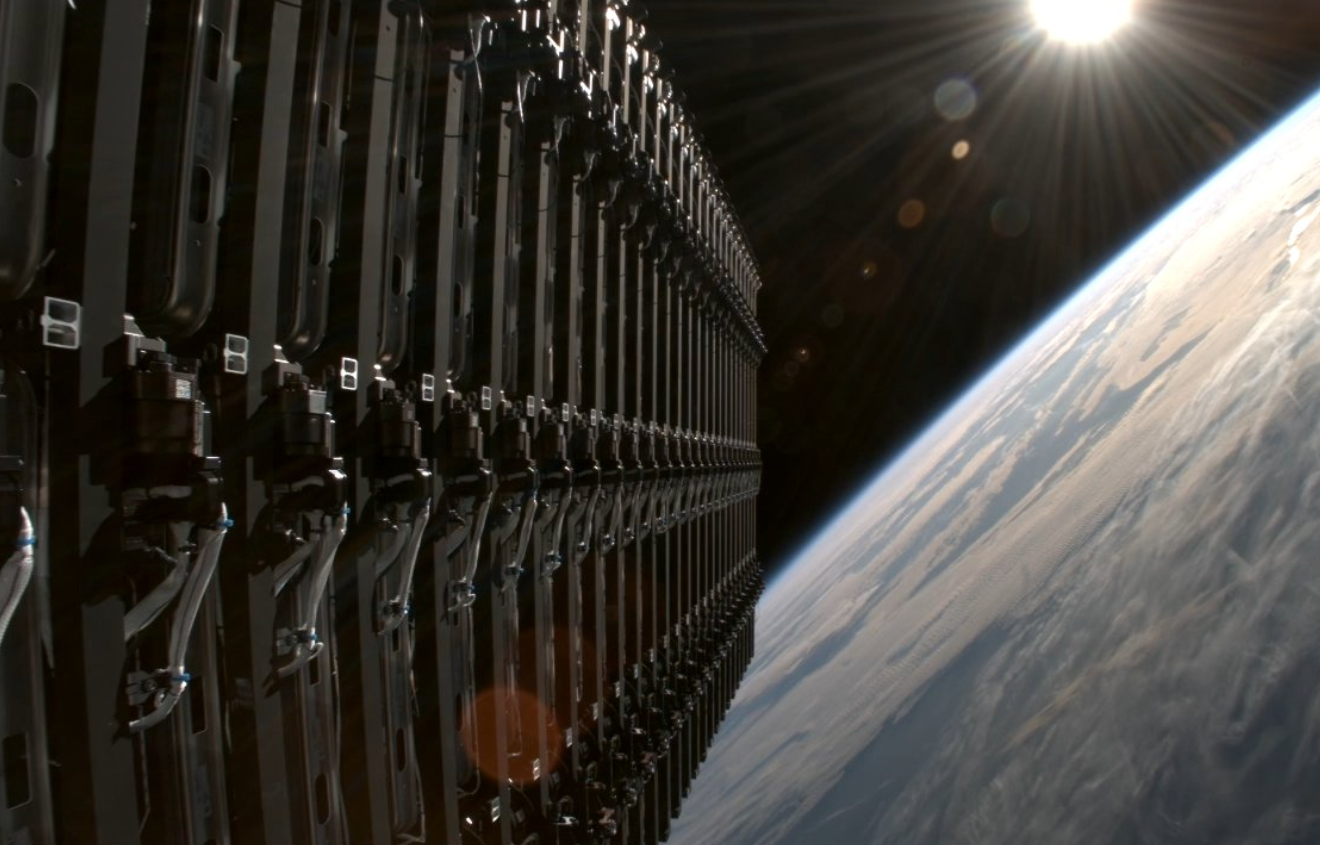
Starlink satellites launched by SpaceX into low Earth orbit. Source: SpaceX
And this SpaceX is
pursuing an IPO in the second half of this year. According to the New York Times, SpaceX has shared its IPO plans with shareholders and is currently in talks with several banks. Elon Musk even replied “Accurate” to a related post on X. Although the company has yet to make an official announcement, Bloomberg reports that
SpaceX is targeting a valuation of up to USD 1.5 trillion (KRW 2,217 trillion) through the IPO and aims to raise USD 30 billion (KRW 44 trillion). If this proceeds as planned, it would break the record of Saudi Aramco, the state-owned oil company of Saudi Arabia, which raised USD 29 billion in 2019.
This is an enormous plan in scale. The most striking point is that Elon Musk appears to have changed his thinking. From the early days, Musk has repeatedly stated that he would keep SpaceX as a private company. This was in order to focus on
SpaceX’s mission of colonizing Mars, namely “interplanetary travel”.
In 2013, he sent the following email to SpaceX employees: “
I am concerned about SpaceX going public before the Mars transport system is complete. The fundamental goal of SpaceX is to develop the technologies needed to establish life on Mars. If an IPO would hinder the achievement of that goal, it should be postponed.” Once listed, it becomes virtually impossible to ignore short‑term profits and stock price movements in favor of long‑term objectives, and he wanted to avoid that reality.
Above all, SpaceX is not in an immediate cash crunch.
Its projected revenue is growing steeply from USD 15.5 billion (KRW 23 trillion) in 2025 to USD 22–24 billion (KRW 32–34 trillion) in 2026. Although no official figures have been disclosed, it is already reported to be profitable. In particular, the number of Starlink subscribers doubled in a year (from 4.5 million to 9 million) last year, powering its growth.
Why, then, has Musk become interested in an IPO at this point in time? The explanation from inside and outside the company is this:
the rise of artificial intelligence (AI) has changed some of SpaceX’s plans.
Who will build data centers in space?
As competition over AI technology intensifies, governments and corporations around the world are pouring massive investments into building data centers. But where will all these data centers get their power? Their water? Their land? Their permits? There are significant constraints on Earth.
The creative idea that could leapfrog these constraints in one stroke is the
“space data center”. Literally,
artificial satellites equipped with AI chips would be placed in orbit and used as data centers (zero land use). They would be able to draw power around the clock from the sun via solar panels (zero electricity bills). There is no need to worry about opposition from local residents to construction (zero civil complaints). In addition, installing radiators on the shaded side of the satellites would allow the heat generated by the chips to be dissipated into outer space at minus 250 degrees Celsius (zero water use). Considering that securing permits, building, and connecting power for a terrestrial data center can take years, this might even save construction time.
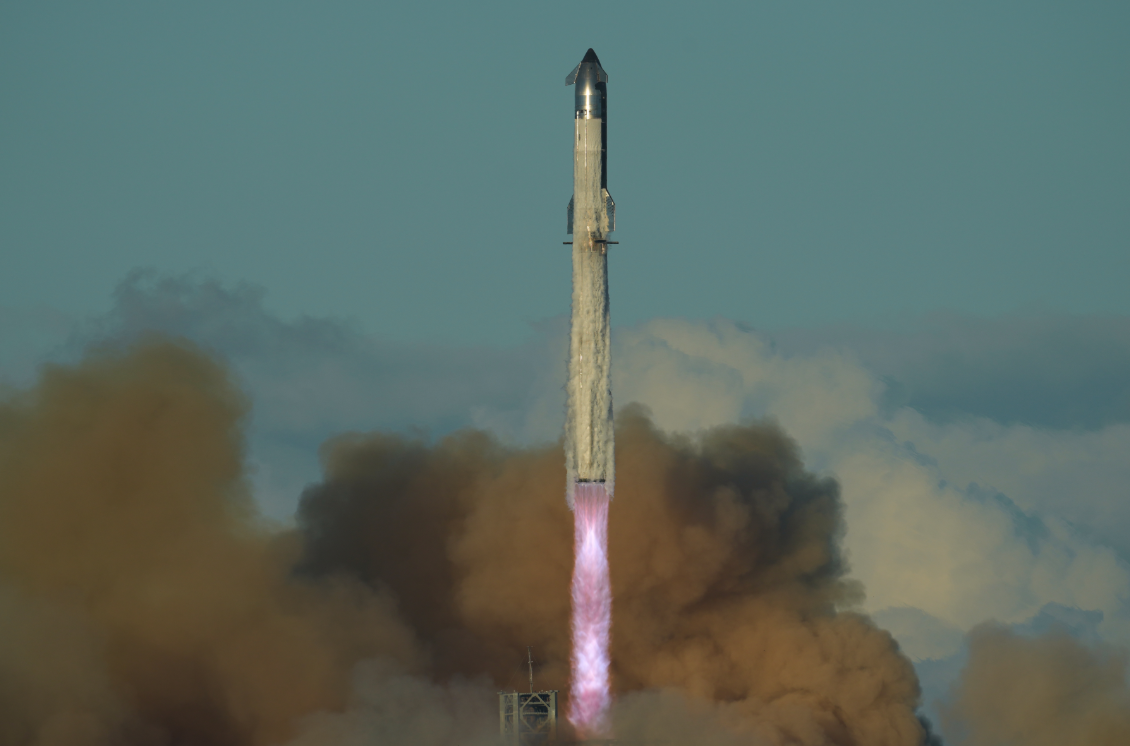
Test launch of SpaceX’s Starship in October 2025. AP / Newsis
And the most important—and most realistic—question attached to this science‑fiction‑like concept is this:
How much will launch costs be? What will it take to place satellites into orbit cheaply, quickly, and in large quantities so that the economics of the model work?
Not only multiple startups but also companies such as Google and Jeff Bezos’s Blue Origin have already entered the space data center business. Yet, in reality, there is virtually only one company in the world that has already proved it can rapidly launch satellites in large numbers: SpaceX.
With Falcon 9, SpaceX has already cut the cost of low‑Earth‑orbit launches from USD 65,000 per kilogram to under USD 1,500 (about KRW 2.2 million). It is now developing
the super‑heavy rocket Starship, which has 6.5 times the payload capacity (150 tons) of Falcon 9. If Starship is commercialized,
launch costs are expected to plummet dramatically to USD 100 per kilogram. Starship completed 11 test flights through last year and is scheduled for its 12th test flight in the first quarter of this year.
In a post on X in November last year, Elon Musk stated: “
Starship will be able to place in orbit AI satellites capable of generating roughly 300GW, or perhaps as much as 500GW, of solar power annually. The important word here is ‘annually’. The average power consumption of the United States is about 500GW, and space AI will surpass that every two years in terms of information processing alone.”
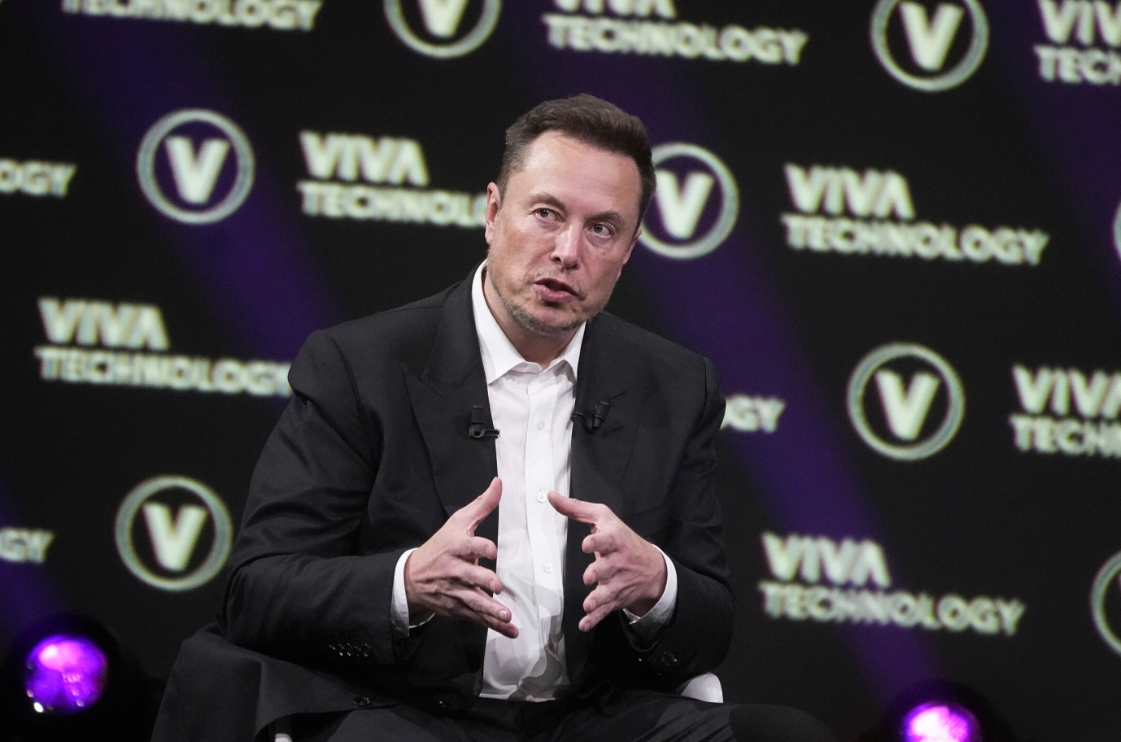
In a recently released podcast, Elon Musk, founder of SpaceX, indicated he would postpone launching an unmanned Mars probe in 2026, calling it “a low‑probability‑of‑success attempt.” Musk is the largest shareholder in SpaceX, holding a 42% stake. AP / Newsis
Given Musk’s characteristic hyperbole, it is debatable whether numbers such as 300GW have a solid basis. What is clear, however, is this:
SpaceX’s pivot toward an IPO ultimately aims to win the AI race.
In an interview with technology outlet Ars, Abhi Tripathi, a former SpaceX engineer who is now operations director at the Space Sciences Laboratory at UC Berkeley, said that
Musk’s realization that Starlink satellites could be configured as a distributed data center network was the pivotal turning point. “It was the moment when an IPO, which had long seemed unlikely, suddenly emerged as an important variable. The key to the AI race is to accumulate and deploy assets faster than competitors. The huge capital raised through an IPO will greatly help Musk achieve his goals.”
Musk is already engaged in fierce AI competition through Tesla (autonomous driving, humanoid robots) and xAI (generative AI). With space data centers via SpaceX, he is trying to move ahead in the AI infrastructure race as well. Before going to Mars, he appears intent on conquering Earth’s AI first.
So is it worth investing?
The fusion of two hot themes—AI and space—is electrifying the market. Even though the listing plan has yet to be finalized, interest is mounting in “how to invest in SpaceX.” As a result, the share prices of firms that invested early in SpaceX and hold stakes (for example, Mirae Asset Securities) have risen, and overseas ETFs that hold SpaceX as a portfolio company (such as Destiny Tech100) have drawn attention. It is time to examine this more closely:
Is SpaceX worth investing in?There is little dispute that SpaceX is more than a decade ahead in the space industry, particularly in the launch segment. The key questions are whether its valuation is appropriate and what risk factors might be lurking.
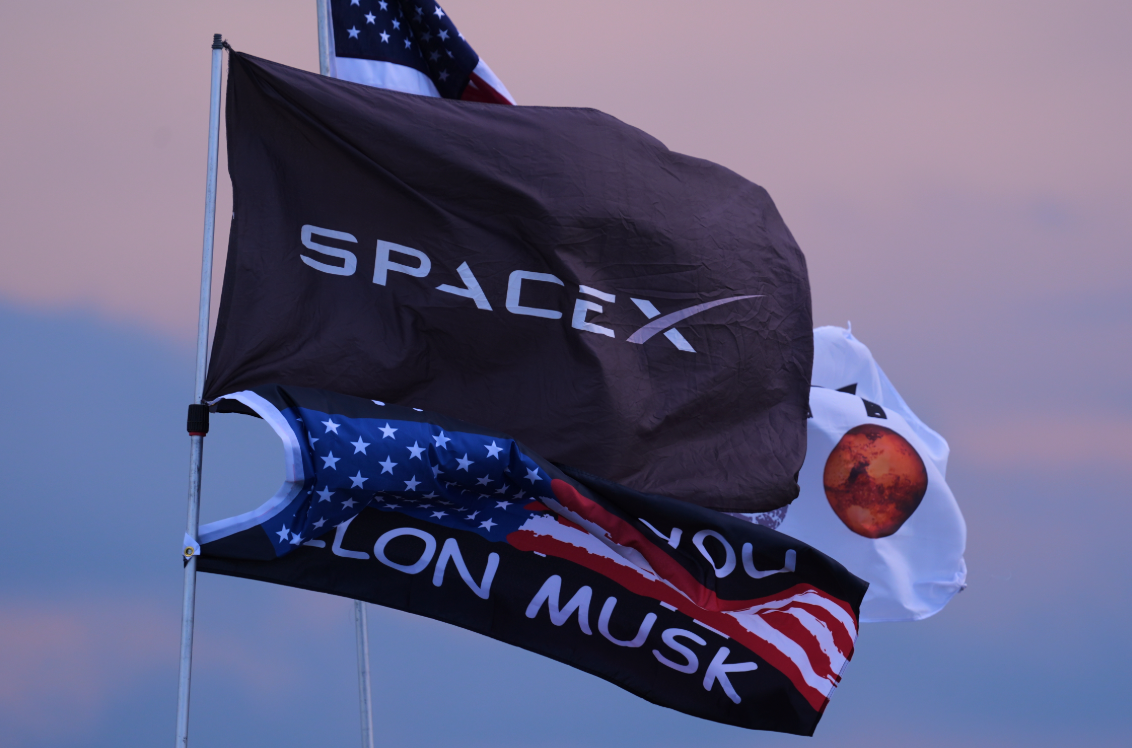
On August 24, 2025, flags are planted near the Starbase site in Texas where SpaceX’s super‑heavy rocket Starship is scheduled to conduct a test flight. AP / Newsis
In this regard, comments from Jay Ritter, an IPO expert and professor at the Warrington College of Business at the University of Florida, made via tech media outlet Gizmodo, are worth considering. SpaceX’s projected 2026 revenue is USD 24 billion, and it is targeting a valuation of USD 1.5 trillion.
This translates into a price‑to‑sales ratio (PSR, market capitalization ÷ revenue) of 62.5 times. In other words, investors would be paying USD 62.5 for every USD 1 in annual revenue.
According to Professor Ritter,
historically, IPOs with a PSR above 40 times tend to leave investors disappointed. Between 1980 and 2021, only 13 U.S. listed companies had annual revenue above USD 100 million and a PSR (at the offer price) exceeding 40. Investors who bought these companies at the IPO price saw three‑year returns that underperformed the broader market by 38% on average.
He therefore notes: “To avoid a share price decline, the company would have to grow its revenue and earnings very rapidly, which is difficult. While the stock price is likely to exceed the offer price on the first day of trading, those who buy during intraday trading could end up with losses.
SpaceX may be a great company, but a great company is not necessarily a great investment.”
In fact, the USD 1.5 trillion target valuation assumes the success of Musk’s ambitious plans: successful Starship development, expansion of the Starlink business, and pioneering of space data centers. Yet last year, Starship test flights succeeded only in the last two of five attempts. The upgraded V3 launcher has not yet undergone a single test flight. It remains to be seen whether SpaceX can deliver flawless results that meet expectations.
There are also
those who still doubt whether Musk will actually proceed with a SpaceX IPO. As he was initially reluctant to list, it is hard to imagine Musk wanting SpaceX to be buffeted by stock market volatility or to see his control diluted. Venture investor Chamath Palihapitiya recently speculated: “
I don’t think SpaceX will go public. I think it will be reverse‑merged into Tesla.”
As befits a mega‑event, a multitude of predictions are already swirling. It remains to be seen how events will unfold. By Deep Dive
The AI race among technology companies is now spreading into space. What might lie at the end of this all‑in competition? The key points can be summarized as follows:
-A major stock market event has been signaled for this year. SpaceX, the world’s largest startup, is preparing for an IPO around the second half of the year. Its current valuation stands at USD 800 billion, and the target market capitalization at listing is said to be up to USD 1.5 trillion.
-What changed Elon Musk’s “no IPO before Mars” stance was the idea of building space data centers. If satellites equipped with AI chips are launched into orbit together with solar panels, they become data centers that do not have to worry about power supply. The key to realizing this is launch cost. With the Starship V3 test flight ahead, there is no doubt that SpaceX is in the lead.
-Related stocks are already surging. But there are also arguments that a USD 1.5 trillion valuation is simply too high. Above all, there is speculation that Elon Musk could change his mind.
*This article is the online version of the Deep Dive newsletter published on January 21. Subscribe to Deep Dive, “economic news that draws you in as you read,” as a newsletter.https://www.donga.com/news/Newsletter
ⓒ dongA.com. All rights reserved. Reproduction, redistribution, or use for AI training prohibited.
Popular News