Investing KRW 3 billion for the first local-government-led development
Reaching orbit aboard SpaceX’s Falcon 9
One year of atmospheric monitoring, including marine fine dust
Building an ecosystem for environmental analysis and industrial applications
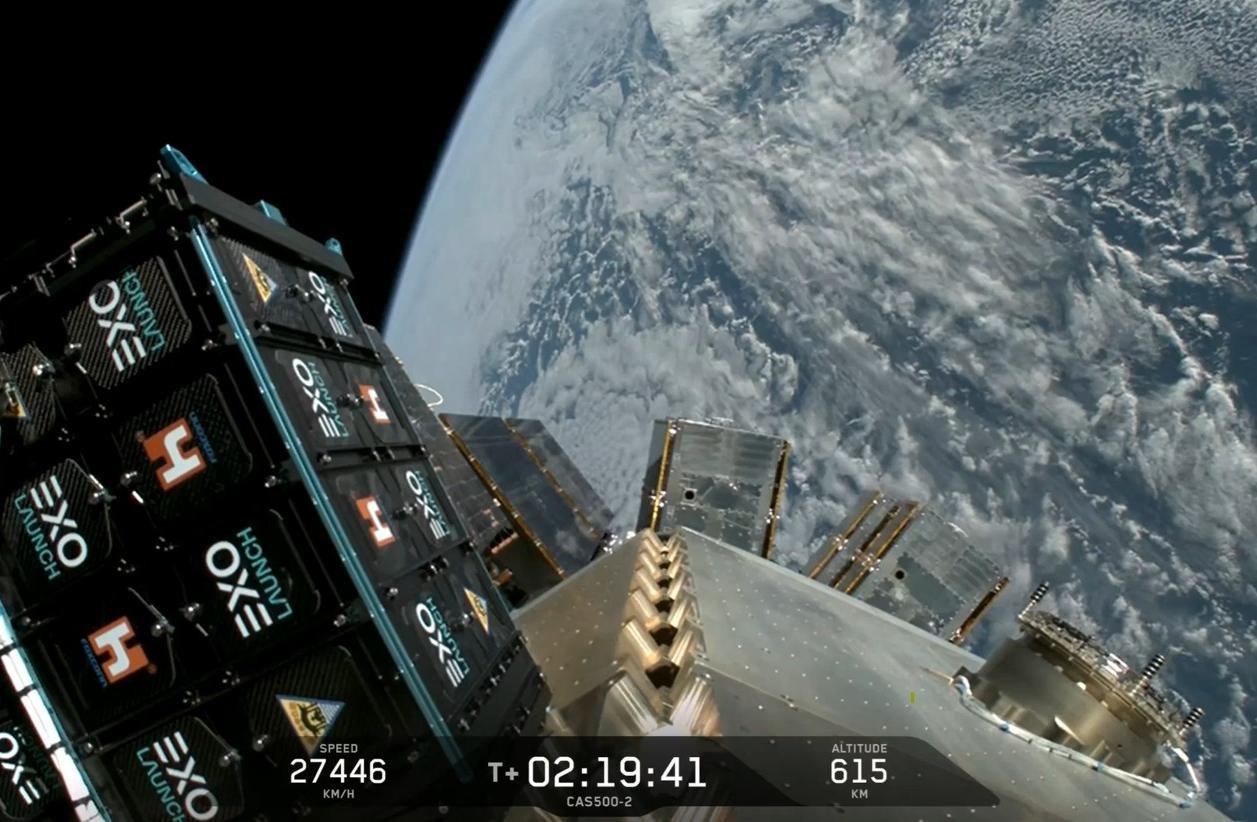
“BusanSat” successfully separated at an altitude of about 615 km at 6:19 p.m. (Korean time) on the 3rd, two hours after launch. Provided by Busan Metropolitan City
Busan Metropolitan City has successfully placed “BusanSat,” a marine observation satellite developed by a local government for the first time in Korea, into orbit. Over approximately one year, BusanSat will observe Busan Port, the West Sea (Yellow Sea) coast of the Korean Peninsula, and areas of the Pacific Ocean, collecting data needed for marine environment analysis and climate change research.
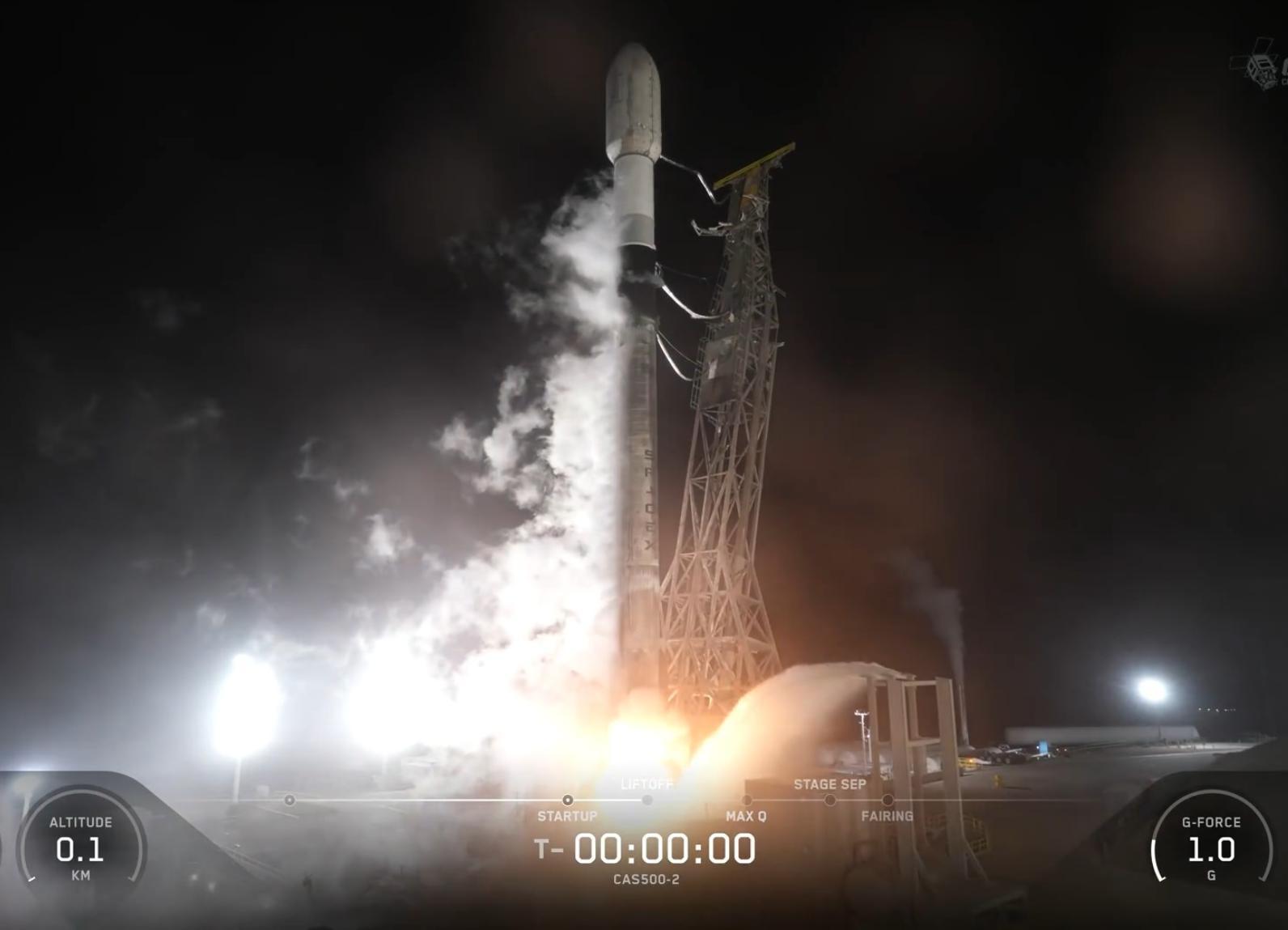
Launch of the SpaceX Falcon 9 launch vehicle carrying “BusanSat.” Provided by Busan Metropolitan City
According to Busan Metropolitan City on the 6th, BusanSat headed into space aboard the SpaceX launch vehicle “Falcon 9” at 4 p.m. (Korean time) on the 3rd from Vandenberg Space Force Base in California, United States. It successfully separated at an altitude of about 615 km at 6:19 p.m. the same day, and went on to achieve its first two-way communication with the Punta Arenas ground station in Chile at 12:41 a.m. on the 4th. An official from Busan’s Marine Capital Policy Division said, “The success of two-way communication is a result that allows the assessment that the satellite communication system has begun operating normally.”
BusanSat is an ultra-small satellite weighing about 12 kg, measuring 20 cm in width and length and 30 cm in height, tasked with observing marine and atmospheric environments such as fine particulate matter over the sea. Busan Metropolitan City began development in 2019 and invested a budget of about KRW 3 billion.
The core equipment is a polarimetric camera. Technology applied to Korea’s lunar orbiter “Danuri” has been expanded for Earth observation and mounted on the satellite. The polarimetric camera is a high-performance instrument capable of precisely analyzing the size and composition of fine particulate matter on the ocean surface and in the atmosphere, which are difficult to identify with a conventional optical camera. Its ability to observe cloud layers also gives it a wide range of applications.
BusanSat was finalized and successfully developed in 2022 through technological cooperation among Busan Metropolitan City, Busan Technopark, the Korea Astronomy and Space Science Institute (KASI), and Nara Space Technology. KASI was responsible for the “Polcube” polarimetric camera, while Nara Space Technology developed the satellite bus.
The satellite is also notable for having a structure that goes beyond simple observation to extend into data-based industries.
Busan Metropolitan City plans to process the raw data it secures and provide it to universities and research institutions, thereby building a data ecosystem that will extend to marine environment analysis, policy formulation, and industrial applications. This is also expected to lead to the creation of a new industry ecosystem based on marine data. As the city becomes able to independently conduct marine and atmospheric observations that previously depended on foreign satellites, its capabilities to secure and utilize region-specific data are expected to be strengthened. Using this launch as a starting point, the city plans to work with domestic and international institutions, including the U.S. National Aeronautics and Space Administration (NASA), to advance technologies for processing and analyzing observation data.
Kim Kyung-deok, acting mayor of Busan, said, “The launch of BusanSat is a meaningful first step toward directly securing marine environment data,” adding, “The observation data will be actively used for responding to climate change and fostering new marine industries, leading to the creation of a new industry ecosystem based on marine data.”
ⓒ dongA.com. All rights reserved. Reproduction, redistribution, or use for AI training prohibited.
Popular News