Fasting vs. after meals, immune responses differed… increased T-cell activation
Photo=Getty Images Bank.
There is a saying that the more one is ill, the better one should eat to recover. Scientific evidence has now been presented to support this claim.
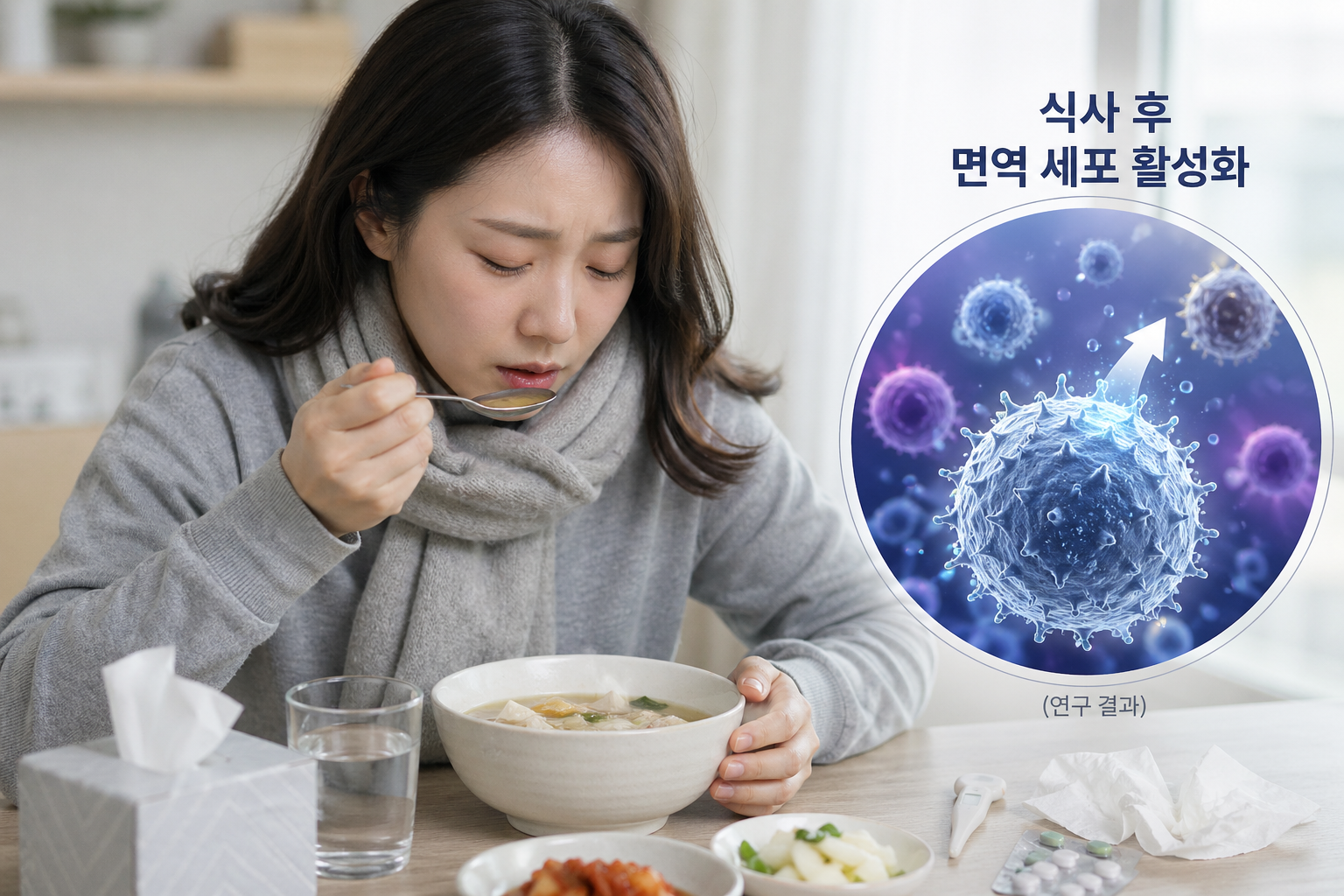
In experiments on humans and mice, a specific type of immune cell known as T cells showed enhanced activation capacity after food intake. This indicates a state in which immune responses can operate more effectively when an infection occurs.
The study findings were published on the 29th (local time) in the leading academic journal
Nature.
Co-author Greg Delgoff, an immunologist at the University of Pittsburgh School of Medicine in the United States, stated, “There is an old saying, ‘feed a cold, starve a fever,’ and there may be some scientific basis for this,” adding, “Whether or not food is consumed can make a significant difference in T-cell function.”
T cells are key white blood cells that play the role of “conductor,” coordinating immune responses against external pathogens.
Professor Delgoff explained, “The process of activating the immune system is a task that consumes a great deal of energy.”
To verify this, the research team collected blood samples from participants before breakfast and then again after they were allowed to eat freely for six hours. They then analyzed the metabolic state of T cells in the blood.
The results showed that after meals, T cells were better able to utilize the nutrients needed for activation than in a fasting state. Following food intake, T cells absorbed glucose more effectively, their fat metabolism capacity increased, and the function of mitochondria, the cellular “power plants,” operated more efficiently.
These changes ultimately led to an enhancement of T-cell immune response capacity. In mouse experiments, the team also confirmed improved T-cell proliferation and stronger protective effects against infection.
Lionel Apetoh, an immunologist at Indiana University in the United States who was not involved in the study, told Nature, “What is particularly striking is the timing,” noting, “A short time span of just six hours made a significant difference in T-cell immune function.”
Image generated by ChatGPT.
These effects persisted over the long term in some T cells, particularly “memory T cells.” Memory T cells remember previously encountered pathogens and rapidly proliferate to trigger an immune response when those pathogens invade again.
The study found that well-fed mice generated more memory T cells than fasting mice, and these cells maintained high metabolic activity for weeks to months afterward.
Professor Delgoff explained, “These cells continuously retain an advantage and were more effective in long-term immune defense.”
The researchers did not identify which specific nutrients are more effective in activating T cells, as they did not strictly control what and how much participants ate.
Despite this limitation, the team interpreted the findings as having important implications.
Professor Delgoff said, “What we confirmed is that the same effect appears every time a meal is consumed,” emphasizing, “Whatever is eaten, the act of eating itself is what matters.”
These results could be applied to cancer immunotherapies, including CAR-T cell therapy. CAR-T cell therapy involves extracting T cells from a patient’s blood, genetically engineering them in the laboratory to recognize cancer cells, and reinfusing them into the patient to attack tumors.
The team also confirmed that CAR-T cells obtained from people who had eaten showed stronger anticancer effects than cells obtained in a fasting state.
However, these results should not be interpreted to mean that meals alone can cure disease or that eating a lot when sick is always beneficial.
The researchers plan to conduct future studies with strictly controlled diets to determine which components of food induce these effects. This is expected to provide important clues for enhancing vaccine efficacy and improving immunotherapy in the future.
Related paper link:
https://dx.doi.org/10.1038/s41586-026-10432-8
ⓒ dongA.com. All rights reserved. Reproduction, redistribution, or use for AI training prohibited.
Popular News