Posted KRW 15 trillion in revenue and KRW 1.5 trillion in operating profit last year
Driving future growth through Lee Jae-yong’s bold bets
Building the world’s best connected car environment
Further solidifying its position as a leading audio brand including JBL
Harman, which Samsung Electronics acquired 10 years ago, has established itself as a core company within Samsung Electronics. There is growing assessment that Chairman Lee Jae-yong’s decision to acquire Harman as a springboard into the future automotive electronics (in-vehicle electronic equipment) market has been validated after a decade by a “doubling of revenue” performance.
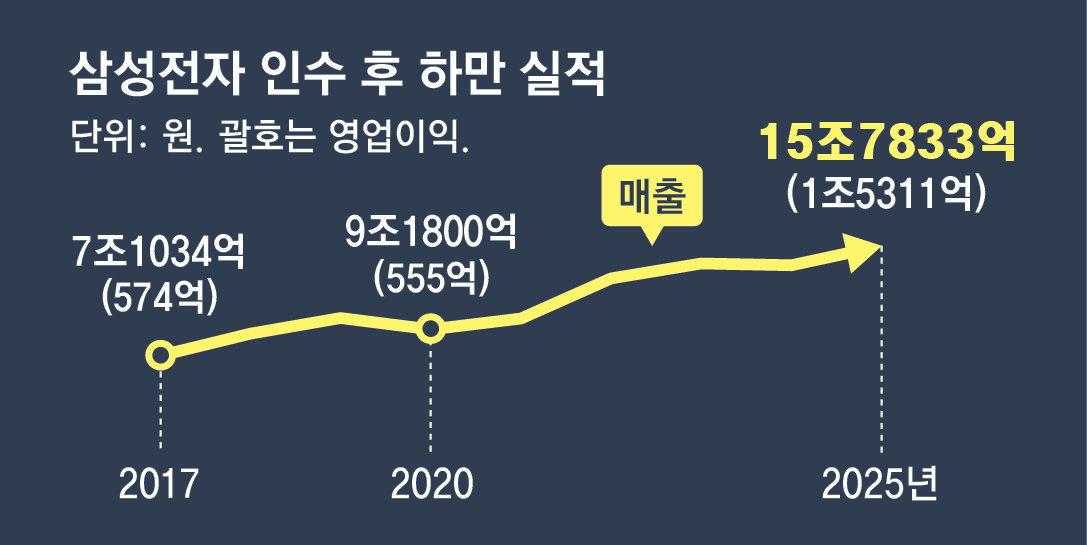
According to Samsung Electronics on the 22nd, Harman posted record results last year with revenue of KRW 15,783.3 billion and operating profit of KRW 1,531.1 billion. Compared with the first year after the acquisition in 2017, when revenue was KRW 7,103.4 billion and operating profit was KRW 57.4 billion, revenue has more than doubled and operating profit has soared roughly 26-fold. The operating margin also approached 10% (9.7%), strengthening profitability.
Chairman Lee selected the automotive electronics business as Samsung’s future growth engine and decided in November 2016 to acquire U.S. company Harman. The KRW 9,400 billion deal, the largest outbound merger and acquisition (M&A) in Korean corporate history, attracted significant attention in business circles at the time.
Since acquiring Harman, Samsung Electronics has pursued qualitative growth by maintaining global leadership in the audio business while scaling up its automotive electronics operations. Harman now generates 65–70% of its total revenue from the automotive electronics segment. In particular, it holds the No. 1 global market position in high value-added core components such as digital cockpits (digitalized vehicle driver spaces) and car audio systems.
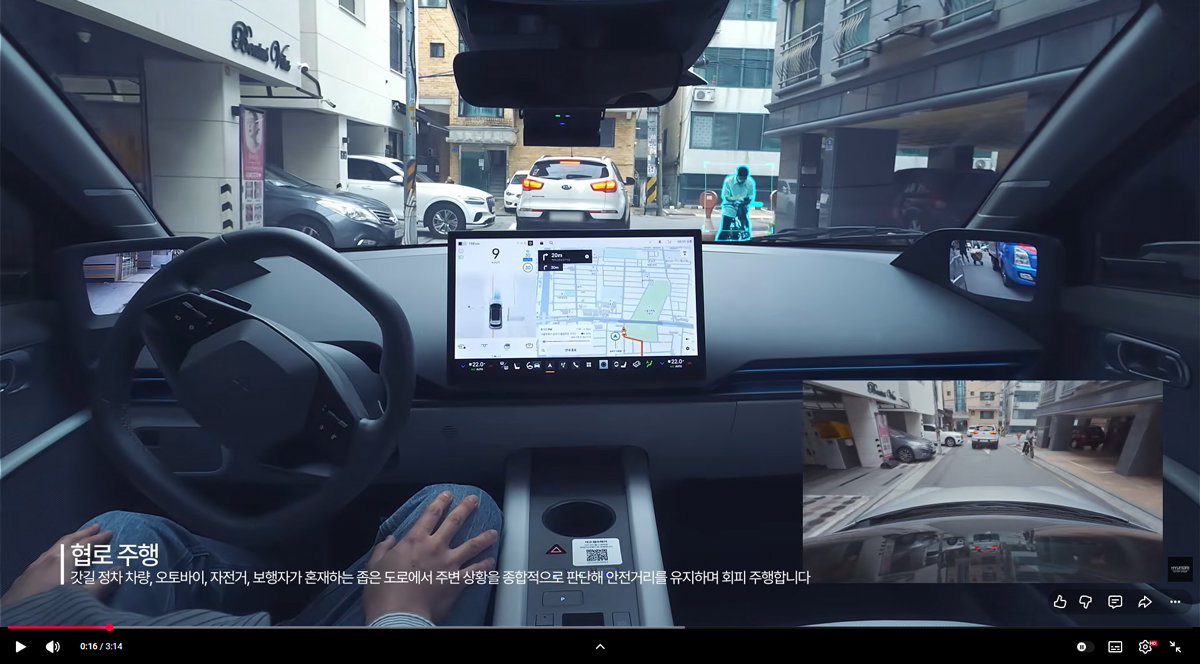
This is analyzed as the outcome of technological collaboration with Samsung Electronics combined with aggressive follow-on M&A. Harman’s hardware design capabilities have been integrated with Samsung Electronics’ 5G networks, automotive semiconductors (Exynos Auto), and SmartThings platform. Delivering a world-class connected car environment—from seamless online connectivity to rapid vehicle control—has served as a key competitive advantage.
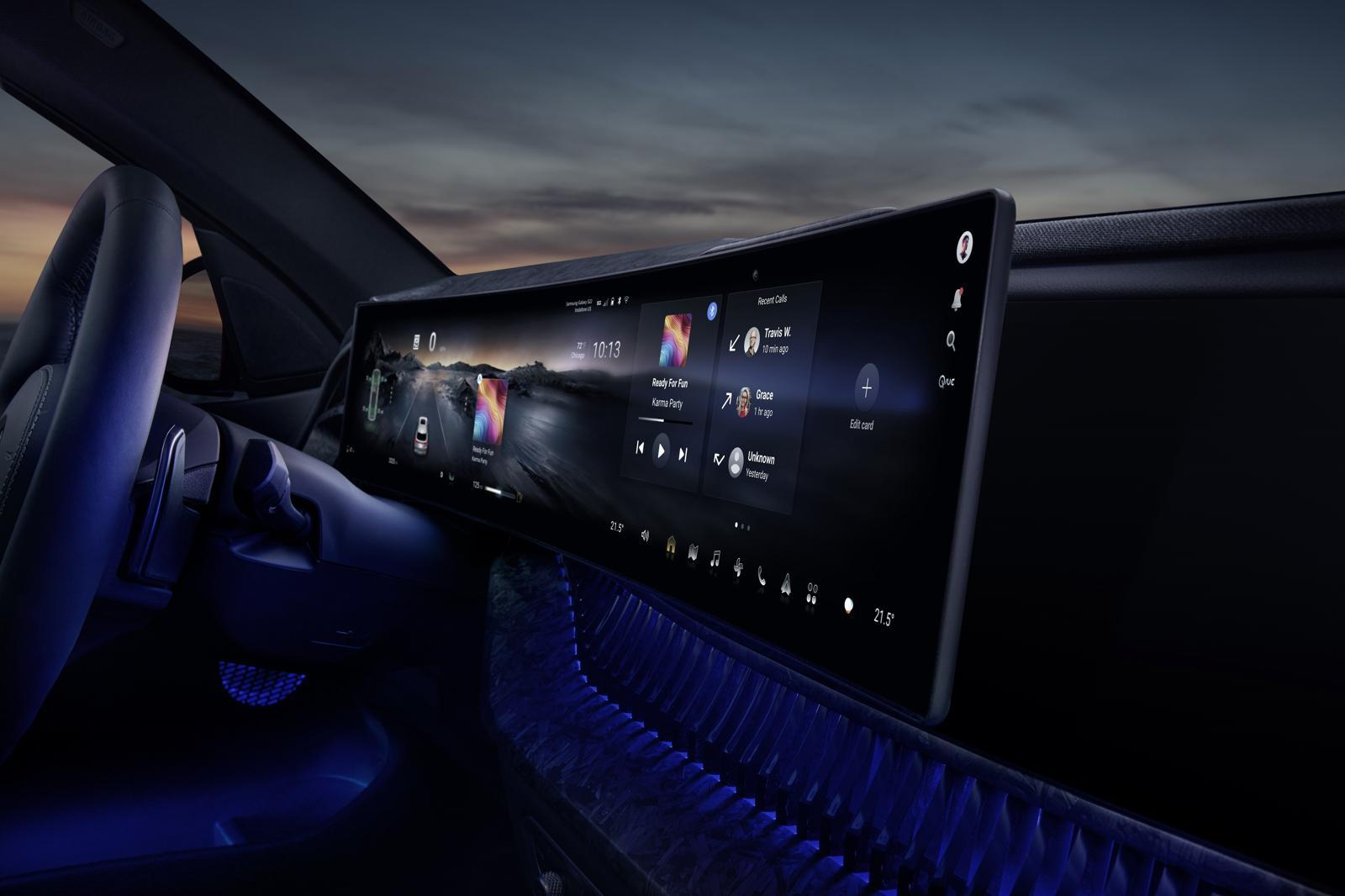
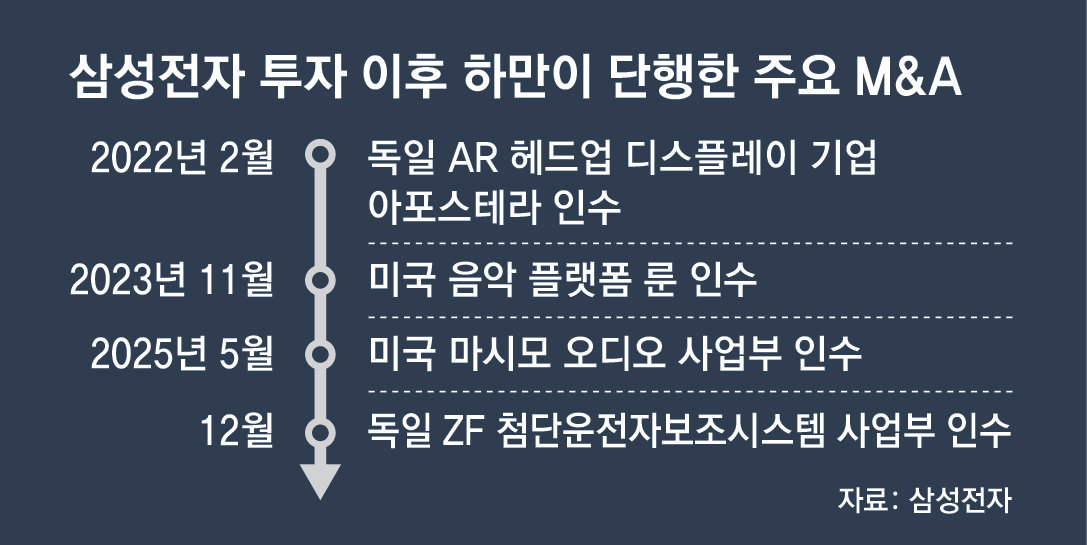
Major additional investments have also produced results. In December last year, Harman abruptly acquired the advanced driver-assistance systems (ADAS) business unit of German company ZF, the No. 1 supplier of autonomous-driving smart camera modules, by investing EUR 1.5 billion (about KRW 2,600 billion). By internalizing vast autonomous-driving data accumulated over more than 20 years, Harman rapidly elevated its integrated operational capabilities. In addition, it invested EUR 131.18 million (about KRW 230 billion) in Hungary to significantly expand its autonomous-driving research and development (R&D) center and production base. Previously, it had successively acquired German AR head-up display company Apostera in 2022 and U.S. music platform Roon in 2023, continually strengthening its in-vehicle software capabilities.
Its position as an audio powerhouse has also become more solid. In May last year, Harman invested KRW 500 billion to acquire the audio division of U.S. company Masimo, securing a wide array of premium brands such as Bowers & Wilkins (B&W), synonymous with high-end audio. Together with flagship brand JBL—which marks its 80th anniversary this year—maintaining the No. 1 position in the Bluetooth speaker market, Harman has built a unique product portfolio that spans from popular mid- to low-priced brands to ultra-high-end luxury lineups.
A business community source said, “The acquisition of Harman is one of the most successful outbound M&A cases in the history of Korean companies,” adding, “Having completed a business structure that encompasses advanced automotive electronics solutions and high-end audio, the company is well positioned for further substantial performance growth going forward.”
ⓒ dongA.com. All rights reserved. Reproduction, redistribution, or use for AI training prohibited.
Popular News