Joint development agreement with local manufacturers
HD Hyundai accelerates construction of new shipyard
Naver and others launch KRW 1 trillion fund
President Lee’s visit marks start of full-scale cooperation
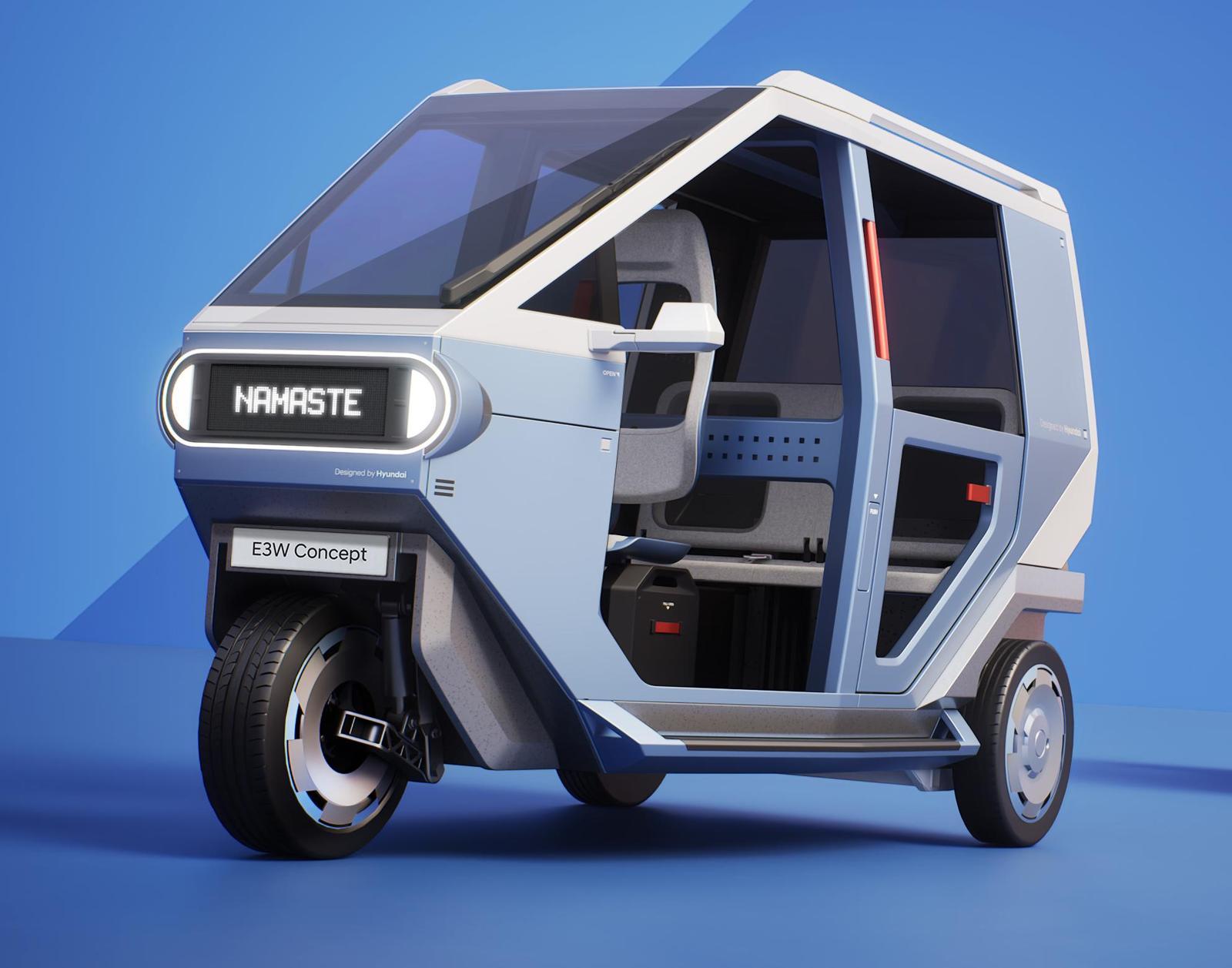
Hyundai Motor Company has signed a “Joint Development Agreement for the Development and Commercialization of Three-Wheeled Electric Vehicles (EVs)” with Indian three-wheeler manufacturer TVS Motor Company. The photo shows an image of the three-wheeled EV concept model. Provided by Hyundai Motor Company
Hyundai Motor Company will jointly develop a three-wheeled electric vehicle optimized for the Indian market with a local Indian company. This marks the fruition of eight years of discussions between Hyundai Motor Group Chairman Chung Eui-sun and Indian Prime Minister Narendra Modi. As HD Hyundai expands a local shipyard construction project to the central government level, and Naver, Krafton, and Mirae Asset move to invest in technology in India, Korean-Indian cooperation in manufacturing is gaining full momentum, spurred by President Lee Jae-myung’s visit to India.
On the 20th (local time), Hyundai Motor announced that it had signed a “Joint Development Agreement for the Development and Commercialization of Three-Wheeled Electric Vehicles (EVs)” with local three-wheeler manufacturer TVS Motor Company (TVS) at the Bharat Mandapam Convention Centre in New Delhi, India, and agreed to jointly develop a locally tailored three-wheeled electric vehicle. The plan is to develop a micro-mobility solution that reflects India’s road conditions, infrastructure, and economic environment, and to produce it in volumes of several hundred thousand units.
The agreement is known to have originated from the rapport between Chairman Chung and Prime Minister Modi at the Korea-India Business Forum held in New Delhi in 2018. At the time, Prime Minister Modi, addressing then Vice Chairman Chung, emphasized the need for eco-friendly mobility solutions that could improve India’s poor transportation environment. In response, Chung said, “Hyundai Motor will join India on its journey toward the great future it envisions.” Development of new mobility solutions was subsequently pursued in earnest.
This investment also aligns with Hyundai Motor Group’s global management strategy to target emerging markets. India is one of Hyundai’s four major markets, alongside the United States, the Korean domestic market, and the European Union (EU). In particular, with around 40% of its population in their 20s, India is regarded as a country with high growth potential. Hyundai operates three production plants in India alone, and Chairman Chung personally visited these plants earlier this year, underscoring the strategic importance of the market.
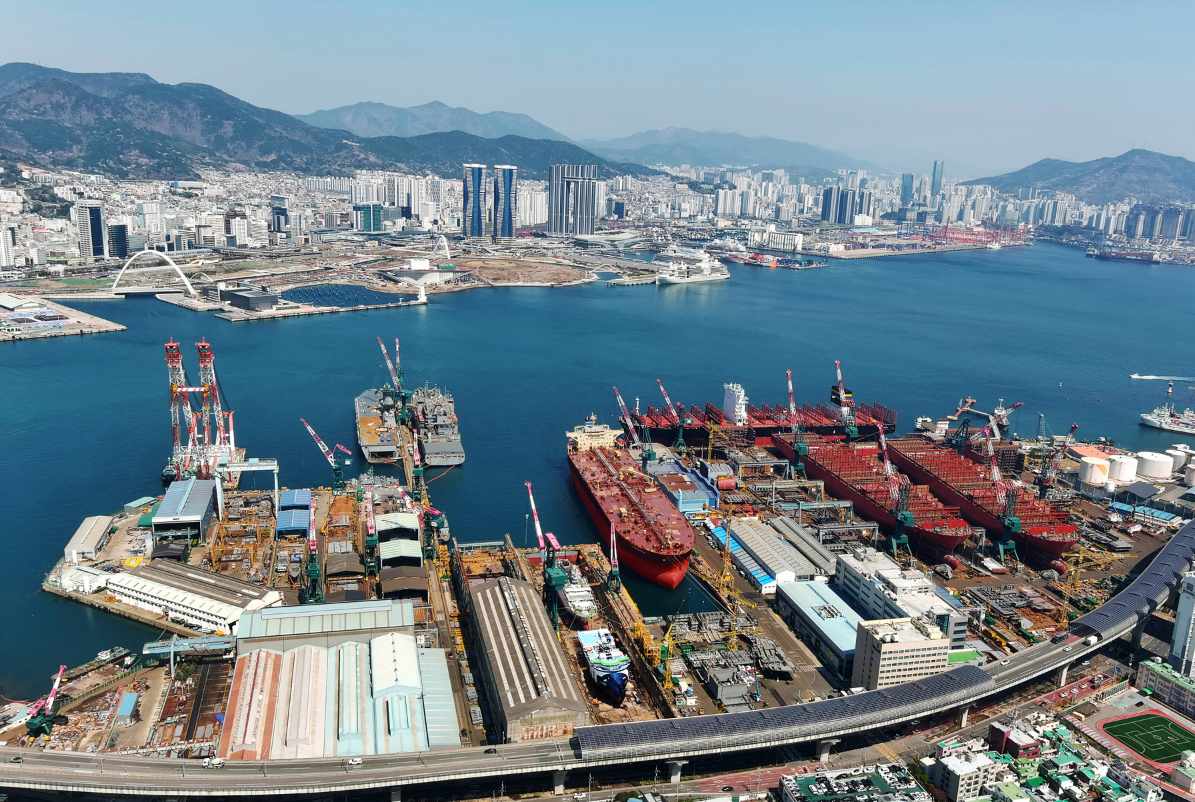
On the same day, HD Hyundai signed a “Memorandum of Understanding (MOU) for the Construction of Key Infrastructure Required for Investment in a New Shipyard and for the Promotion of a Joint Venture Establishment” with NSHIP TN, a special purpose vehicle established by VOC Port Authority under the Indian government, and with Sagarmala Development Company, among others. Leveraging the current visit, HD Hyundai elevated the new shipyard construction MOU signed with the southern state of Tamil Nadu in December last year to a central government-level project.
The relationship between HD Hyundai and India appears to be strengthening further. In January this year, HD Hyundai Chairman Chung Ki-sun, together with HD Korea Shipbuilding & Offshore Engineering CEO Kim Hyung-kwan, participated—exclusively among Korean business leaders—at the “Global Energy Leaders’ Roundtable,” to which Prime Minister Modi issued personal invitations.
Naver, Krafton, and Mirae Asset have also moved to expand the territory of K-software by creating an investment fund of up to KRW 1 trillion. On the 21st (local time), the three companies held a commemorative meeting in New Delhi, India, to mark the creation of the “Unicorn Growth Fund (UGF)” worth up to KRW 1 trillion. UGF began operations with more than KRW 500 billion, combining Krafton’s initial investment of KRW 200 billion with funds from Naver, Mirae Asset, and external investors. Previously, Naver and Mirae Asset had achieved results in discovering unicorns in India and Southeast Asia (unlisted companies established within the last 10 years with a corporate value of at least KRW 1 trillion) through the “Asia Growth Fund (AGF)” created in 2018.
Krafton CEO Kim Chang-han said, “Based on Krafton’s experience contributing to the formation of the local gaming ecosystem, UGF will serve as a mid- to long-term partner supporting the global leap of promising Indian companies.”
ⓒ dongA.com. All rights reserved. Reproduction, redistribution, or use for AI training prohibited.
Popular News