US CMS announces policy to “rein in insurer support, raise patient cost-sharing”
Trump administration effectively excludes biosimilars from drug tariff list
Celltrion’s biosimilar business expected to benefit from shifts in US healthcare policy
US policies align with “lower-priced biosimilars and securing local manufacturing plants”
Celltrion’s competitiveness in the US on the rise… earnings growth expected to accelerate
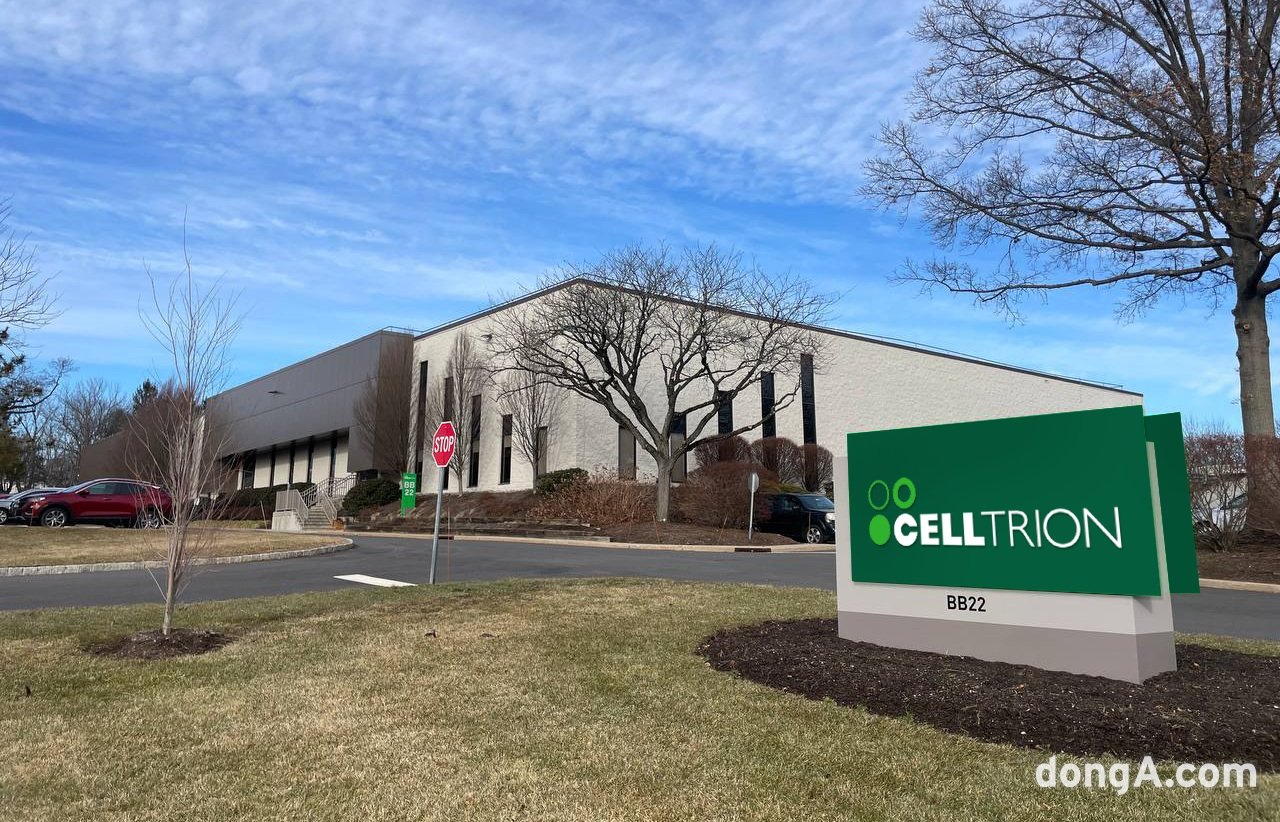
Panoramic view of the Celltrion Branchburg plant signage. Provided by Celltrion
The United States, the world’s largest pharmaceutical market, is rolling out a series of policies that are set to change the local healthcare environment. These policies are designed to curb U.S. government healthcare spending while inducing drug price reductions through increased local production, thereby easing the overall burden of medical costs. Naturally, biosimilars, whose key strength is price competitiveness, are emerging as the optimal alternative aligned with these policies. Against this backdrop, the competitiveness of Korean bio company Celltrion, which has made biosimilars its core business and secured its own manufacturing facilities in the U.S., is expected to come into sharper focus.
U.S. CMS announces “control of insurer subsidies and higher patient cost-sharing”… “Growing preference for biosimilars”
On 6 April (local time), the U.S. Centers for Medicare & Medicaid Services (CMS) announced its 2027 policy revision proposal, whose core can be summarized as “government cost control.” First, the CMS subsidy increase rate for Medicare Advantage (MA), the Medicare program for seniors, was set at 2.48%. This is less than half of the previous year’s 5.06% increase, and when considering inflation, it is effectively viewed as a reduction in subsidies.
Panoramic view of the Celltrion Branchburg plant. Provided by Celltrion
CMS also decided to manage more strictly the rebate payments it makes to insurers. Previously, when claiming rebates, insurers engaged in a kind of “overstatement” by including not only current disease codes but also historical medical records. Under the newly announced policy, only codes directly linked to current treatment and prescriptions will be recognized. As support is now based on disease codes more clearly substantiated by medical evidence, cost control is seen as having been strengthened. In addition, the annual patient out-of-pocket maximum will rise from USD 2,100 (approximately KRW 3.09 million) this year to USD 2,400 (approximately KRW 3.53 million) next year, increasing the financial burden on patients.
With tighter controls on subsidies to insurers and higher patient cost-sharing on the horizon, preferences for drugs with lower wholesale acquisition cost (WAC) are expected to rise further. Biosimilars, which are sold under multi-pricing systems such as low WAC and unbranded versions, are being cited as the optimal alternative under the revised CMS policy framework.
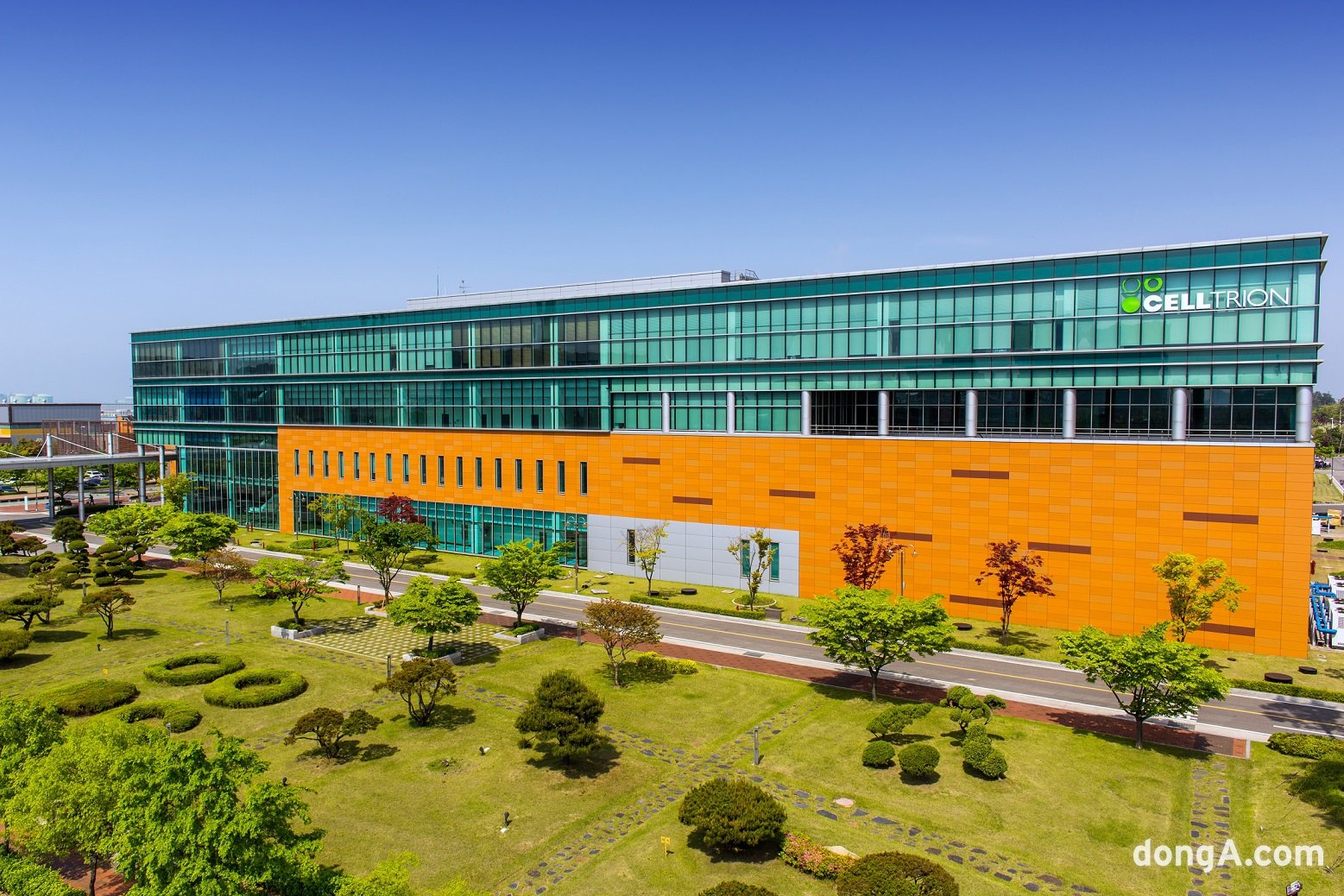
Panoramic view of Celltrion Plant 2. Provided by Celltrion
U.S. policies induce “drug price reductions”… Competitive edge maximized for biosimilar firms with local plants
On the same day the CMS policy was announced, the Trump administration in the U.S. unveiled a measure on the “adjustment of imports of drugs and drug ingredients (into the U.S.).” Its main content is that patented drugs and their ingredients imported without having concluded drug price negotiations with the U.S. government will be subject to a 100% tariff. For Korea, a 15% tariff will apply, reflecting existing trade agreements. By contrast, companies that sign a Most Favored Nation (MFN) drug pricing agreement with the U.S. Department of Health and Human Services (HHS) and maintain manufacturing facilities in the U.S. may be exempt from tariffs.
The new policy directions from the White House and CMS are ultimately analyzed as encouraging local production-based drug price reductions and promoting the use of lower-priced medicines, thereby seeking to cut government healthcare spending.
Celltrion, which has biosimilars as its main business, has been operating its local manufacturing facility, the Branchburg plant in the U.S., since early this year. This is seen as aligning well with the healthcare policy direction being pursued by the U.S. government. In the U.S., the world’s largest pharmaceutical market, Celltrion is expected to benefit both directly and indirectly from these trends.
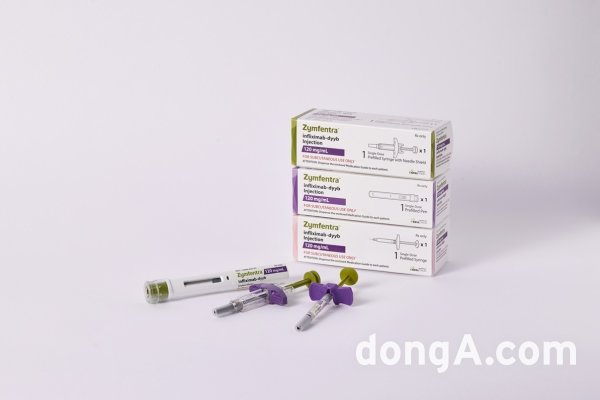
Celltrion’s Zympenetra (Remsima SC), which has emerged as a key product in the U.S. market. Provided by Celltrion
Celltrion’s business model closely matches U.S. policy direction… Performance expected to improve
With a series of policies favoring the use of biosimilars continuing to be announced, Celltrion’s performance growth is expected to accelerate going forward. In particular, the White House excluded biosimilars from the scope of drug tariffs under this latest measure. U.S. authorities appear to view biosimilars as a key alternative capable of driving drug price reductions in market competition with original products.
Last month, the U.S. Food and Drug Administration (FDA) also announced measures to streamline biosimilar development, including the relaxation of biosimilar pharmacokinetic (PK) study requirements and an expanded range of acceptable reference products. Under this policy, Celltrion expects to reduce total clinical development costs by up to 25%.
So far this year alone, the U.S. government has introduced three policies favorable to biosimilars. These policy changes are expected to affect key stakeholders directly linked to drug prescribing, including insurers, patients and healthcare professionals, ultimately leading to broader use of lower-priced biosimilars.
Celltrion Global Biotech Research Center. Provided by Celltrion
A Celltrion official stated, “The series of policies recently announced in the U.S. show a trend toward increasing local production, inducing drug price reductions, and supporting the use of lower-priced medicines in order to achieve the ultimate goal of reducing healthcare expenditure,” adding, “In particular, companies whose business models align with this policy direction are expected to enjoy significant benefits by creating synergies with government initiatives.”
The official continued, “Celltrion has biosimilars, which can drive drug price reductions, as its core business and has also secured local manufacturing plants, so it can be seen as having corporate competitiveness optimized for U.S. government policy,” and emphasized, “Based on this, the company plans to maximize prescription expansion and performance improvement.”
ⓒ dongA.com. All rights reserved. Reproduction, redistribution, or use for AI training prohibited.
Popular News