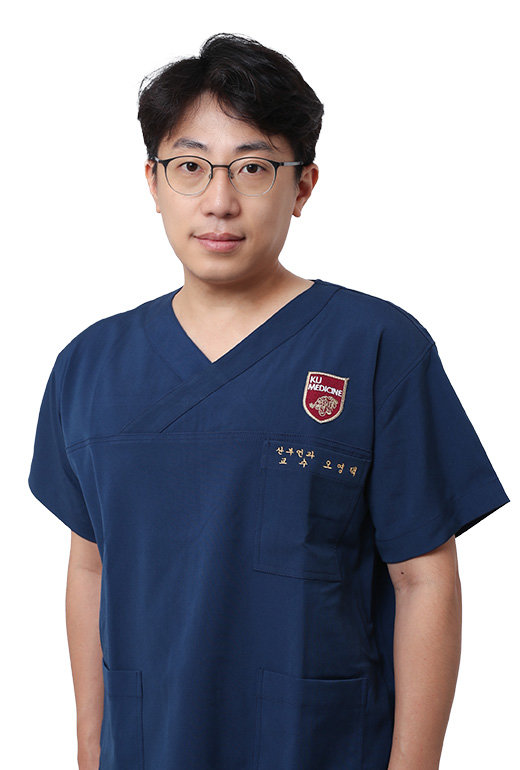
Oh Young-taek, Professor of Obstetrics and Gynecology at Korea University Ansan Hospital. Courtesy of Korea University Ansan Hospital
Professor Oh Young-taek of the Department of Obstetrics and Gynecology at Korea University Ansan Hospital has presented a non-invasive precision diagnostic technology, suggesting new possibilities for gynecologic cancer diagnosis.
The study, titled “Precision Diagnosis in Gynecologic Oncology via Methylation Liquid Biopsy,” was presented on March 28 at an official invited lecture of the Taiwan Association of Obstetrics and Gynecology (TAOG 2026). Professor Oh received a certificate of appreciation from the organizers in recognition of the excellence of the research outcomes.
The core of the research is “DNA methylation,” a mechanism in which methyl chemical groups bind to DNA and regulate gene expression. Under normal conditions, it helps ensure that only the necessary genes are selectively activated. However, during carcinogenesis, “hypermethylation” occurs, in which excessive methyl groups attach to tumor suppressor genes, leading to abnormal changes in gene regulatory functions.
Based on this principle, Professor Oh’s team explored biomarkers capable of identifying high-risk groups of patients with low-grade squamous intraepithelial lesions (LSIL), a precancerous stage of cervical cancer, who are more likely to progress to high-grade squamous intraepithelial lesions (HSIL). Most LSIL cases resolve spontaneously, but some progress to cancer, making accurate stratification of high-risk patients crucial. Conventional HPV tests and cytology are useful for confirming the presence of lesions but have limitations in precisely predicting the risk of progression.
The research team collected cervical cells and conducted integrated analyses of diverse biological information, including viruses, genes, and microorganisms. They found that viral or microbial information alone was insufficient to distinguish risk levels of lesions, whereas DNA methylation patterns showed clear differences between high-risk and low-risk groups.
On this basis, they identified two key genes (KIRREL3, ADRA2A) as biomarkers and developed a machine-learning-based prediction model. The model achieved an accuracy of 94.1%, and in validation it did not miss any high-risk cases, attaining 100% sensitivity. Sensitivity refers to the ability to correctly identify patients who are actually at risk.
This approach has also been extended to the diagnosis of endometrial cancer. Endometrial cancer is generally diagnosed through ultrasound and biopsy following abnormal vaginal bleeding, and there are limited methods for early screening before symptoms appear. In particular, endometrial biopsy can cause pain and bleeding, placing a burden on patients, while the proportion of those ultimately diagnosed with cancer among those tested is known to be relatively low.
To address these limitations, the team verified the potential for non-invasive diagnosis using vaginal discharge. The method predicts the presence of endometrial cancer by extracting DNA from a patient’s vaginal discharge and analyzing its methylation patterns. A diagnostic model based on a total of 28 methylation biomarkers demonstrated performance with sensitivity of up to 82% and specificity of 96%. Specificity refers to the extent to which normal individuals are not incorrectly classified as cancer patients.
The research team aims to further expand the technology to a test method using sanitary pads, with the goal of developing a diagnostic technology that can detect cancer occurrence in everyday life without requiring a hospital visit. Once commercialized, the technology is expected to improve access to early screening and reduce unnecessary biopsies.
Professor Oh stated, “The goal is the ‘popularization of screening,’ enabling cancer diagnosis in daily life without burden, instead of expensive and invasive tests,” adding, “Through broader clinical application and commercialization, we aim to contribute to improving women’s health.”
ⓒ dongA.com. All rights reserved. Reproduction, redistribution, or use for AI training prohibited.
Popular News