SKT sells two-thirds of its stake in U.S. firm
Hyundai Motor slows related business push… Hanwha Systems recently suspends indefinitely
Slow tech commercialization and policy progress amid growing global uncertainty, including in the Middle East
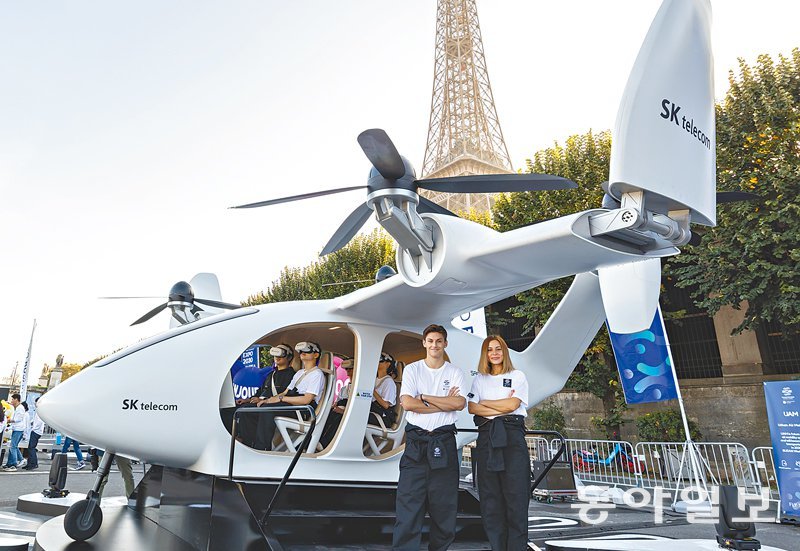
Urban Air Mobility (UAM) experience zone operated by SK Telecom near the Eiffel Tower in Paris, France, in 2023. Dong-A Ilbo DB
As companies that had ambitiously entered the Urban Air Mobility (UAM) business, touting “20 minutes from Jamsil to Gimpo Airport,” are pulling out one after another, UAM research and development (R&D) investment in Korea is effectively coming to a halt. With both technology commercialization and policy-making progressing slowly, and global uncertainty increasing due to factors such as the war in the Middle East, related companies are withdrawing from UAM projects that are “not immediately profitable.”
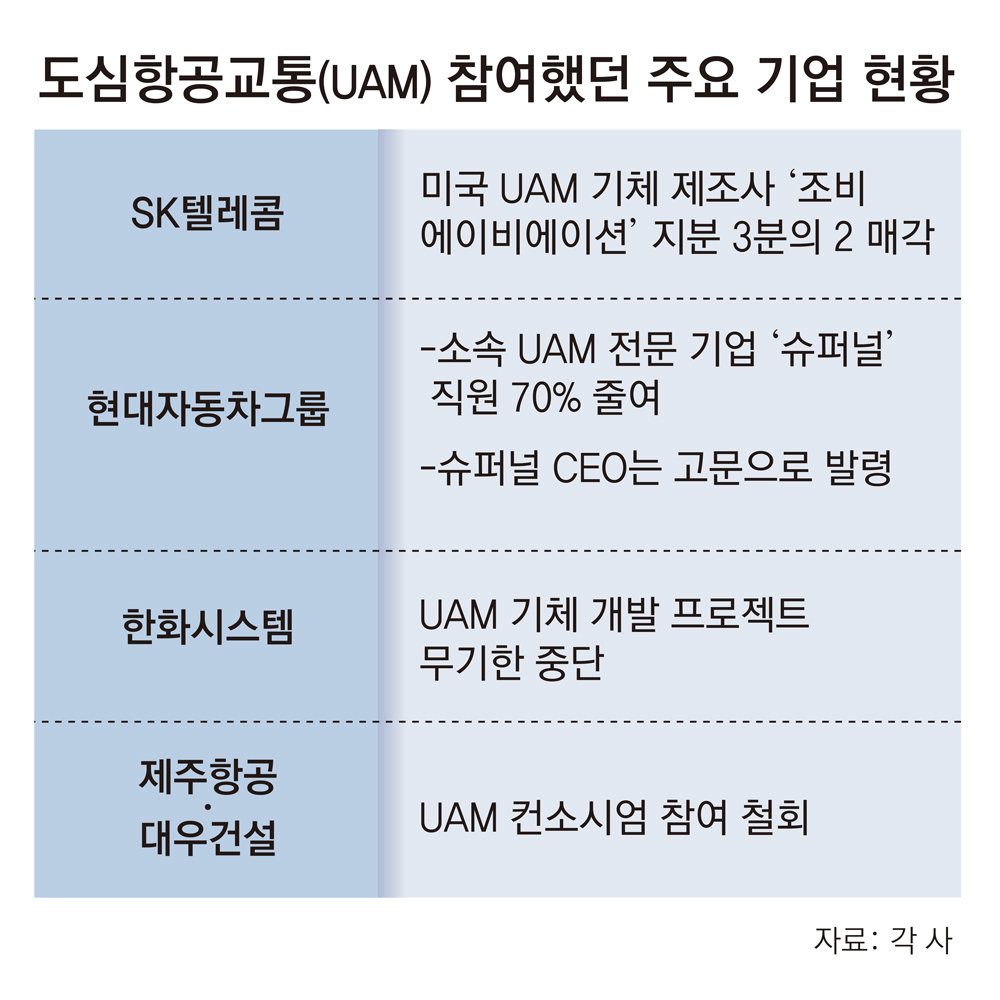
According to industry sources on the 29th, SK Telecom recently sold two-thirds of its stake in Joby Aviation, a U.S. company that is the world’s leading UAM airframe developer. The company had invested about KRW 130 billion (about USD 100 million) in 2023 to build a partnership and, in the same year, promoted UAM by setting up a UAM experience pavilion in Paris under the theme “Fly to Busan” as part of the campaign to host the 2030 Busan World Expo. However, it is now effectively exiting the related business in about two years.
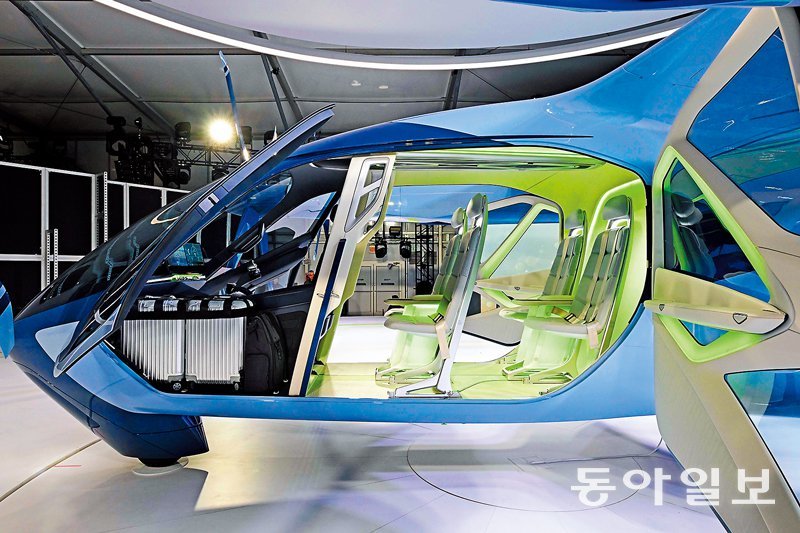
Supernal, the Hyundai Motor Group’s Urban Air Mobility (UAM) specialist, and its next-generation aircraft ‘S-A2’ at CES 2024 in Las Vegas, USA. Dong-A Ilbo DB
Hyundai Motor Group, which owns the U.S.-based UAM specialist Supernal, has also been gradually reducing investment in the business since last year. In August last year, then-Supernal CEO Shin Jai-won stepped down from the management front line to become an adviser, followed by the departures of the Chief Technology Officer (CTO), Chief Strategy Officer (CSO), and others. Earlier this month, foreign media reported that 296 of Supernal’s roughly 380 employees, or 78%, had been laid off.
Hanwha Systems, which had entered the UAM airframe development business, is also reported to have recently suspended the project indefinitely. Jeju Air, which had formed a consortium with Daewoo Engineering & Construction to participate in a Korean-style UAM demonstration project, has recently withdrawn from the project altogether.
Companies are halting UAM investment one after another because “there is no sign it will become profitable.” UAM is being developed in the form of “passenger drones” powered by batteries and motors, but current battery density and weight are still insufficient for aviation use, leading to the assessment that developing profitable aircraft in the short term is virtually impossible. For the same reason, global aircraft manufacturers such as Boeing and Airbus have also recently put the development of electric and other environmentally friendly aircraft on indefinite hold.
The institutional framework for UAM commercialization has also yet to be established. As flying aircraft, UAM vehicles must obtain “airworthiness certification” from aviation authorities—certification that essential elements for aircraft manufacture are met and safety is ensured—before commercial operation is possible. However, neither the U.S. Federal Aviation Administration (FAA) nor the European Union Aviation Safety Agency (EASA) has completed the relevant regulatory framework. A representative of one UAM company said, “Once regulations are set, the airframes will have to be completely redeveloped to comply,” adding, “Not only in Korea but at most UAM companies worldwide, there is a tendency to postpone airframe development until airworthiness certification procedures are established.”
In addition, in Korea’s case, the fact that most of central Seoul—where UAM would have the highest passenger demand—is designated as a no-fly zone, effectively making commercial operation in Seoul impossible, is also influencing decisions to abandon the business. A commercial airline pilot commented, “Even if UAM becomes a reality and can fly to the airport, it will inevitably have to land in sequence, observing procedures along with commercial jets landing every two to three minutes, so ‘20 minutes from Jamsil to Gimpo’ is practically impossible.”
However, these companies unanimously state that they have “not completely abandoned the business.” An industry insider said, “Companies are expected to first focus on more profitable areas such as defense and autonomous driving, then re-enter UAM investment once a clear regulatory framework for the business is in place.”
ⓒ dongA.com. All rights reserved. Reproduction, redistribution, or use for AI training prohibited.
Popular News