A real-world adaptable housing solution realized in a 10-pyeong home in Gapyeong
Factory-built method boosts construction efficiency and minimizes environmental impact
Structure enables easy disassembly and reassembly, ensuring spatial mobility and longevity
Expansion of a platform-based architectural ecosystem becomes visible, including rooftop additions in urban areas
Until now, residential space has been perceived as a form fixed to the land. It was common for houses to be built on the ground, go through a depreciation process, and be demolished once they reached the end of their lifespan. To own a house effectively meant being tied to a specific set of coordinates. However, modern life is becoming far more fluid. As the proportion of single-person households grows and remote work becomes widespread, the desire for secondary spaces beyond a primary residence—so-called second homes—has also increased. The problem is that even as family structures and working patterns undergo rapid change and the axis of daily life shifts, buildings remain in place. Architecture startup Mnemo Technologies (MNEMO, hereafter Mnemo) is a company that aims to resolve this disparity between space and life.
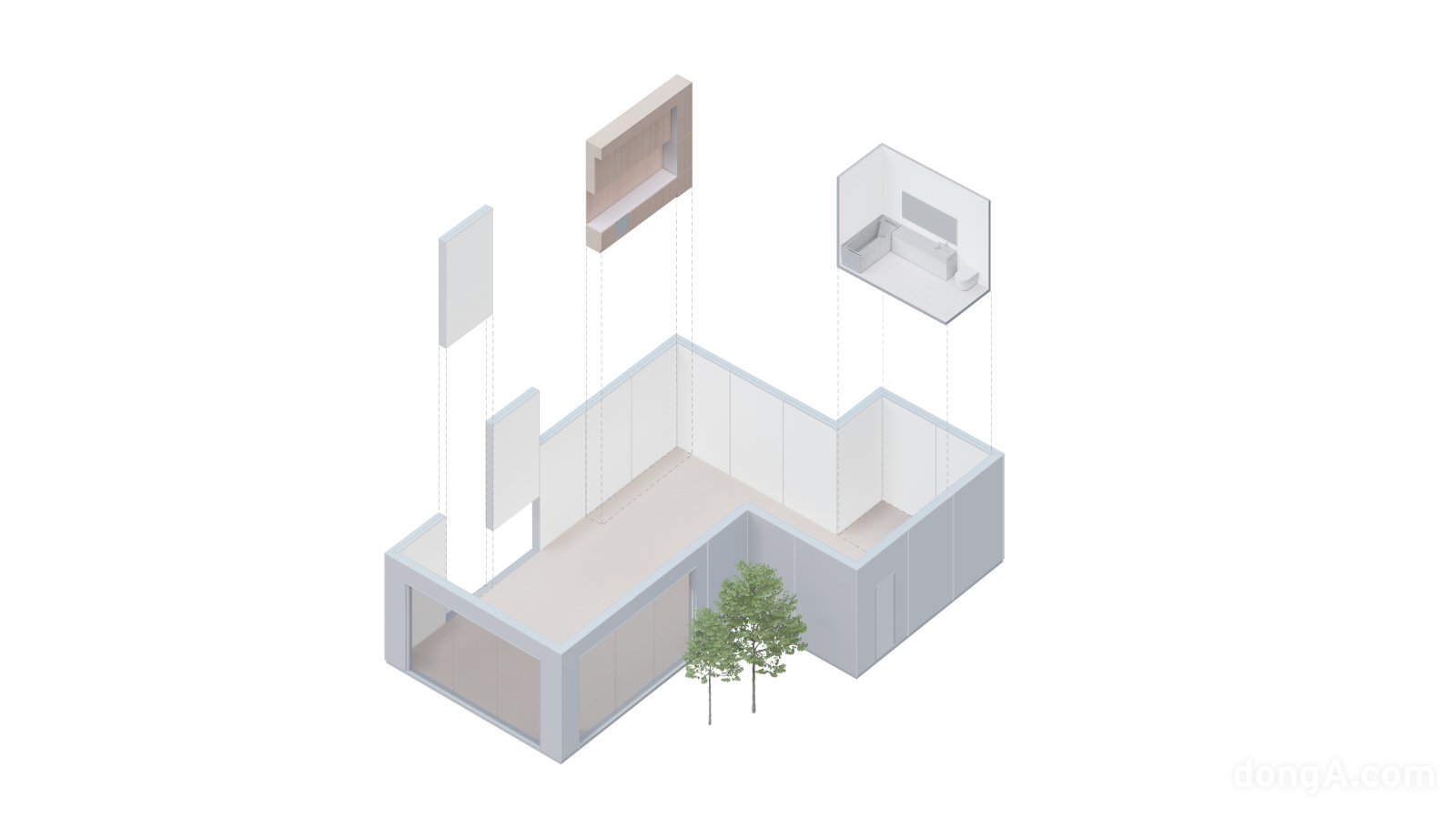
The approximately 33㎡ residential facility built in Gapyeong is a result that demonstrates this awareness of the problem in architectural terms. It was constructed using a method in which precisely fabricated structural components produced in a manufacturing plant are transported to the site and assembled. While its exterior resembles a typical small house, its underlying design is fundamentally different. Moving away from conventional methods where quality depended on weather conditions or on-site labor capacity, the company implemented standardized processes to deliver consistent performance. By excluding wet construction methods, the construction period was shortened, and environmental pollutants such as noise and dust generated on-site were also reduced.
The core competitive edge of this space lies in the fact that it was conceived on the premise of post-completion flexibility. If the number of occupants increases, the floor area can be expanded; when the space is no longer needed for its original purpose, it can be dismantled and relocated to another site. Aging parts can be selectively removed and replaced, improving resource efficiency. Rather than a one-off building that is simply erected and left as is, it is closer to a spatial system that is adjusted and maintained in line with the resident’s life cycle.
This suggests a shift in how housing is perceived. Conventional homes, as immovable assets tied to land, have had limited modes of utilization beyond sale or lease. Under a structure that can be relocated and reassembled, however, housing is redefined not as a location-dependent consumer good but as a movable physical asset.
Mnemo CEO Kim Min-seok explained that the original intention is not indiscriminate construction, but rather to lay the groundwork for reducing waste, enhancing durability, and enabling reconfiguration as needed. In concrete terms, this translates into scenarios such as resort areas in regional locations being transformed into urban residential zones, or small units being expanded into family homes.
This approach also aligns with shifts in housing demand. As work outside traditional offices spreads, interest in residential areas on the outskirts of city centers has surged, and in many occupations the boundary between work and rest has eroded. The key selection criterion is increasingly less about where a house is located and more about whether the space is flexible enough to respond to changes in one’s life.
Mnemo is extending this variable-structure technology to rooftop extensions in central Seoul. Recent relaxations in floor area ratio regulations have opened the way to securing additional space atop existing buildings, but many projects face implementation difficulties due to load-bearing concerns and construction convenience issues. Mnemo’s lightweight modular method reduces the stress exerted on existing structures while enabling rapid construction. From country houses to urban regeneration projects and temporary event facilities, sharing the same system across these uses is a core platform characteristic of the company.
CEO Kim drew an analogy: if mobile phones of the past were finished products with fixed functions, smartphones have become platforms that are continuously upgraded. He stressed that architecture, too, must evolve into a system that develops in line with residents’ needs. This is why the small house in Gapyeong is seen not merely as an example of compact housing, but as the starting point of a new architectural order.
ⓒ dongA.com. All rights reserved. Reproduction, redistribution, or use for AI training prohibited.
Popular News