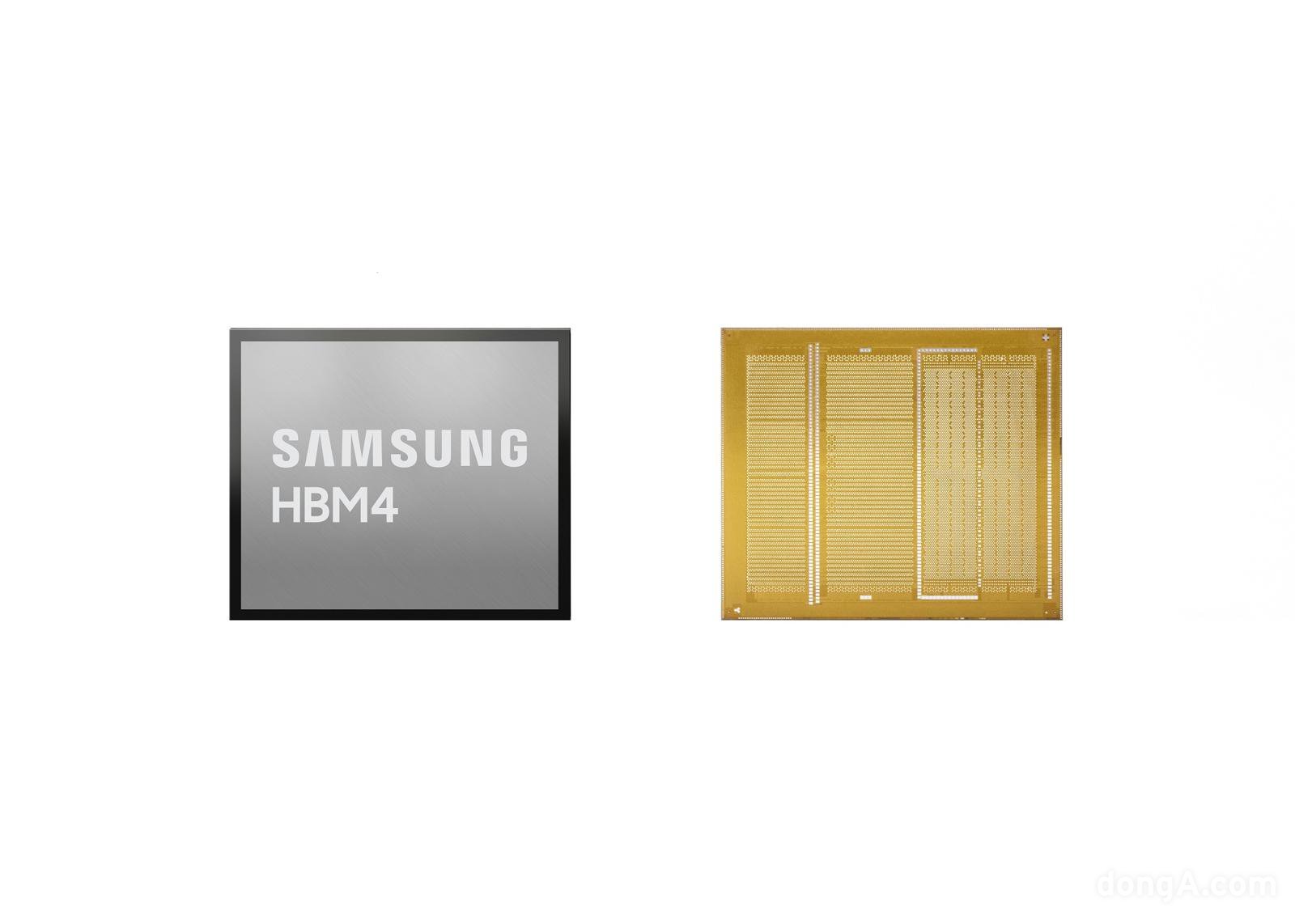
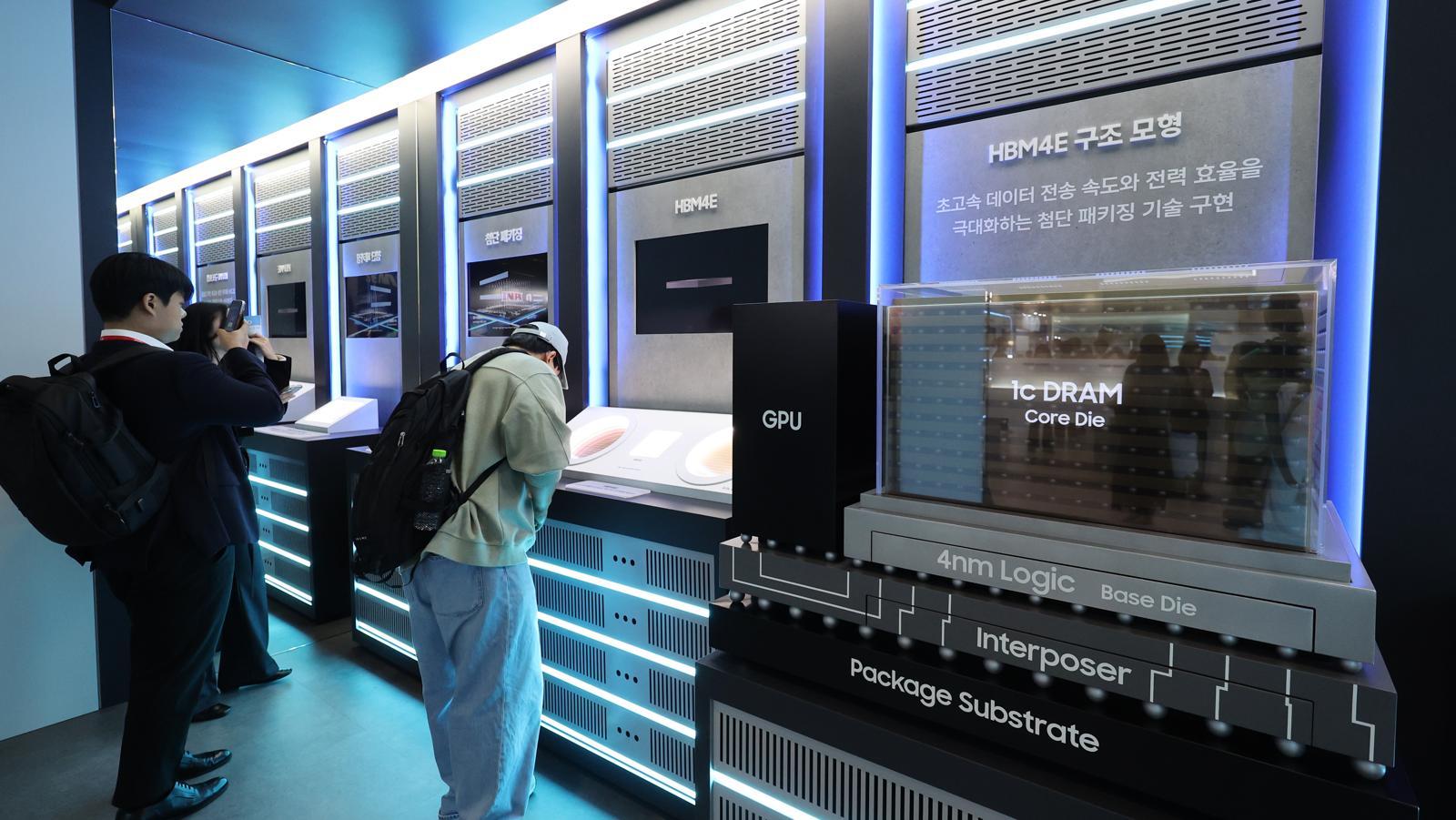
Samsung Electronics HBM4
Samsung Electronics announced that it participated in NVIDIA GTC 2026, held in San Jose, United States, from 16–19 March (local time), where it showcased technologies targeting the next-generation artificial intelligence (AI) semiconductor market. The centerpiece of this exhibition is the physical chip of its fifth-generation high bandwidth memory, HBM4E, and an integrated memory solution optimized for NVIDIA’s next-generation accelerator platform, Vera Rubin.
HBM4E unveiled, combining memory, foundry, and packaging capabilities
Samsung Electronics unveiled its HBM4E chip for the first time in a dedicated space within the exhibition hall, applying a 1c DRAM process and the company’s foundry 4-nanometer base die technology. This product is the result of maximizing the strengths of an integrated device manufacturer (IDM) that performs the entire process in-house, from design and production to packaging.
HBM4E supports a data transfer rate of 16Gbps per pin and bandwidth of 4.0TB per second. It incorporates hybrid copper bonding (HCB) technology, which reduces thermal resistance by more than 20% compared with conventional methods. This technology directly connects copper interconnects, enabling stacks of 16 or more layers of chips while maintaining excellent heat management, making it well-suited for next-generation high-performance computing devices.
Integrated memory supply system targeting the Vera Rubin platform
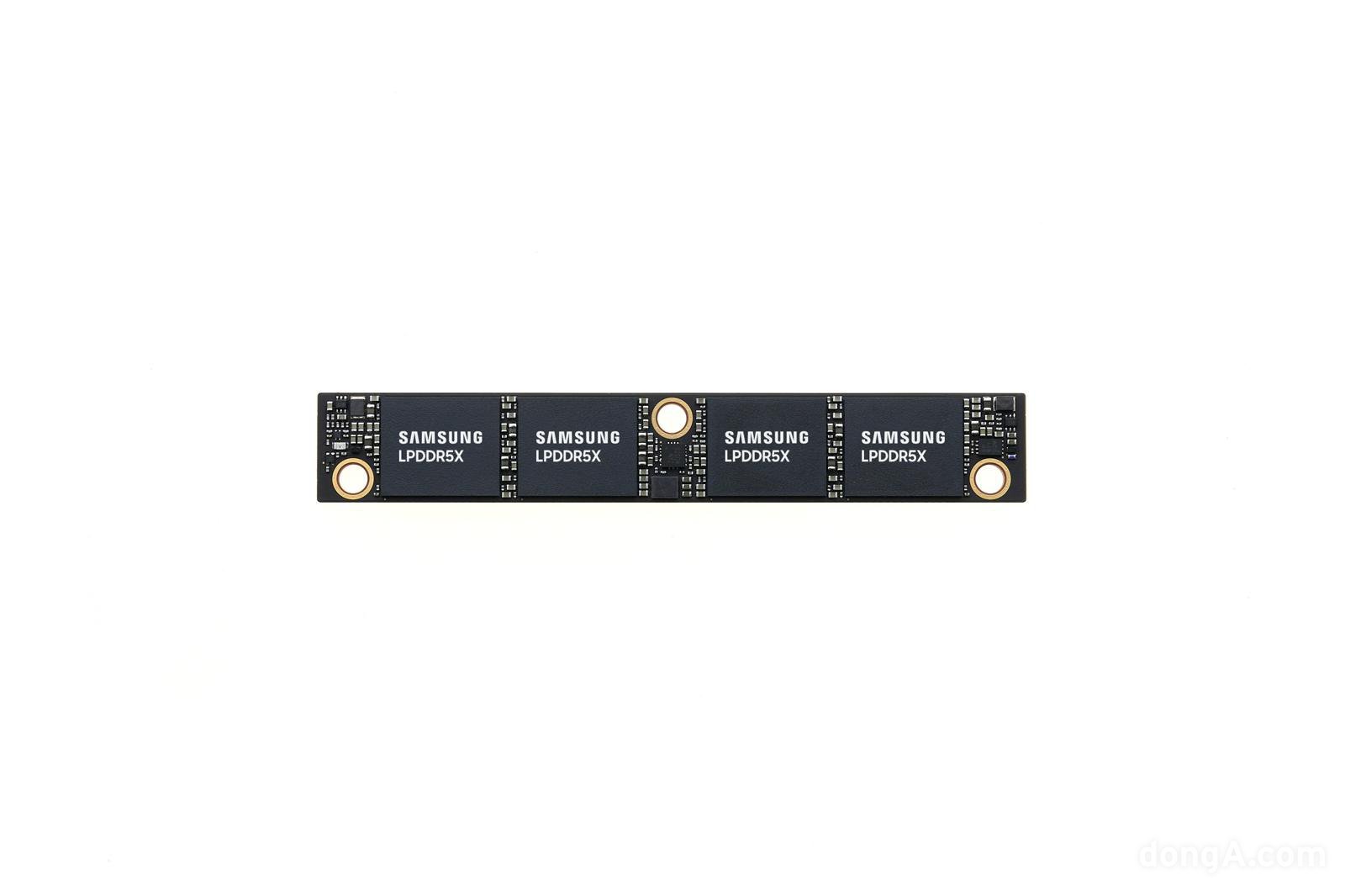
Samsung Electronics SOCAMM2
Samsung Electronics stressed that it is the only company capable of supplying on schedule the core components that will be mounted on NVIDIA’s next-generation AI platform, Vera Rubin. In the NVIDIA Gallery section of the exhibition hall, HBM4 for Rubin GPUs was displayed alongside SOCAMM2, a server memory module optimized for the Vera CPU, and the high-performance storage device PM1763.
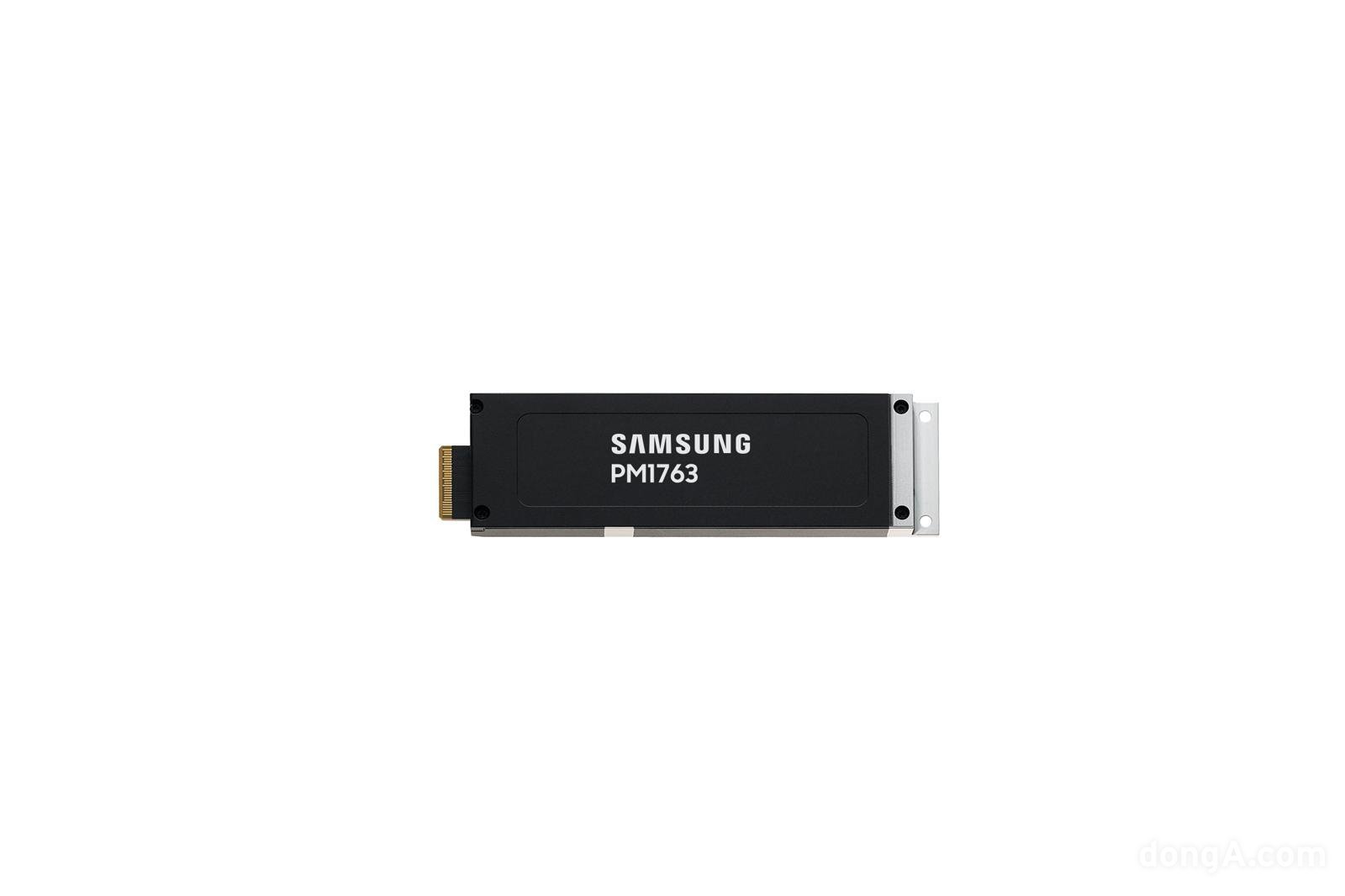
Samsung Electronics PM1763
The PM1763, a server solid-state drive (SSD), is built on the PCIe Gen6 standard and incorporates technology that reduces data read and write bottlenecks to enhance AI computing efficiency. On site, the company demonstrated large-scale data acceleration workloads using servers equipped with this product to validate its performance. It also detailed supply plans for the PM1753 SSD for the CMX platform, designed to efficiently process data generated during AI inference.
Expanding strategic cooperation for AI infrastructure innovationOn the second day of the event, the 17th, Song Yong-ho, head of Samsung Electronics AI Center, is scheduled to take the stage at NVIDIA’s invitation. Song plans to share Samsung’s integrated memory vision, which is essential for building next-generation AI systems, and outline plans to strengthen cooperation between the two companies across the entire infrastructure beyond a simple component supply relationship.
Samsung Electronics divided its exhibition space into three areas—AI data centers, on-device AI, and physical AI—and also introduced next-generation memory standards such as GDDR7 and LPDDR6. The company intends to enhance development efficiency through integrated solutions and solidify a virtuous cycle of technology in the high-performance semiconductor market.
ⓒ dongA.com. All rights reserved. Reproduction, redistribution, or use for AI training prohibited.
Popular News