SK has ridden the wave of the artificial intelligence (AI) revolution to achieve record-high profitability in its semiconductor business, ushering in a new heyday. In particular, by securing overwhelming leadership in the high bandwidth memory (HBM) market, a core component of AI servers, the company set a new milestone in annual performance, while revenue also reached an all-time high, solidifying its status as a “memory powerhouse.” Having completed its rebalancing, the SK Group now encompasses the full spectrum of global AI solutions. This article examines how the SK Group, once a semiconductor component supplier, has reinvented itself as an architect of the global AI ecosystem.

While remaining largely under the radar, SK Group’s bio business has been quietly building internal strength and sustaining its growth. Although overshadowed by SK hynix’s stellar performance, the SK Group’s bio business is cited as the next growth engine following semiconductors. The group’s initial attempt to break into the U.S. market with a single epilepsy drug has now evolved into a push into radiopharmaceutical therapy (RPT) and next-generation contract development and manufacturing organization (CDMO) services, firmly establishing bio as a new core growth pillar. In the near future, as AI technology—being developed group-wide—becomes integrated into the bio sector, growth is expected to accelerate further.
Quiet growth bears fruit… Enters the “KRW 2 trillion revenue club”SK’s bio business adopts a “distributed specialization” structure in which four independent legal entities share roles within their respective areas of expertise. It can be likened to a team of four players, each with a different position, playing together.
The key players are SK Biopharmaceuticals, which is responsible for innovative new drug development; SK Pharmteco, a CDMO specialized in pharmaceuticals; SK bioscience, which focuses on vaccines and next-generation bio platforms; and SK plasma, which produces blood plasma-derived products. Combined, the four companies generate well over KRW 2 trillion in annual revenue. Because each entity has a different revenue model, the group benefits from a “portfolio effect,” whereby weakness in one area can be offset by strength in another. The group is thus regarded as evolving beyond the traditional bio business model—reliant on a single new drug—into a platform-type bio group in which new drug development, vaccines, CDMO, and blood products are organically interconnected.
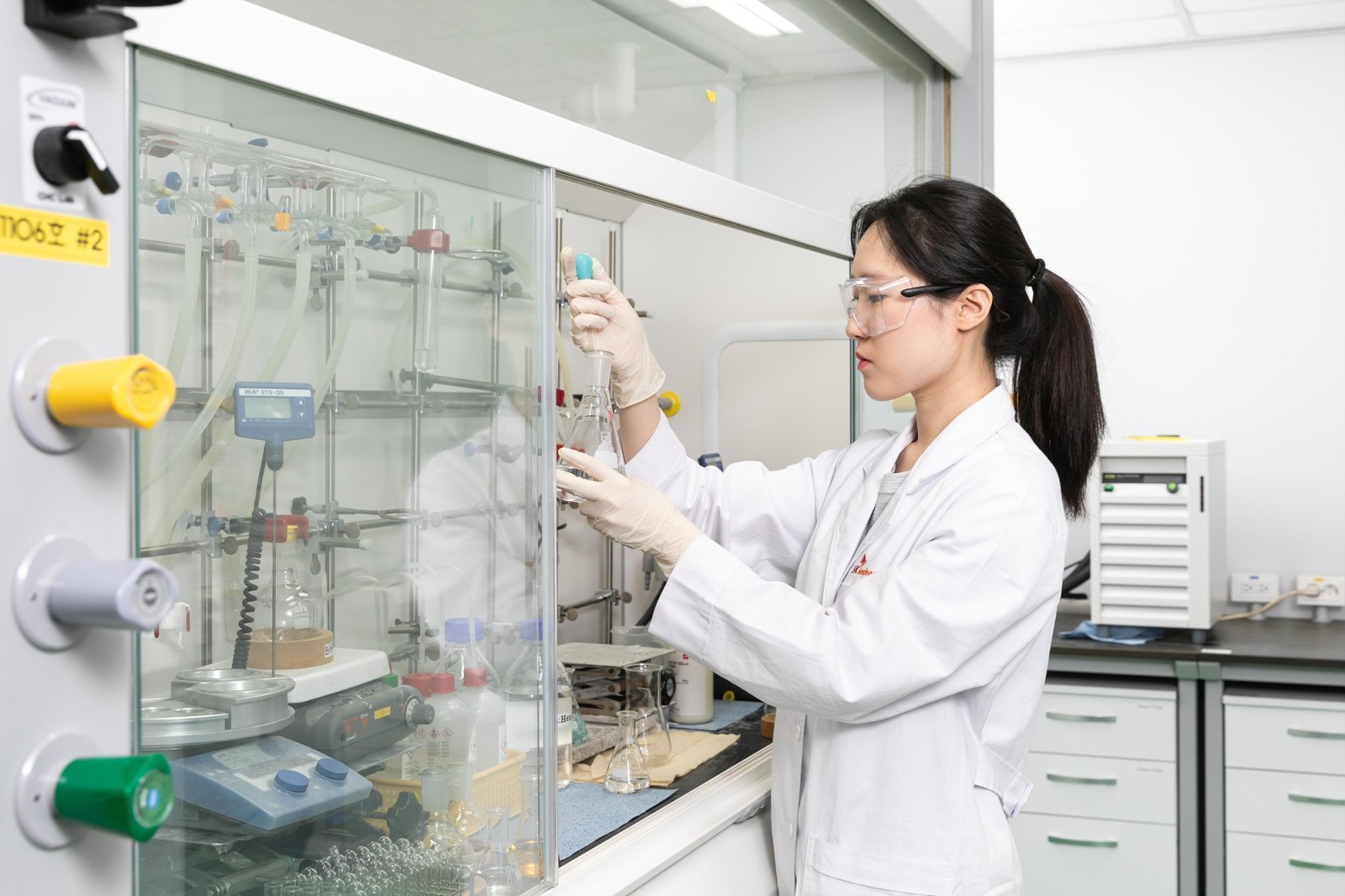
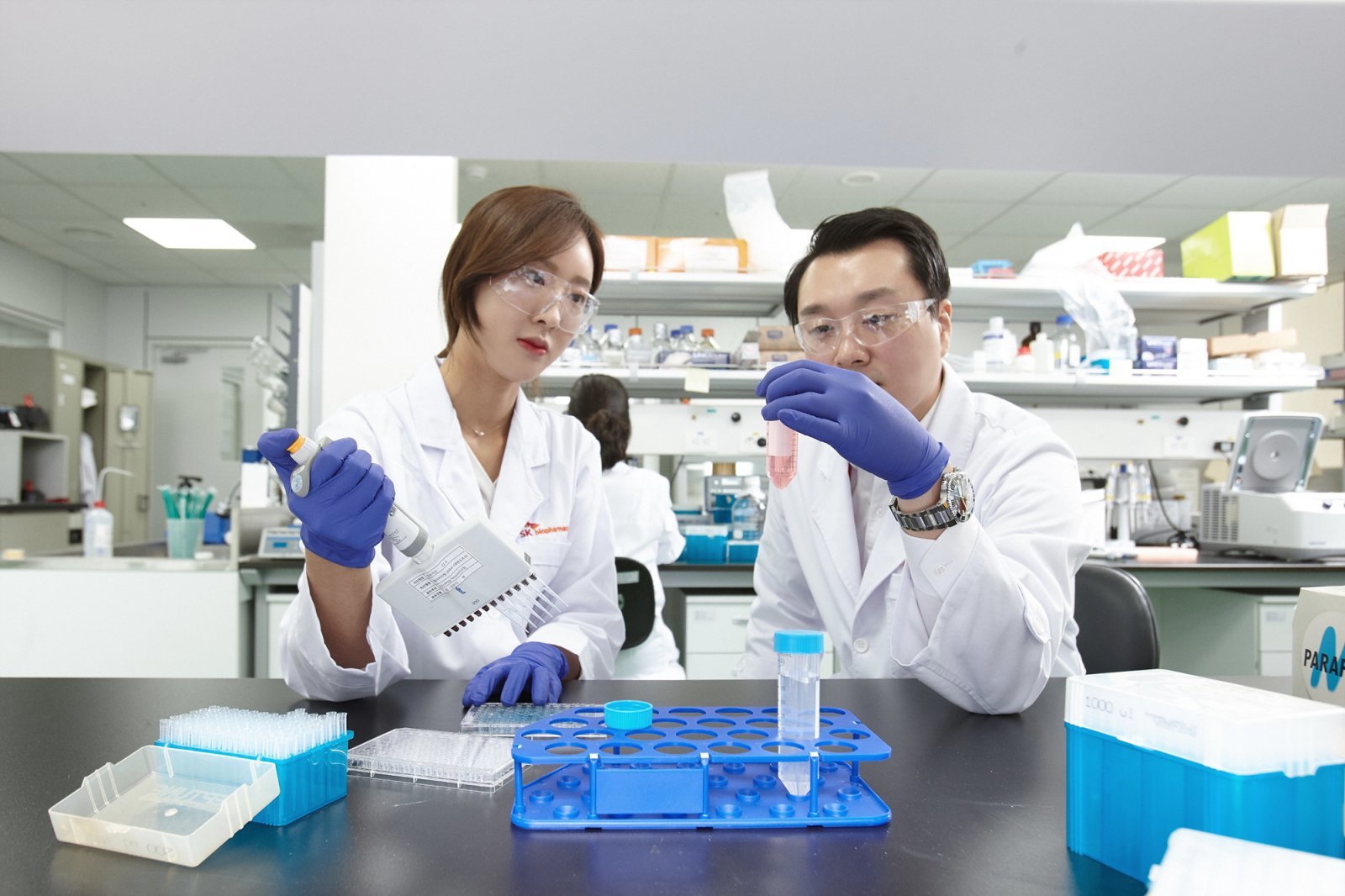
SK Biopharmaceuticals research center.
SK Biopharmaceuticals aims beyond cenobamate’s success toward RPTThe primary growth catalyst for SK’s bio business is SK Biopharmaceuticals. For its independently developed epilepsy treatment cenobamate (U.S. brand name: Xcopri), the company chose a straightforward approach: instead of licensing out rights to a global big pharma, it built its own direct sales network in the United States. As a result, it recorded its first full-year net profit in 2024 and went on to post KRW 203.9 billion in operating profit in 2025, emerging as a clear profit generator within the group.
The substantial cash flow generated by cenobamate is now being deployed as financial ammunition to secure an early lead in the next-generation anticancer segment of radiopharmaceutical therapy (RPT). RPT, which combines radioactive isotopes with special molecules that seek out cancer cells, selectively destroys cancer cells while sparing normal cells, significantly reducing the side effects associated with conventional anticancer drugs. It is drawing attention as a “precision targeted therapy.”
Global pharmaceutical giants such as Novartis, Eli Lilly, and Bristol Myers Squibb (BMS) have already invested trillions of KRW in this field. Novartis’s RPT therapy Pluvicto generated sales of approximately KRW 1.3 trillion in 2023 alone, establishing itself as a blockbuster drug. The global RPT market is projected to grow to around KRW 18 trillion by 2032.
SK Biopharmaceuticals is pursuing a “vertical integration” strategy from raw materials to therapeutics. It has secured a stable supply chain for actinium-225 (Ac-225), a key radioactive isotope, through agreements with TPI, a subsidiary of U.S.-based TerraPower, and Belgium-based PanTera, and has also built a proprietary chelator platform technology. In January this year, it became the first Korean company to receive U.S. FDA approval of an Investigational New Drug (IND) application for a phase 1 clinical trial of an alpha-emitting RPT therapy, SKL35501.
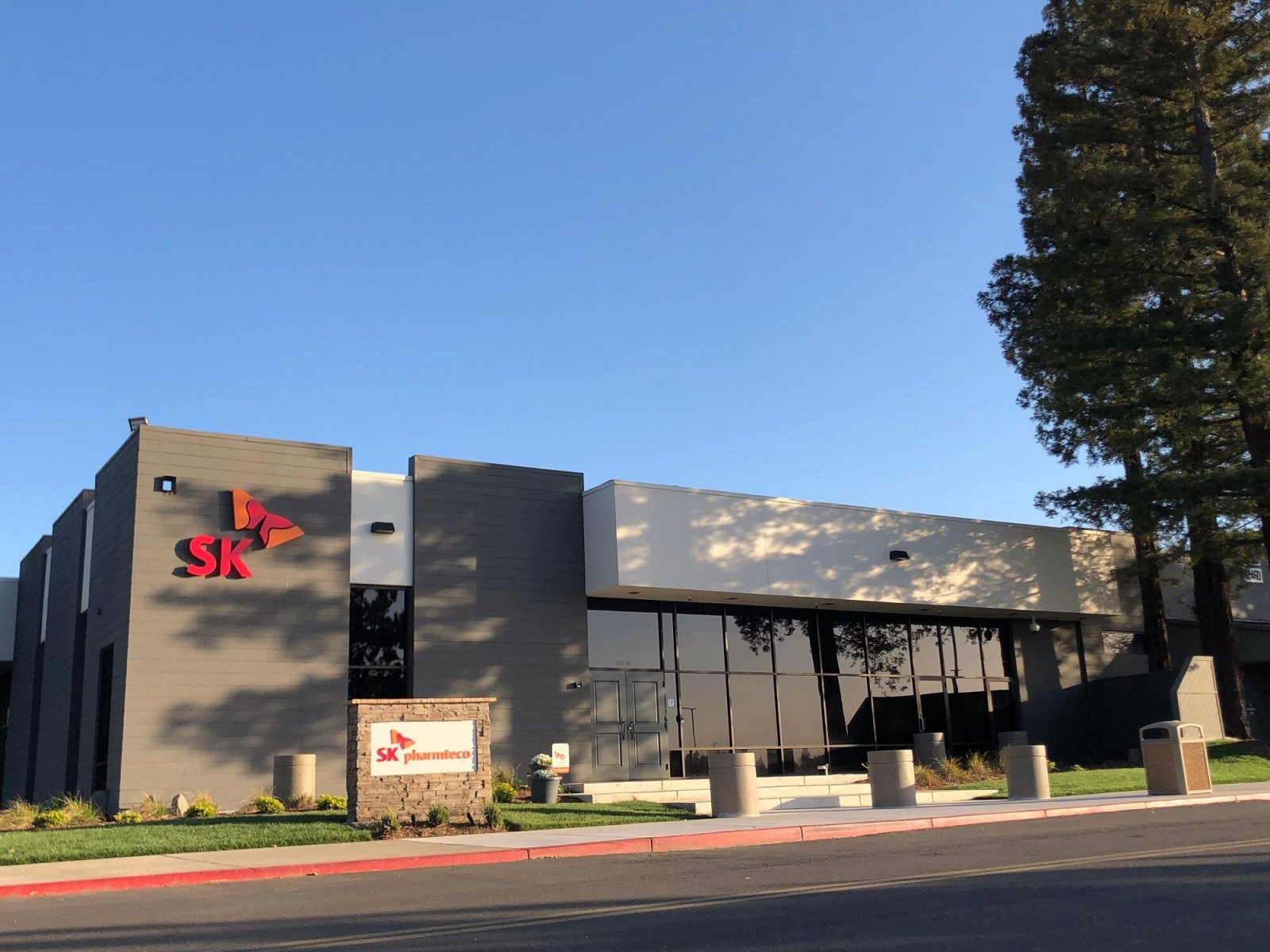
Headquarters of SK Pharmteco, SK’s global integrated CDMO entity, located in Sacramento, California, USA.
Obesity drug boom and CDMO leapGlobal CDMO player SK Pharmteco has recently emerged as a core link in the worldwide supply chain for obesity treatments. Surging global demand for GLP-1-based obesity drugs, such as Ozempic and Wegovy, has led to a significant shortage of manufacturing facilities capable of producing their key peptide ingredients around the world.
To capture this demand, SK Pharmteco is investing approximately KRW 340 billion in a dedicated peptide plant in Sejong, which is scheduled to begin full-scale operations at the end of this year. The company is solidifying its position as a key partner in the global obesity drug market, with potential collaboration with Eli Lilly also being discussed.
SK bioscience has rebounded after a period of weak performance following the end of the COVID-19 pandemic boom. IDT Biologika, a German CDMO specialist acquired in 2024, returned to profitability within one year of the acquisition and began to fully function as the group’s European base, helping SK bioscience more than double its 2025 revenue year-on-year to KRW 651.4 billion. Although the company is still in the operating loss zone, this is interpreted as reflecting platform investments for future growth.
SK plasma, which produces pharmaceuticals derived from human blood, plays a solid role as a stable cash generator for the group, thanks to the non-cyclical nature of its essential medicines. After turning profitable in 2023, the company has continued to generate steady earnings and is preparing for an initial public offering (IPO) by 2026. This stability provides a strong foundation for the SK Group’s overall bio business.
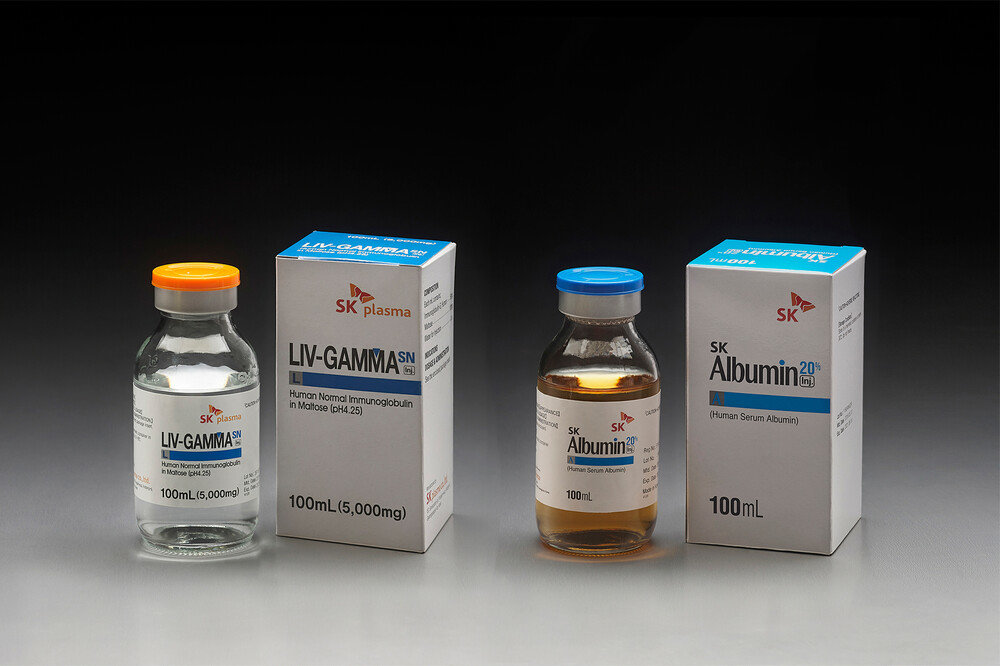
SK plasma blood product pharmaceuticals.
Vision toward a “platform-type integrated bio group”… a global big biotech modelThe global bio industry is evolving away from the traditional “Big Pharma” model toward “Big Biotech,” characterized by innovative technologies and flexible business models. SK Group’s ambition to build a “platform-type integrated bio group” can be viewed as a Korean version of this global big biotech model.
SK’s strategy is to maximize the strengths of each affiliate and connect them organically. SK Biopharmaceuticals generates cash from its new drugs, which is then funneled into high-risk, next-generation technologies such as RPT. SK Pharmteco supports the manufacturing base by producing raw materials needed in the new drug development process, while SK bioscience expands its external reach through global CDMO acquisitions. SK plasma, with its production of essential, non-cyclical medicines, serves as a financial safety net for the entire group.
This distributed structure enables each affiliate to maintain independent expertise while the group as a whole generates synergies that span the entire value chain from drug discovery to manufacturing and commercialization. Unlike Lonza, a global CDMO company, or Gilead, which focuses on new drug development, SK internalizes all these capabilities within the group, allowing it to respond more flexibly to external environmental changes.
SK Biopharmaceuticals research center
Litmus test for “K-big biotech” over the next five yearsSK Group’s bio business has now evolved beyond a simple collection of affiliates into a platform that completes the entire process of development, production, and commercialization within the group. However, the challenges ahead are also clear. In 2032, the patent for cenobamate will expire and generic competitors will flood the market. Before then, follow-on pipeline candidates such as RPT therapies and Parkinson’s disease treatments must show clinical success.
The success of cenobamate should be viewed not as the end, but as the beginning. The next five years are expected to reveal whether the four strategic pillars that have now begun to move in concert can complete SK’s transformation into a Korean-style “big biotech” model.
Q&A: Understanding SK Group’s bio business at a glance
Q. Why has SK Group selected radiopharmaceutical therapy (RPT) as its next-generation growth engine?
A. Because the paradigm of cancer treatment is shifting toward “precision strikes.” RPT is a next-generation therapy that uses radioactive isotopes to selectively attack only cancer cells, and it is a field into which global pharmaceutical companies are investing aggressively. SK Biopharmaceuticals is leveraging its experience from developing cenobamate to build both an RPT pipeline and an isotope supply chain, moving to secure a first-mover advantage.
Q. Why is SK Pharmteco making a large-scale investment in its Sejong plant?
A. As the global obesity drug market has grown rapidly, production capacity for active pharmaceutical ingredients (APIs), particularly GLP-1 peptides, has become insufficient. Through the expansion of the Sejong plant, SK Pharmteco aims to secure peptide production capacity and establish itself as a key manufacturing hub in the global pharmaceutical supply chain.
Q. Why is SK Group’s bio business divided into four separate legal entities?
A. Because the bio industry encompasses businesses with very different characteristics in R&D, manufacturing, platforms, and cash generation. SK Biopharmaceuticals focuses on new drug development, SK Pharmteco on global manufacturing, SK bioscience on vaccine platforms, and SK plasma on blood products. By distributing roles in this way, the group can reduce risk while creating synergies.
Q. What are the growth drivers after SK Biopharmaceuticals?
A. Key next-generation pipelines include a disease-modifying therapy (DMT) for Parkinson’s disease and radiopharmaceutical therapies (RPT). Based on the cash flow secured through cenobamate, the group is expanding its R&D into central nervous system (CNS) disorders and next-generation anticancer treatments.
Q. How likely is it that SK Group’s bio business will grow into a global “big biotech”?
A. Although there is still a gap in scale compared with global big biotechs, it is rare in Korea to find a structure that simultaneously possesses experience in commercializing new drugs, global CDMO production capabilities, vaccine platforms, and stable cash-generating businesses. If additional success cases emerge from RPT or CNS new drugs, there is a growing assessment that the group could grow into a platform-type integrated bio company.

ⓒ dongA.com. All rights reserved. Reproduction, redistribution, or use for AI training prohibited.
Popular News