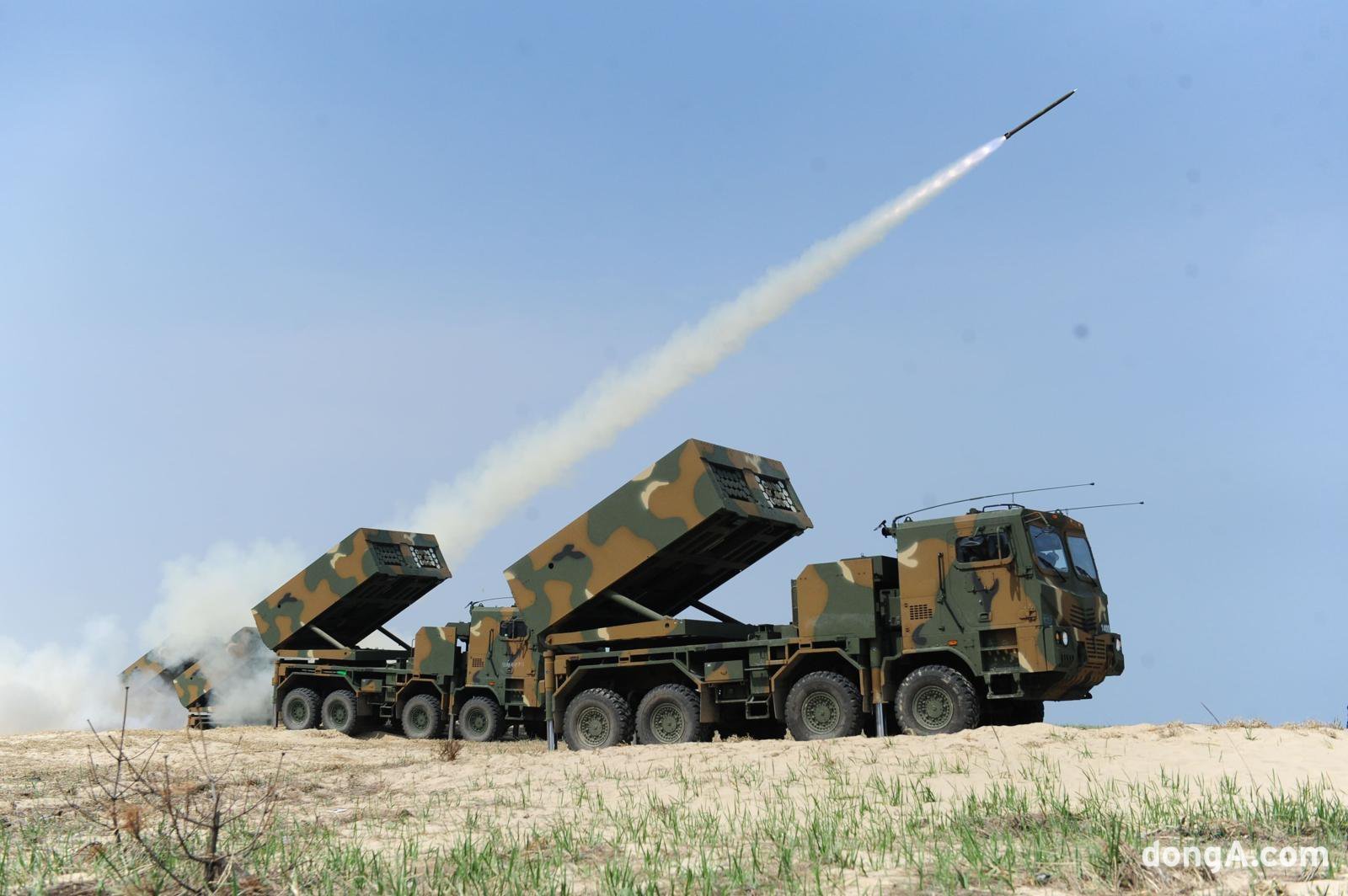
Hanwha Aerospace Chunmoo multiple launch guided weapon system. DongA.com DB
With Norway’s purchase of the Chunmoo system produced by Hanwha Aerospace, observers assess that Korean defense companies are entering the European market in earnest. Some companies have begun pursuing localization strategies by establishing production plants in Europe and other regions.
On January 29 (local time), Norway’s Ministry of Defence announced that it had selected the K239 Chunmoo multiple launch rocket system (MLRS), produced by Hanwha Aerospace of Korea, as the final contractor for its Long Range Precision Fire System (LRPFS) program, worth 19 billion kroner (approximately KRW 2.8 trillion).
Since 2022, when Russia launched its second invasion of Ukraine, Norway, as a member of NATO (North Atlantic Treaty Organization), has been pursuing the LRPFS program to preemptively deter Russian aggression. Among European states, Norway will be the second country to operate Chunmoo, following Estonia, one of the three Baltic states.
Sixteen Chunmoo launchers and training equipment are to be delivered by 2029. The quantity of ammunition has not been disclosed for security reasons, but 130 mm and 239 mm unguided and guided rockets and 600 mm tactical surface-to-surface missiles are expected to be delivered by 2031. Excluding integrated logistics support, training materiel, and support systems, Hanwha estimates the export value at around USD 1 billion (approximately KRW 1.4 trillion).
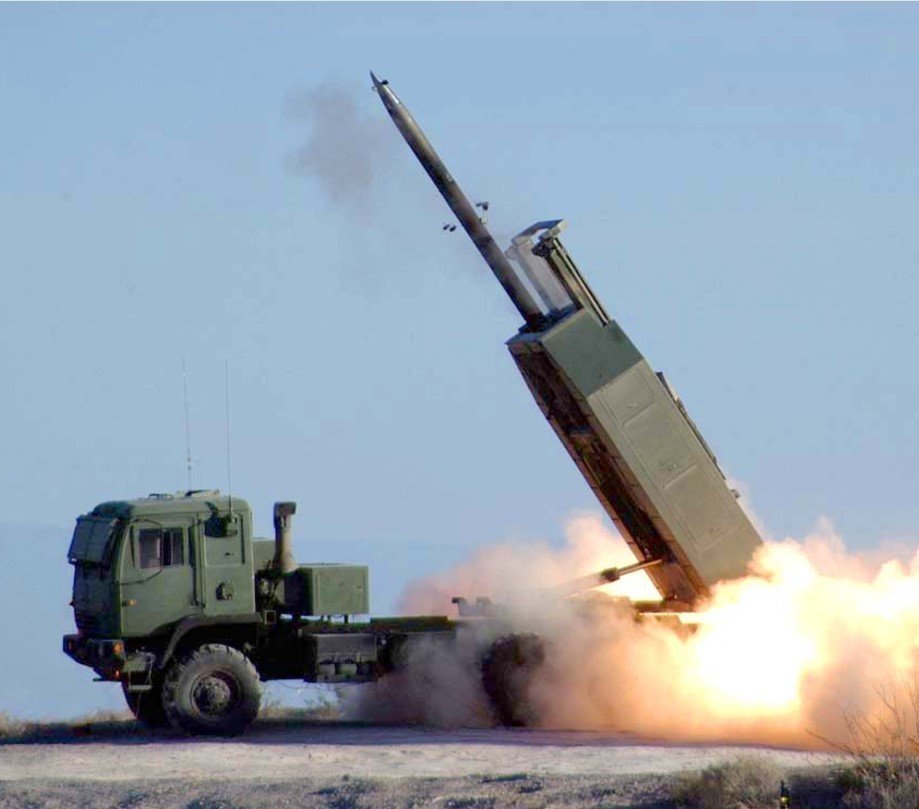
U.S. Lockheed Martin’s HIMARS (High Mobility Artillery Rocket System) firing rockets. Newsis
● Hanwha outpaces U.S. and European competitorsIn this program, Chunmoo’s competitors included the HIMARS (High Mobility Artillery Rocket System) from U.S. company Lockheed Martin and the EURO-PULS system from KNDS, a joint German-French defense company. However, as Israel, the country of origin for EURO-PULS launchers, became the focus of international controversy due to its military operations in the Gaza Strip, Norway’s Ministry of Defence is reported to have excluded that system from consideration.
Compared with the M270 MLRS previously operated by the U.S. Army, HIMARS carries half the number of launch pods, but it was developed to be transportable by medium transport aircraft, offering the advantage of rapid redeployment. Its mobility is also rated highly, as the launcher is mounted on an Oshkosh 5-ton medium tactical truck. HIMARS is operated by 16 countries, including the United States, Jordan, the United Arab Emirates, and Bahrain, and has been supplied free of charge to the Ukrainian military, which is employing it in combat against Russian forces.
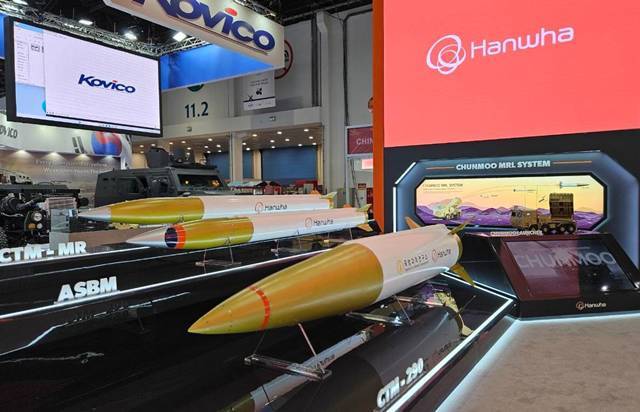
Munitions expected to be mounted on Chunmoo. Provided by Hanwha Aerospace
● Norway: “Chunmoo package is the best option”In the final assessment, the Norwegian Armed Forces gave high marks to Chunmoo’s delivery capability and package competitiveness. Eirik Kristoffersen, Chief of Defence of Norway, explained, “We judged the Korean package to be the best because it not only can be delivered within the set time and budget, but also includes 16 launchers and a high-quality ammunition package.”
Chunmoo’s performance also received strong evaluations. The Norwegian Defence Materiel Agency (FMA) stated regarding Chunmoo’s capabilities, “Other commercial proposals could not match its level of completeness in integrating launchers, missiles, and fire control/command systems within a single system, or its ability to operate long-range munitions in the 500 km class.”
For the Chunmoo export package, Hanwha proposed 130 mm, 239 mm, 400 mm, and 600 mm unguided, guided, and tactical surface-to-surface missile munitions. Among these, the 600 mm tactical surface-to-surface missile is presumed to be the KTSSM-II (Urae-2) short-range ballistic missile currently under development for the Korean military, with a range of more than 300 km. The Norwegian side assessed that, with upgrades, it would be possible to extend the range to over 500 km.
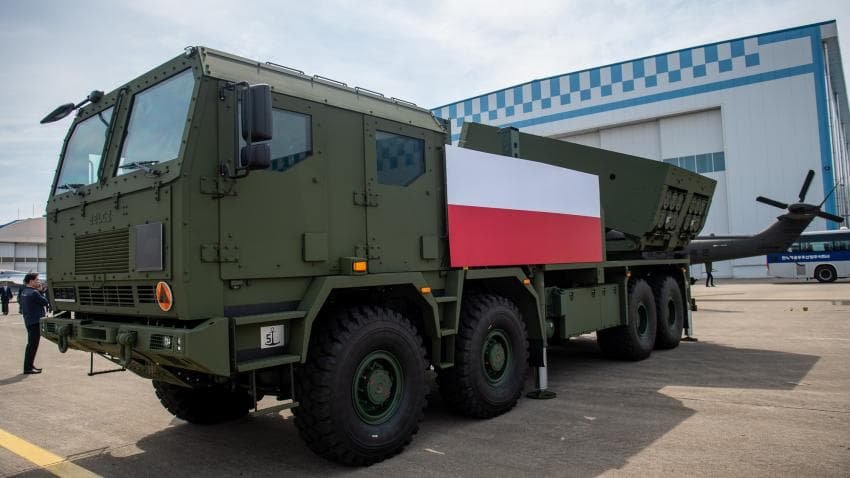
Chunmoo modified for the Polish export version (Homar-K). Provided by Hanwha Aerospace
● Korean companies shift from exports to localization strategiesChunmoo is operated in four countries—Korea, Poland, Saudi Arabia, and the United Arab Emirates (UAE)—with a total of 440 launchers in service. Estonia and Norway have confirmed their acquisition, and Poland has signed contracts for additional units, bringing the total number of launchers expected to be in operation to 578.
Poland, in particular, operates 174 units under the name “Homar-K,” having mounted the Chunmoo launch system on domestically produced Jelcz trucks. As the country with the second-largest Chunmoo fleet after the Korean military, Poland has become a focal point of Hanwha’s localization strategy.
Artur Kuptel, head of Poland’s Armament Agency, stated in an interview with Polish defense media outlet Defence24 on January 24 (local time) that “a joint missile factory of Hanwha Aerospace and WB Group will be established in Gorzów Wielkopolski in Lubusz Voivodeship, western Poland.” He added, “The goal is to complete preparation and construction between 2026 and 2029 and begin missile production in Poland from 2030.”
The plant will produce CGR-080 guided rockets (range of about 80 km) used in the Homar-K system for delivery to the Polish Army. Local production of munitions is expected not only to shorten deployment timelines but also to speed up maintenance and repair, thereby significantly enhancing logistics support capabilities.
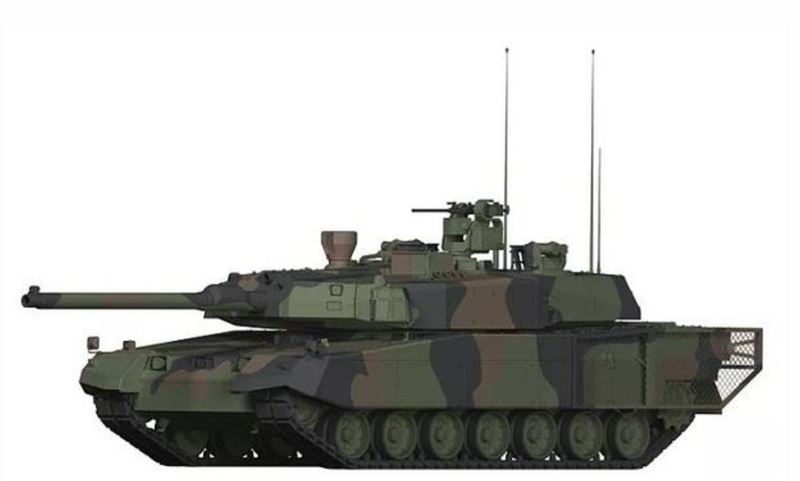
K2PL CG image scheduled for production in Poland. Provided by Hyundai Rotem
● K2 tanks and Redback IFVs also secure production basesThis localization strategy is being applied to other weapons systems beyond Chunmoo. Hyundai Rotem signed a second K2 tank export contract with Poland in 2025. Under the agreement, the “Bumar” production plant of PGZ, Poland’s state-owned defense group, will locally produce 61 of the 64 K2PL tanks, the Polish export variant of the K2. The approach links technology transfer and local production to weapons procurement contracts.
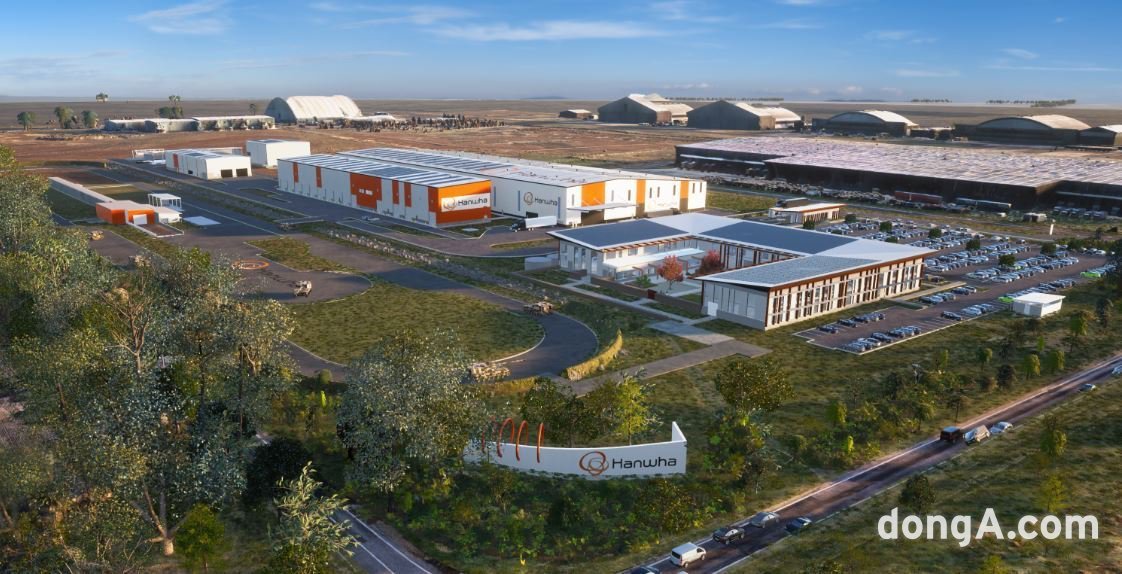
Australia has also adopted a local production strategy. After confirming the purchase of 30 K9 self-propelled howitzers and 15 K10 armored ammunition resupply vehicles on December 31, 2021, Australia additionally decided to acquire 129 AS-21 Redback infantry fighting vehicles. All of these systems are to be produced at Hanwha Aerospace’s “H-ACE” plant near Geelong in Victoria, approximately 800 km southwest of Sydney.
Romania is likewise seeking to procure Korean weapons through local production. On July 10, 2024, Romania signed a contract with Hanwha Aerospace for 54 K9 self-propelled howitzers and 36 K10 armored ammunition resupply vehicles, worth a total of USD 920 million (approximately KRW 1.3 trillion). All of these systems are scheduled for production at Hanwha Aerospace’s “H-ACE Europe” plant in Petrești, Dâmbovița County, Romania. Hanwha also plans to use H-ACE Europe as a base to participate in Romania’s next-generation infantry fighting vehicle (IFV) program and intends to produce the full quantity for the Romanian Armed Forces locally if the Redback is ultimately selected.
Panoramic view of Hanwha Aerospace’s Australian plant “H-ACE (Hanwha Armoured vehicle Centre of Excellence)”. Provided by Hanwha Aerospace
● Praised for creating local jobs… challenge of utilizing remaining facilities
The model of establishing plants in the customer country for production and delivery can win positive reviews from local governments and residents by creating jobs and transferring manufacturing technology. However, some point out that this approach can lead to higher production costs and leaves the question of how to utilize related facilities after weapons production ends. There are also persistent concerns that technology transfers conducted during local production may, in the long term, help nurture future competitors.
On the issue of technology transfer, an industry source stated, “Technology transfer is carried out selectively, taking into account the overall industrial capabilities of the importing country,” and explained, “Because core technologies are not transferred, it is not a structure in which they immediately become competitors.” Regarding the handling of overseas factories after production ends, the source added, “We can also consider using them as facilities for future system upgrades or depot-level overhauls.”
In addition, if further overseas orders push the production capacity of domestic plants to its limit, distributed production using overseas plants is being discussed as an alternative. It is also reported that studies are under way on securing military supplies through overseas production bases in the event of a contingency on the Korean Peninsula.
ⓒ dongA.com. All rights reserved. Reproduction, redistribution, or use for AI training prohibited.
Popular News