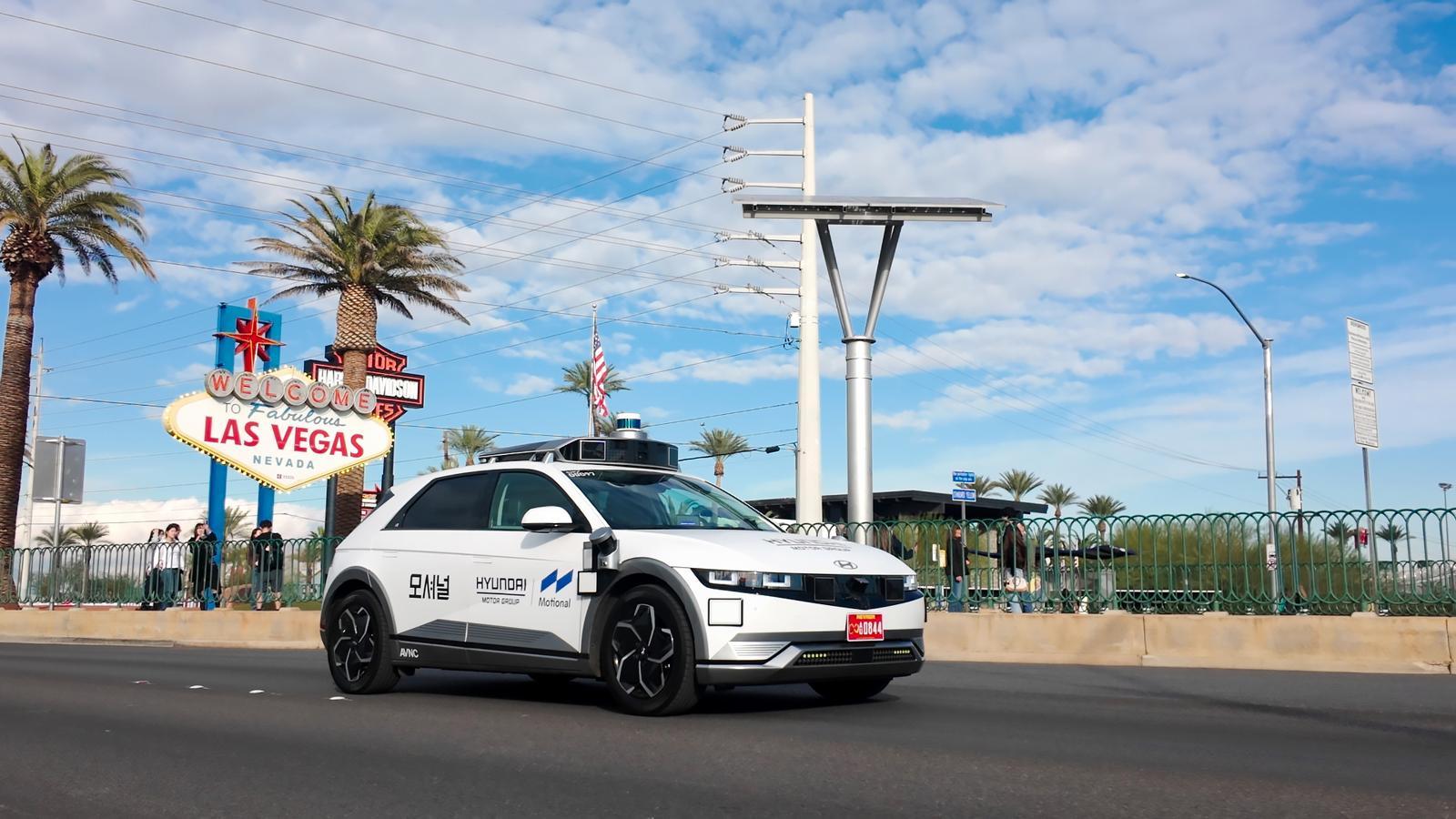
A Motional robotaxi driving through downtown Las Vegas. Provided by Hyundai Motor and Kia
On 8 January (local time) at Motional’s Technical Center in Las Vegas, United States, Motional—the joint venture between Hyundai Motor Group and U.S. autonomous driving company Aptiv—held a test-ride event for journalists attending the world’s largest information technology (IT) and consumer electronics exhibition, CES 2026, to showcase its technology ahead of full-scale pilot operations in the area this year.
Opening the rear door of Hyundai’s IONIQ 5 electric vehicle, with the Korean word “모셔널” (Motional) written in large letters, and boarding the vehicle, interior cameras, radar and lidar sensors made clear that it was an autonomous-driving robotaxi. Following the instructions on the display in front of the seat, after fastening the seat belt and pressing the “START” button on the screen, the vehicle began to move smoothly. The front screen showed a map with the driving route, along with graphic representations of surrounding vehicles and pedestrians.
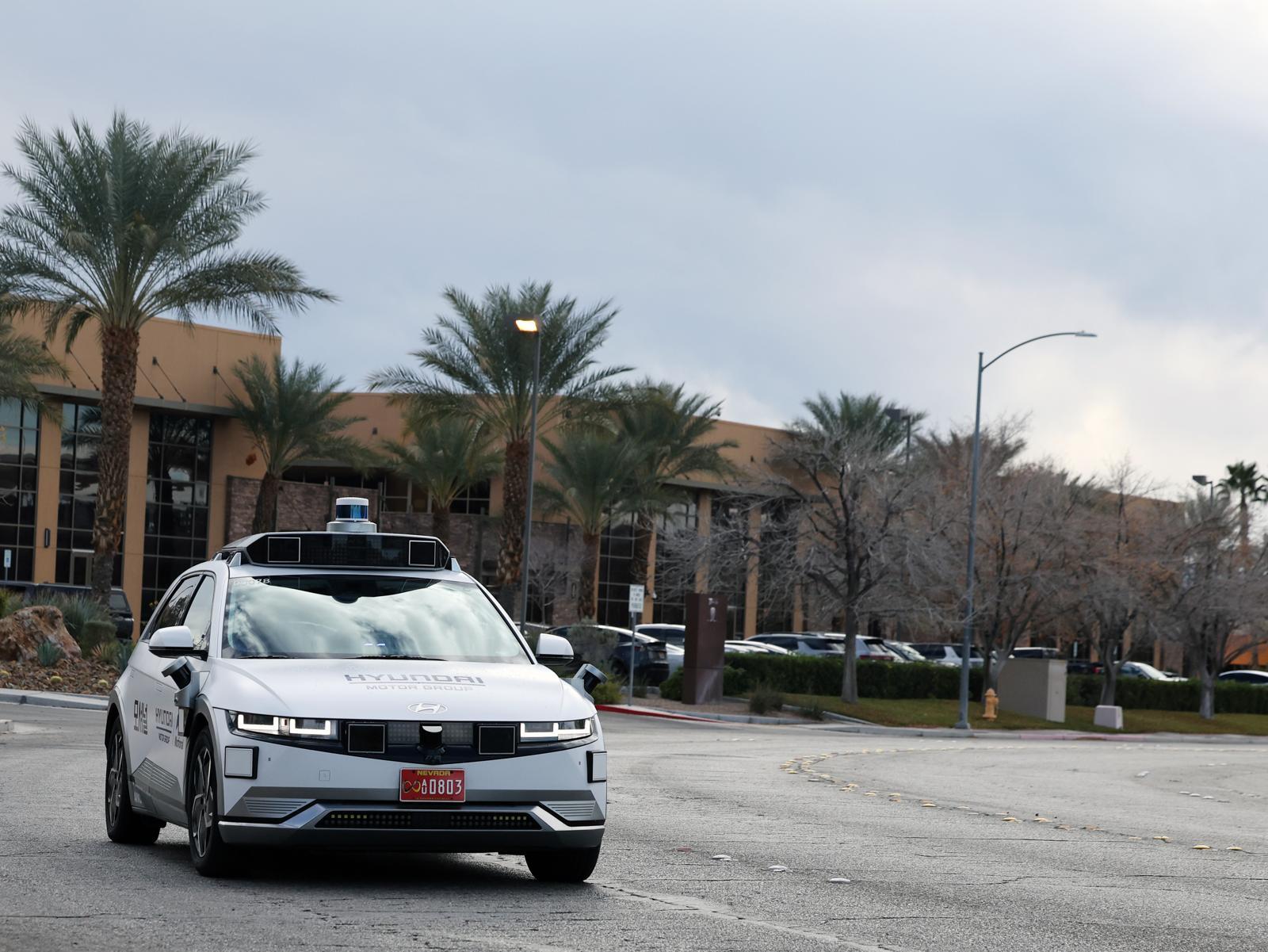
On 8 January (local time), an IONIQ 5-based “robotaxi,” jointly developed by Hyundai Motor Group and Motional, conducts a demonstration run in front of the Motional Technical Center in Las Vegas, Nevada. Las Vegas = News1
Over roughly 30 minutes covering a distance of 14 km, the Motional vehicle adjusted its speed to match traffic conditions, driving as a human would. After traveling along a wide road, the vehicle entered Town Square, an outdoor shopping complex, where the road suddenly narrowed and its movements became more cautious. On the screen, icons representing pedestrians and bicycles passing close to the vehicle repeatedly appeared and disappeared. It was particularly notable that Motional’s system appeared to control the vehicle by anticipating pedestrians’ intentions in advance. If a pedestrian’s upper body direction and gaze were oriented toward the roadway, the system interpreted this as an intention to cross and automatically stopped or significantly reduced speed; otherwise, it determined that the person was walking along the sidewalk and maintained a slow pace.
The system also read road signs accurately. When it encountered a red inverted triangle “STOP” sign with white lettering at an intersection, the vehicle came to a complete stop, then detected vehicles to the left, right and opposite side before proceeding.
Lane changes were smooth as well. After passing through Town Square and entering Las Vegas Street, where the airport and highway intersect, the vehicle detected the speeds of surrounding cars, automatically activated the turn signals, and changed lanes appropriately for efficient driving. Where there were two dedicated left-turn lanes, it even changed to the lane with fewer waiting vehicles.
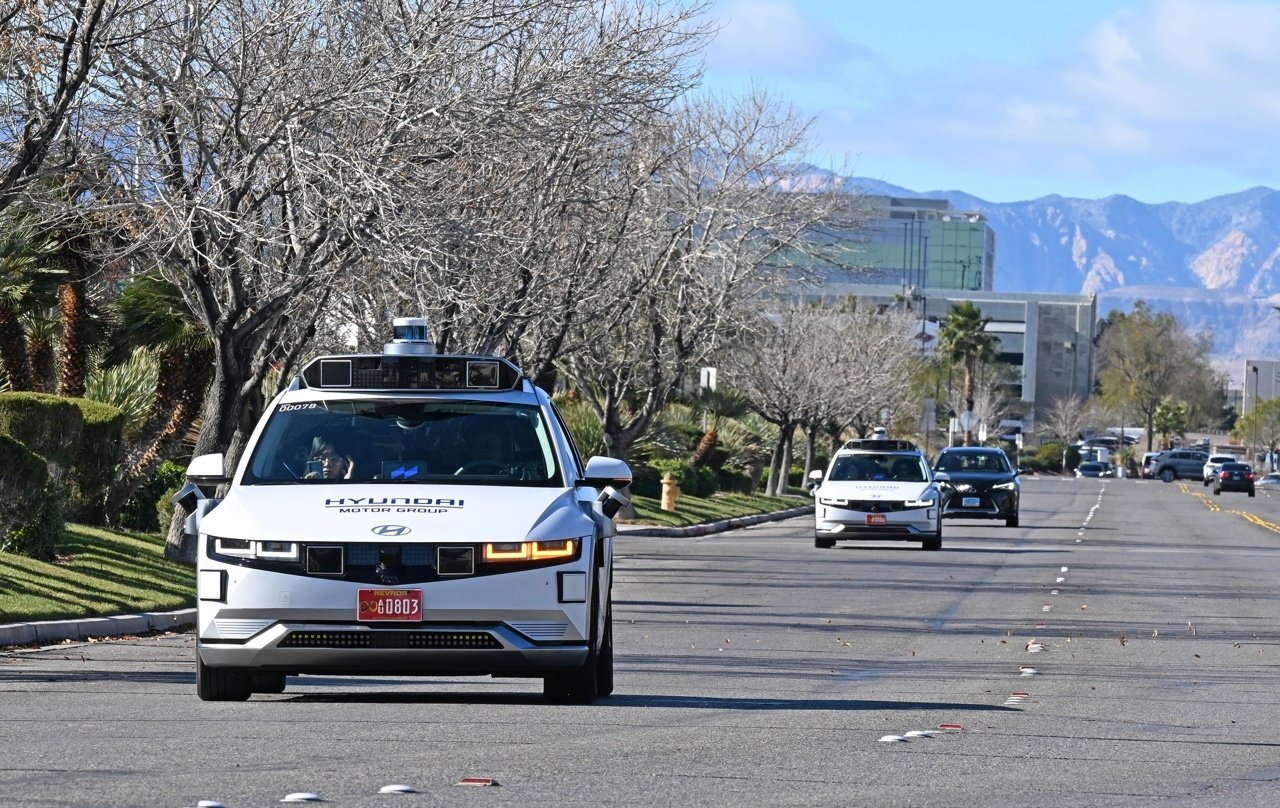
Motional’s IONIQ 5 robotaxi. Provided by Hyundai Motor Group
Hyundai Motor Group plans to conduct pilot operations of Motional’s robotaxis in Las Vegas through the end of this year, then begin commercial services around year-end. During the pilot phase, an employee will sit in the driver’s seat to ensure safety, but once commercial operations begin, the service is planned to operate at Level 4 autonomy, where no driver is required in the vehicle.
Motional’s autonomous driving uses an “E2E (end-to-end)” technology approach, in which the vehicle makes its own decisions based on integrated sensor data. Tesla’s Full Self-Driving (FSD) also adopts this method. Because it can be applied to all roads rather than just designated routes, it offers high versatility but also a higher likelihood of unexpected incidents. Laura Major, CEO of Motional, said, “We are using AI learning to raise performance to cover the ‘last 1%’ of rare but critical safety scenarios, such as suddenly opening doors or responses to emergency vehicles.”
In terms of securing learning data from on-road driving, Motional is still viewed as lagging behind Tesla and Chinese competitors. Motional’s accumulated autonomous driving distance stands at 160 million km, while Tesla has reportedly logged 11.2 billion km and Baidu Apollo in China about 240 million km.
Hyundai Motor Group aims to close this gap through Motional’s “Level 4 commercialization.” A Hyundai Motor Group official said, “Motional’s top priority is to successfully launch the commercial service planned for the end of this year,” adding, “Once technology and competitiveness are further accumulated after that, there is also the possibility of deployment in other regions, including Korea.”
ⓒ dongA.com. All rights reserved. Reproduction, redistribution, or use for AI training prohibited.
Popular News