[AI Robots Reshaping Korean Manufacturing] After Threatening White-Collar Jobs, AI Robots Move Into Blue-Collar Work
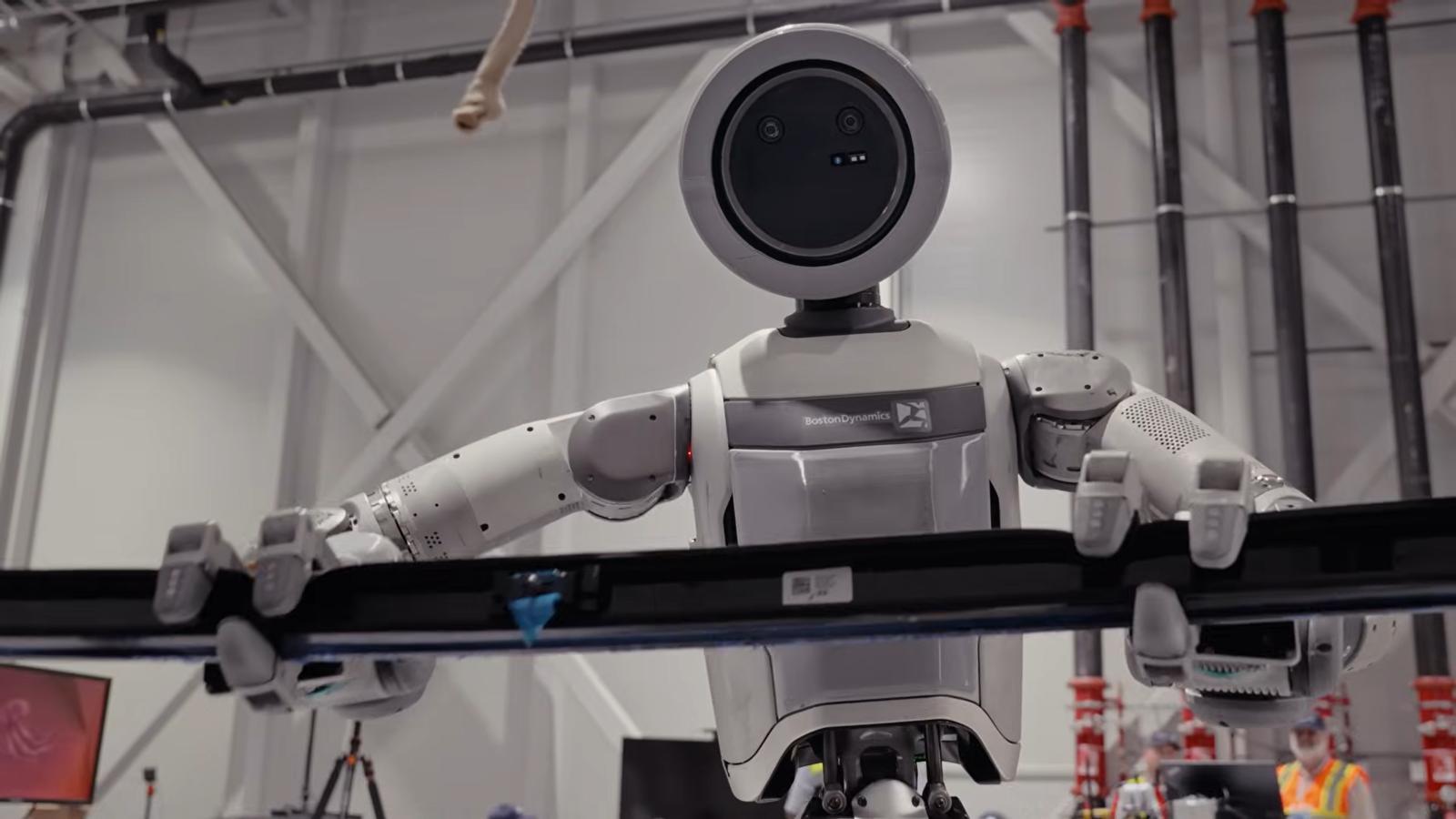
Atlas, a next-generation humanoid robot developed by Boston Dynamics, Hyundai Motor’s robotics affiliate. Courtesy of Hyundai Motor.
As the performance of physical artificial intelligence (AI) improves rapidly, concerns are emerging that robot workers are even threatening blue-collar jobs. While generative AI triggered by ChatGPT has displaced office jobs, there are signs that robots capable of working nonstop 365 days a year are encroaching on the realm of manual labor.
According to the information technology (IT) industry on the 8th, if the cost of AI robots declines and they gain a strong “price-performance” advantage, the replacement of human labor by robots could accelerate further. Global consulting group Ernst & Young (EY) predicted, “As the technological capabilities of AI robots advance rapidly and prices fall, within five years a ‘cost cross’ will occur in which the introduction and operating costs of AI humans become cheaper than human labor costs.”
According to the New York Times, Amazon has already deployed AI robots centered on logistics and plans to cut 160,000 jobs in the United States alone by next year and 500,000 jobs in the longer term. The World Economic Forum (WEF), in its “Future of Jobs Report” published last year, projected that while 47% of all work will be performed by humans as of 2025, this share will fall to 33% by 2030, with the remainder carried out either solely by machines (33%) or through forms of collaboration between humans and machines (34%).
Choi Ji-won
AI-translated with ChatGPT. Provided as is; original Korean text prevails.
ⓒ dongA.com. All rights reserved. Reproduction, redistribution, or use for AI training prohibited.